The most wind-resistant roofing is generally metal roofing, particularly mechanically fastened continuous panel systems. Thanks to their design and fastening method, these roofs can withstand very strong winds, often exceeding 200 km/h. Other solutions such as concrete tiles or slate can also be effective, provided they are installed correctly.
Wind forces and their impact on a roof
Wind doesn't just push the roof downwards. It also creates a lifting effect. The fast-moving air above the roof generates pressure that can tear off the roofing materials.
Two main phenomena need to be understood:
- The direct pressure, which presses down on the roof surface
- The suction effect, which lifts the elements from below
- Irregular gusts are more dangerous than a steady wind.
The most sensitive areas are:
- The edges of the roof
- The angles
- Roof overhangs
- The ridges
A wind-resistant roof must therefore be securely attached to the structure and minimize wind resistance. It's not just the material that matters, but also how it's installed.
Is metal roofing the most wind-resistant?
Yes, in most cases, metal roofing is considered the most effective against strong winds. See on REFORMEX.
Continuous panel steel or aluminum systems offer several advantages:
- Direct mechanical fixing into the structure
- Long panels with few joints
- Low wind resistance
- very high resistance to uplift
Some systems are tested to withstand winds exceeding 200 to 250 km/h when properly installed.
Another important advantage: metal is lightweight. This reduces stress on the structure while maintaining excellent mechanical strength.
In terms of budget, you should expect to pay on average:
- 80 to 150 euros per square meter for a quality metal roof
- The price varies depending on the thickness, the type of fixing and the complexity of the project
This type of roofing is particularly recommended in coastal areas or regions exposed to storms.
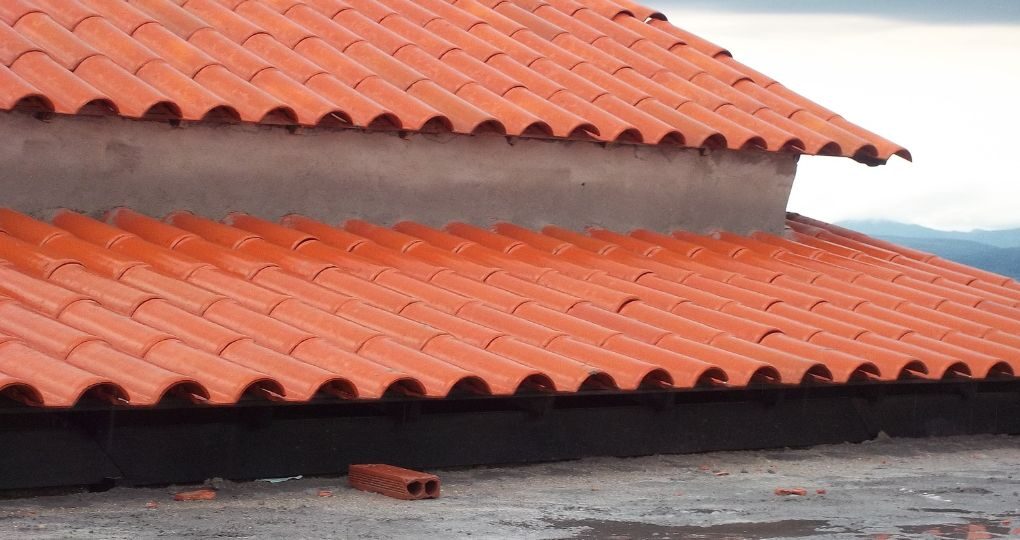
Do concrete or terracotta tiles withstand wind well?
Tiles can offer good resistance, but it all depends on how they are fixed.
Their main advantage is their weight. A heavy tile offers natural resistance to lifting. However, if it is not properly fixed, it can be torn off individually.
To improve wind resistance:
- The tiles must be mechanically fixed, not simply laid down.
- The outlying areas need to be reinforced.
- The roof slope must be adapted
Concrete tiles are often more stable than lighter traditional tiles.
In terms of cost:
- 50 to 100 euros per square meter for concrete tiles
- 60 to 120 euros per square meter for terracotta tiles
This type of roofing is suitable for moderately exposed areas, but requires rigorous implementation.
Is slate suitable for very windy regions?
Natural slate is dense and durable. It can withstand wind if each piece is securely fixed.
Its effectiveness depends on:
- The type of fastening used
- The spacing of the hooks or nails
- The quality of the framework
A poorly fixed slate can come loose, even if the material is robust.
Its main drawback is its significant weight, which requires a suitable structure.
Regarding the budget:
- 100 to 180 euros per square meter for natural slate
- The cost may increase depending on the complexity of the installation.
It is suitable for exposed areas if the implementation is flawless.
Does the shape of the roof influence wind resistance?
Yes, the shape of the roof plays a crucial role.
A hipped roof It withstands wind better than a gable roof with large gables. The simple, compact shapes reduce the pressure exerted by gusts.
Elements that improve overall resistance:
- A moderate slope
- Few spills
- Reinforced corner fixing
- Good airtightness
A concrete example: a house with a compact, metal roof will be much less vulnerable than a large roof with wide overhangs and poorly fixed elements.
Before choosing a material, it is therefore necessary to analyze:
- The geographical area
- Exposure to the wind
- The height of the building
- The quality of the existing structure
The material is important, but the overall design of the roof is just as important.
How to reinforce an existing roof against wind?
If your roof is already in place, it's possible to improve its resistance without replacing everything. Much wind damage stems from insufficient fastening or a lack of reinforcement in vulnerable areas.
Here are the most effective solutions:
- Add additional mechanical fixings to the edges and corners
- Reinforce the anchor points between the frame and the walls
- Install metal connecting fasteners
- Replace any weakened or poorly secured components
Regular inspections also help to anticipate problems. A cracked tile or a poorly fixed panel becomes a weak point during a storm.
The cost of reinforcement generally varies between 20 and 60 euros per square meter depending on the work required.
How important are the fixings in wind resistance?
The material alone does not guarantee strength. The fixing is often the determining factor.
A roof can be of very good quality, but if the elements are not properly anchored, the wind can quickly tear them off.
Key points to check:
- Type of screws or hooks used
- Anchoring depth in the structure
- Fastener spacing
- Strengthening of peripheral areas
In highly exposed areas, the fixings are more numerous and closer together. This density significantly improves resistance to uplift.
A suitable fastening system can significantly increase the overall performance of the roof, even without changing the material.
Are wind resistance standards and tests important?
Yes, they are essential for comparing solutions.
Reputable manufacturers test their products in the laboratory to measure their ability to withstand uplift and extreme gusts.
These tests allow us to determine:
- The maximum wind speed that can be supported
- The behavior of the material under prolonged pressure
- The strength of the fasteners
A roof designed to withstand speeds of over 200 km/h provides additional safety in exposed areas.
Before making a choice, it is advisable to ask for the product's certified performance. This avoids unpleasant surprises.
What budget should be allocated for a wind-resistant roof?
The cost depends on the material, the complexity of the construction site and the reinforcements required.
On average:
- Metal roofing: 80 to 150 euros per square meter
- Concrete tiles: 50 to 100 euros per square meter
- Natural slate: 100 to 180 euros per square meter
We must also include:
- The workforce
- Any necessary structural reinforcements
- Reinforced fastening systems
Investing in a more resistant roof may seem more expensive initially, but it greatly reduces the risk of repairs after a storm.
In very windy areas, choosing a suitable solution is first and foremost a matter of safety and durability.