Our article in brief
- Before decorating, we look at two things: the coat material (stone, brick, marble, wood) and the fact that the The hearth still serves Or not. Everything else follows from that.
- On the tablet, a composition that holds together relies on three gestures: a centerpiece (mirror or painting), some different heights, and the space left empty.
- A condemned home it is not a black hole: candles, wickerwork, ceramics, stacked wood or dark paint inside make it a focal point.
- To change scale, two levers: the painted fireplace (fast, reversible) and the facing (stone, terracotta, tiles, lime plaster).
- THE fireplace accessories — servant, log basket, spark screen — are decorations in their own right: choose them to be seen.
There are places in a house that the eye naturally seeks out. The fireplace is one of them, even when it's not lit, even when it's been bricked up for thirty years. It's the lowest point in the room, the one around which armchairs naturally gravitate—and that's precisely why a decoration on the fireplace Failure is immediately apparent: an accumulation of knick-knacks without hierarchy, a frame too small lost in the middle of a stone mantelpiece, a gaping fireplace that one doesn't know what to do with.
I like this constraint because it has a simple solution: you don't decorate a fireplace by filling it, you decorate it by... frame. So I'll take you step by step — reading your fireplace before putting anything on it, composing the mantel, dressing up a fireplace that is no longer used, redesigning the support with paint or facing, choosing accessories that are as useful as they are effective, and evolving all of this over the seasons without buying anything new.
Read your fireplace before placing the first object
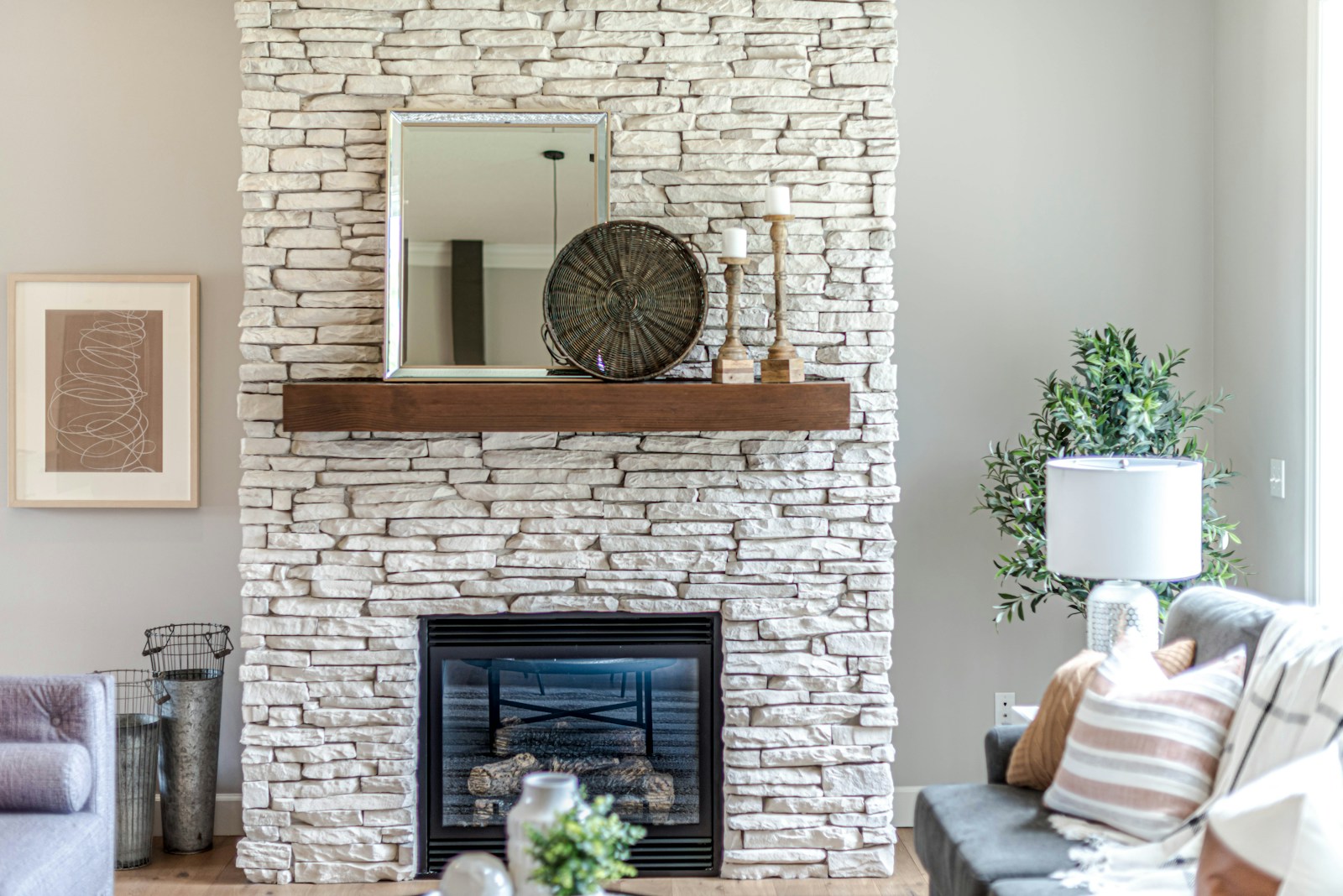
A fireplace isn't a shelf. It's a volume, a material, a history—often that of the house itself. Before you bring out the vases, look at it as an object: what is it made of, how much space does it occupy on the wall, and is it still used? These three answers immediately dispel most bad ideas.
What the material tells us: stone, brick, marble, wood
Each subject sets its own pace. One limestone beige, porous and irregular, calls for objects of the same family — terracotta, linen, basketry, raw wood — and does not tolerate very shiny surfaces well, which make it appear dull by contrast.
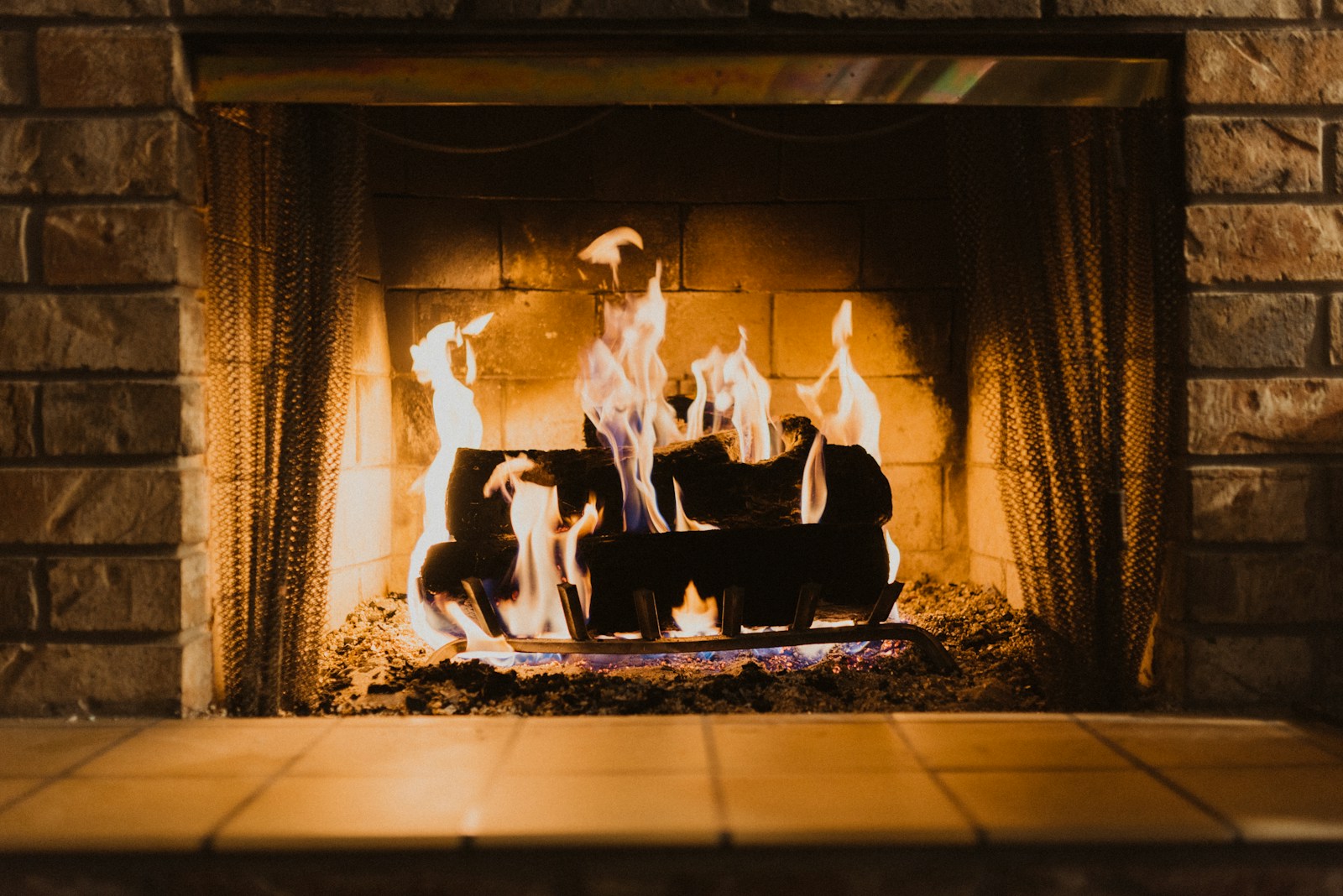
There red brick, It, however, is already a strong color: it leans towards orange and overwhelms any warm tones added to it. It's better to counteract it—with deep green, matte black, or cream—than to pair it with terracotta, otherwise everything will be lost. marble It plays the opposite role: veined, reflective, somewhat solemn, it likes emptiness around it and two or three distinct objects. As for a solid wood mantel, It is very forgiving, including dense compositions and patinated objects.
| Coat material | A palette that highlights her | Items to prioritize | That's what turns it off. |
|---|---|---|---|
| Limestone, tufa | Off-white, sand, olive green, terracotta | Matte ceramics, linen, basketry, driftwood | Chrome and shiny plastics |
| Red brick | Deep green, matte black, cream, brass | Black frames, smoked glass, foliage | Oranges and reds near the brick |
| White or grey veined marble | Off-white, grey, black, discreet gold | Mirror, sculpture, a large unique vase | Accumulation of small trinkets |
| Solid wood, old beam | Browns, ochres, slate blue, patinated brass | Vintage items, books, pottery, textiles | High-gloss finish |
| Painted plaster or stucco | Tone-on-tone with the wall, or a stark contrast | Graphic frames, glassware, plants | Heavy objects on a thin shelf |
Is the fireplace still working?
This is the crucial question, yet it's often overlooked. On a working fireplace, the mantel and the wall above it heat up: place heat-resistant materials there—metal, ceramic, stone, thick glass—and keep unprotected candles, dried foliage, and resin frames away from the hearth. A light arrangement, which can be removed in ten seconds before lighting, is far better than a static display.
On a blocked or purely decorative fireplace, there is complete freedom: the hearth becomes a niche, the mantel a console. This is also the most frequent case in old apartments, where the hearth has been blocked but the mantel has been preserved — a stroke of luck, in fact, because it remains the most beautiful architectural element of the room.
What should I put on the mantelpiece?
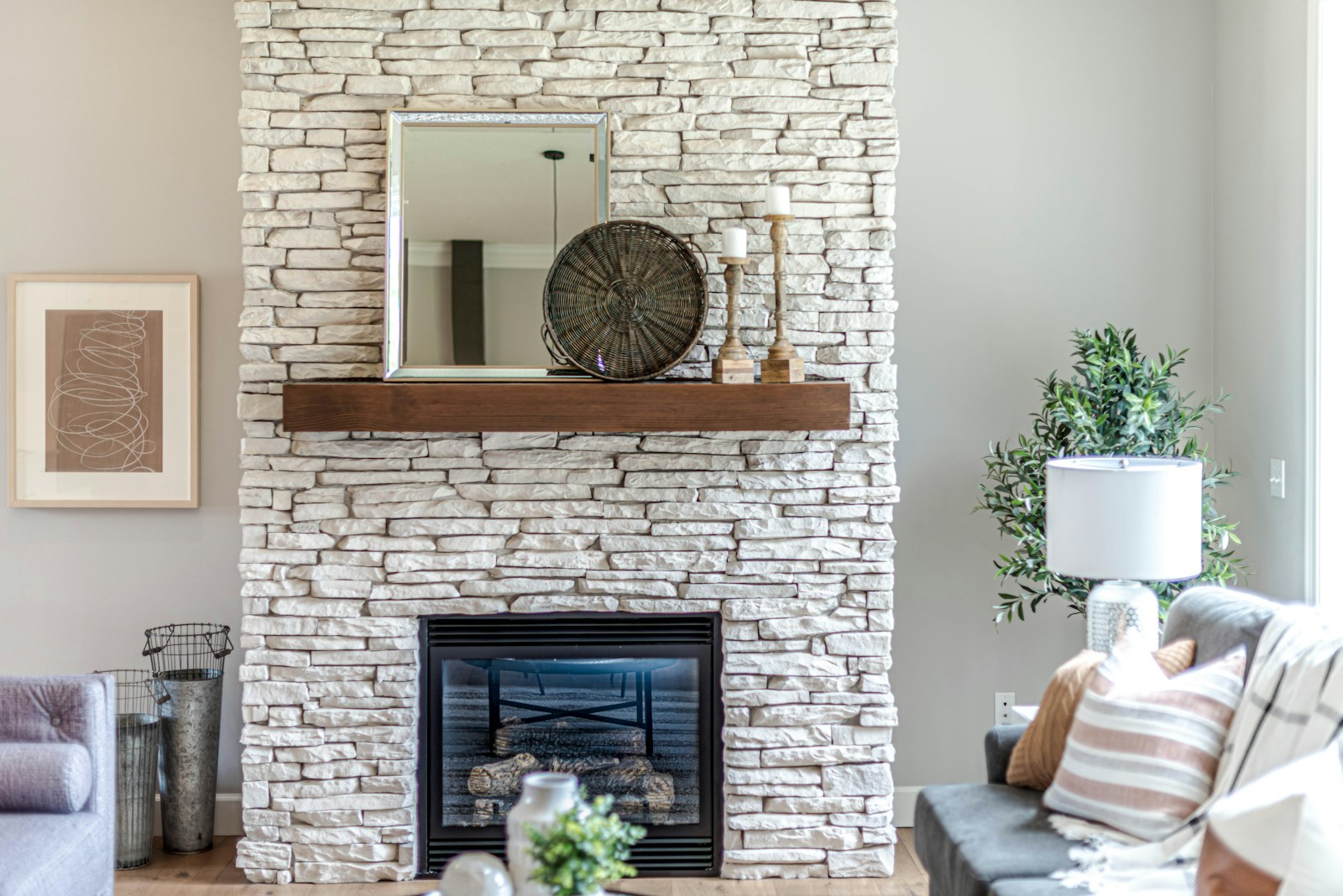
That's the real question behind the fireplace decorations What to include, and above all, how much? My answer can be summed up in one sentence—a centerpiece, two or three companion pieces of varying heights, and deliberate emptiness. Emptiness is not a lack; it's what gives value to what remains.
Mirror, painting, or nothing at all?
The wall above the mantelpiece is a natural frame, and it deserves a single, decisive action. mirror is the most generous option: it reflects light, doubles the depth of the room and makes small living rooms feel more spacious. Round, it softens a very geometric fireplace; rectangular and placed upright against the wall, it visually lengthens the space.
THE painting Tells a different story: it personalizes, it adds color, it draws the eye. A single large piece almost always works better than a series of small frames, which quickly look like a forgotten collage. And then there's the third way, my favorite for antique marble or carved stone fireplaces: put nothing above it, let the architecture speak for itself. In any case, a sense of scale helps avoid the classic mistake—your centerpiece should occupy about two-thirds of the mantel's width. Any smaller and it floats; any larger and it overwhelms.
Three heights, odd numbers, a little depth
A successful tablet is constructed like a small still life. Here are the three steps, in order:
- Place the highest point. Mirror, painting, or large vase of branches: it's the mirror that establishes the vertical line. Offset it slightly from the center if you want a lively rather than a static composition.
- Add the average heights. Two or three objects, never aligned at the same height: a slender candlestick, a plump ceramic, a stack of three bound books.
- Finish with the bottom and the depth. A small object placed in front of a larger one, a slightly overlapping frame, a flat bowl. It is this overlapping that prevents the "row of soldiers" effect.
Two key points complete the method. odd numbers — three, five objects — create an imbalance that the eye reads as natural. And the choice between symmetry and asymmetry depends on the piece of furniture: a period fireplace, with its moldings, supports two identical candlesticks framing a mirror very well; a contemporary fireplace is boring in symmetry and benefits from being composed in a stepped fashion, all on one third of the mantel.
A fireplace doesn't need to be lit to warm a room: you just need to want to stop and look at it.
Objects that almost always work
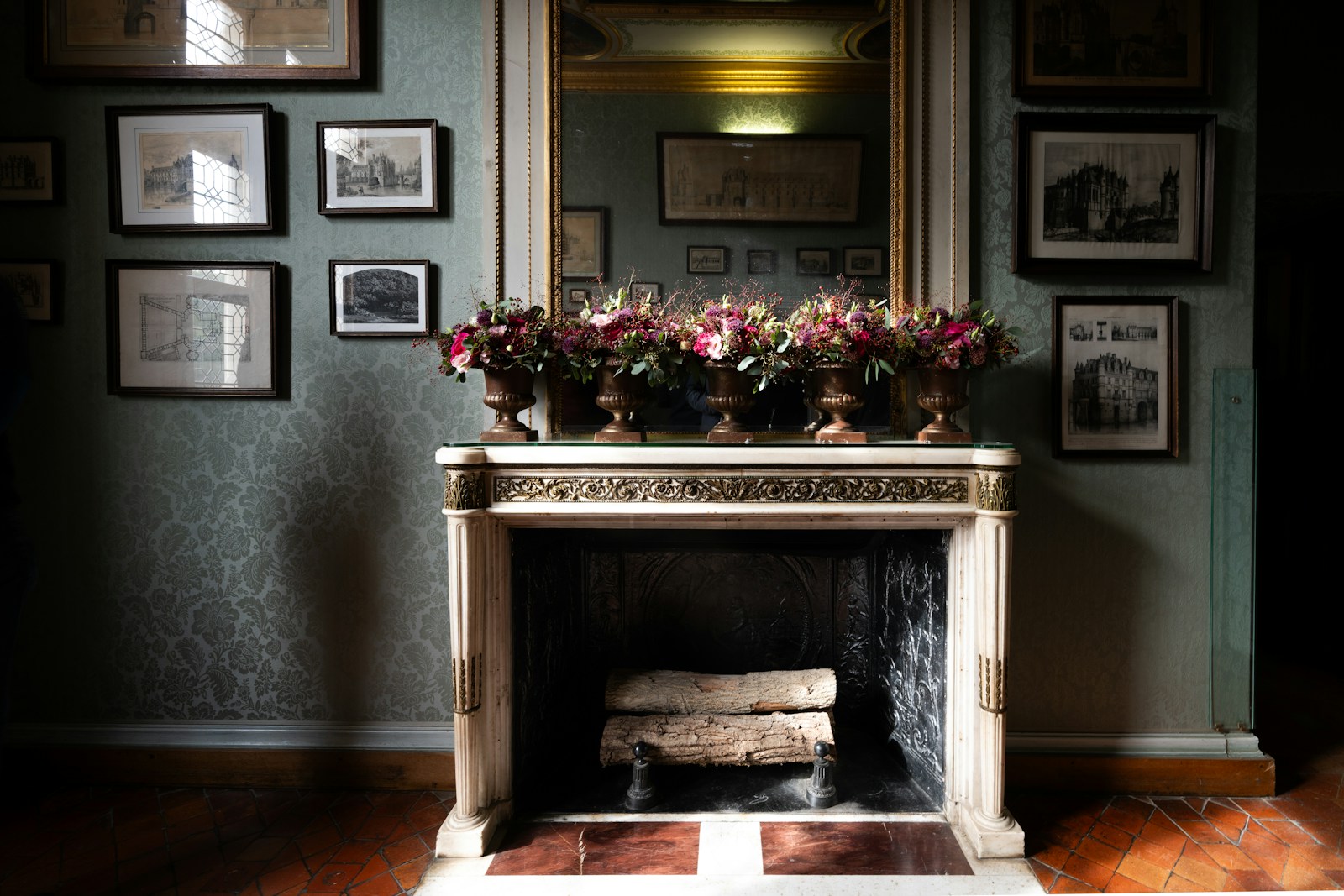
If I had to keep a small collection of versatile decorative objects, it would be these — materials, more than specific references. They blend together, transcend styles, and can be endlessly recomposed:
- Ceramics and terracotta : a bulbous vase, a miniature jar, a cup. The terracotta provides immediate warmth over a light-colored coat.
- Candlesticks, in brass, turned wood, or glass. A lantern candle Sometimes, simply placing it at one end is enough to hold the entire composition.
- The plant Dried eucalyptus, olive branch, monstera in a wicker pot. It breaks up the mineral rigidity of the stone.
- The vintage items : an antique hand mirror, a small wooden sculpture, a brass tray - these are what give it an inhabited look.
- The books, Flat, in threes: the most discreet and effective base for raising an object.
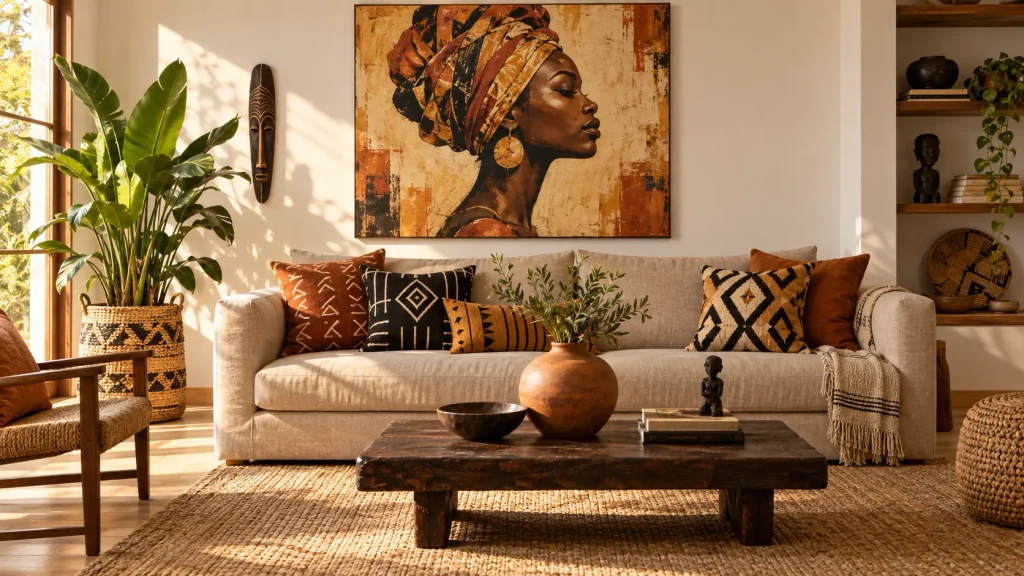
It's also the right terrain for a ethnic chic decor : a few well-spaced handcrafted pieces, a dominant natural material, and you get a coat that travels without ever falling into the postcard setting.
💡 Tip — Take a picture of your coat with your phone once you've finished, then look at the black and white photo. Without the colors, any volume imbalances and holes are immediately obvious. It's the test I use before taking a step back.
Decorating a condemned (or out-of-season) fireplace
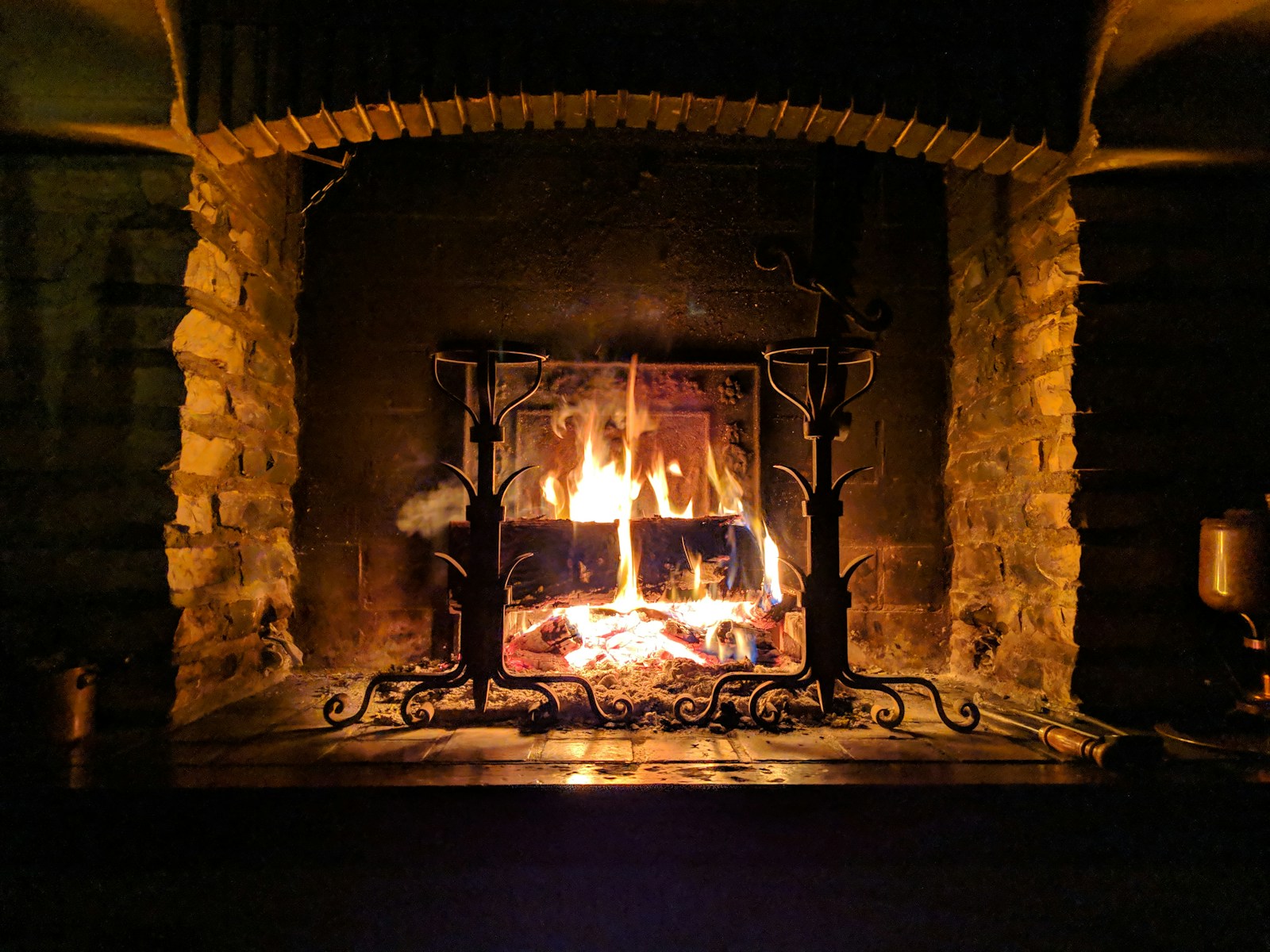
An empty, blackened hearth is the weak point of many living rooms. Yet, it's also the most beautiful niche in the house: framed, recessed, with a depth of shadow that nothing can replace. Whether the fireplace has been walled up for a long time or is simply out of use from May to October, the principle is the same—fill the void with a single idea, not five.
Video: How to decorate a fireplace that is no longer in use (DOYOUNO Maison).
Candles, lanterns and stacked wood
It's the most evocative gesture, because it recreates the light of the fire without the fire. A group of pillar candles Lanterns of varying diameters and heights, placed directly on the hearth or on a metal tray, transform the fireplace back into a warm hearth. Glass and metal lanterns serve the same purpose, with the added benefit of protecting the flame; LED models address safety concerns when children are present.
The other classic is the stacked wood. Logs stacked tightly together, cut to the same length, with the visible sections facing forward: the graphic effect of the round logs is magnificent and completely free. On a blocked-off fireplace, you can even just use a single row on the front, without filling the entire depth.
Baskets, ceramics and dried plants
A big wicker basket A woven rush basket gently fills the space and serves various purposes: storing blankets, magazines, or logs. Two baskets of different sizes are better than one centered basket. Similarly, a large terracotta jar or a pair of stoneware vases placed in the opening create a sculptural focal point, especially if the back of the fireplace is dark.
THE dried vegetable Deserves special mention: sheaves of wheat, cotton branches, pampas grass, eucalyptus foliage. It lasts for months, requires nothing, and its graphic silhouette works equally well in a Mediterranean interior or a contemporary living room. Obviously, reserve it for fireplaces that are no longer in use.
Painting the interior of the fireplace
This is the most radical intervention, and the one we dare the least. Painting the back and sides of the hearth in matte black A deep wash erases soot, unifies a motley masonry, and transforms the hollow into a velvety flat surface: objects placed in front of it finally stand out. Conversely, a chalky white or a muted green makes the hearth a small, bright alcove. On a condemned hearth, a matte mineral paint suffices; on a working hearth, a product designed for high temperatures is necessary—and it's best to refrain from using it if you're unsure of the surface.
Painted fireplace, facing, designer fireplace
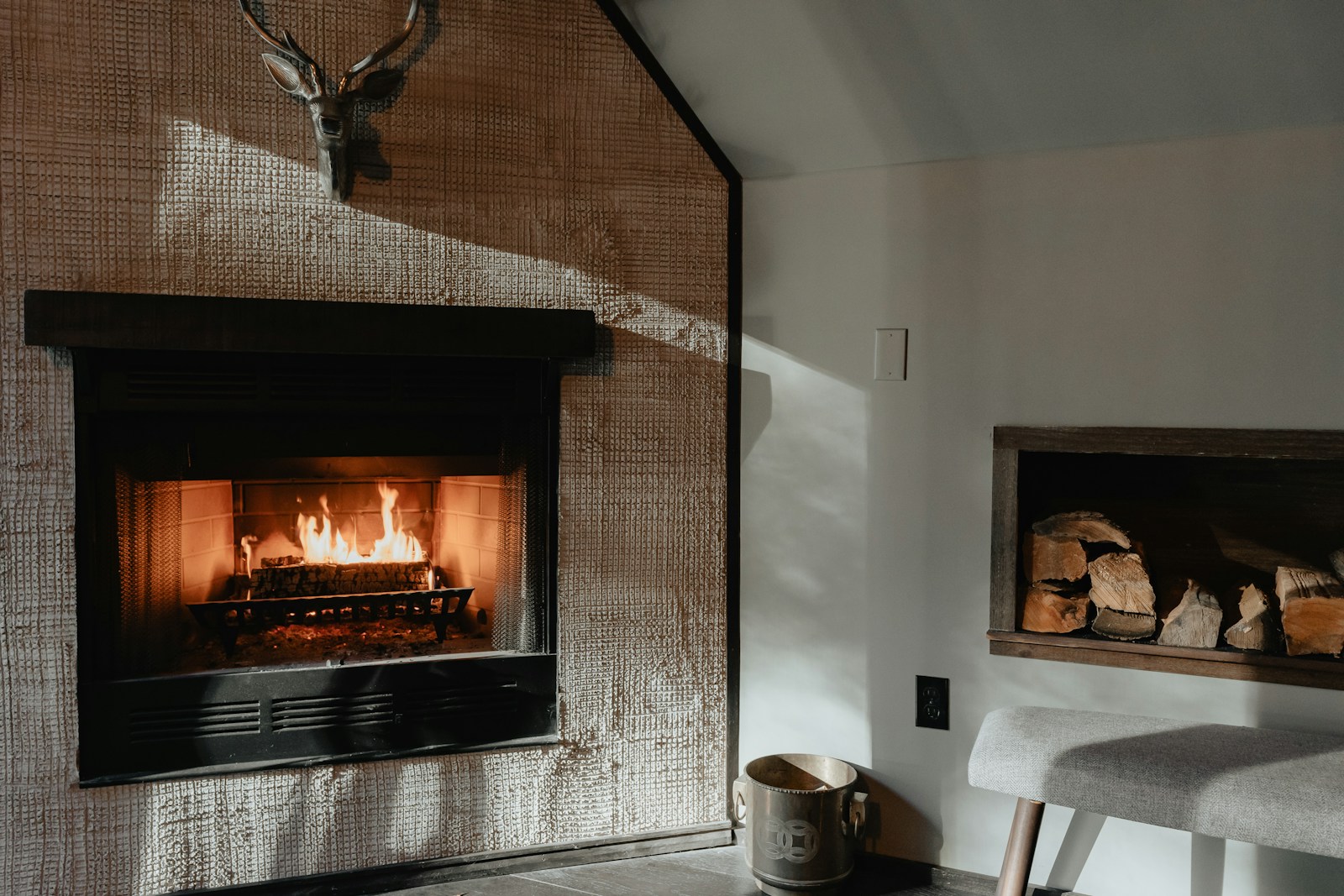
Sometimes, no object will save the day: the fireplace itself is the problem. A 1970s block of orange reconstituted stone, a dull marble top, a disproportionately large plaster hood. At this point, you're not just decorating, you're giving it a makeover—through paint or cladding, two very different approaches in terms of commitment.
Painted fireplace: the fastest lever
There painted fireplace This is the most dramatic transformation relative to the effort required. A lime wash on a brick or stone allows the grain to show through and softens the color without masking it—this is the famous whitewashed effect, and lime has the advantage of remaining permeable to water vapor, thus allowing a mineral surface to breathe. An opaque matte paint, on the other hand, makes everything disappear: on a solid, unattractive block, this is often the best thing you can do for it.
Two points to note. On a smooth, low-absorbency surface such as the marble, Nothing adheres without a primer designed for difficult surfaces: that's where the durability depends. As for colors, matte black, off-white, and deep greens remain the safest bets — they make the fireplace appear as an architectural volume, not as a piece of furniture.
Fireplace surround and design bias
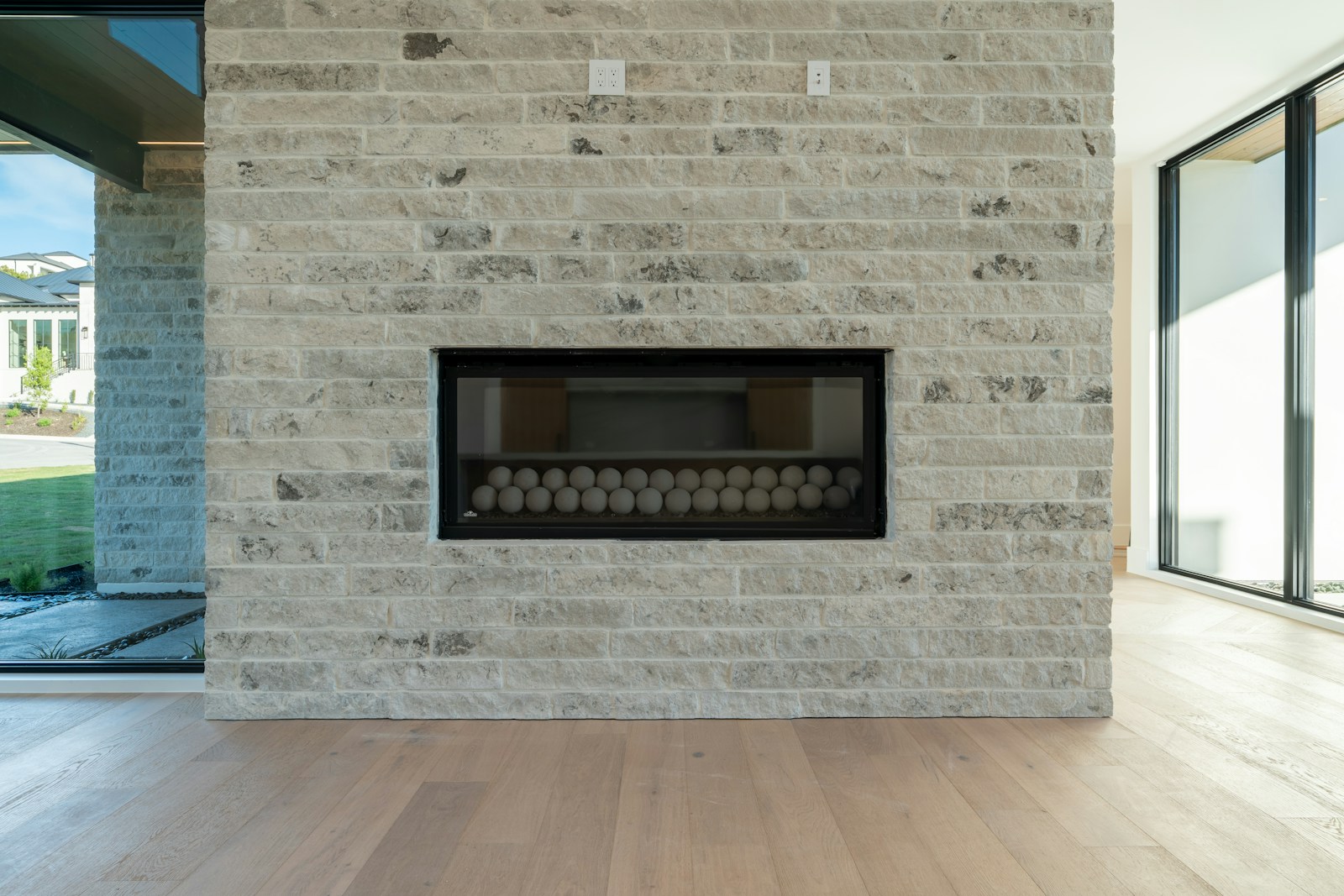
THE fireplace surround completely changes the perceived material. Natural stone slabs provide relief and shadow; terracotta or reclaimed brick slabs bring the irregularity that modern blocks lack; tiles—zellige, cement tiles, glazed tesserae—introduce visible color and craftsmanship; finally, a lime plaster or polished concrete sculpts the whole into a single continuous volume, very beautiful when paired with dark wood. To understand the behavior of these materials, the Technical center for natural building materials documents terracotta, raw earth and natural stone.
Side designer fireplace, The underlying trend is clear: either the mantelpiece is concealed—same color as the wall, sharp edges, no molding, a simple rectangular opening for the hearth—or it is asserted as a monolith, a single block of stone or plaster that becomes a sculpture. Both approaches work; it is the middle ground, the slightly molded and somewhat modern fireplace, that gives the impression of an unfinished construction site.
A word of caution, because this goes beyond simple decoration: any alteration to the structure, ductwork, or appearance of a facade may require authorization, depending on the circumstances, and the building's bylaws will have a say. Check with your local town hall and consult the relevant information sheet. prior declaration of works before launching anything irreversible. A simple facing glued onto the existing structure remains, for its part, in the realm of decoration.
Accessories and fireplace corner, season after season
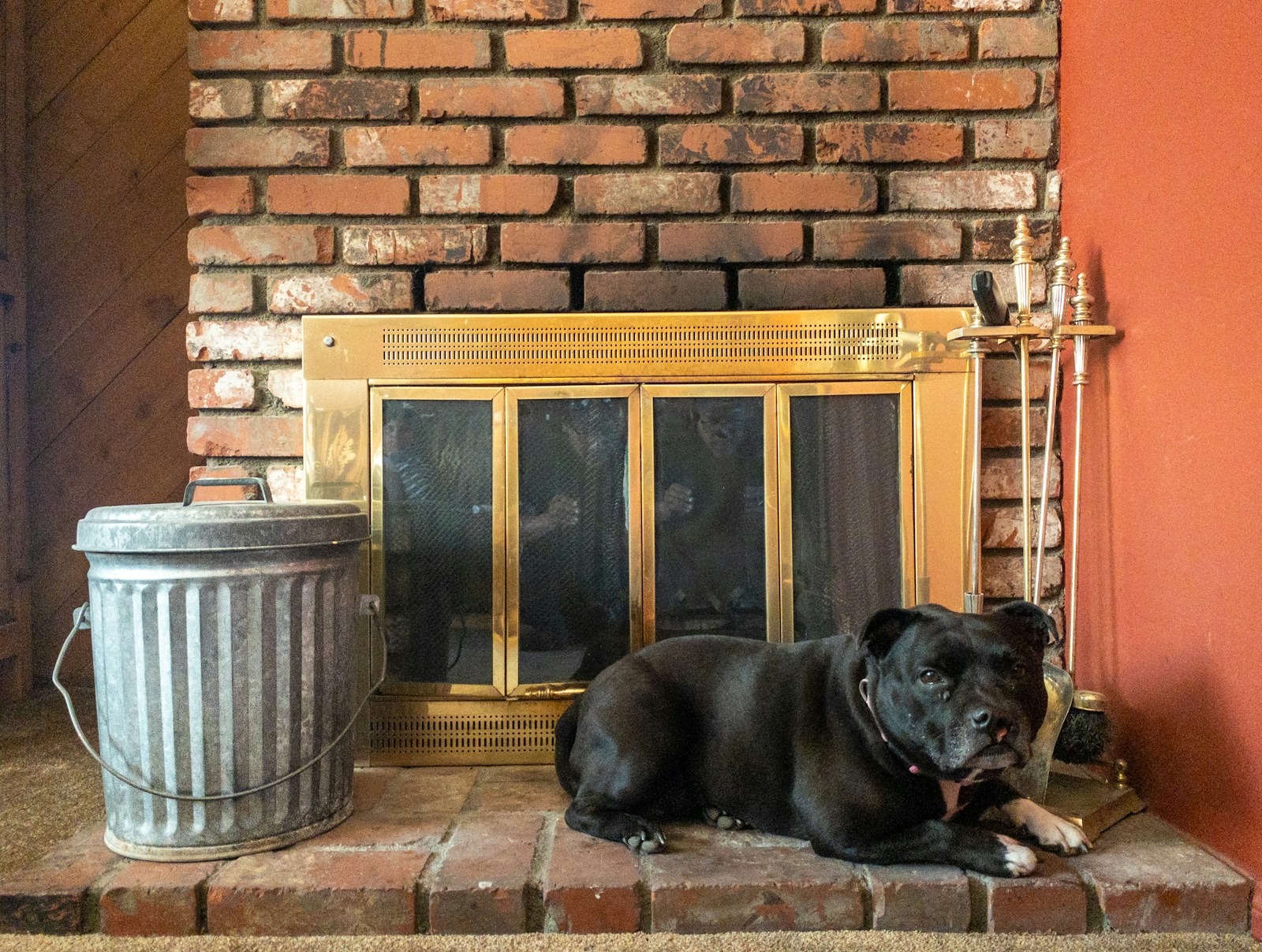
We talk a lot about the tablet, rarely about what lives around it. That's a shame, because the fireplace accessories They are visible all year round and contribute significantly to the ambiance. Fireplace and accessories form a whole: it's best to choose them as decorative objects, not as hardware.
Serving cart, log basket, spark screen
Here is the small family you need to know, and what to look for when choosing them:
- The fireplace servant : the stand that combines a fire skewer, shovel, brush and tongs. Wrought iron for a country house, brass for a classic interior, matte black steel and fine lines for a contemporary living room.
- The log basket Wicker, rush, openwork metal, thick canvas with leather handles. It's the largest piece in the fireplace corner, so it sets the tone — choose a generous one rather than a spartan one.
- The spark arrestor : a grate or screen placed in front of the fireplace. Once the fire is out, a graphic model in black metal makes a very good decoration on its own.
- The bellows and the ash bucket : everyday accessories, but hung on the wall or placed on the floor, they compose a handcrafted still life.
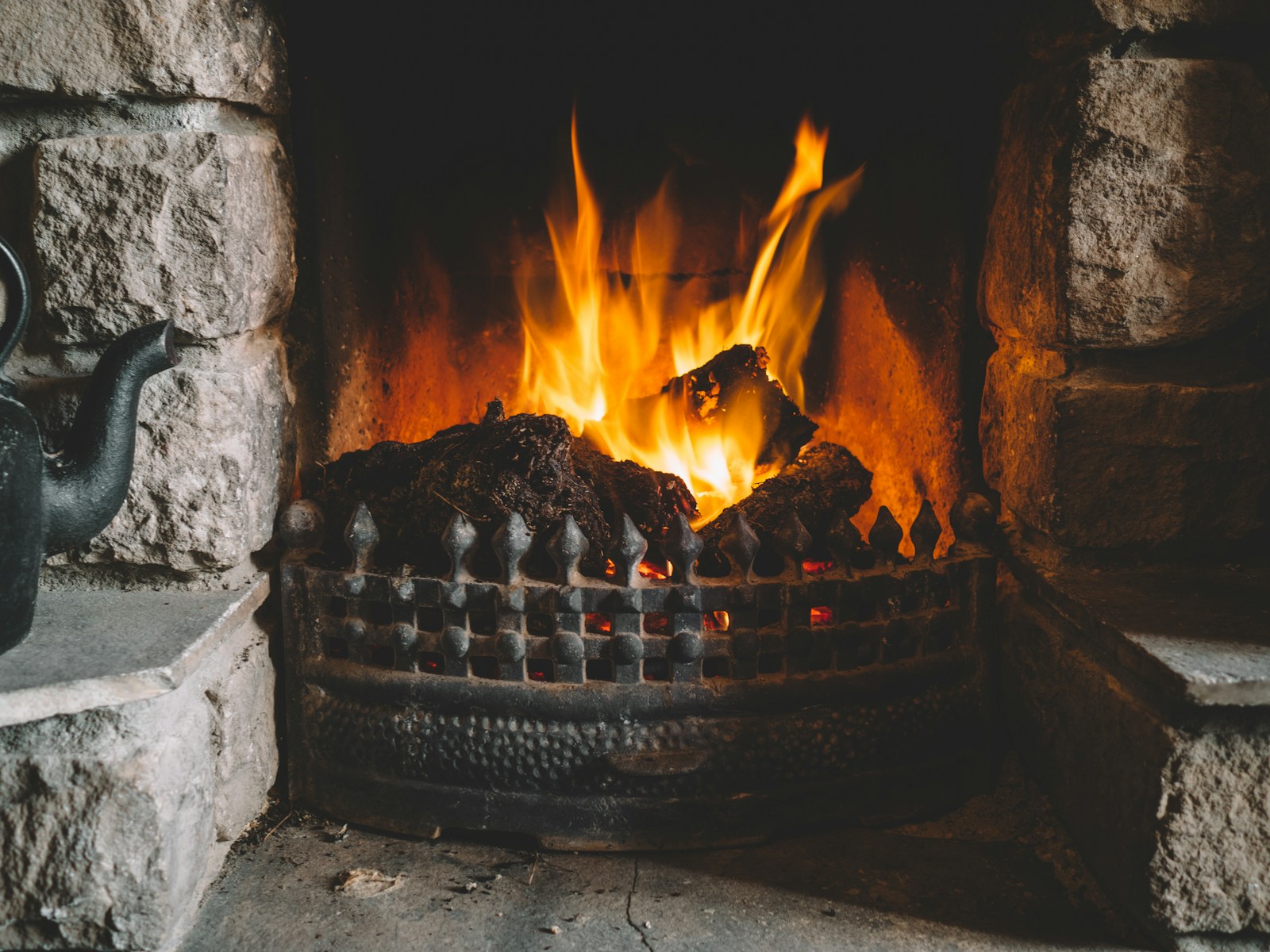
- The cast iron hearth base plate (the reluctant) and the andirons: the antique pieces found at flea markets are often the most beautiful, and they can be seen even without a blaze.
A tip for consistency: stick to a single dominant metal. Three different finishes — brass, chrome, black cast iron — in one square meter, and the whole thing immediately becomes disjointed.
And in the summer, when the fire goes out?
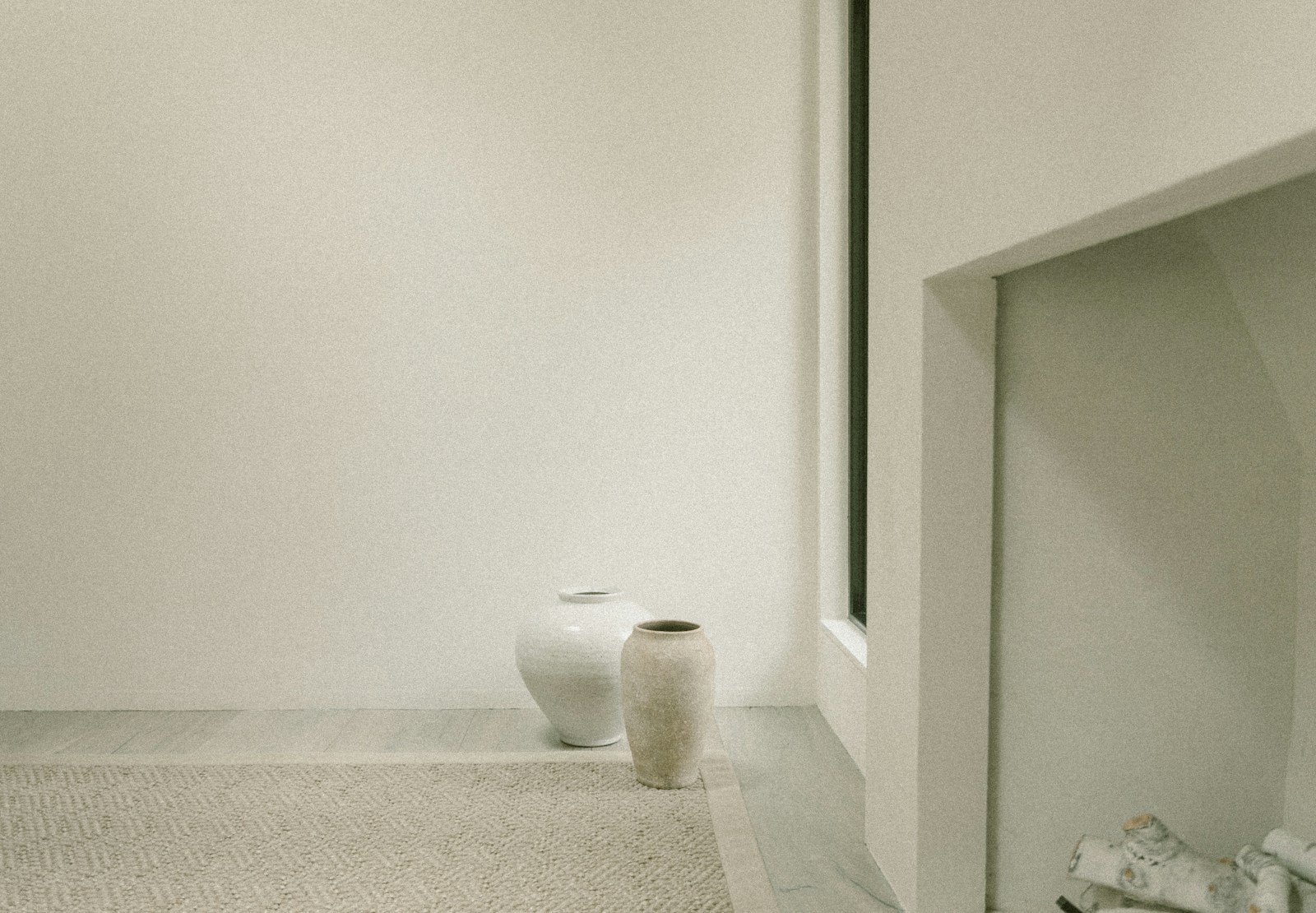
The fireplace is the only element in the living room that gets a seasonal makeover, and that's a good thing: you can refresh the atmosphere without changing any of the furniture. In summer, you empty it, clean it, and set up the lighter version—a large dried bouquet, a couple of jars, unlit candles. In autumn, decorative gourds, coppery foliage, and a wool blanket on the armchair are all you need. In winter, you return to wood, thick textures, and flames. And for the holidays, a garland of foliage on the mantelpiece, hanging stockings, two votive candle holders: the most anticipated Christmas decoration in the house.
The fireplace corner: floor, seating, light
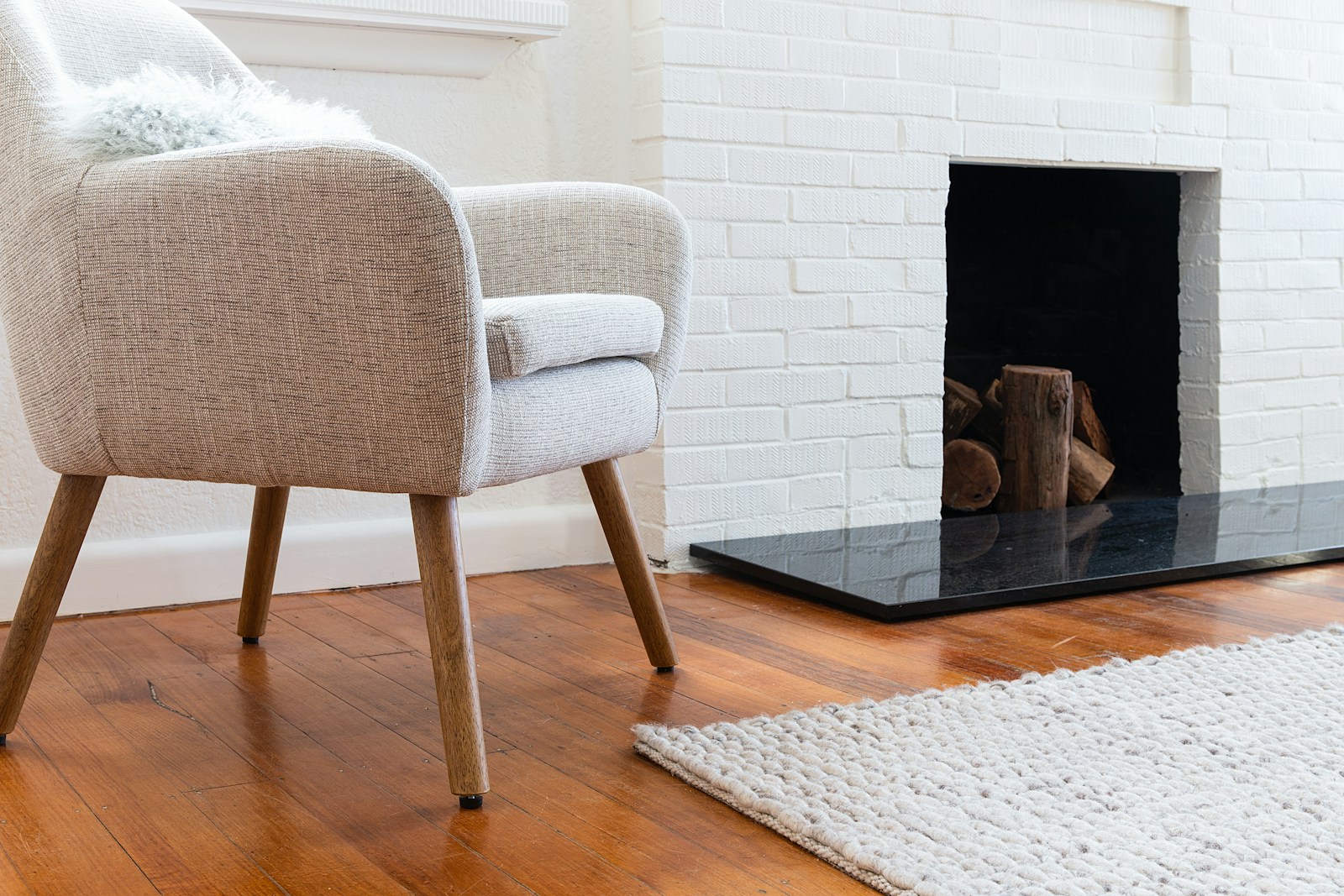
All that remains is the floor and the space in front of it. A short-pile rug placed a good distance from the fireplace, an armchair turned at a forty-five-degree angle rather than facing the wall, a small stool for a cup: this triangle is what truly makes you feel at home. Add low lighting—a table lamp on one side, two wall sconces framing the mantel—and you get that warm glow that defines a real cozy lounge. It is here, finally, that decoration ceases to be a matter of objects and becomes a way of inhabiting the room.
Looking for an interior that tells the story of a journey?
Explore the colonial styleFAQ: Your questions about fireplace decoration
What decorations should I put on a fireplace?
A statement piece above the mantelpiece (mirror or large painting), then three to five objects of varying heights on the shelf: candlesticks, ceramics, dried plants, a stack of books. Leave space between the groups and keep a single dominant material for clarity.
How to decorate a fireplace that is no longer in use?
Treat the fireplace like a decorative niche. Safe bets include a group of candles of varying heights, stacked logs with visible sections, a large wicker basket, a terracotta jar, or a dried bouquet. Painting the background matte black enhances everything else.
How to decorate an old fireplace?
Let it speak for itself. On an antique marble or carved stone fireplace, the molding already provides the decor: two symmetrical candlesticks, a mirror or nothing at all above, and a few carefully chosen antique objects. Avoid clutter, which obscures the original design.
How to give a red brick fireplace a makeover?
Three options, from the lightest to the most engaging: counter the orange with deep green, matte black or cream objects; apply a lime wash which lightens while letting the grain show through; or paint in opaque matte to completely erase the brick.
How to decorate the inside of a fireplace?
Choose a single idea and fill the space boldly: one striking object rather than ten small ones. Candles, baskets, stacked wood, ceramics, or dried plants work very well. Reserve flammable materials for fireplaces that are permanently out of service.
How to decorate a fireplace with an insert?
The finishing touches are applied to the perimeter, not the firebox. A facing of stone, brick, or lime plaster unifies the block, and a solid wood or stone shelf creates the decorative surface that is often lacking. Keep heat-sensitive items away from the glass.