Our article in brief
- There is no single price For an interior decorator: it all depends on the scope of the mission, the surface area and the chosen billing method.
- Four billing methods coexist in the profession: time past, THE flat rate per deliverable, THE percentage of the works budget and the online service.
- Decorator, interior designer and home decor coaches do not sell the same thing: comparing their prices without comparing their services makes no sense.
- A estimate It is judged on its deliverables: number of round trips, purchasing management, potential supplier commissions.
- The only reliable estimate for your project is one provided in your name. We intentionally do not publish any such estimates here.
«"How much does an interior decorator cost?" This is the question I get asked most often in my conversations with you, right after the one about colors. And it's also the one I refuse to answer with a random figure. Because between an hour of consultation in your living room and a complete project overseen right up to the curtains being hung, we're not talking about the same profession—and therefore not the same budget.
You'll find round price ranges everywhere, copied from one site to another, mixing services that have no connection to each other. I prefer to give you something else: the reading grid. What makes the bill go up or down, the billing methods that actually exist, the difference between a decorator and a interior designer, and the questions to ask before signing. With this, the quote you receive will no longer be a mysterious number: it will be a proposal that you can evaluate.
Interior decorator prices: what really makes the difference?

A decorating price is never a catalog price: it's the result of an equation where you control most of the unknowns. Understanding these variables means taking back control of your budget: you're no longer subject to a fixed amount, you choose what you buy.
The scope of the mission, the primary lever for the budget

This is by far the number one factor, because the gap in workload between the two extremes of the profession is immense. On one side, a short consultation The professional comes, observes, listens, and you leave with some leads. On the other hand, a mission complete : survey of existing conditions, layout plan, mood board, choice of materials, selection of suppliers, orders and site monitoring until reception.
Between the two, a whole range: the mood board The site plan alone, the shopping assistance alone. Each additional step adds hours, and therefore the cost. This is why the same professional can quote very different prices depending on your specific requests, without changing their base rate one iota.
Surface area, number of rooms and level of customization
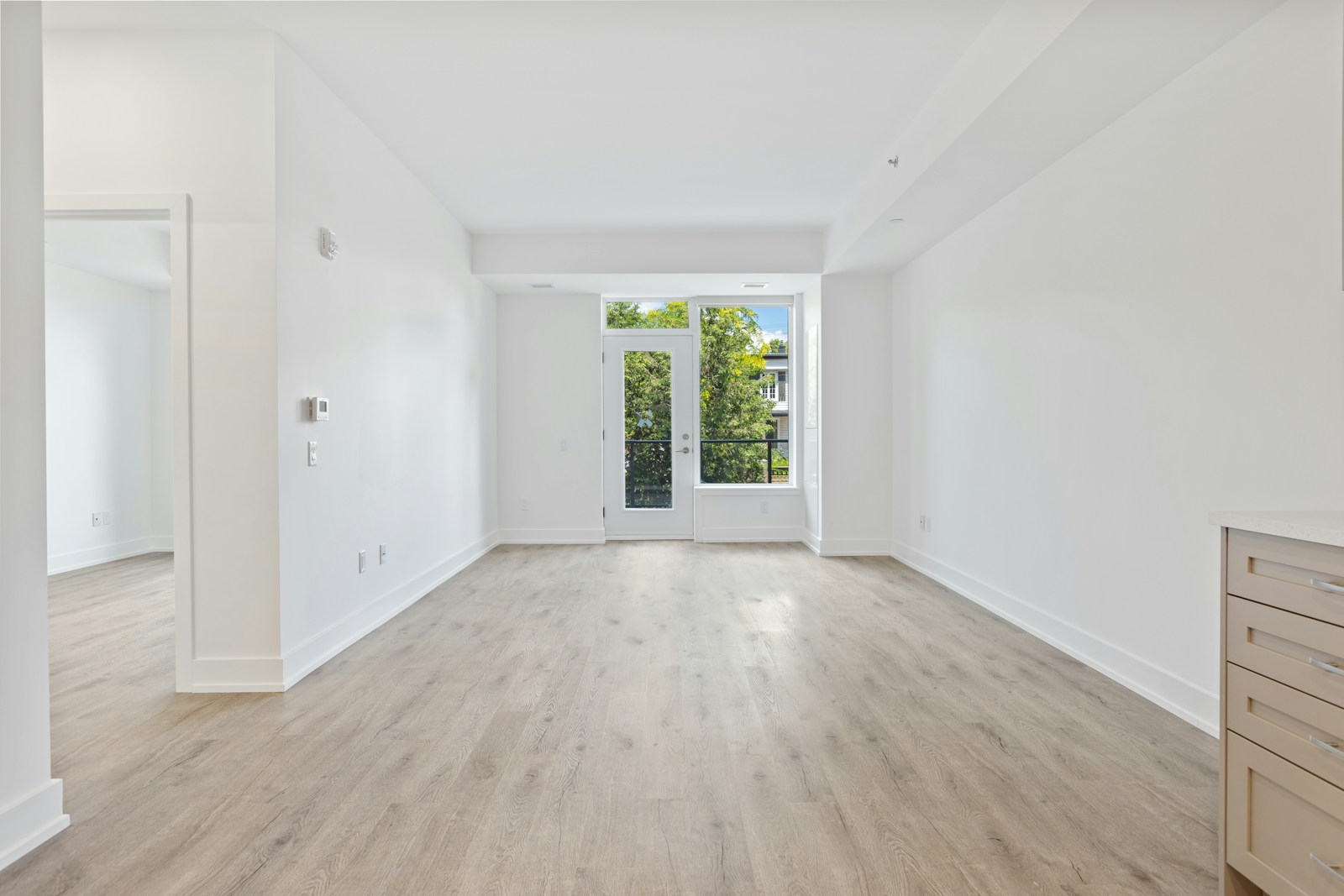
A studio apartment and a family home don't require the same amount of design time. But it's not just the surface area that matters: it's the number of pieces and their complexity. Three identical bedrooms are dealt with more quickly than a kitchen open to a living room constrained by circulation, and a bathroom requires technical choices (location, connections, coverings) that a living room does not impose.
Next comes the level of customization. A project assembled using store-brand references takes shape more quickly than a bespoke interior, with custom-made furniture, a craftsman to brief, and materials to source. If you dream of a solid wood sideboard tailored to your wall, the research is part of the service—and it comes at a price. As with the choice of a sofa that structures an entire living room, Custom-made products require time before money is needed.
Finally, three more discrete variables are added: the shift, The geographical area and the professional's experience are important factors. A decorator who has been established for fifteen years, with a substantial portfolio and a network of artisans, does not position herself as someone who is just starting out.
Why are the price ranges found online so wide?
Because they add up incomparable things. The same article places side-by-side the price of a consultation visit and that of a complete renovation project, then averages them out. The result is arithmetically correct but practically useless: it tells you nothing about your project.
There's also a less obvious bias: many of these price ranges come from platforms that themselves sell matchmaking services. They describe their own offering, not the market. Therefore, you won't find any figures on this page: an amount taken out of context would serve as an anchor, and you would judge an honest quote as "too expensive" and a flimsy proposal as "reasonable.".
A decoration award is never read in isolation. It is always read alongside a list of its contents.
The four ways to charge for a decorating service

There's no set pricing structure in this profession: each professional sets their own rates. Four models are commonly used, and knowing how to recognize them makes all the difference. It's not a question of expensive or inexpensive, but of...’adequacy : a poorly chosen billing method will make you pay for too much support, or not enough.
Hourly rate: you pay for the time spent
The most legible of the four. The professional announces a hourly rate and bills you for the hours spent: visits, research, calls to suppliers. An ideal solution when the need is occasional — a doubt about a color, an opinion on a plan you've already drawn up, a part that doesn't work and no one knows why.
The key point to be aware of is clear: without a limit, the bill remains open. So ask for a estimate of the number of hours And, above all, what is included in the billing? The travel time? The emails between appointments? The written report? These factors are worth more than the price itself.
The package: you pay for a defined deliverable
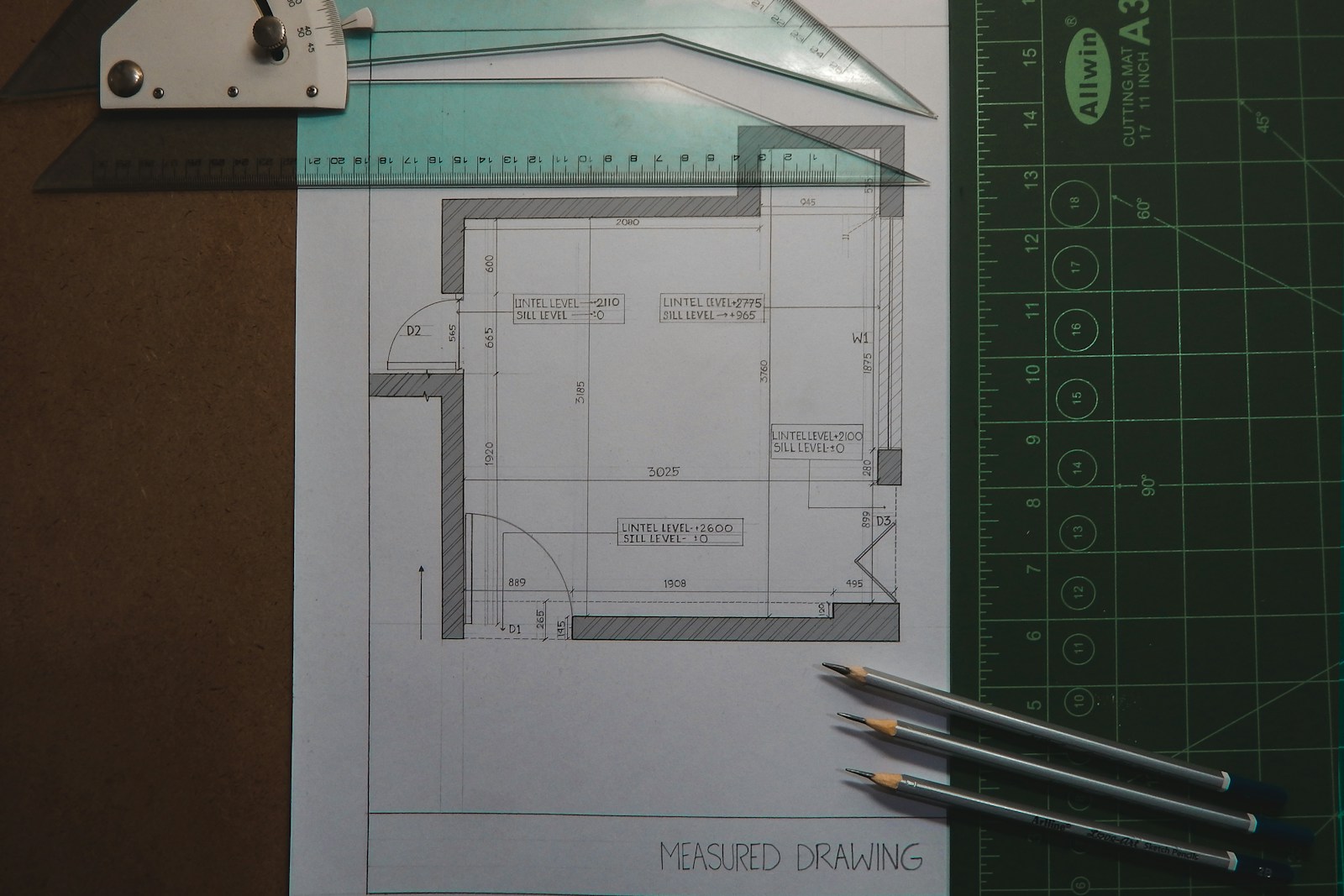
Here, we no longer sell time, but a result A mood board for the bedroom, a floor plan for the living room, a complete file for the apartment. Often broken down "by room," this model is the most reassuring for an individual, because the price is known in advance and will not change.
On one condition: that the deliverable is precisely described. A "mood board" package might refer to an inspirational image or a document listing each item, its supplier, and its dimensions. These are not the same thing. Also, ask for the number of...«round trips included: this is almost always where misunderstandings arise.
The percentage of the construction budget: you pay per project
For projects that include construction work, fees are often expressed in percentage of the project amount. The logic is sound: the larger the project, the more complex the coordination. This is the classic model of comprehensive, monitored projects, and it aligns the professional's focus with the smooth execution of the project rather than their working hours.
Two things absolutely need to be clarified. First, the calculation basis Does the percentage apply to the pre-tax amount of the work, including or excluding furniture, before or after unforeseen expenses? Furthermore, what happens to the percentage if the budget overruns: does it remain fixed at the initial estimate, or does it adjust accordingly? On a large-scale renovation, This clause carries significant weight.
The online service: you pay for a board remotely

This is the newest model, and often the most affordable. You submit photos, measurements, and your preferences via a form; you receive a mood board, a plan, and a shopping list. Some services operate on a pay-per-use basis. flat rate per piece, Others offer subscription-based access to a wealth of advice. For a first room or a remote project, it's a serious entry point.
Its limitation is structural: no one comes to the site. And the harsh light of late afternoon, an uneven ceiling, or the echo of an empty room can't be seen in a photograph. So, if you're not satisfied with the result, check what happens: revision included, a new proposal, or nothing at all.
| Billing method | How it works | Who does this suit? | The point to check |
|---|---|---|---|
| Hourly rate | You pay for the hours actually used. | A one-off need, an opinion on a project already underway | The estimated number of hours and what is included (travel, emails) |
| Flat rate per item or per deliverable | Fixed amount for a pre-defined deliverable | A room to be repaired, a clearly defined need | The exact content of the deliverable and the number of round trips |
| Percentage of the budget for the works | The fees are based on the cost of the project. | A complete project including construction and monitoring | The basis for calculation and its fate in the event of budget overruns |
| Online service or subscription | You send photos and measurements, you receive a file | Small scope, remote project, desire to execute it oneself | No visit required and all revisions included |
💡 Tip Before your first call, write down in three lines what you expect: the room(s) involved, what you want to receive (ideas? a plan? a shopping list?), and whether you're planning any work. Professionals will respond much faster, and their responses will be comparable.
Decorator, interior designer, or decorating coach: who does what?

This is the most costly misconception on the subject. People compare a decorator's quote to an interior designer's, are surprised by the difference, and conclude that one is too expensive. In reality, they're comparing a mood board to a construction site. Putting each profession in its proper place is the best way to avoid paying for what you don't need.
The interior decorator: the atmosphere, the materials, the finishes

His domain is what can be seen and touched: colors, furniture, textiles, light, objects. According to the job description of the’Onisep dedicated to interior decorators, The professional begins by listening to the client's needs, produces successive sketches—in pencil or 3D—then can request quotes from the relevant tradespeople and coordinate their work. The minimum entry requirement for this profession is a two-year post-secondary degree, and it can be practiced as a freelancer or as an employee.
In other words: the decorator doesn't alter the structure, but they also don't just "choose cushions." They consider the furniture layout, the harmony of materials, and the flow of movement. They are the right person to talk to if your walls are staying where they are and it's the...«atmosphere which needs to change — like when you try to give a room a truly calming identity.
The interior designer: volumes, plans, the construction site
The technical complexity has increased, and the price reflects this. (The specifications) Onisep for interior designers describes a professional who takes measurements and creates a site survey plan, develops cross-section, elevation and layout plans, produces a financial estimate, and then becomes project manager He selects service providers, organizes site meetings, prepares the minutes, and issues the acceptance report for the completed work. The minimum entry requirement is a four-year university degree (bac+4), with the option of working as a freelancer or an employee.
You need him as soon as you need him affecting volumes : knocking down a partition wall, moving a kitchen, creating a bathroom, converting an attic. His mission entails responsibility for technical choices, which explains both the cost and the importance of verifying the insurance which cover the intervention.
Interior design coach: why is it the most accessible option?

Because a decorating coach doesn't create your project: they help you create it. They come, observe, ask questions, give you ideas, color combinations, and layout principles—and you're the one who buys, moves, and hangs things. The deliverable is lighter, the time spent is shorter, and the bill is logically lower.
If we rank the three jobs from the most accessible to the most engaging, the order is almost always the same: interior design coach, Then interior decorator, Then interior designer. Not because one is better than the other, but because each takes on a growing share of the work—and the risk. The real calculation, therefore, is not "which one costs the least," but "how much work am I capable of doing myself.".
In video: "Why hire an interior decorator: the benefits" (Elodie Petard channel — Réussir son intérieur).
Read a quote and get a fair price for your project

Here we are: the only way to get a valid figure is to ask for it. And the only way to compare it is to know what you're reading. Ask for it. several quotes — two or three are enough — giving each one exactly the same brief. Without this common ground, you're not comparing prices: you're comparing interpretations of your request.
What a decorating quote should state in black and white
- THE perimeter : which rooms, what surface area, and what is explicitly outside the scope of the mission.
- THE deliverables named one by one: plan, mood board, shopping list with references, finishing file.
- THE number of appointments and on-site visits, as well as the number of versions included.
- THE billing method retained and its calculation basis, including what triggers a supplement.
- THE calendar : deadline for submitting documents, milestones, duration of the mission.
- Who place and pay for orders, the payment schedule and the cancellation conditions.
A quote that's only three lines long isn't a "simple" quote; it's a vague one. And a vague quote always ends up being filled in—at your expense. Take the time to reread it line by line, just as you would any other quote. a decorating professional you can contact near you.
What questions should you ask before signing?
- What happens if I don't like the result: how many versions are included, and then what?
- Is the first meeting charged, and is its amount deducted if I entrust you with the task?
- Are travel, calls, and written exchanges included or counted as extra?
- Who orders the furniture, who is responsible for the delivery times, and who handles a damaged item?
- Do you receive a discount or commission from your suppliers, and how is it handled?
- Can I see examples of projects similar to mine, with the exact scope of your intervention, and what insurance policies cover your mission?
These questions are not mistrustful, but rather a matter of shared professionalism. A good decorator will gladly answer them: they define the scope of the project and help him avoid unpleasant surprises as well.
Purchases, supplier discounts and commissions: the points that need clarification

This is the most common area of uncertainty, and it deserves to be addressed frankly. Many professionals benefit from negotiated conditions with their suppliers. Three methods exist, all legitimate: the discount is passed on to you, it partially compensates the professional, or it is shared. None of these is problematic in itself. What becomes problematic is not knowing about them.
Simply ask who is buying what, and whether a supplier profit is factored into the arrangement. You will then be able to interpret a proposal that appears "cheaper in fees" but makes up for it on furniture—and vice versa. Again, the only judge is the quote in your name that you will receive: it is to him that I refer you for any figures concerning your project, and to no one else.
One last thing, perhaps the most important: define your scope Before Before asking for a price quote, note down the items involved, what you want to receive, your overall budget—including labor and furnishings—and what you absolutely cannot compromise on. A professional who comes to you with this framework will provide an accurate, quick, and predictable quote. A client who says "I'll see" will always end up paying for the initial assessment.
Before requesting a quote, clarify your project room by room.
Read our guide to furnishing your homeFAQ: Interior decorator prices
What is the average rate for an interior decorator?
There is no reliable average price: the cost depends on the scope of the project, the surface area, the billing method, and the professional involved. Price ranges published online often include a wide variety of services. Only a personalized quote, prepared after discussing your project, will provide a valid price.
Does an interior decorator charge per square meter?
Some professionals calculate by the square meter, especially for larger projects covering multiple rooms, but this is neither the rule nor the standard practice in the industry. A flat fee per room, an hourly consultation fee, and a percentage of the total construction budget remain equally common. Always ask about the calculation method used.
How much does a simple consultation with an interior decorator cost?
A short consultation—visit, assessment, and proposed solutions—is the most affordable option in the profession, often billed by the hour or as a flat fee. The cost varies depending on the duration, travel, and deliverables provided afterward. Ask if this fee is deducted for a full service.
What is the price difference between a decorator and an interior designer?
The two professions don't offer the same services, so their fees aren't directly comparable. An interior designer focuses on spatial planning, technical drawings, and construction supervision; a decorator works on the atmosphere and finishes. For the same scope of work, an architect's role is more demanding.
How much does an interior decorator earn?
Income depends on employment status: salaried employee at an agency or freelancer billing for services. The French National Office for Information on Education and Careers (Onisep) publishes a job description with a starting salary guide and the possible employment statuses; this is the reference to consult, rather than figures shared without sources on forums.
How to hire an interior decorator on a small budget?
Focus on scope rather than quality: an hour of on-site consultation, a mood board for a single room, or an online service. You leave with a clear direction and handle the shopping and setup yourself, at your own pace.