Choosing sturdy, weather-resistant outdoor curtains is a great way to make your outdoor space a pleasant place to live every day. With increasingly unpredictable weather, from sudden downpours and strong winds to scorching sun, lightweight curtains are no longer enough.
You need reliable solutions that protect your furniture, provide comfort, maintain privacy, and stay attractive over time. A good choice will allow you to enjoy your garden, patio, or balcony, whatever the weather. For custom options that combine durability and style, consider quality products like... Shade4you outdoor curtain.
In this article
Main benefits for your garden, terrace or balcony
Outdoor curtains aren't just decorative. They make your outdoor space more practical, like an extra room in your home. For a patio, pergola, balcony, or terrace, they add a beautiful visual touch and enhance comfort. They also help define distinct areas, such as a seating, reading, or dining area, sheltered from view and the wind.
They also protect your furniture. Sun, rain, and wind quickly wear down tables, chairs, and cushions. Durable curtains limit wear and tear, keep your furniture looking its best for longer, and prevent replacement costs. It's a smart and more environmentally friendly choice.
Protection against rain, wind, sun and humidity
In 2025, the weather often throws curveballs. Durable outdoor curtains provide a real barrier against the elements. A waterproof model blocks the rain, allowing you to use your patio even in a downpour. Wind-resistant fabric prevents your outdoor space from becoming unusable during strong gusts.
The sun feels good, but it can also be damaging. Fabrics with UPF 50+ protection block up to 98% of UV rays. This is very important for skin health and for preventing fading of furniture and textiles. By reducing direct sunlight, these curtains also limit heat, making the space cooler during the summer.
Creating pleasant outdoor spaces all year round
The great advantage of durable curtains is that they make your outdoor space usable almost year-round. In summer, they provide shade, filter light, and protect against UV rays. In the rain, they keep the space dry so you can continue your activities.
Some materials, like olefin, provide slight thermal insulation. They retain a little heat in the evening or on cool days. Your garden or patio then becomes a true place to relax in all seasons.
What materials should be preferred for durable outdoor curtains?
The choice of fabric is fundamental to the lifespan and performance of your curtains. It must be resistant to weathering, UV rays, fading, and mold, while remaining aesthetically pleasing and easy to clean. There are many options, but understanding the strengths and limitations of each material makes the choice simpler.
Polyester: advantages and limitations
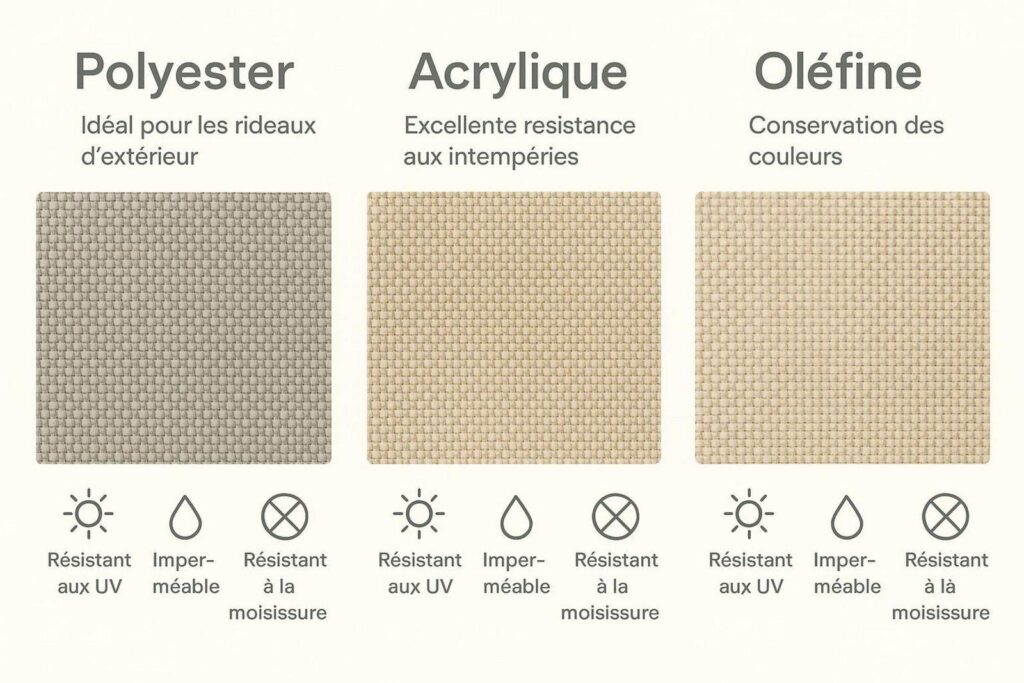
Polyester is the most common material for outdoor use. It's a synthetic fiber prized for its strength and value. It withstands rain and sun well and is often treated to resist UV rays, moisture, and fading. It's a versatile choice, suitable for most environments, both urban and rural, particularly in the sails offered by [company name]. Shade4You.
Its limitations: its lifespan may be shorter than that of higher-end fabrics. Under very strong and continuous sun exposure, it may fade. While it is water-repellent, it is not always waterproof, and in very heavy rain, water may seep through.
Acrylic, olefin, durable canvas: a comparison of uses
Acrylic is renowned for its outdoor durability. It dries quickly, resists fading and mold, and is even resistant to salt water, making it ideal for coastal areas. Maintenance is simple; often a damp cloth is all that's needed. It's available in a wide range of colors and patterns.
Olefin (polypropylene) is lightweight, soft, designed for outdoor use, and often economical. It offers excellent UV resistance (dye-through, up to 1200 hours in lab tests), does not absorb water, and retains its color. It is also a good choice for light insulation and water resistance.
The canvas (thick cotton) is sturdy, but the 100% cotton version absorbs water, becomes heavy, and can get moldy if it doesn't dry quickly enough. It's best to bring it inside during rain. Blended canvases (cotton + synthetic fibers) are more water-resistant and retain the natural look of cotton.
| Material | Strengths | Boundaries | Ideal for |
|---|---|---|---|
| Polyester | Affordable price, decent UV/rain resistance | May fade over time, not always waterproof | Classic terraces and balconies |
| Acrylic | Excellent UV resistance, quick drying, mold resistant | Higher cost | Sunny and coastal areas |
| Olefin | Long-lasting colors, does not absorb water, lightweight insulation | Less chic than acrylic, depending on the finish. | Areas very exposed to the sun |
| Mixed fabric | Natural look + improved water resistance | Heavier than synthetic materials | Natural/wooded environments |
Key points for choosing a fabric according to your climate
The local climate dictates the choice of fabric. In full sun, opt for olefin or acrylic with a UPF 50+ rating. In humid areas or those prone to frequent downpours, waterproofing is crucial: coated polyester or water-repellent acrylic are excellent choices. Near the sea, acrylic is very suitable thanks to its resistance to salt water and mold.
For a conservatory, treated linen can provide a natural look while remaining UV and water resistant. In terms of maintenance, acrylic and olefin fabrics are often easier to clean than cotton canvas. Consider your local weather and intended use to choose a fabric that will last and maintain its performance.
How to determine the resistance of an exterior curtain?
The longevity of a curtain depends on more than just its appearance. Several technical criteria are important for its durability against time and the elements. Understanding these criteria will help you choose a truly protective and long-lasting model.
Waterproofing and water-repellent treatments
Waterproofing is a crucial factor. A waterproof curtain blocks water, even during a heavy downpour. This is essential for protecting furniture and keeping your patio usable. PVC and coated polyester perform well thanks to their tight weave and the treatments applied.
Distinguish between waterproof and water-repellent. Water-repellent fabrics cause water to bead and roll off, which is good for light rain, while still allowing the fabric to breathe. In heavy, prolonged rain, the water will eventually seep through. Performance is measured by the water column: water-repellent ≈ 0 to 1000 mm, waterproof > 1000 mm (up to 15,000 mm for extreme conditions). Heat-sealed seams and stainless steel grommets also help protect against water.
UV and fading resistance
The sun takes its toll over time. UV rays fade colors and weaken fibers. Good UV resistance allows fabric to retain its color and shape season after season. Look for a UPF 50+ rating to limit UV rays and extend the fabric's lifespan while protecting people and furniture.
Olefin and acrylic offer excellent results against fading. Solution-dyed olefin lasts up to 1200 hours in lab tests. Treated polyester also performs well. Gentle, regular cleaning helps maintain these properties.
Anti-mold properties and ease of maintenance
Humidity and warmth create the perfect breeding ground for mold. Choose curtains with mold-resistant properties, either naturally made of acrylic or treated with a special finish. This is especially helpful in humid areas or if the curtains are slow to dry.
Simple care promotes a long lifespan. Most outer fabrics (polyester, acrylic, olefin) can be cleaned with a damp cloth, a hose, or in a washing machine at a low temperature (30°C) with mild detergent. Air dry to preserve the finishes.
Difference between water-repellent and waterproof fabric
These two options do not meet the same need:
| Kind | Rain protection | Breathability / weight | Recommended use |
|---|---|---|---|
| Water-repellent | Good against light showers | Lighter and more breathable | Sheltered pergolas, low-rainfall regions |
| Impermeable | It blocks water even in heavy rain | Heavier, less breathable | Highly exposed areas, seeking total protection |
For a pergola or terrace, a water-repellent acrylic can be a good compromise, especially near the coast where the air is laden with humidity.
How to choose the right style and color for your exterior?
Performance isn't everything. Appearance plays a major role in creating a pleasant and cohesive atmosphere with your decor. Style and color must harmonize with the furniture, walls, and desired ambiance, while also managing light and privacy.
Choosing colors according to the exposure and the decor
Color changes the atmosphere. For a soft and bright ambiance, opt for light and neutral tones (white, beige, light gray, taupe). They blend easily with facades and make the space appear larger. They also reflect heat better.
For added vibrancy, opt for bright colors or patterns. Black and white stripes are elegant, while yellow stripes bring a touch of sunshine. Floral or tropical prints are well-suited to the garden. Coordinate the curtain color with the cushions, furniture, and shutters. With bold patterns, combine them with neutral tones to maintain a balanced look.
Light-filtering, blackout, or privacy screen: which type for which need?
The choice depends on the intended use and exposure. Each type has its advantages:
- Light-filtering curtains: They gently filter light, provide privacy, and block UV rays. Perfect for a conservatory, a partially sheltered patio, or a bright reading nook.
- Blackout curtains: They block almost all light (up to 99%). Often made of coated polyester, they keep the interior cool in summer and provide true privacy. Very useful for south-facing or very sunny spaces.
- Privacy curtains: Depending on the fabric (light-filtering or blackout), they offer varying degrees of privacy. A translucent exterior curtain can provide a good balance between light and privacy.
Consider the balance between light, privacy, and sun protection depending on the area. A dining area in full sun will benefit from blackout blinds, while a shaded reading nook will only need light-filtering blinds.
What criteria are there for a secure and durable installation?
The durability of the curtain depends as much on the fabric as on the quality of the installation. An improperly chosen fixing system can damage the curtain and become risky in bad weather. It is therefore essential to select suitable systems and take certain precautions.
Sturdy and suitable fixing systems (eyelets, hooks, rails…)
The system must be compatible with the installation structure, weight, and type of curtain. Common choices include:
- Carnations: Metal rings at the top of the fabric allow the curtain rod to slide through. Simple and modern. For outdoor use, stainless steel is preferable to prevent rust and facilitate smooth sliding. The grommets at the top and bottom reduce the effect of wind.
- Passersby: Fabric loops on a rod offer a casual yet reliable look. Velcro loops make installation and removal easy, with the option to slightly adjust the height.
- Rails and rods: Choose corrosion-resistant materials (aluminum, stainless steel). For a pergola, tensioned steel cables provide smooth movement. For a fixed and very stable installation, opt for wall brackets.
- Exterior curtain panels: Flat panels fixed at the top, bottom, or both, for a clean look.
Regardless of the system, secure the supports firmly to the structure. The quality of the fasteners is just as important as the quality of the fabric for a reliable installation.
Tips to avoid tears and falls during severe weather
Strong wind is the number one enemy. To limit the damage:
- Weighting the bottom: Add weights, a small chain, or discreet fasteners to the bottom of the curtain. Double-grommet models (top and bottom) are very effective.
- Reinforce the fixings: In exposed areas, use very sturdy rods and brackets. Wall fixings hold better than pressure bars.
- Choose tear-resistant fabrics: Coated polyester or thick acrylic. Avoid very lightweight fabrics if the site is windy.
- Check regularly: Check screws and brackets, especially after rain or strong winds. Replace any worn or rusty parts.
- Store if rough weather is forecast: If a storm is forecast, take down and store the curtains when possible.
By following these steps, your installation remains safe for longer and you enjoy lasting comfort.
Should you opt for custom-made or standard curtains?
Custom-made or standard? Each option has its advantages. The right choice depends on the shape of your space, its dimensions, and your expectations.
Taking the right steps for optimal protection
Regardless of the option chosen, accurate measurements make all the difference. Approximately 70% problems stem from incorrect measurements. If the curtain is too short or too narrow, it won't provide adequate protection. If it's too long or too wide, it will wear out more quickly and lose its aesthetic appeal.
Width: Measure the curtain rod (without finials) and multiply by 1.5 for a nice drape. With grommets, allow approximately 40% of fabric for even pleats. Height: From the top of the rod to the floor. For a clean drape, subtract 2 cm. For a slight break at the floor, add 4 to 5 cm. Also add approximately 3 cm between the top of the curtain and the rod for grommets. Always check the manufacturer's instructions for your specific hanging system.
Advantages of custom-made solutions for atypical installations
Custom-made solutions perfectly meet the needs of each space: large terraces, small pergolas, narrow balconies, irregular shapes. They offer a perfect fit, providing protection and a refined look.
You choose the dimensions, color, fabric type (light-filtering, blackout, waterproof), and finishes to perfectly match your décor. The cost is higher than a standard model, but it's a lasting investment with seamless integration and a result that truly reflects your style.
How to maintain outdoor curtains to prolong their lifespan?
Regular maintenance keeps the fabric clean, effective, and long-lasting. Without it, the fabric can deteriorate more quickly, stain, or lose its treatments. The good news is that most outdoor curtains are easy to care for.
Cleaning tips to avoid stains and mold
The frequency depends on exposure to the elements and pollution. Here are some helpful tips:
- Quick cleaning: Dust and small marks can be removed with a soft brush or a damp cloth.
- Machine wash: Polyester, acrylic, or olefin fabrics are often machine washable: delicate cycle, 30°C max, mild detergent. Do not use bleach or harsh detergents.
- Hand wash: For large items or delicate fabrics, use lukewarm water + mild soap, then rinse thoroughly.
- Drying: Air dry only. Avoid tumble drying; the heat damages fibers and finishes. Wait until the fabric is completely dry before folding or storing.
- Water-repellent renovation: Water repellency diminishes over time. You can reapply a suitable water-repellent product after several washes.
Storing curtains in winter or during bad weather
If the winter is harsh or very strong winds are forecast, take down and store your curtains. Before storing them, clean them and let them dry completely to prevent mold and odors. Fold them and place them in a dry place, away from direct sunlight and temperature fluctuations. A breathable cover will protect them from dust and insects.
Minor repairs to maintain the fabric's effectiveness
Even the best fabrics can snag or tear slightly. Inspect your curtains regularly. Small tears can often be repaired with a suitable repair kit or a clean seam. Addressing them early prevents the damage from worsening. If a panel is too worn, it's best to replace it to maintain the effectiveness and attractive appearance of the curtains.
Frequently asked questions about durable outdoor curtains
Here are quick answers to the most common questions to help you make the right choice.
How to choose the right size for an outdoor curtain?
For width: measure the curtain rod (without finials) and multiply by 1.5 to 2 depending on the desired drape. The curtain should extend beyond the opening to better block wind and rain. For height: measure from the top of the rod to the floor. For a clean drape, subtract approximately 2 cm. For a slight break at the floor, add 4 to 5 cm. With grommets, allow approximately 3 cm between the top of the curtain and the rod. Accurate measurements ensure a neat finish and good protection.
Which should be prioritized depending on the exposure (full sun, wind, humidity)?
Choose the fabric according to the exposure:
- Full sun: Olefin or acrylic with UPF 50+. Light colors (white, beige) to reflect heat. Blackout if you want to block maximum light and heat.
- Wind : Thick, tear-resistant fabrics. Sturdy fixings (wall brackets, steel cables). Weighted curtains or double eyelets to minimize the voile effect.
- Humidity/Rain: Waterproof fabrics (PVC, coated polyester) are best if you want to stay dry. For a more breathable fabric, a water-repellent acrylic or polyester fabric is suitable for light rain. Opt for fabrics with anti-mold treatments.
- Coastal areas: Acrylic recommended for salt air and humidity.
What budget should be allocated for durable outdoor curtains?
The price depends on the dimensions, the fabric, the treatments (anti-UV, thermal), the brand and whether it is standard or custom-made.
For a basic model, expect to pay between €20 and €30. For larger or higher-performance versions (high water resistance, high UV resistance, insulation), budget €70 to €100 or more per panel. Custom-made panels are more expensive, but they fit perfectly and often last longer thanks to better materials and careful finishing, thus avoiding repeated replacements. This is a real plus for the comfort and protection of your outdoor space.