Our article in brief
- The most effective solution: paint the door, its frame and its baseboards in the exact shade of the wall, with the same degree of brightness.
- The most reversible: a curtain or a curtain on a rod placed above the lintel — zero trace, zero construction site.
- The most spectacular: a sign of cleats or wallpaper that flows seamlessly from the wall to the door.
- Bookshelf, mirror or piece of furniture in front: reserved for locked doors, and never in front of an emergency exit, a technical access point or a ventilation grille.
There's that door. The one to the cupboard under the stairs, the laundry room door, the cellar door—or that boarded-up door that hasn't opened since three moves, but still pierces the living room wall. We don't want to remove it: it means plaster repairs, a doorframe to tear out, sometimes an access point that will have to be re-established someday. We simply don't want to see it anymore.
Good news: a door can be made to blend in much more easily than you might think, and almost always without heavy tools. I'll show you seven solutions that really work—from the most discreet, tone-on-tone paint, which remains my favorite, to the most radical, placing a piece of furniture in front of it. For each, I'll explain what it actually looks like, how reversible it is, and the one thing you should never block.
Why this door stands out (and what we're trying to erase)
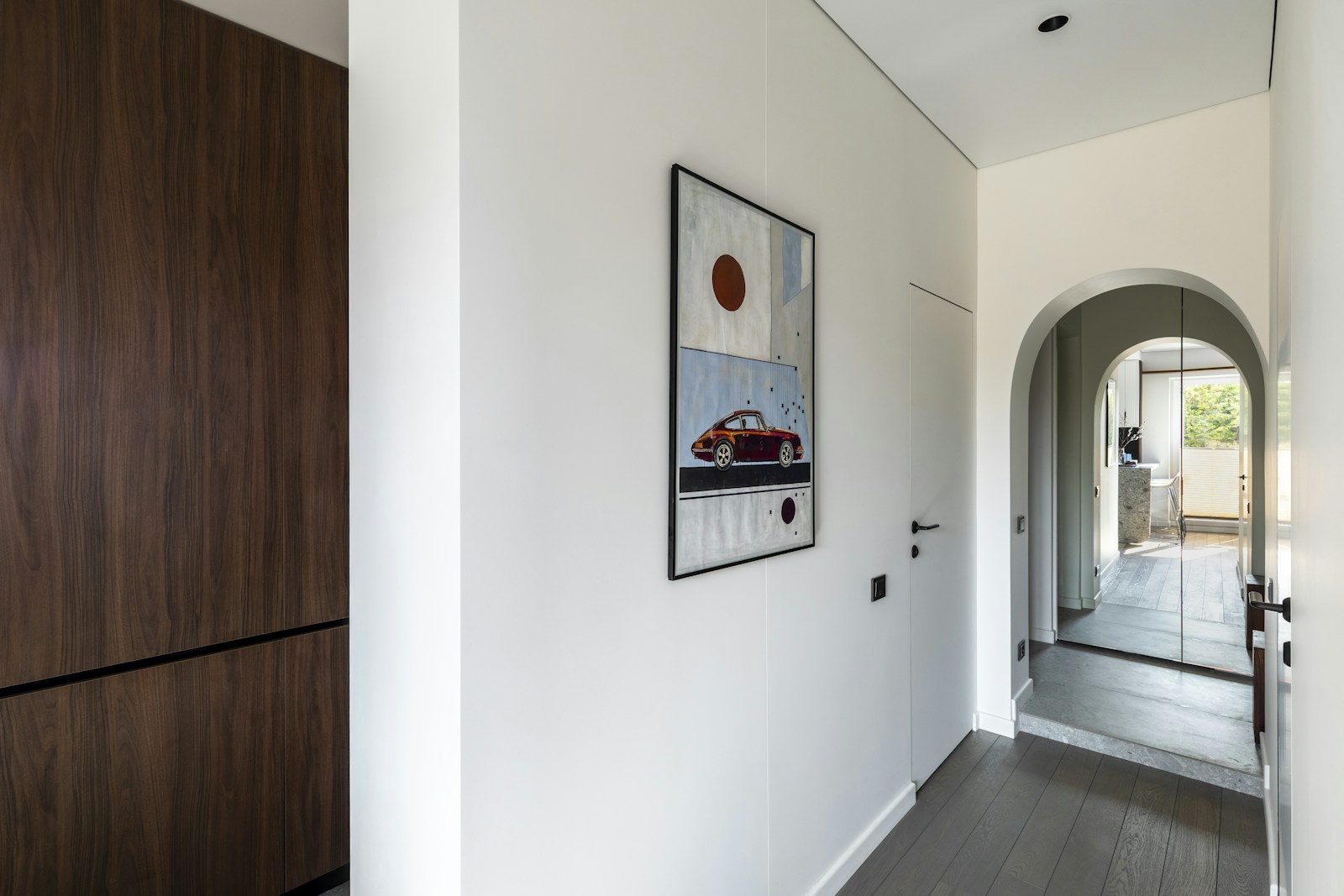
To hide a door without removing it, you don't mask the door: you eliminate what distinguishes it from the wall. Three main types of solutions are available — painting it in the exact same color as the wall, covering it with a fabric or a continuous covering (slats, wallpaper), or diverting the eye with a mirror or a piece of furniture.
The three breaks that betray a door
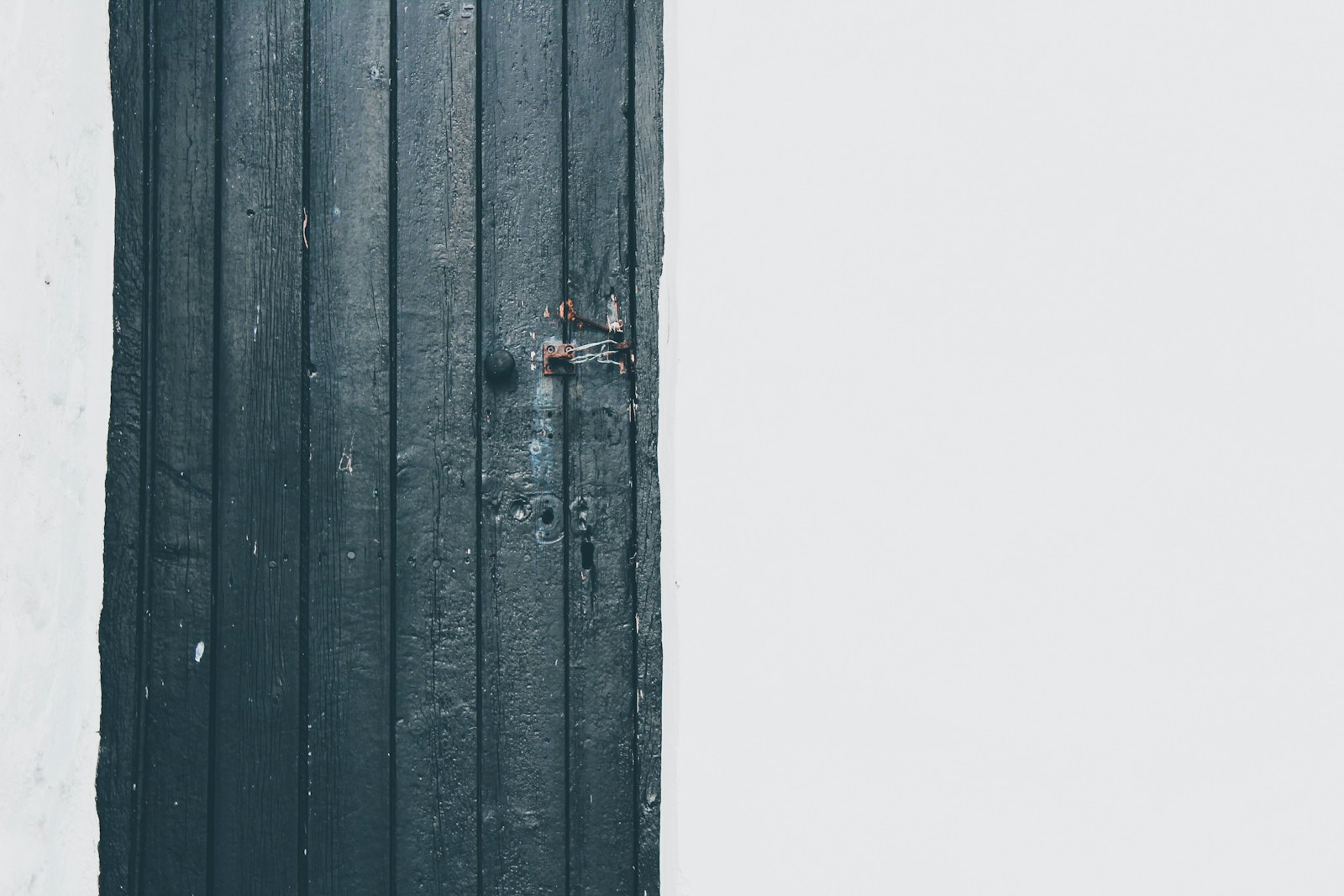
Our eye doesn't read objects, it reads breaks. A door is defined by three of these breaks, and it's precisely on these three that we must work—not on the door itself. That's why so many attempts fail: we dress up the panel, we forget the frame, and the rectangle reappears.
- The color break — a white lacquered opening on a terracotta, clay or sage green wall draws a clear rectangle that can no longer be ignored.
- The break in relief — the door frame, the stop, the moldings of the panel and the baseboard which butts against it create a border in thickness, visible even in tone on tone.
- The break in light — A satin-finish door reflects light differently than a matte wall. At the end of the day, when the light becomes grazing, the door lights up again like a screen.
Erase or own up to it: two strategies, not one
Before choosing a technique, resolve the fundamental issue. Either you erase The door blends into the wall, and the gaze glides over it without stopping. Either you assume The door becomes a deliberate decorative element: a flat expanse of deep color, a painted arch, a graphic panel. In both cases, the result is calming because the door is no longer an anomaly. What tires the eye is the in-between—a door that has been slightly altered, but not fully realized.
The choice depends primarily on the room. In a hallway, entryway, or bedroom, minimalism almost always prevails: these spaces feel more open when the walls become continuous surfaces. In a living room with plenty of materials and storage, cladding an interior door as a deliberate piece of joinery can, on the contrary, add structure to the wall. And if the door will be used daily, keep in mind the practical constraint: anything you place in front of it will have to move aside, be pushed aside, or open.
| Solution | Erasure effect | Reversibility | Door still usable | Construction site level |
|---|---|---|---|---|
| Tone-on-tone paint (door + frame) | Very strong | Weak (needs repainting) | Yes | Light, a weekend |
| Curtain or drape | Strong if the fabric is opaque | Total | Yes, we draw back the curtain | Very light |
| Continuous cleat panel | Very strong | Weak | Yes, if the battens are glued to the opening. | Medium to technical |
| Continuous wallpaper | Strong, on a flat door | Weak | Yes | AVERAGE |
| Decorative adhesive or sticker | Medium to high depending on the pattern | Good | Yes | Very light |
| Large mirror | It averts the gaze more than it erases. | Good | No, if the mirror is placed in front | Light |
| Bookshelf or piece of furniture in front | Total | Good | No — locked door | Light to medium |
Painting the door in the exact same shade as the wall: the most effective solution
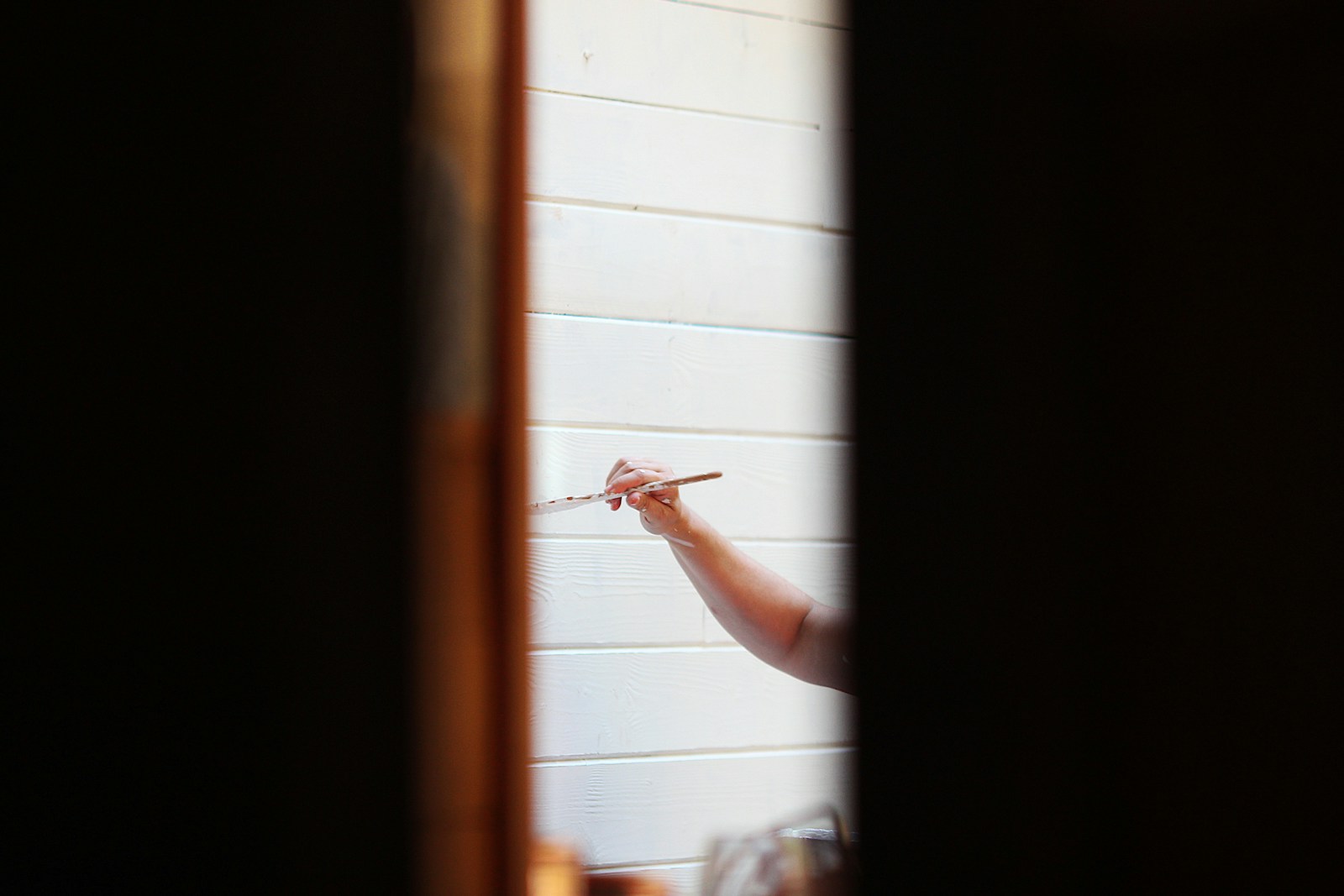
If only one method could be chosen, it would be this one. It costs only time, requires no rare skills, works on a closet door as well as a cellar door, and its result is always surprising: the door doesn't disappear completely, but it ceases to exist as an object. You enter the room and you no longer look for it.
Why tone-on-tone really makes a door disappear
Because we remove the contrast, and contrast is the only fuel for perception. On a plain wall, a door painted in the same color becomes just another surface: it has the same value, the same temperature, the same depth. What remains visible—the subtle hint of play around the door—is too discreet to attract attention.
Beware of the trap: exact shade This means the same color chart reference, not "a white that looks similar." Two similar whites, one slightly pinkish, the other slightly greenish, are much more noticeable than you might think when placed side by side over a height of two meters. If you no longer know the color of your walls, have it measured at a paint store using a plaster chip taken from behind a picture frame, or repaint the wall at the same time. And if you're unsure about the color itself, deep, earthy tones are more forgiving than pure whites: our selection of«color ideas for repainting a wooden piece of furniture It provides good reference points; the logic is the same on a door.
The detail that changes everything: the same degree of shine
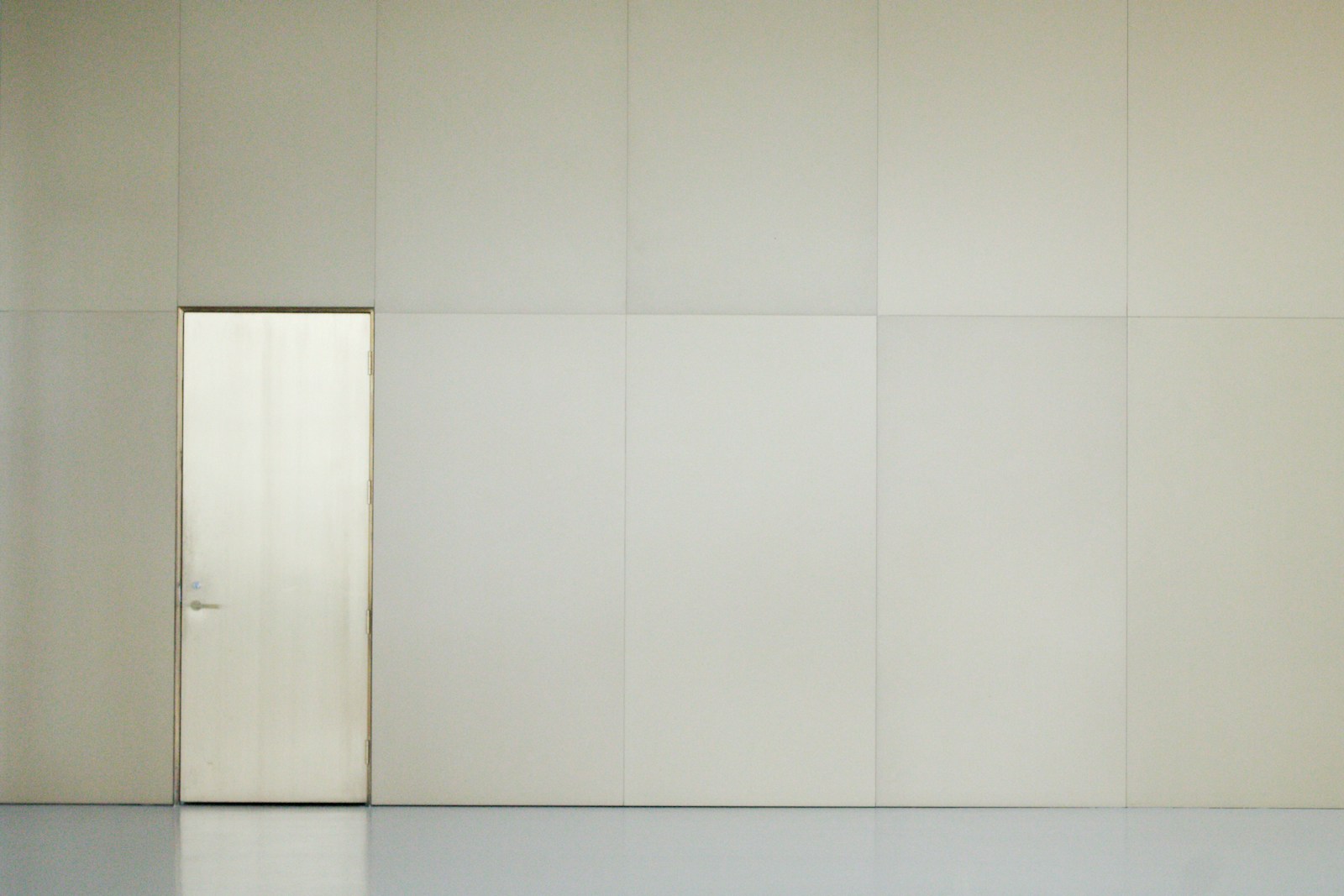
This is the most common, and most frustrating, mistake: the color is perfect, and yet the door is still visible. The culprit is the degree of brightness. The walls are most often finished in a matte or velvet finish; the doors, on the other hand, traditionally receive a satin or gloss lacquer, which is more durable. As a result, the door reflects light when the wall absorbs it, and the rectangle reappears as soon as the sun grazes the wall or a wall light is switched on.
The solution is simple: align the finishes. The most livable compromise is a finish velvet (sometimes called satin matte or eggshell) on both surfaces — matte enough not to catch the light, yet opaque enough to be wiped clean with a sponge around the handle. A pure matte finish on a kitchen or laundry room door will quickly show marks; a full satin finish on the wall, on the other hand, will reveal every imperfection in the plaster.
Should the door frame and baseboards also be painted?
Yes, and that's where the crux of the matter lies. A door painted the same color as the wall with a jamb Leaving it white is like a picture frame around an empty picture: the problem has been shifted, not solved. So paint the door leaf, the frame, the jamb, and the stop, and extend the paint to the baseboard if it follows the outline. The handle matters too: a bright brass lever handle on a faded door becomes the brightest point on the wall. A discreet model, or one in a shade close to the wall, completes the job.
- Thoroughly degrease the entire surface, especially around the handle and at the bottom of the door.
- Lightly sand with fine sandpaper to mattify and improve adhesion, then dust off.
- Apply a bonding undercoat if the door is varnished, lacquered, laminated or melamine — without it, the paint will peel.
- Paint in two thin coats: the moldings and corners with a brush, the large surfaces with a small lacquer roller.
- Leave to dry with the door open and the wedges in place before closing — paint that is still soft sticks to the frame.
💡 Tip — Before you begin, test the color by overlapping the wall and the door: apply a wide strip of paint that straddles the wall and the door, let it dry completely, then look at it in the evening under artificial light. That's when two "almost identical" shades will give themselves away.
A door never disappears because it has been hidden: it disappears when nothing distinguishes it from the wall.
Curtain, drape, slatted panel: to conceal without touching the door
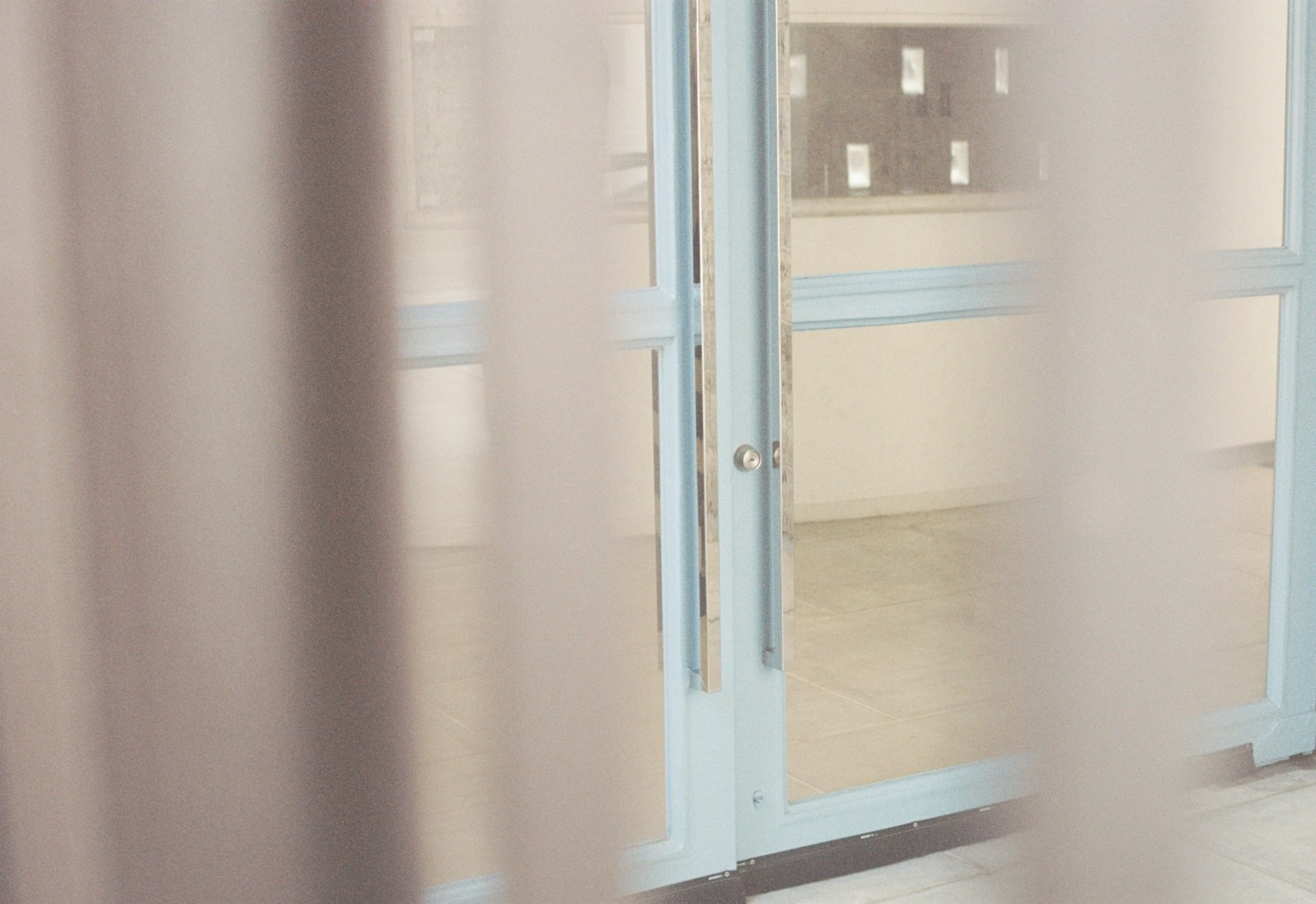
When painting isn't an option—you're renting, the door is glass, you don't feel like getting out the paintbrushes—the approach changes: instead of altering the door, you add a material. It's the quickest way, and often the warmest, because it brings fabric or wood to where there was only a smooth panel.
Is a curtain enough to make a door disappear?
It doesn't erase it: it replaces it. And that's perfectly fine, because a length of washed linen, velvet, or heavy cotton becomes a desirable feature where the door was once a flaw. To maintain the illusion, the key is to think big. The curtain rod should be positioned about ten centimeters above the lintel, not flush with the frame, and it should extend generously on either side: it's this overhang that creates the impression of a fabric wall rather than a curtain hung over a door. The fabric should fall to the floor, or just touch it.
On a door that's still in use, opt for eyelets or rings, which slide easily, rather than a pleated heading that resists. For complete blackout, double the curtain: a blackout lining eliminates transparency and absorbs some noise, which is invaluable in front of a laundry room. As for materials and colors, our trendy curtains of the season clearly demonstrate the difference between a veil that allows glimpses and a curtain that truly closes off the view.
The slatted panel, to blend the door into a rhythmic wall
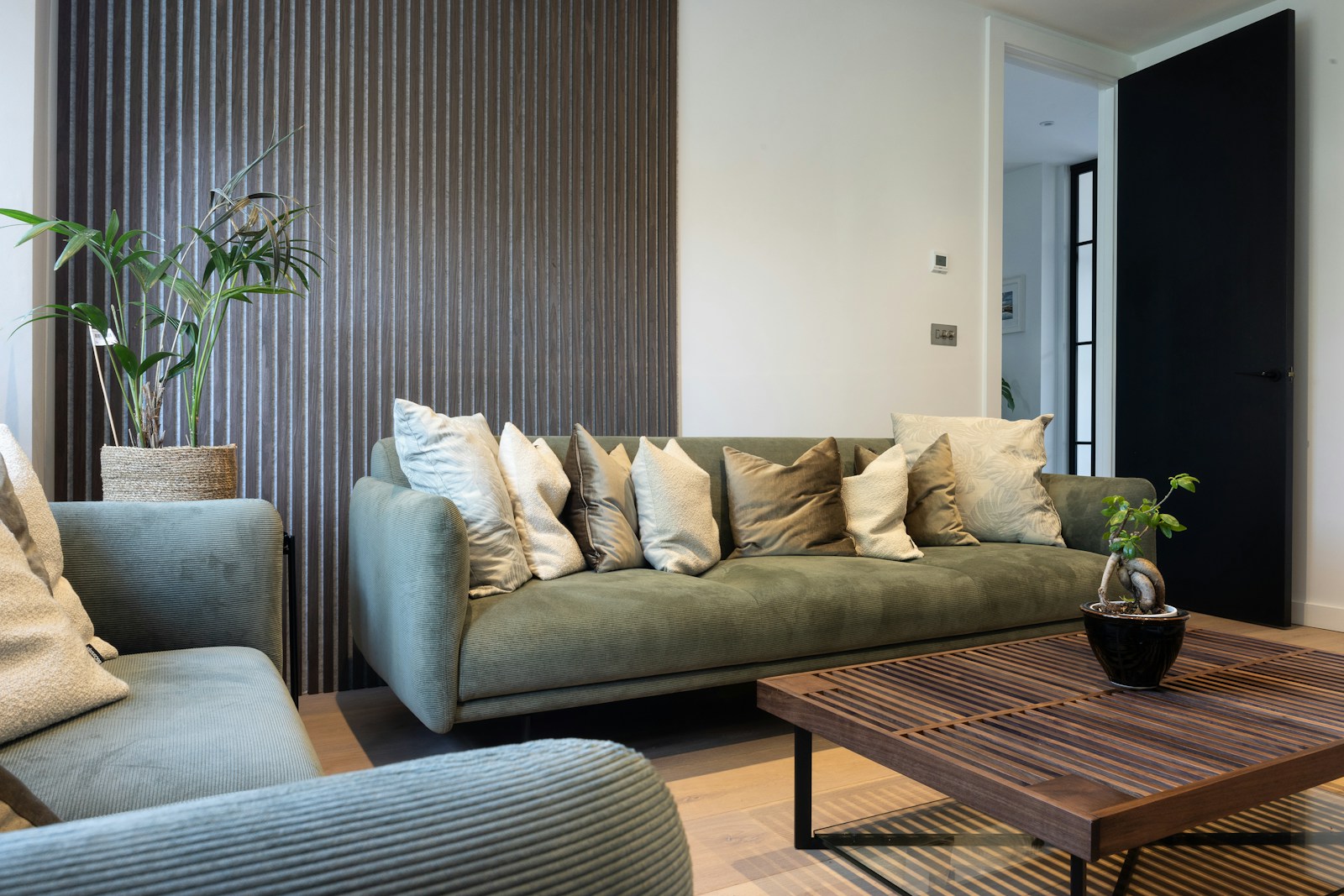
This is the most spectacular solution, and the one that creates the "hidden door" effect that many people are looking for. The principle is a perceptual game: a wall covered with cleats Vertical lines create a regular rhythm, and the eye follows this rhythm instead of focusing on the contours. If the battens run continuously across the doorway, the doorway dissolves into the lines.
Two implementation methods are possible. Either you glue the battens directly onto the door frame, stopping them precisely at the edge of the door to ensure a smooth opening: the door will still open, but it will be heavier and thicker. In this case, check the weight the hinges can support, the clearance against the wall, and the gap at the bottom. Or you can cover the entire wall, including the door, treating the door as a continuous surface—this is the principle behind door frame covering kits found in large DIY stores, which you can choose according to the available thickness. This second option is more demanding and requires a door that is no longer in use, or custom-made joinery.
Cane work, rattan, braided fibers: the handcrafted version
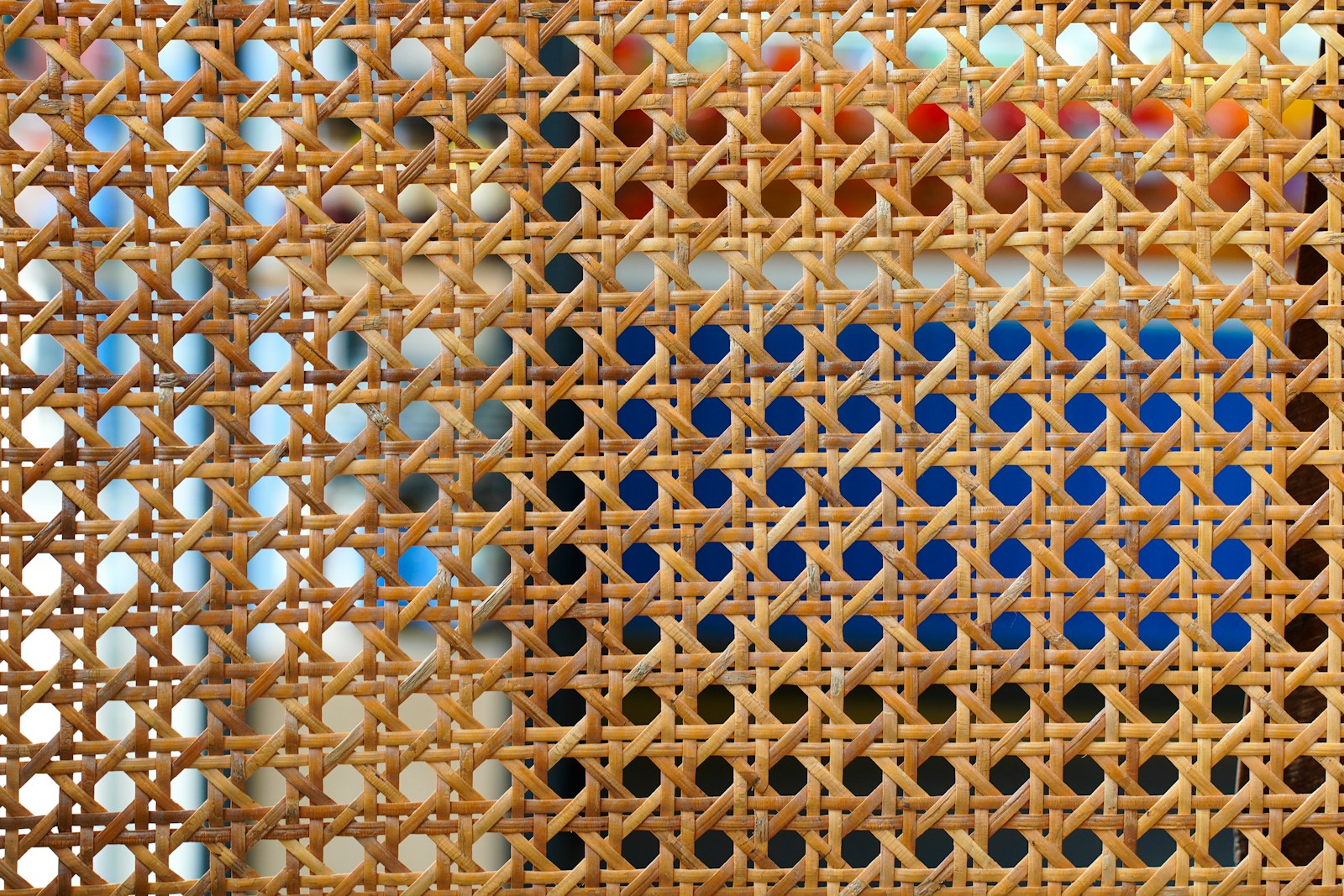
My favorite variation, because it brings a soul that painted wood lacks. A cane panel stretched over a light frame, a rattan hurdle, a woven fiber mat: the material filters the view without completely closing it off, lets air circulate, and speaks of a handcrafted gesture. In front of a closet or laundry room door, this breathability is a real advantage: nothing seals off a space that needs to dry. rattan and its weaving They blend particularly well with warm walls, clay, sand or terracotta, and age by developing a patina rather than degrading.
Wallpaper, mirror, bookcase: decorative erasures
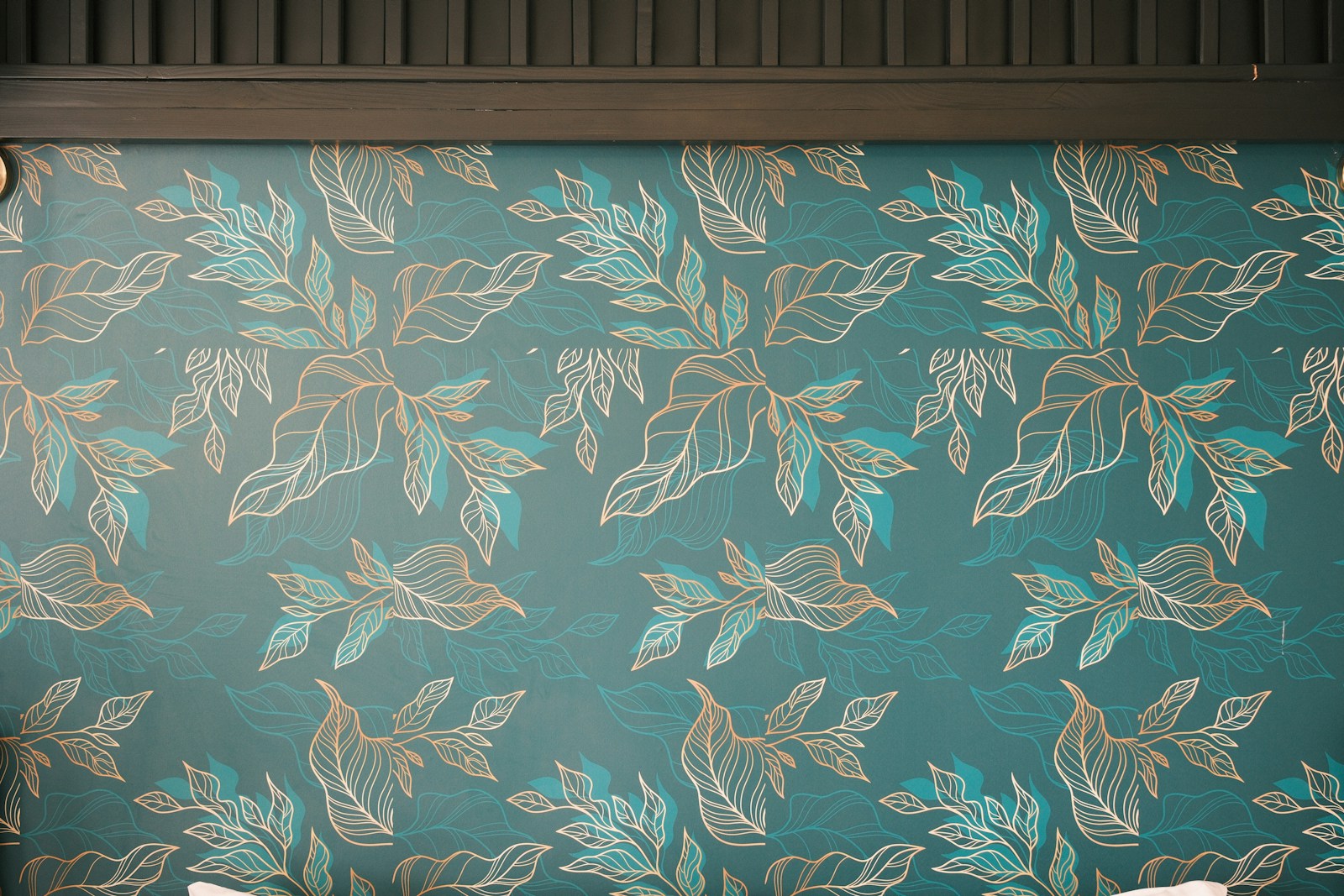
There remain solutions that focus on the decor rather than the surface: extending a pattern, reflecting light, or simply placing something in front of it. These are often the quickest, and two of them come with a trade-off—the door will no longer open.
Can you put wallpaper on a door?
Yes, on one condition: that the door is plane. On a flat or molded door without a pronounced relief, the wallpaper flows seamlessly from the wall to the door, creating a remarkably effective pattern. However, on a door with molded panels, forget it: the wallpaper doesn't follow the contours, it stretches, creases, and tears at the inside corners.
The pattern matching is crucial. A rich, patterned design—foliage, botanical motifs, scattered small shapes—is far more forgiving than a stripe or grid, which require perfect, millimeter-precise alignment around the door frame. Non-woven wallpaper is easier to hang and removes more cleanly, which is important in rental properties. And if your goal is also to make the room appear larger, our tips on the wallpaper that visually enlarges a room These also apply to a wall with a door.
A lighter and completely reversible option: adhesive rolls and door stickers, to be applied to a smooth, grease-free surface. The result depends heavily on the design—a solid color or subtle texture blends in, while a printed trompe-l'œil remains just that: a printed image. As for so-called "secret door" kits, let's be honest: what you see in the photos is almost always custom-made joinery, a bookcase door mounted on pivots, not an accessory you can screw on in an hour.
The large mirror, the illusion that shifts the gaze
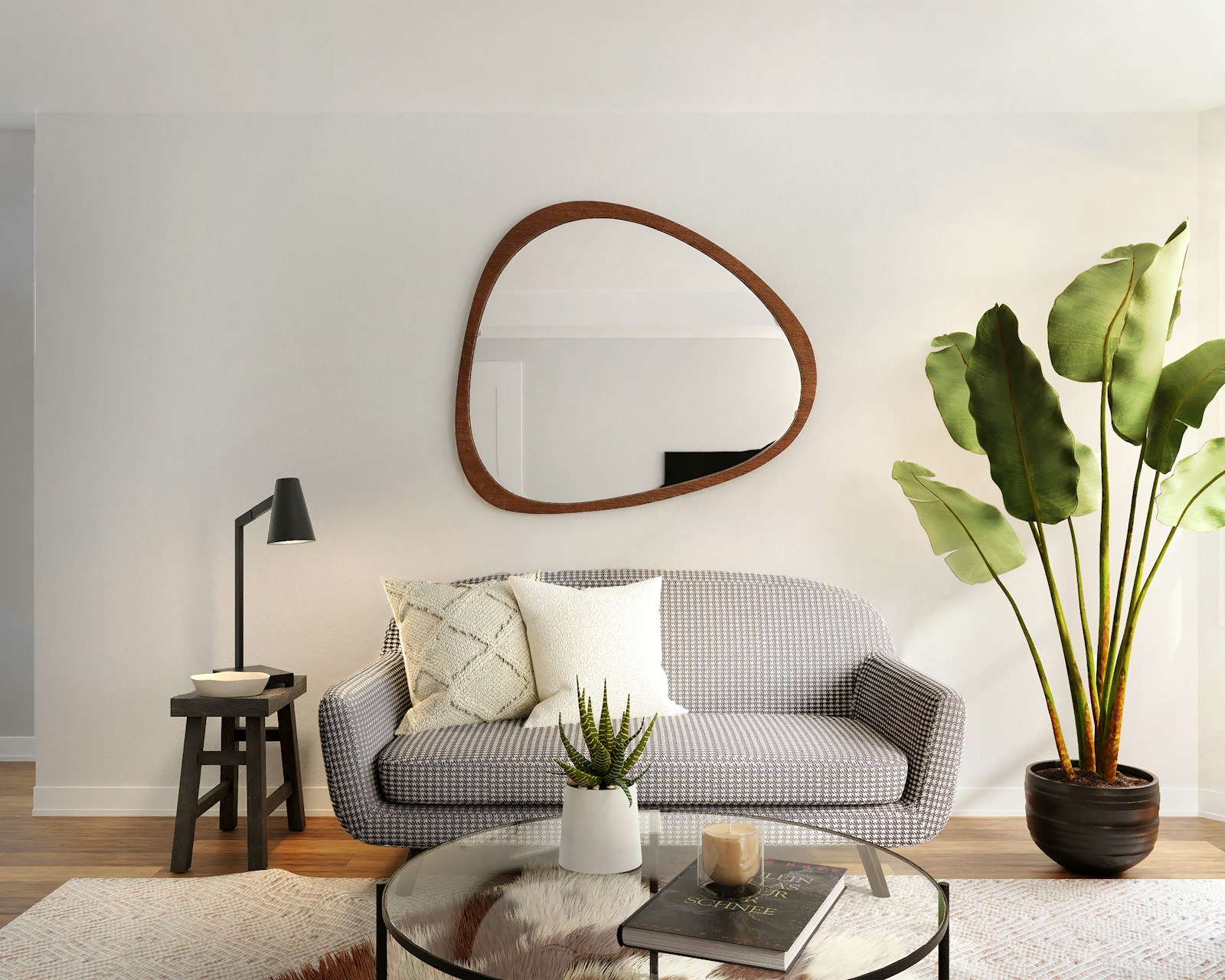
The mirror doesn't erase anything: it creates a new focal point, stronger than the door, and it lets in light. Placed on the floor against the door, in a very large format, it conceals most of the panel and doubles the room's depth—provided it's properly secured and prevents tipping, which is essential if there are children or pets. Attached to the door itself, it's still possible on a door that's still in use, but check the hinges' load capacity and add a safety film to the back of the glass. A collection of small, antique, found mirrors also works very well: it creates a sense of composition, not just a door.
The bookcase or the piece of furniture in front: total erasure
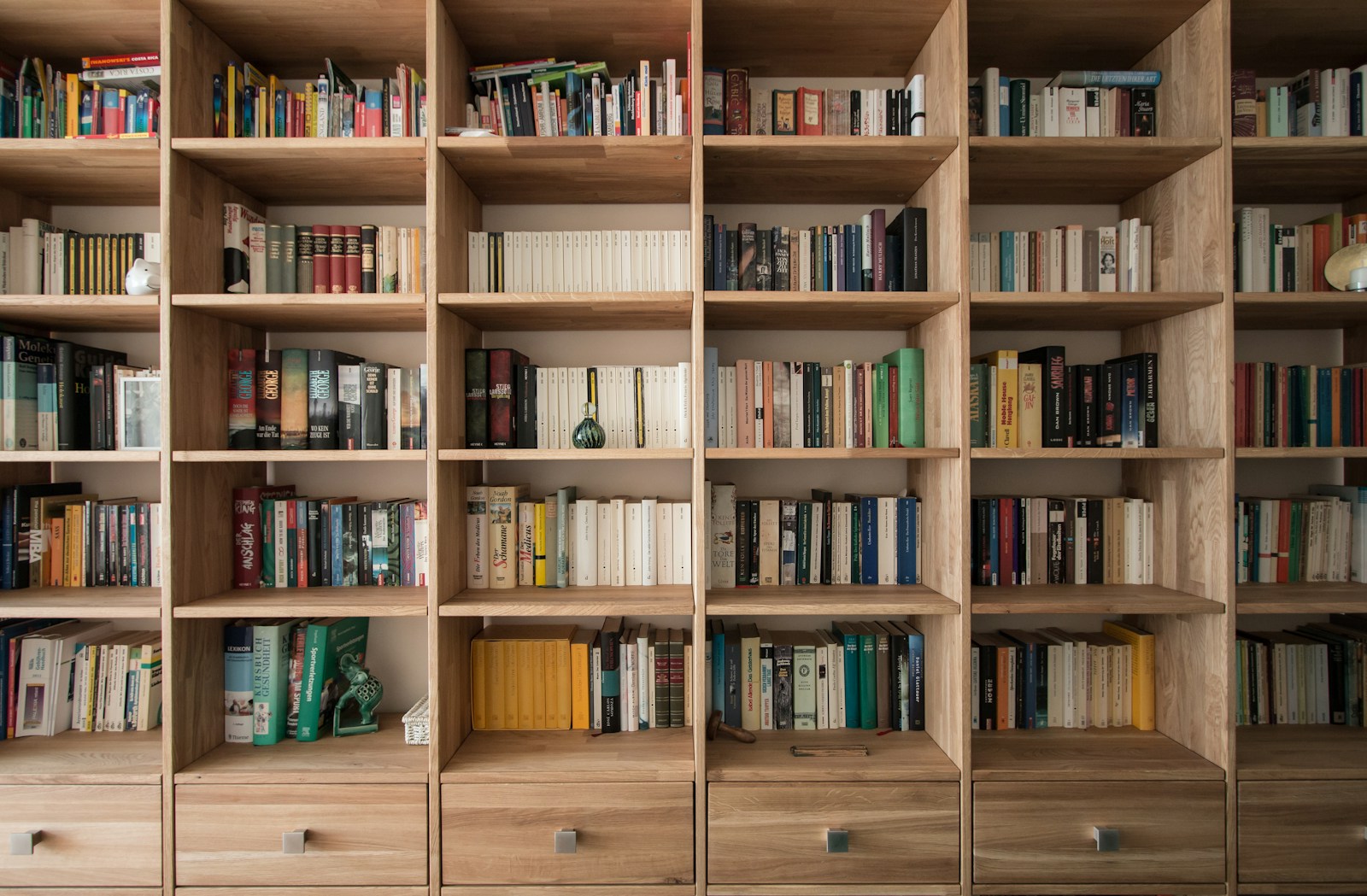
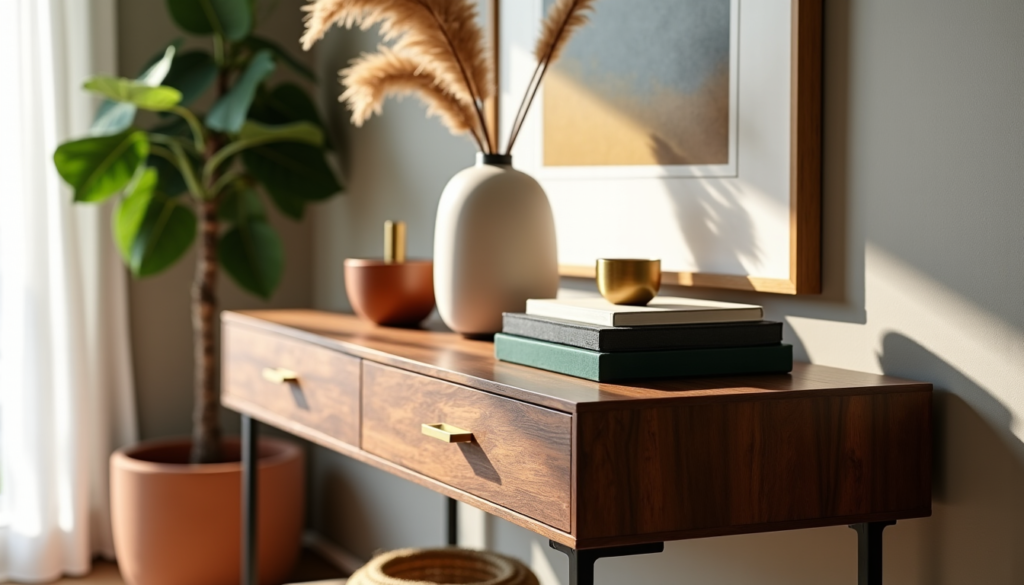
This is the only solution that completely eliminates a door, and it only applies to a door that is permanently condemned. A full-height bookcase, filled with books and a few decorative objects, absorbs the frame and makes it disappear within a day. If the height feels cramped, try pairing a lower piece of furniture with a larger one hung above it: a chest of drawers, a storage bench, or a console table, topped with a painting or a generously sized mirror. The effect is the same, and the wall feels more spacious.
Two precautions before pushing the furniture against the wall. The first is mechanical: a tall, loaded piece of furniture should be secured to the wall with an anti-tip bracket, regardless of its apparent weight. The second is more often overlooked: if the door opens onto an enclosed space—a cellar, storage room, or former hallway—sealing it completely can trap moisture. Leave a slight gap behind the furniture, or plan to reopen it from time to time. You'll find other solutions of this kind in our... guide to furnishing your home.
Locked door: what you should never block
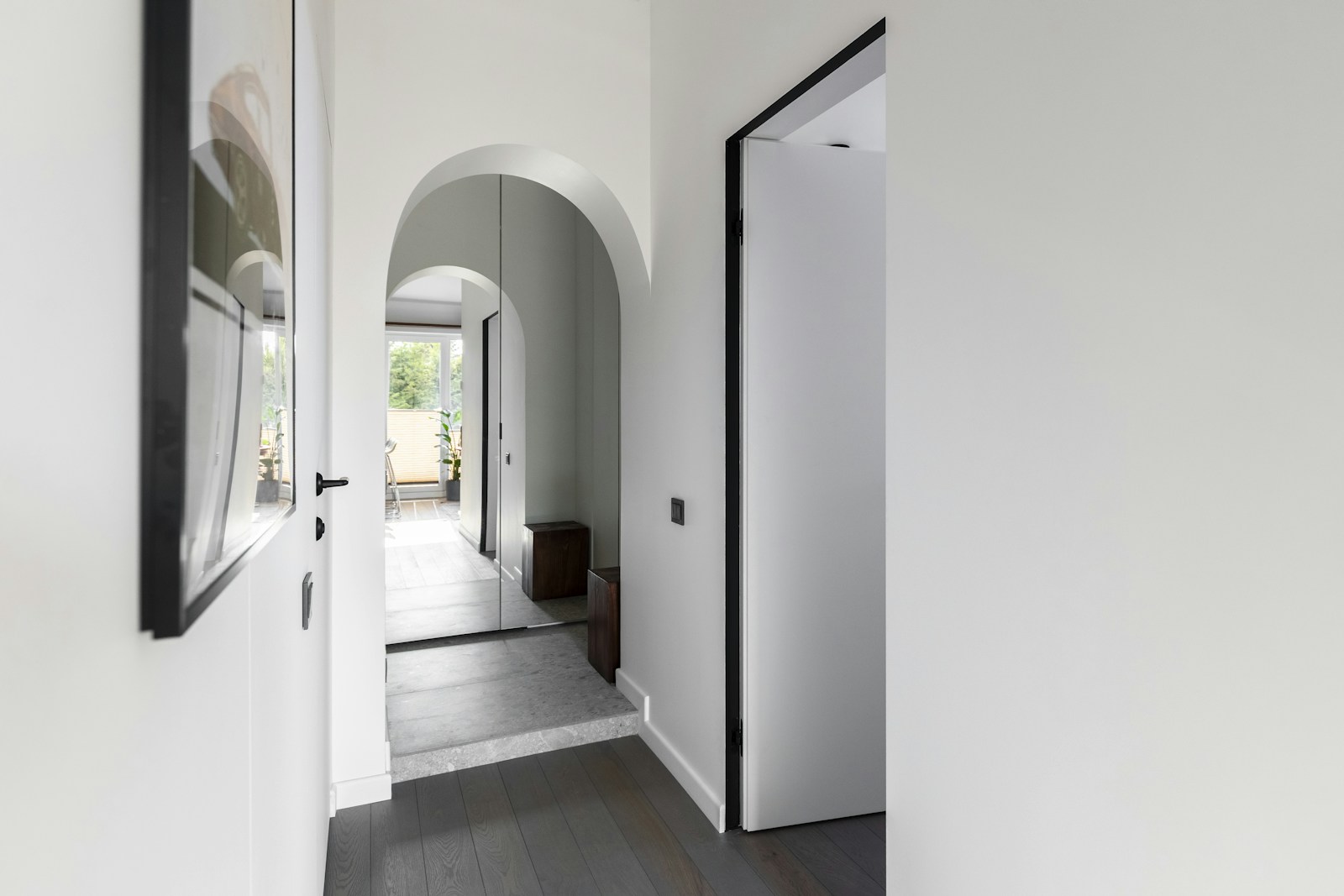
This is the part most decorating idea lists forget, and it's the most important. All the solutions mentioned above are safe as long as the door remains passable. As soon as it's blocked—furniture in front of it, battens across it, wallpaper sealing the opening—you need to know what's behind it and what purpose the door still serves.
Emergency exit, technical access, ventilation: the three prohibited areas
- An emergency exit. A landing door, a service door, a second exit leading to the outside or a stairwell does not get blocked, even "temporarily" and even if it is never used.
- Technical access. Electricity or gas meter, panel, water shut-off valve, boiler, tank, inspection hatch, VMC box: all of this must remain accessible, for you as well as for an emergency responder.
- Air circulation. Transfer grille, air inlet, and especially the gap deliberately left under the door, which allows air to reach the extraction vents.
This last point deserves an additional sentence because it is invisible. In a ventilated dwelling, air enters through the dry rooms and exits through the kitchen and bathroom: it must therefore be able to circulate from room to room. Regional health agencies also remind us of this. Do not block the ventilation and drainage grilles. of a dwelling. Specifically: a curtain that trails far on the floor in front of a door with a gap obstructs the passage. Let it just touch the floor rather than hanging over the edge, and never seal the bottom of a door to "hide it better.".
Whether renting or in a co-ownership: reversible first
The logic is simple: the more reversible it is, the less discussion there is. Curtain, mirror placed, furniture in front of it, adhesive on a smooth door—you can fix everything in an hour. Refreshing a paint job also falls under this category, according to service-public.fr. the tenant can furnish freely, While major alterations to the property or its fixtures require the landlord's written consent, adding a trim to a door, removing a door frame, or modifying woodwork clearly fall into the second category: request permission in writing beforehand to avoid having to restore the property to its original condition upon moving out.
In a condominium, anything affecting an apartment entrance door or a door leading to a common area may fall under the condominium bylaws and, depending on the circumstances, a decision made at a general meeting. Again, the rule is to avoid making assumptions: consult your property manager before taking any action, and contact your local town hall's planning department if the project affects the building's exterior. On the interior, however, you have complete freedom—and a door painted to match the building's color has never caused any offense.
With that door sorted, there's still the whole house to breathe.
Read our guide to furnishing your homeFAQ: Hiding a door without removing it
How to hide a door in a living room?
In a living room, continuity is key: paint the door, its frame, and its baseboards in the exact same shade as the wall, then extend the decor in front with a console table, a plant, or a painting. A panel of wooden slats running the length of the wall also works very well.
How to hide a door with wooden battens?
Two options: glue the battens directly onto the door frame, stopping them abruptly at the edge, or cover the entire wall with a continuous vertical pattern that extends across the doorway. Check the added weight on the hinges and the door swing before gluing anything.
How to hide a front door?
It's never condemned. It's made to feel ordinary: the same color as the interior wall, then a proper entryway scene in front of it, with a rug, bench, coat hook, mirror, and lamp, which catches the eye. A lined curtain also provides a bit of sound and thermal insulation.
How to hide a glass door?
Three options, depending on the amount of light you want to keep: frosted or patterned adhesive film on the glass, a shade sail mounted on two clip bars, or a cane panel placed in front. The film remains the most discreet and reversible solution of the three.
How to hide a boarded-up door?
A properly sealed door can accommodate anything: a full-height bookcase, a large floor-mounted mirror, continuous wallpaper, or wooden battens. Just make sure it doesn't conceal a meter, a utility access panel, or a ventilation grille, and that it isn't being used as an emergency exit.
How to hide a door with a mirror?
A very large mirror placed on the floor against the door is sufficient, provided it is properly secured and prevented from tipping over. If it's fixed to the door itself, check the weight the hinges can support and apply a safety film to the back of the glass. The effect makes the room appear larger while also providing privacy.