Decorating a bedroom often means finding the right balance between aesthetics and a feeling of spaciousness. And when square footage is limited, every choice counts. Colors, materials, furniture… but also wall coverings play a key role. Wallpaper, long considered a simple decorative element, is now a powerful tool for transforming the perception of a room.
In this article, I propose to explore how wallpaper can help you visually enlarge an adult bedroom, without pushing out the walls.
In this article
Playing with patterns to push the boundaries
The gaze structures space. This is a reality often underestimated in decoration.
Certain patterns have the power to visually lengthen a room. Vertical stripes, for example, give an impression of height, ideal for low ceilings. Conversely, horizontal lines widen the room and create a feeling of openness.
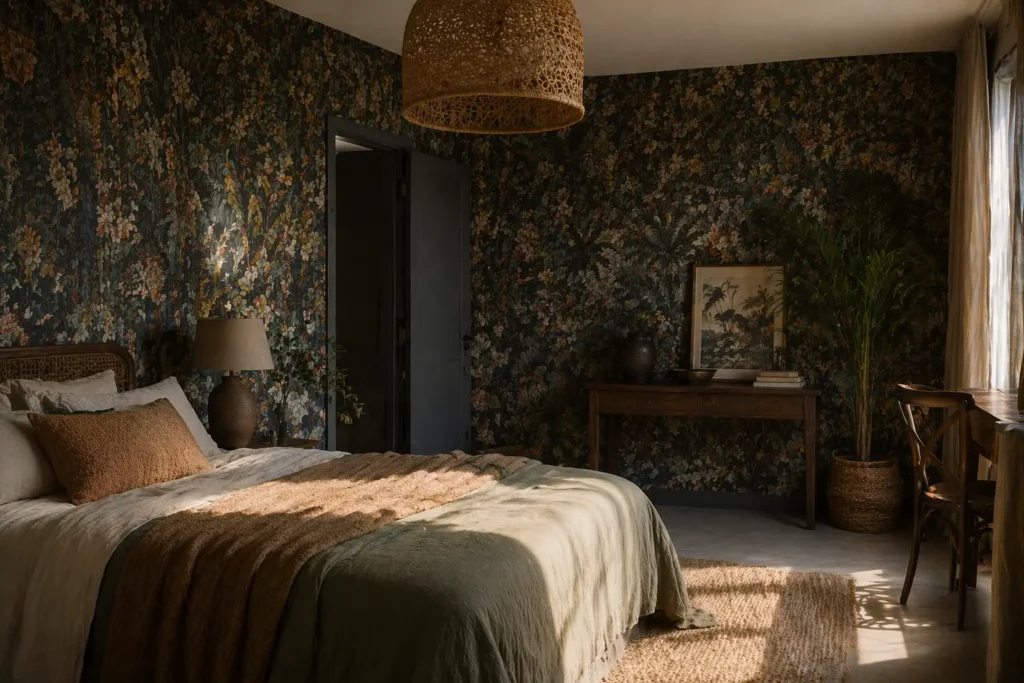
Panoramic patterns or murals are also particularly effective. They invite the eye to travel beyond the wall, creating an illusion of depth. In an adult bedroom, this can translate into a natural landscape, a botanical scene, or textures inspired by raw materials.
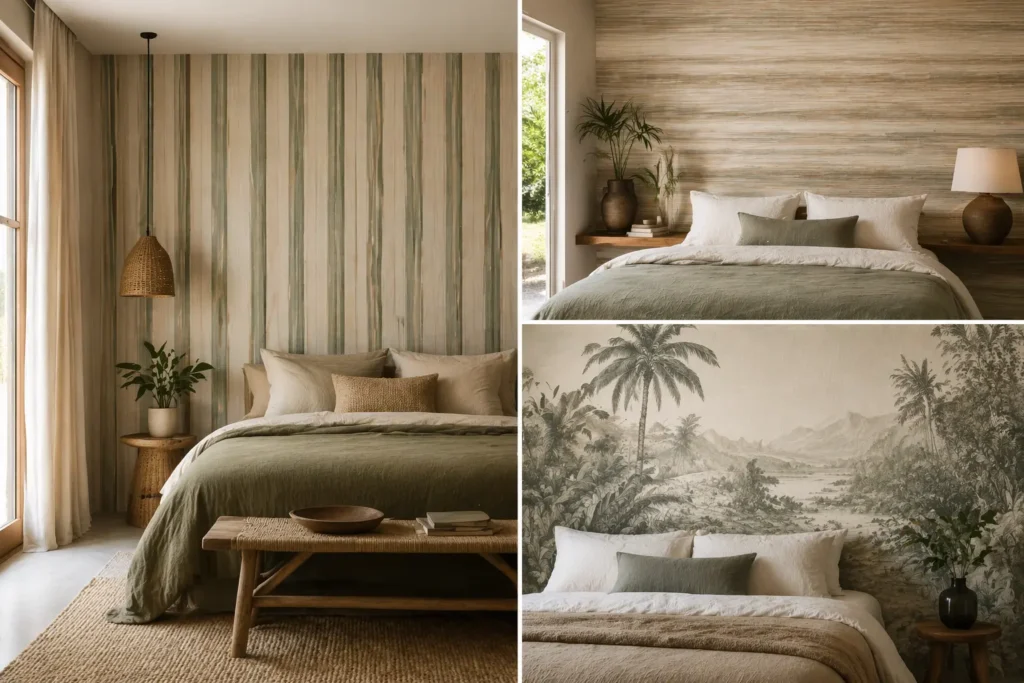
To take this approach further, it is interesting to explore solutions such as the modern adult bedroom wallpaper, which combines contemporary aesthetics and visual effects designed to structure space.
Opt for bright and natural colors
Color remains one of the most powerful levers for changing the perception of a room.
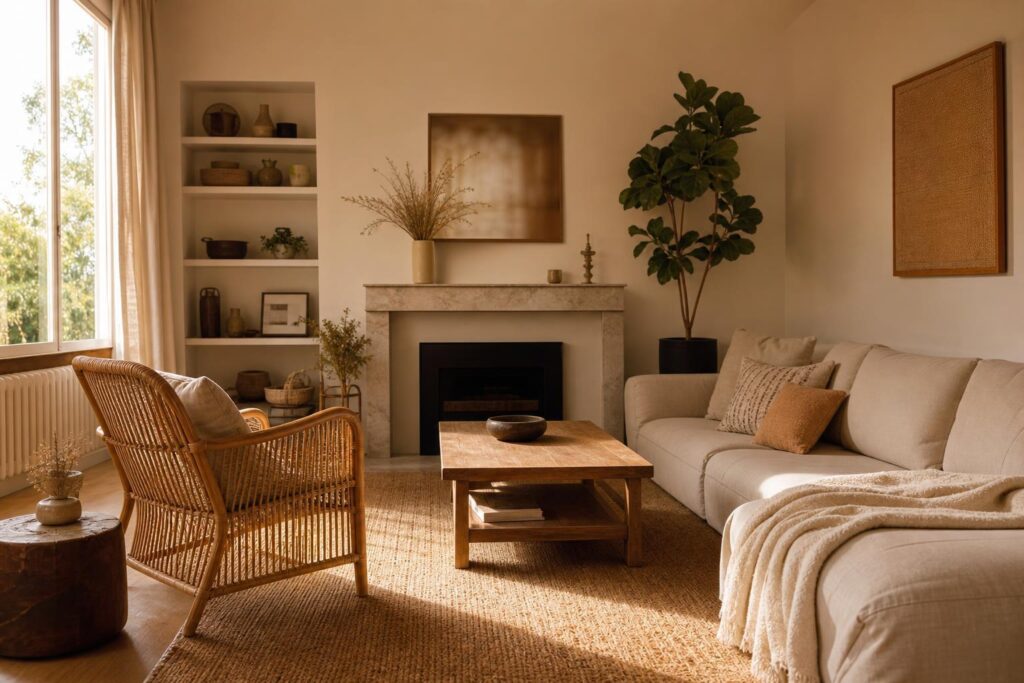
In a bedroom, choosing light colors helps reflect light and visually open up the space. Sand, linen, off-white, or pastel shades create a soft and airy atmosphere.
But visually enlarging a space doesn't necessarily mean sticking to monochrome. Subtle gradients, watercolor effects, or tone-on-tone patterns add depth without weighing down the room.
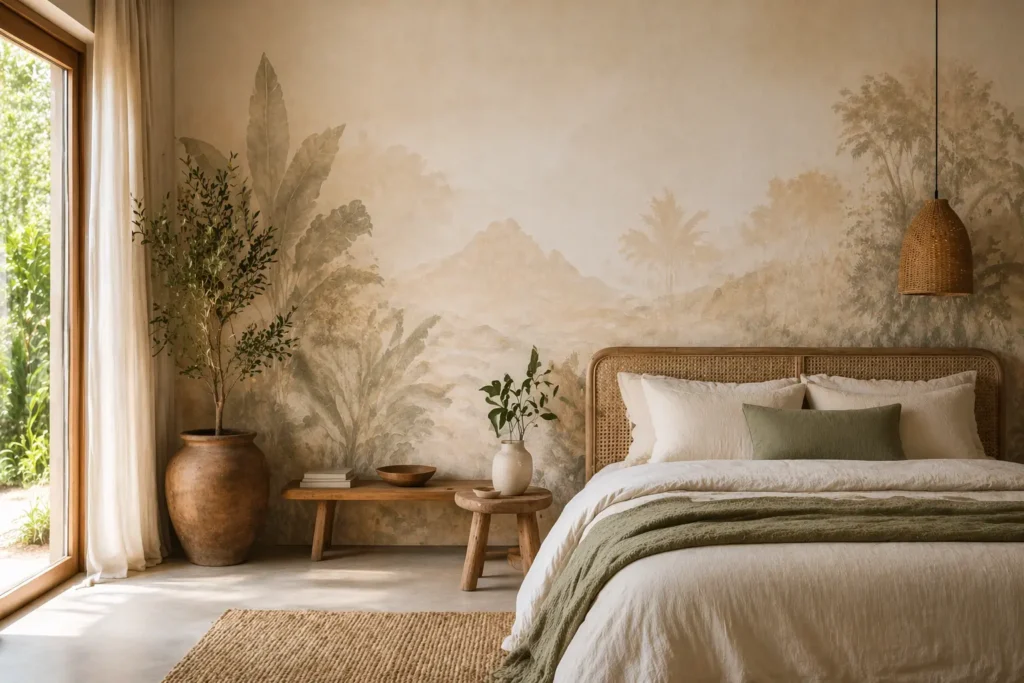
In the spirit of La Maison ColonialeWe often find this desire to connect the interior to natural influences: mineral textures, plant textures, or inspirations from elsewhere, which give breath to the room.
Create a focal point to structure the room
Contrary to popular belief, enlarging a room does not mean making all the walls uniform.
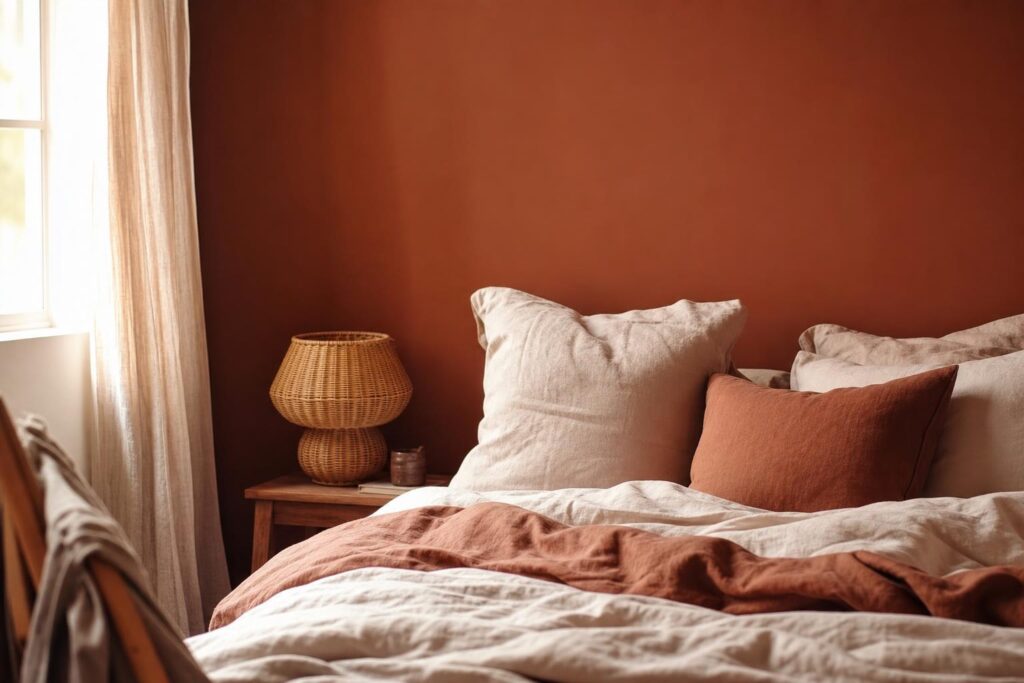
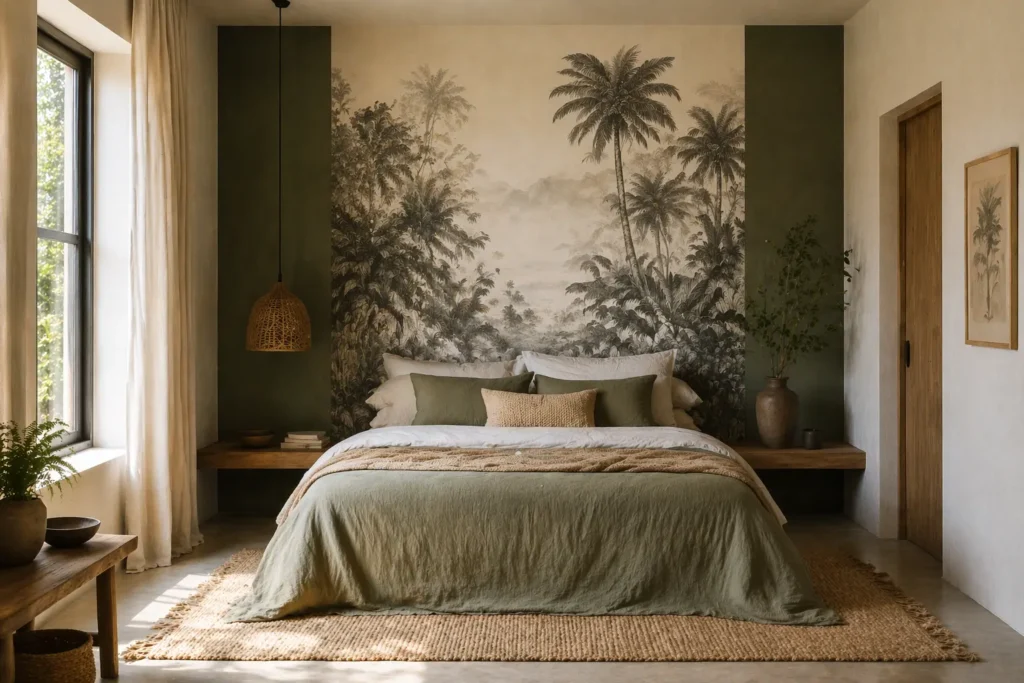
Creating a focal point can, on the contrary, help structure the space and guide the eye. An accent wall, for example behind the headboard, adds character while leaving the other walls more minimalist.
This contrast creates a visual hierarchy that gives depth to the room. The eye is first drawn to a strong element, then explores the whole, which gives a greater sense of space.
To find inspiration and identify styles that match your world, you can, in particular Discover Izoa's wallpaper designs, which offer a wide variety of designs suitable for different types of atmospheres.
Working on the continuity between the walls and the rest of the room
Wallpaper never works alone. It interacts with the furniture, textiles, and light.
To visually enlarge a room, it is essential to create continuity. This can be achieved through matching colors in the bed linen, natural materials such as wood or rattan, or a coherent color palette between the walls and decorative elements.
The idea is not to overload, but to harmonize. A well-designed room gives an impression of fluidity, where each element finds its place without disrupting the perspective.
Avoid mistakes that shrink the space
Conversely, some choices can create a feeling of confinement.
Overly busy patterns on all the walls, stark contrasts, or the excessive use of very dark colors can visually shrink a room. This doesn't mean they should be avoided altogether, but rather used sparingly.
Similarly, wallpaper that is poorly positioned — for example on a wall that is already cluttered — will lose all its visual impact.
What I find interesting about wallpaper today is that it goes far beyond its decorative role.
When chosen carefully, it becomes an essential tool for structuring space, playing with light, and transforming volumes. In an adult bedroom, where both comfort and serenity are desired, it adds character without compromising the feeling of spaciousness.
Ultimately, visually enlarging a room is not a question of surface area… but of perception.