Wasps often settle near homes during the summer. Under a roof, in a shed, a hedge or even inside a wall, their presence can quickly become problematic, especially when the nest is located in a passageway.
In this case, professional intervention helps limit the risks, while adapting the treatment method to the specific characteristics of the location. Here's how a wasp nest removal operation typically unfolds, and why it's best to avoid any DIY attempts…
How to recognize a wasp nest?
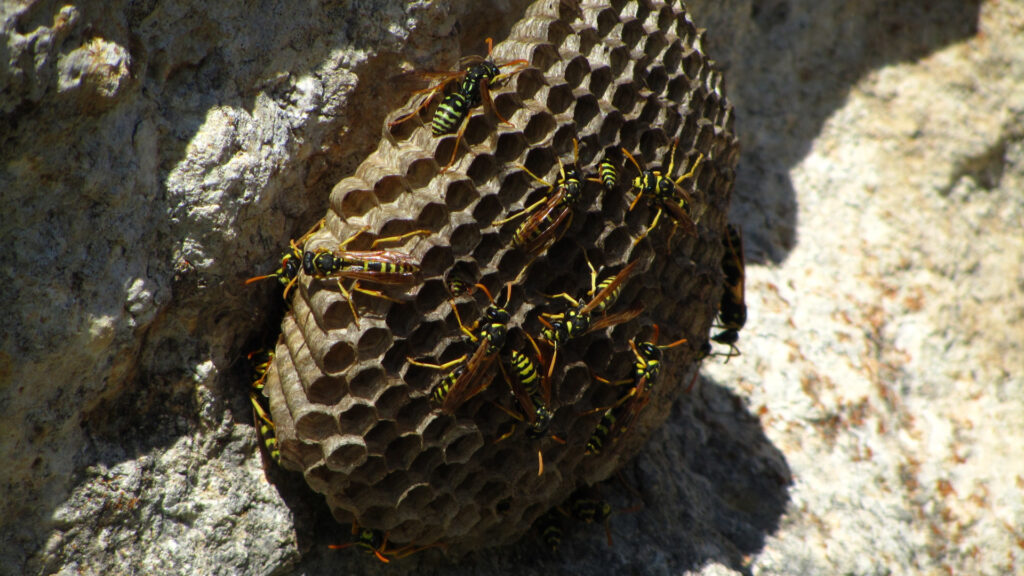
Before asking for a Wasp nest removal in Auxerreit is useful to confirm the presence of a colonyWasps build their nests with chewed cellulose and prefer locations sheltered from wind and moisture. Their behavior also allows you to spot a nest before it grows larger.
You can recognize a potential wasp nest by these few observations:
- Frequent trips of wasps to the same place
- A greyish, papery nest located under a roof, in an attic, a wall, a hedge, or in the ground
- A crackling sound can be heard when a nest is hidden behind a partition.
- Wasps become more aggressive when you approach their nest
- A regular presence of wasps attracted to sugary foods or meat near the area
A concrete example with an intervention in Auxerre
In Auxerre, as in the neighboring towns of Monéteau and Appoigny, requests for intervention in the houses They generally increase during the warmer months….
A diagnosis before any intervention
Upon arriving on site, the technician begins by to precisely locate the wasp nest and identify the various access points. The analysis takes into account the size of the nest, its location, and the risks to the occupants. This step then determines the most appropriate method for destroying the wasp nest, while also ensuring the safety of the intervention around the affected area.
A treatment adapted to the configuration of the premises
Depending on the situation, different techniques can be used, including dusting, spraying with a specific insecticide, or using an aerosol suitable for hard-to-reach areas. Technicians wear protective equipment to reduce the risk of stings. When the nest is located in a wall or under a roof, the approach is adjusted to reaching the colony without unnecessary exposureNote that this emergency intervention can be requested when the nest represents an immediate danger to the occupants.
Follow-up after the nest's destruction
After treatment, a period of 48 to 72 hours This is generally necessary for the entire colony to disappear. The professional then verifies that the nest has become inactive and can advise on some preventative measures to limit the possibility of a new nest being built.