Our article in brief
- «"Contemporary" does not refer to a fixed era: it is what is being done NOW. Style evolves with the times, and that is precisely its definition.
- THE modern is a 20th-century movement, the minimalism a rule of quantity, the Scandinavian a regional family: three things that the contemporary is not.
- Its true markers: simple lines, open volumes, straightforward materials, absence of ornamentation, subtle contrasts.
- Our interpretation: a successful contemporary design is never clinical. Raw wood, ceramics, and textiles add warmth.
- Four gestures are enough to modernize an existing piece — and five reflexes instantly date a fake contemporary.
The word is everywhere. In real estate ads, on product descriptions, in kitchen catalogs: everything is "contemporary," so nothing really is anymore. And when you try to find out what this style means, you most often end up with a gallery of images and a similar but not quite the same word: modern. contemporary decor deserves better than a rough synonym for "pretty and recent".
So let's get things straight, because this is where the difference lies between an interior that feels contemporary and one that looks like a tired showroom. We're going to see what "contemporary" means exactly, what this style is not (and the list is instructive), the concrete markers that make it recognizable, the way we love it at La Maison Coloniale — warmed by the material —, then the few gestures that are enough to contemporaneize an existing room without breaking a wall.
Contemporary decor: what exactly are we talking about?
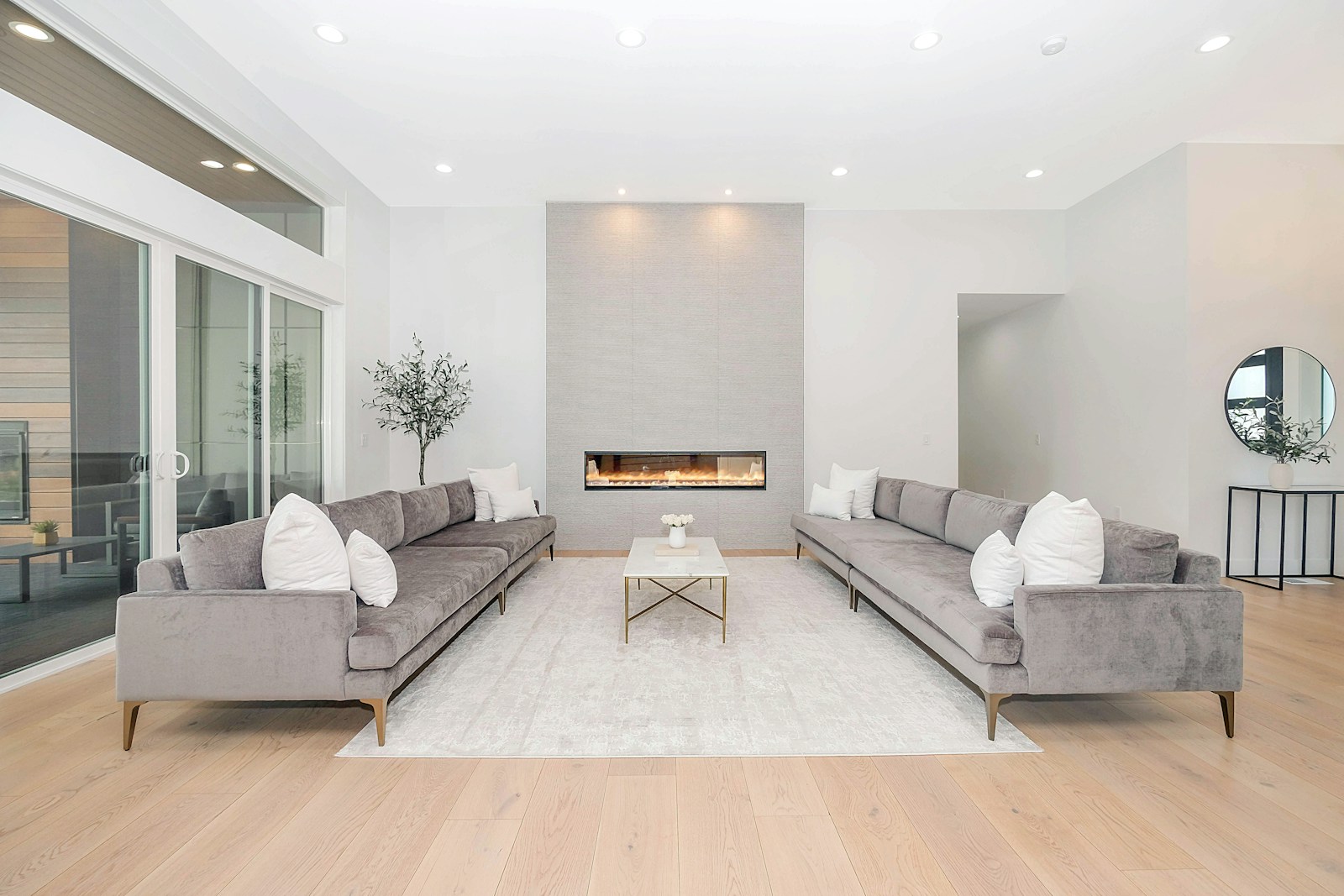
Contemporary decoration refers to interior design that follows the aesthetic codes of the present moment: simple lines, open spaces, straightforward materials, and minimal ornamentation. Unlike a historical style, it has neither a birth date nor a fixed vocabulary. It evolves with the times it inhabits.
Contemporary means: of now
The word doesn't come from decoration, it comes from language—and that's where it becomes clear. The lexical portal of CNRTL It gives two useful meanings: that which exists at the same time than anything else, and what belongs to the present time. Not a word about the sofas, not a word about the colours. Just a position in time.
This detail changes everything. A contemporary style is not defined by a specific object but by a in relation to the time. The same dictionary also points out that in history, the so-called contemporary period is the one that comes After The modern era: the two words do not refer to the same thing, even in books. That's why I advise you to take it as a moving reference point rather than a fixed category: "contemporary" situates, it does not prescribe.
Does contemporary style have a specific date?
No, and that's the source of half the misunderstandings. An interior described as contemporary fifteen years ago is no longer so today: it has become dated, even though nothing has changed within it. Contemporary style is a constantly evolving concept. This is what makes it both fascinating and somewhat treacherous, because you can't simply buy it once and for all.
In concrete terms, this means that the contemporary can be read in the current decorating trends — the hues, the shapes, the materials that emerge — without ever being reduced to them. What I look at first is not the color of the year: it's the structure. A contemporary piece remains contemporary even when chromatic trends change, because its lines and volumes stand on their own.
Contemporary, modern, minimalist, Scandinavian: the great misunderstanding
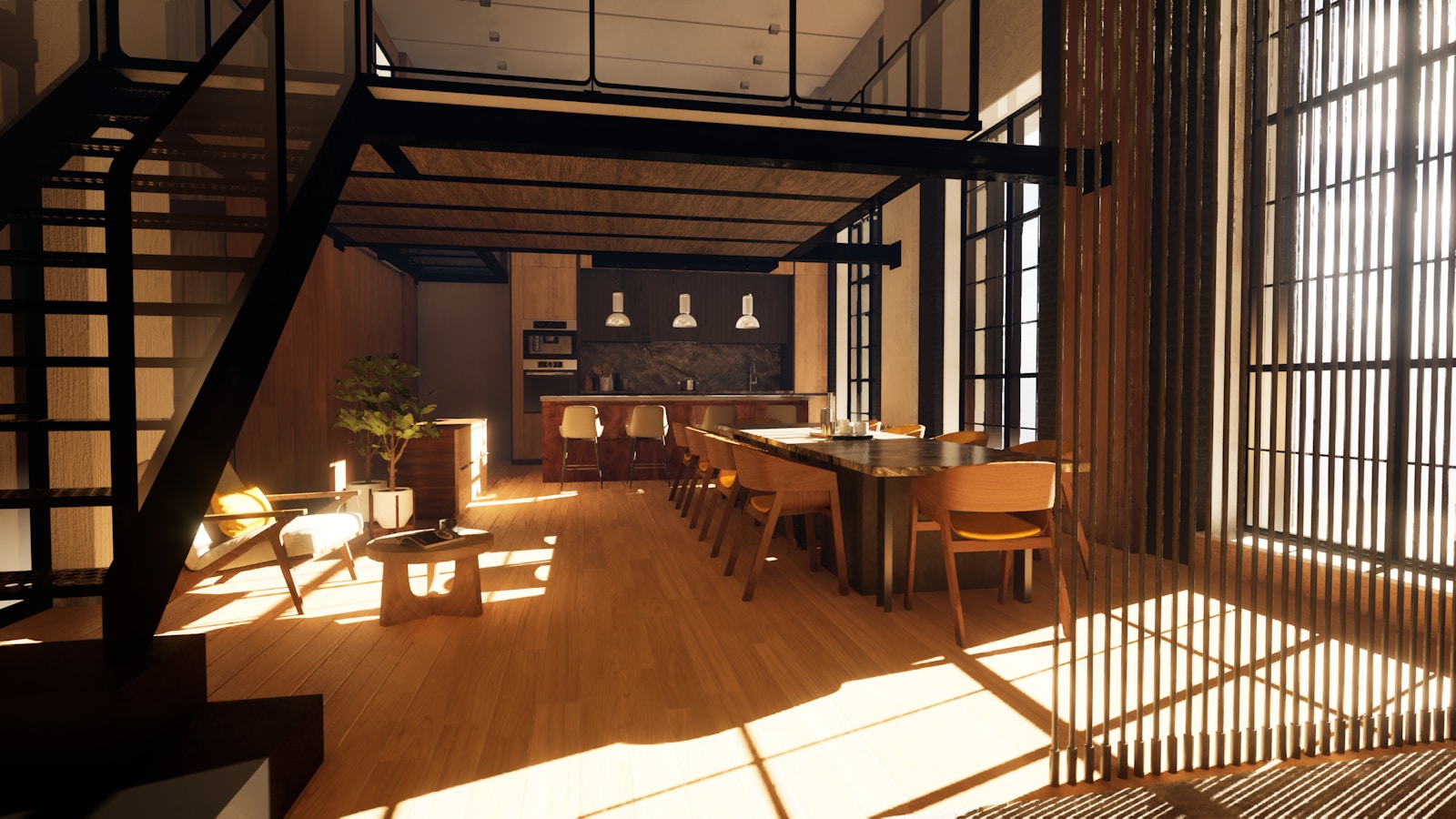
Modernism is a 20th-century movement, self-contained and easily identifiable. Minimalism is a discipline of quantity. Scandinavian and Japandi are regional styles. Contemporary design, however, is neither a date, nor a rule, nor a geographical location: it absorbs the present moment, regardless of the style it encompasses.
Why do we confuse modern and contemporary?
Because in everyday French, the two words are almost interchangeable: dictionaries give "« modern »"As a near-synonym for current." The confusion is therefore perfectly legitimate… in conversation. In design vocabulary, however, it is no longer so, and this is precisely the point missing from most articles on the subject.
THE modern design This refers to a movement born in the 20th century, with its program: a break with traditional styles and ornamentation, clean geometric forms, industrial materials like steel, glass, and concrete, and the idea that an object must first and foremost serve its purpose. This movement has a beginning, a body of work, a recognizable aesthetic. It can be dated at a glance. Contemporary design cannot—and that is precisely what separates them. A modern piece of furniture is a piece of furniture of a particular era; a contemporary interior is an interior of a specific time. this era.
Neither minimalism, nor Scandinavian, nor japandi
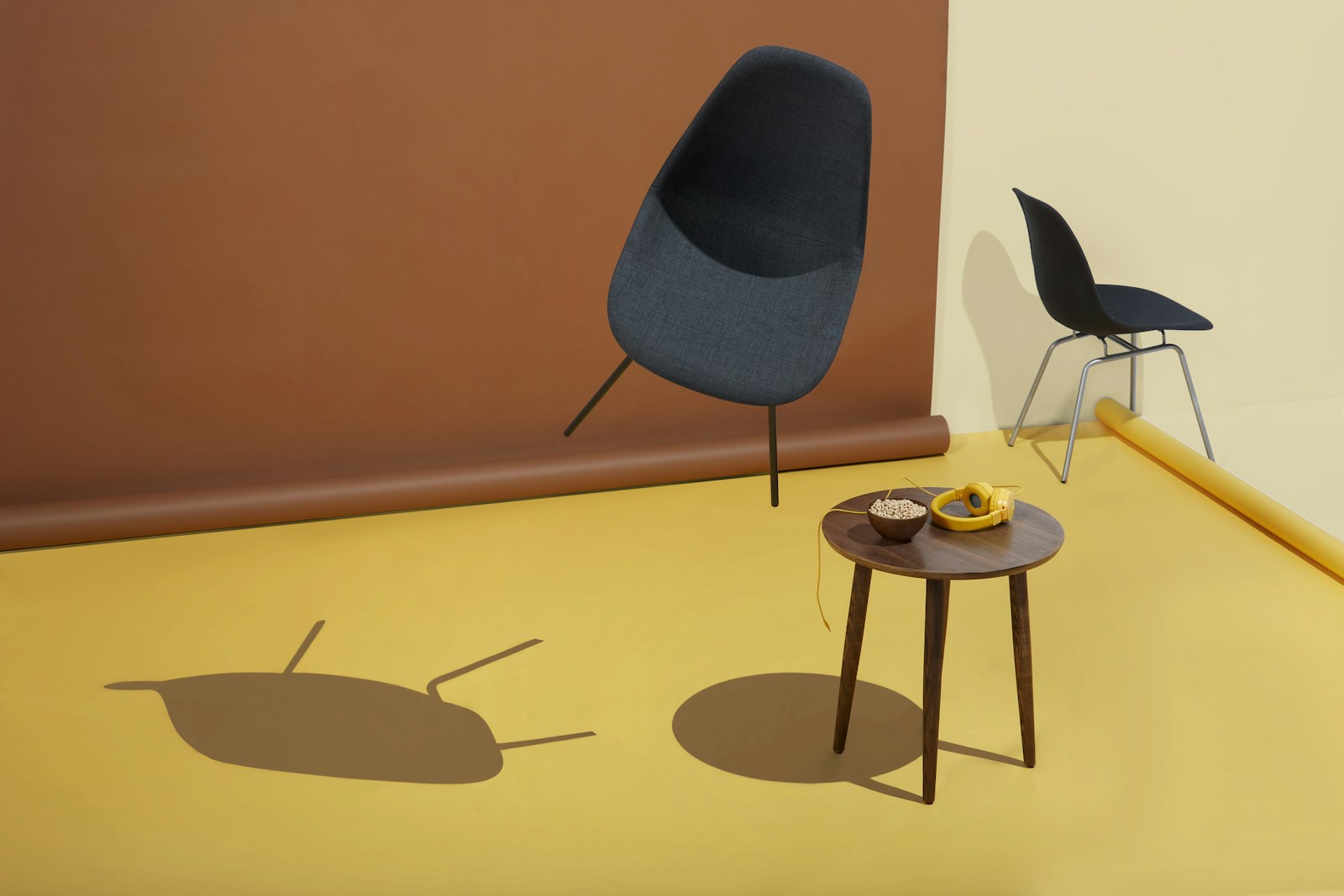
THE minimalism It's a rule of quantity: fewer objects, fewer patterns, less of everything. A contemporary interior can be minimalist, but it can also be generously furnished, with books, plants, and mismatched ceramics. Confusing the two is to deprive yourself of warmth for no reason.
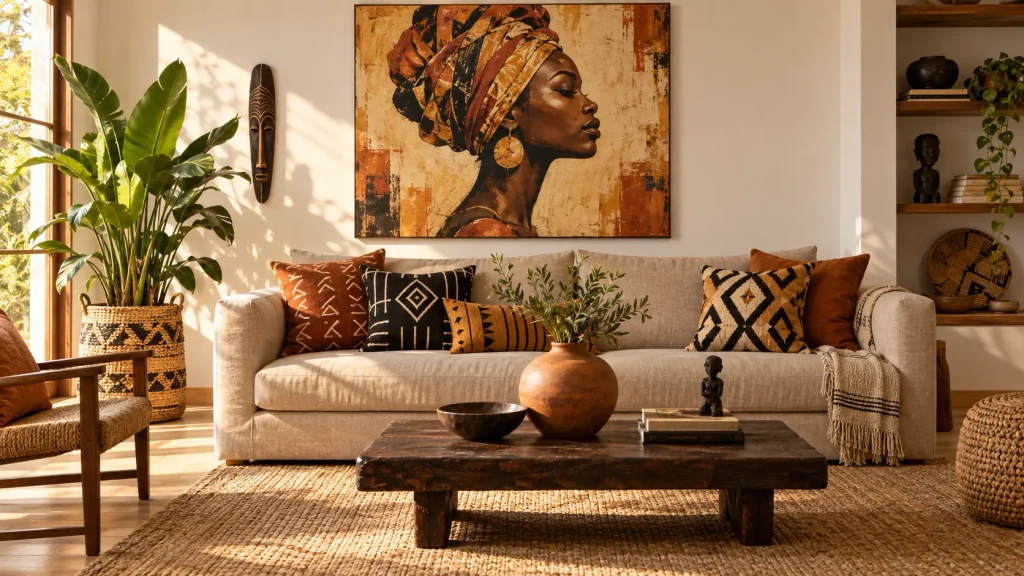
THE Scandinavian, This, however, is a geographical family with its own codes: light woods, a pale palette, thick textiles, and light cherished because it is rare. We detailed this in our guide to the Scandinavian bedroom decor, and you will see that it obeys its own logic, not that of the present time. The same goes for the Japandi style, a blend of Japanese minimalism and Nordic comfort, or for the ethnic chic decor and his taste for braided materials and narrated origins: these are universes, not synonyms.
The right way to look at things: the contemporary is a time layer which can span all these families. You can have a contemporary Japandi and a Japandi that's already dated. It's liberating, because it means you don't have to choose a side — you have to be of your time.
| Style | What it really is | immediate visual reference | Not to be confused with |
|---|---|---|---|
| Contemporary | A position in time: the codes of the present moment | Simple lines, open volumes, no ornamentation | Modernity, of which it is not synonymous. |
| Modern | A 20th-century movement, with its own body of work and rules | Clean geometry, steel, glass, concrete, the queen of functions | The contemporary, which has no date |
| Minimalist | A discipline of quantity, applicable to any style | Very few objects, free surfaces, limited palette | The decorative void or the coldness |
| Scandinavian | A regional family born from a rare climate and light | Light woods, off-whites, wool, cocooning | Minimalism, which is warmer |
| Japandi | A cross between Japanese minimalism and Nordic comfort | Low furniture, muted colors, visible craftsmanship | The generic contemporary "zen" |
| Ethnic chic | An inspiration drawn from materials and know-how from around the world | Braided fibers, handcrafted patterns, warm hues | Themed decor and exotic cliché |
The concrete markers of a contemporary interior
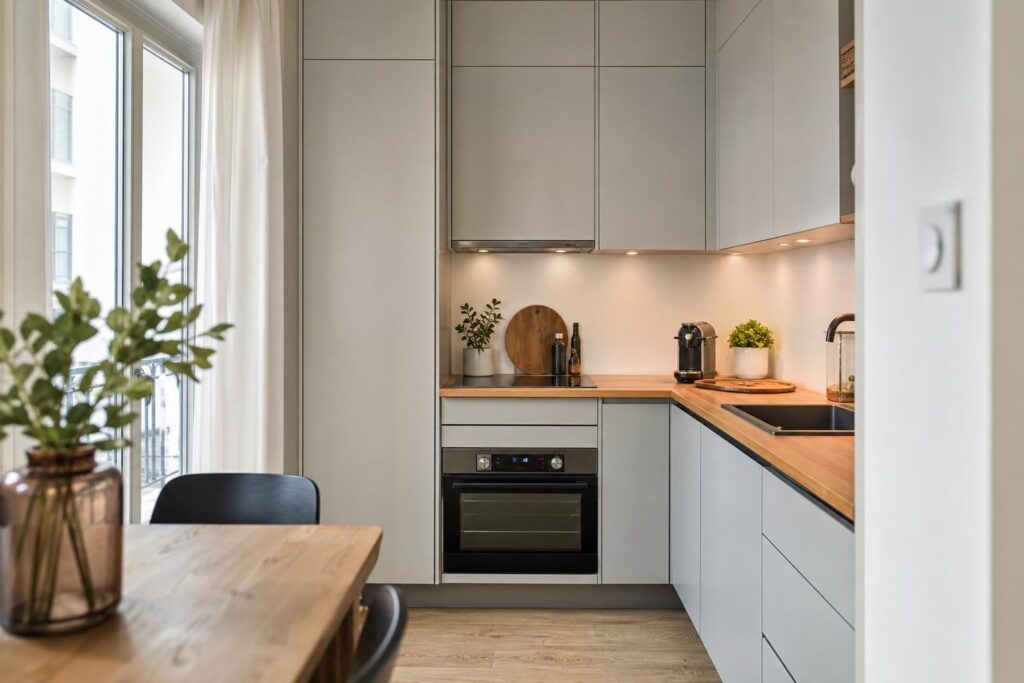
A contemporary interior can be recognized by five signs: clean lines without being harsh, open volumes where circulation is legible, raw materials left as they are, the absence of added ornamentation, and controlled contrasts — two or three strong values, not ten. The rest is a matter of taste.
Clean lines, but not cold lines
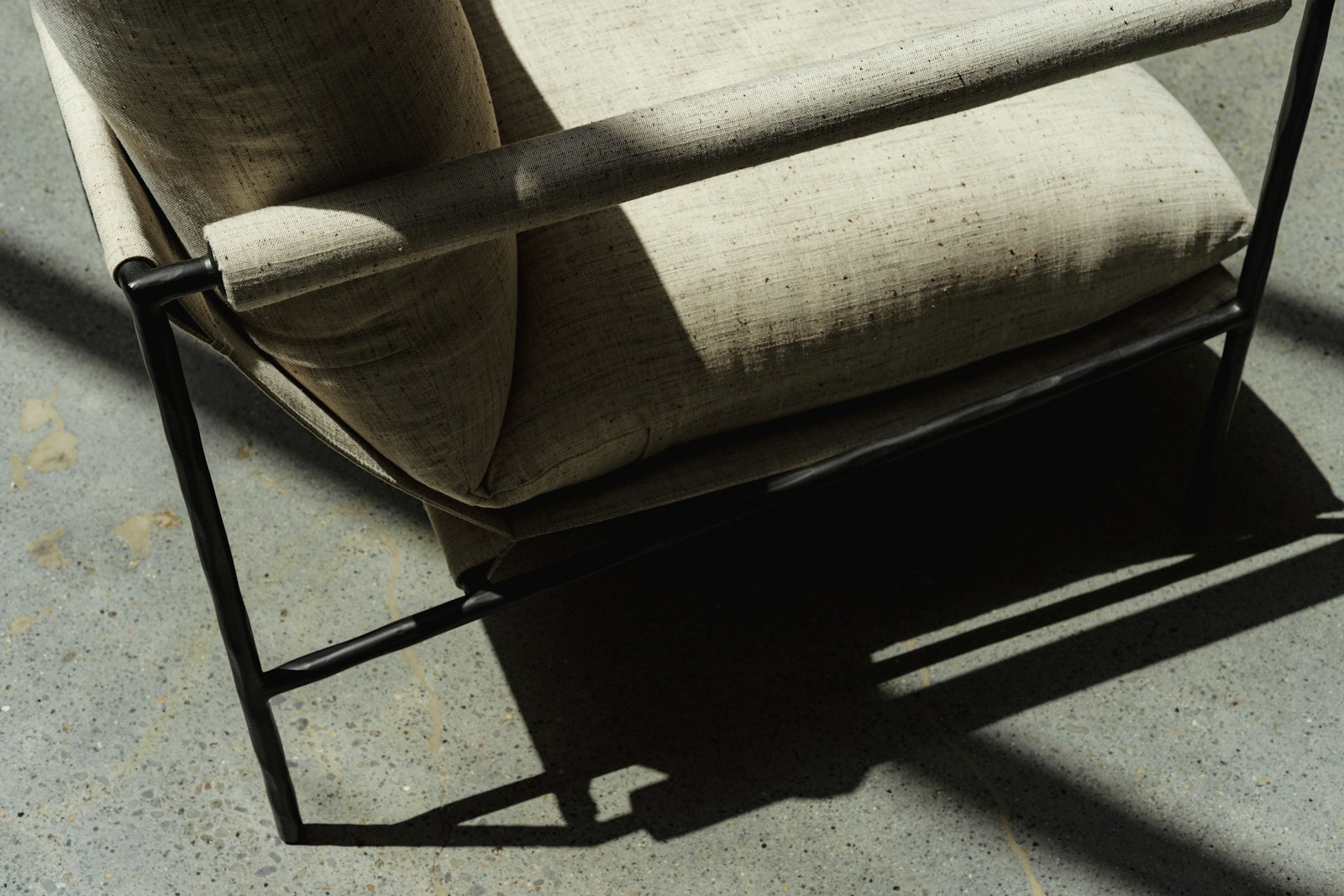
This is the most misunderstood nuance of contemporary style. Clean lines don't mean harsh. An armchair with simple shapes It can have a deep seat and a wraparound back; a table can have a clean top and slightly softened edges. What's removed is the superfluous decoration: applied moldings, turned legs, ornate handles, cornices. Not the comfort, not the generous proportions.
The rule I apply when I look at a piece of furniture is: can its design be described in a single sentence? "An oak bench, two solid sides, a top"—that's contemporary. If it takes three sentences to describe its ornamentation, it's something else entirely. This simplicity of description is an excellent test, and it costs nothing.
Open spaces and deliberate emptiness
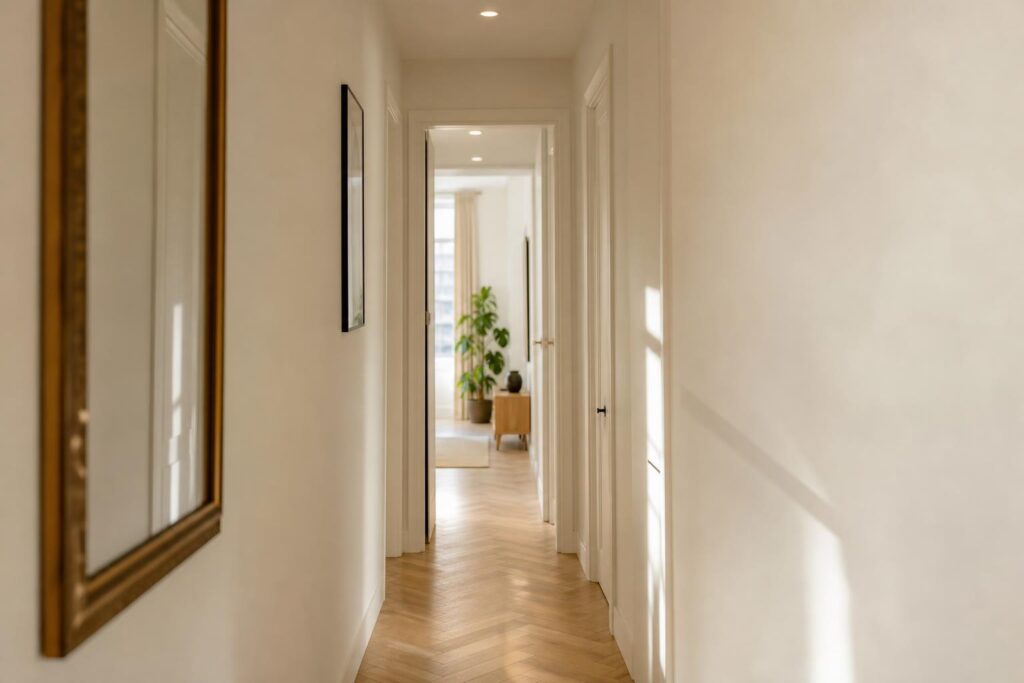
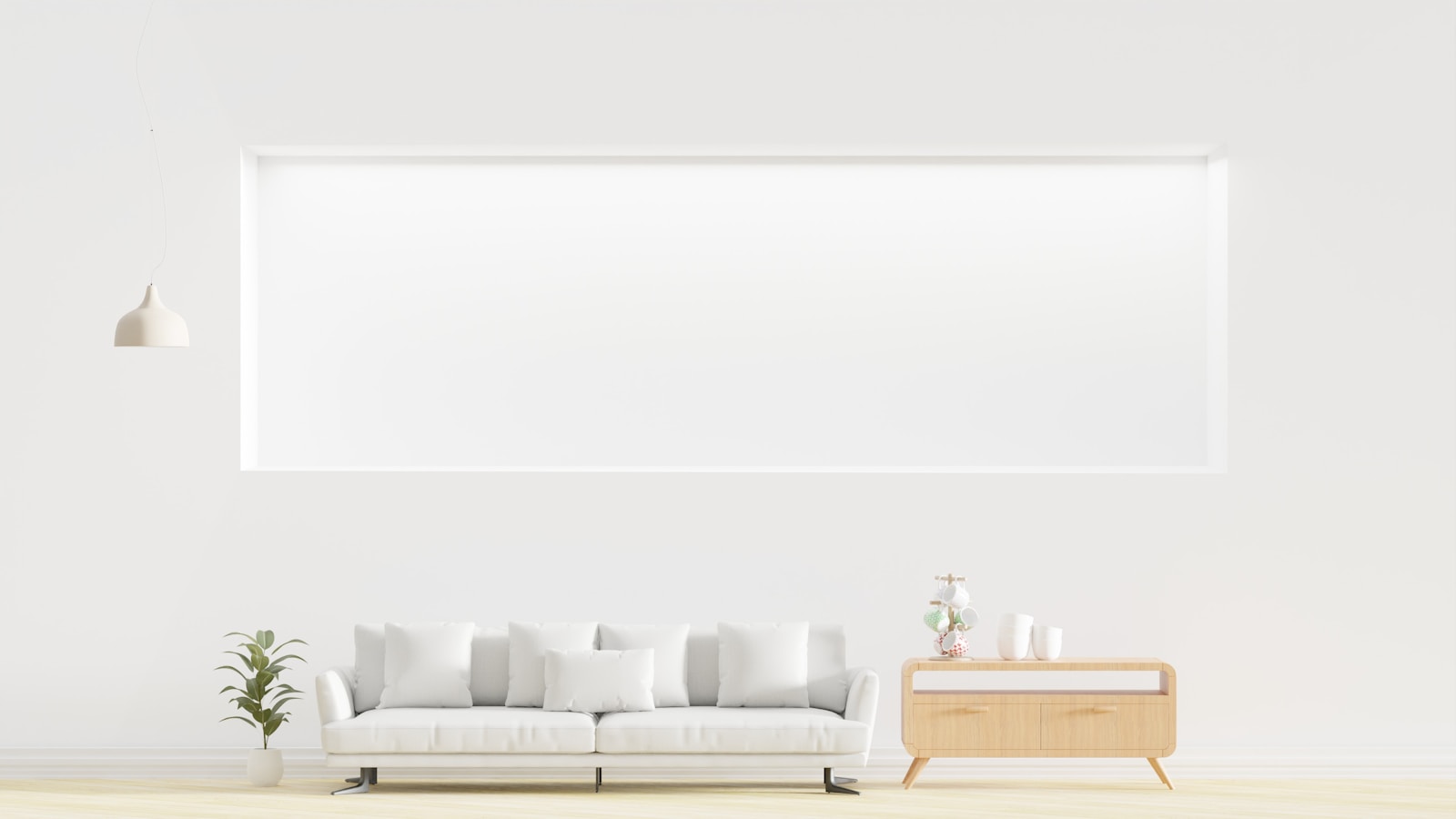
Contemporary design favors spaces that flow together and walls that breathe. This doesn't mean tearing everything down; it means leave space in the right place. A bare section of wall next to a composition, an open space in front of a bay window, a floor visible along its entire length. Emptiness is not an economy, it is a material in its own right — the one that gives value to what remains.
This is also why contemporary furniture is often raised on slender legs or placed directly on the floor: in both cases, the eye takes in the room's volume. What disrupts this effect are massive pieces of furniture placed against the wall all around the perimeter, which transform the living room into a corridor.
Bold materials and subtle contrasts
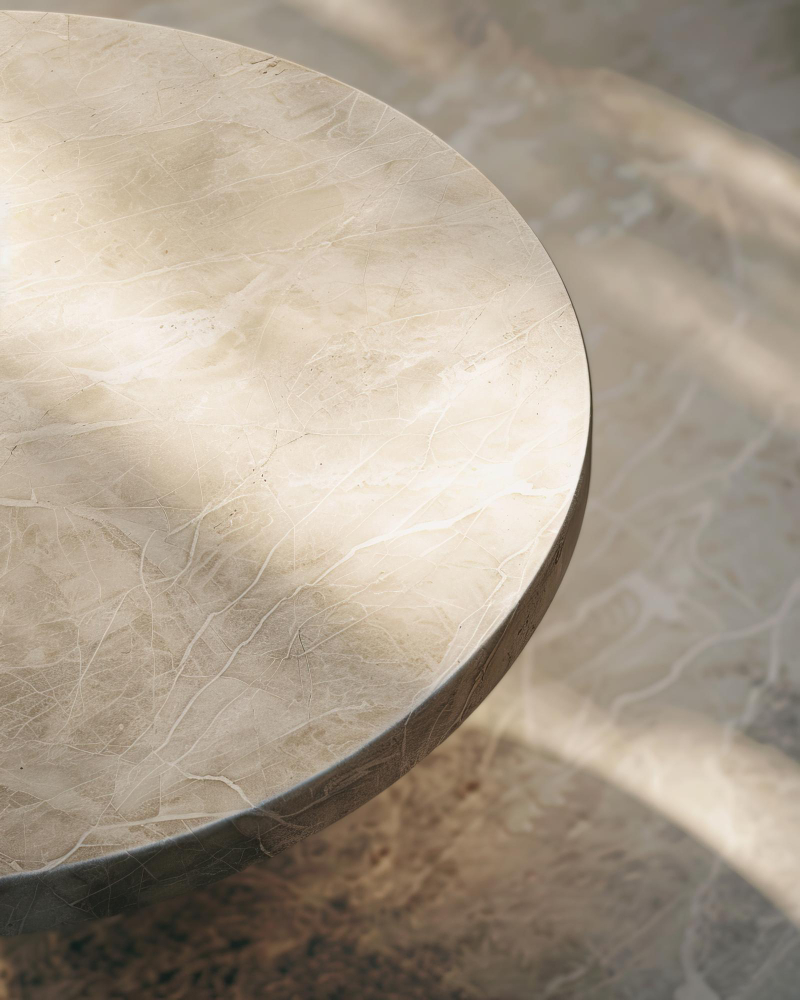
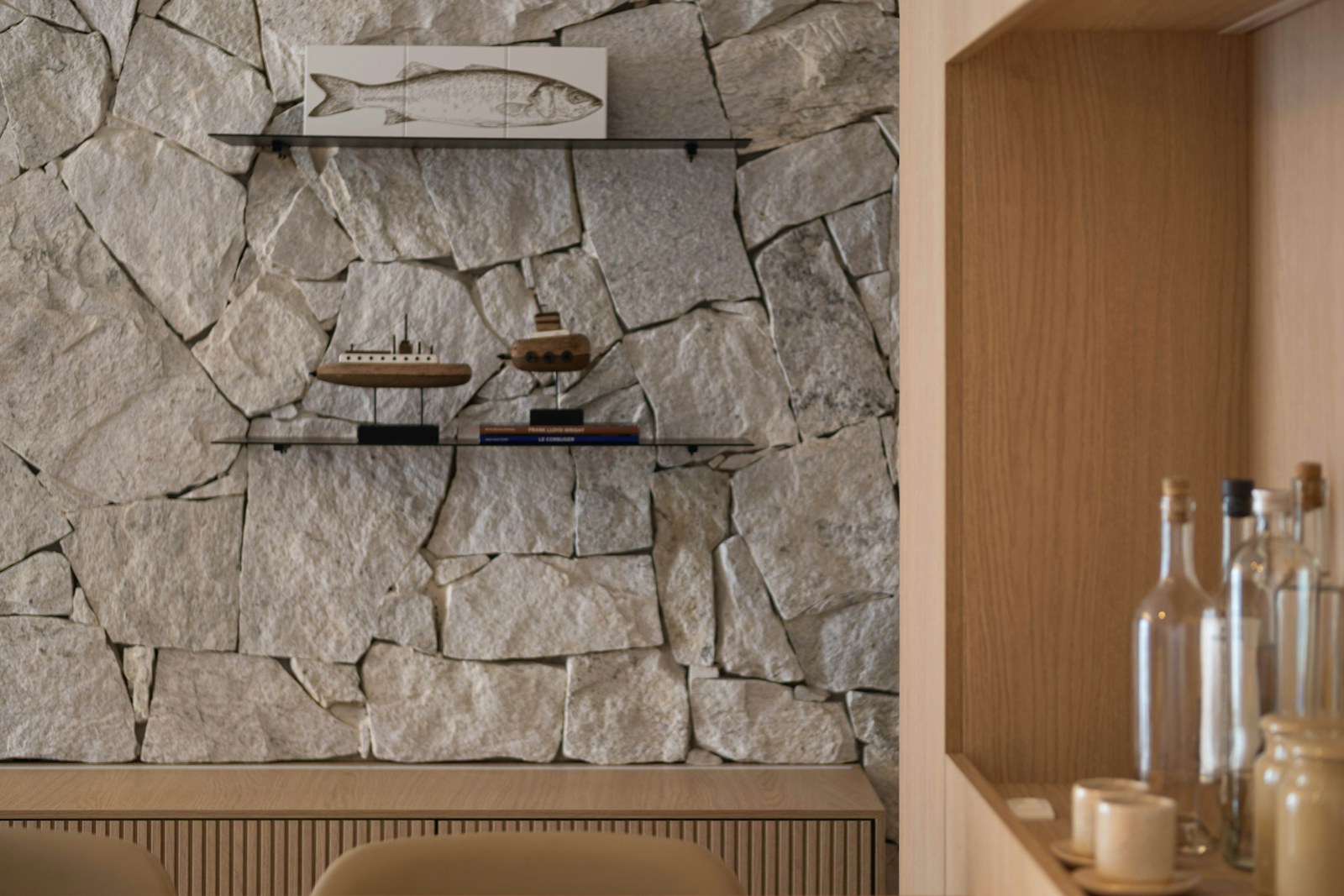
A genuine material is one that doesn't pretend: wood that shows its grain, stone that retains its texture, metal that embraces its color, unglazed terracotta, linen that wrinkles. Contemporary design prefers an honest material to a flattering imitation—and this is a point on which I am uncompromising, because this is where the credibility of a piece is determined.
- Palette : a deep neutral base (off-white, sand, greige, warm grey), a dark value to anchor, a single accent colour.
- Materials : two or three maximum per room, clearly differentiated — one wood, one textile, one mineral.
- Shapes : predominantly straight lines, one or two curved objects to break up the rigor.
- Finishes Matte or satin finishes are preferable; gloss is reserved for very small surfaces.
- Ornament : no purely decorative additions to the furniture; decoration comes through objects, art and textiles.
Video: How to create a minimalist decor (Minute Déco).
Our take on the contemporary: matter versus coldness
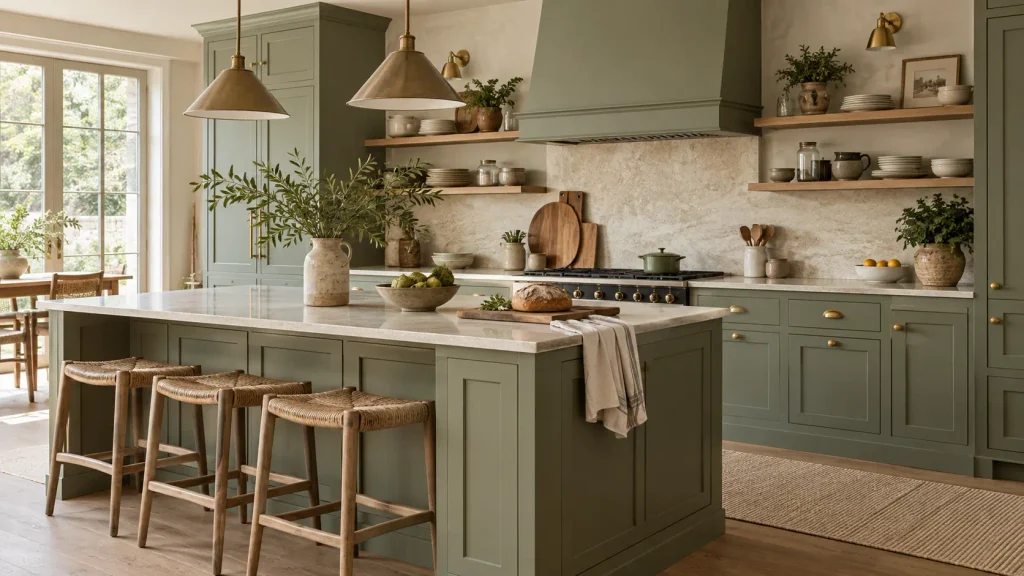
A contemporary interior doesn't have to be clinical. At La Maison Coloniale, we consistently warm it with natural materials: raw wood, handcrafted ceramics, washed textiles, and woven fibers. The lines remain clean, the feel becomes soft. This is what distinguishes a lived-in home from a showroom page.
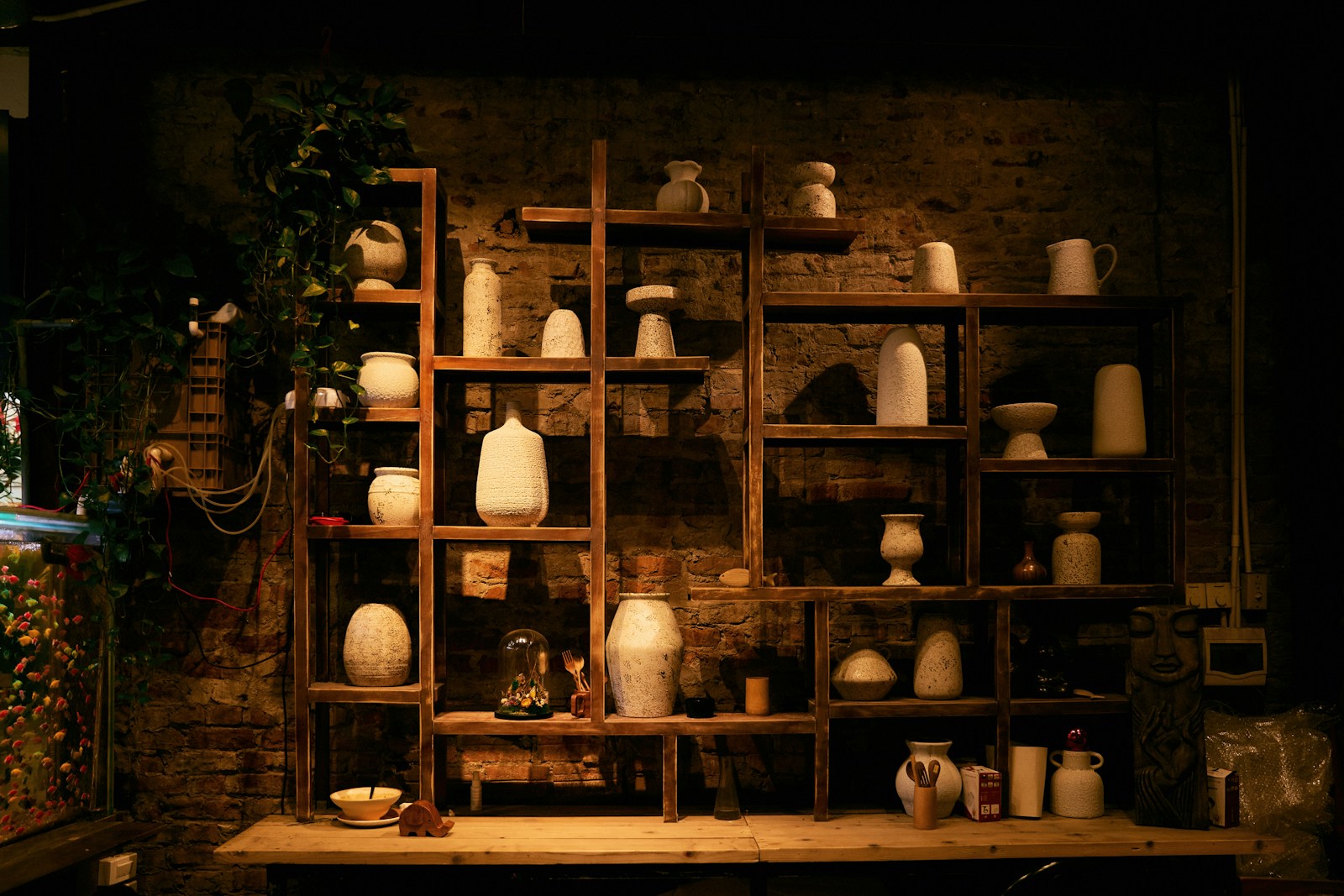
Raw wood, the antidote to the clinical
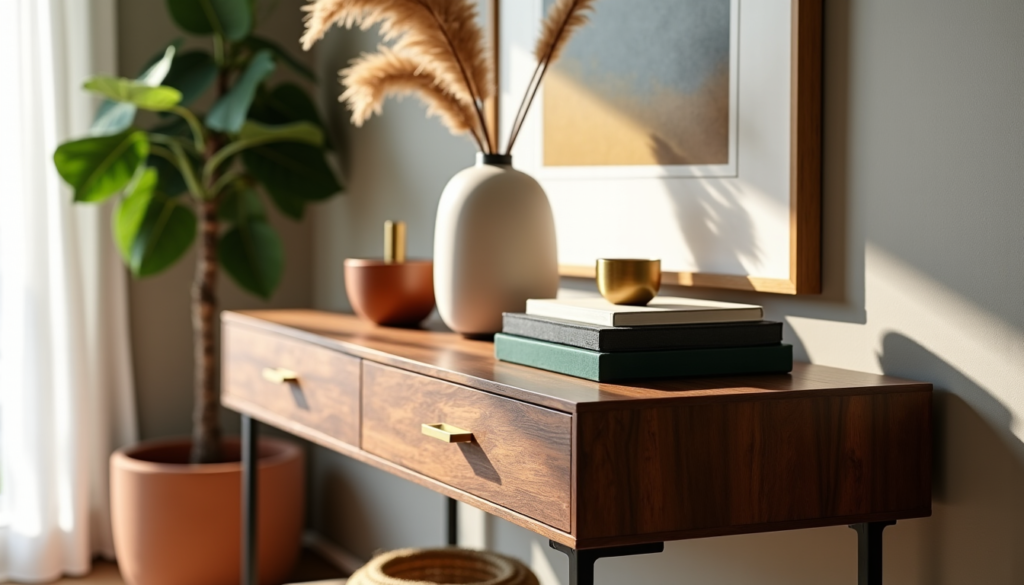
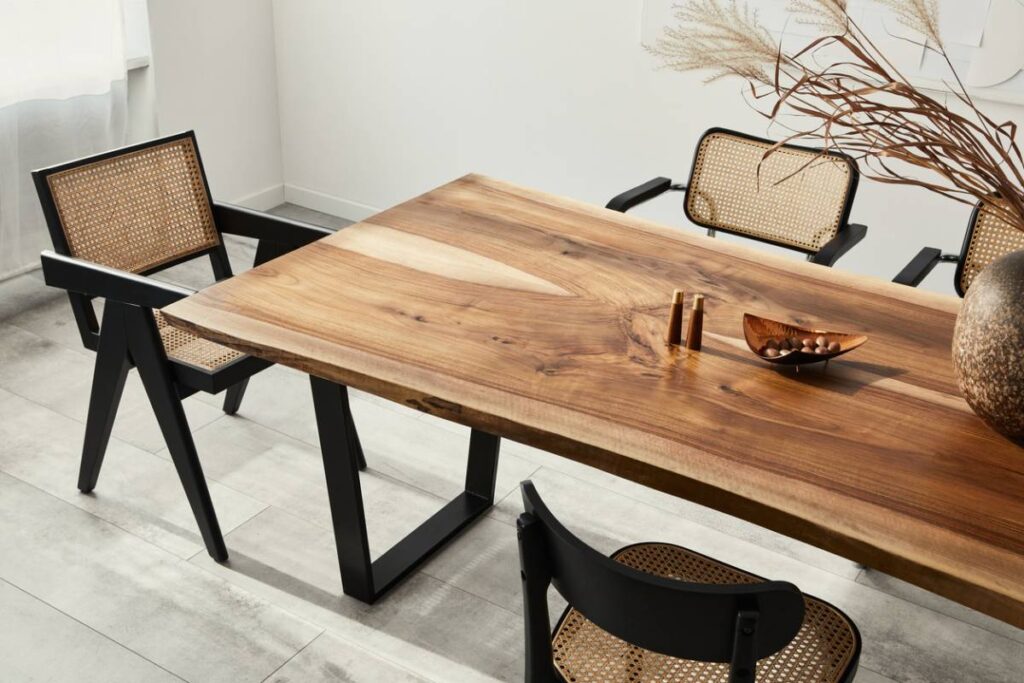
If only one gesture could be kept, it would be this one. A contemporary piece that sounds cold almost always lacks raw wood A solid oiled tabletop, a console table with visible grain, a shelf that retains its knots. Wood brings three things at once — a warm hue, a texture that the hand recognizes, and an irregularity that breaks the perfection of smooth surfaces.
The key is to leave it alone. A matte oiled oak, a waxed walnut, a barely stained ash: the finish should be as invisible as possible. As soon as you apply a glossy varnish, you get the opposite effect—a surface that reflects light like plastic and belongs to another decade.
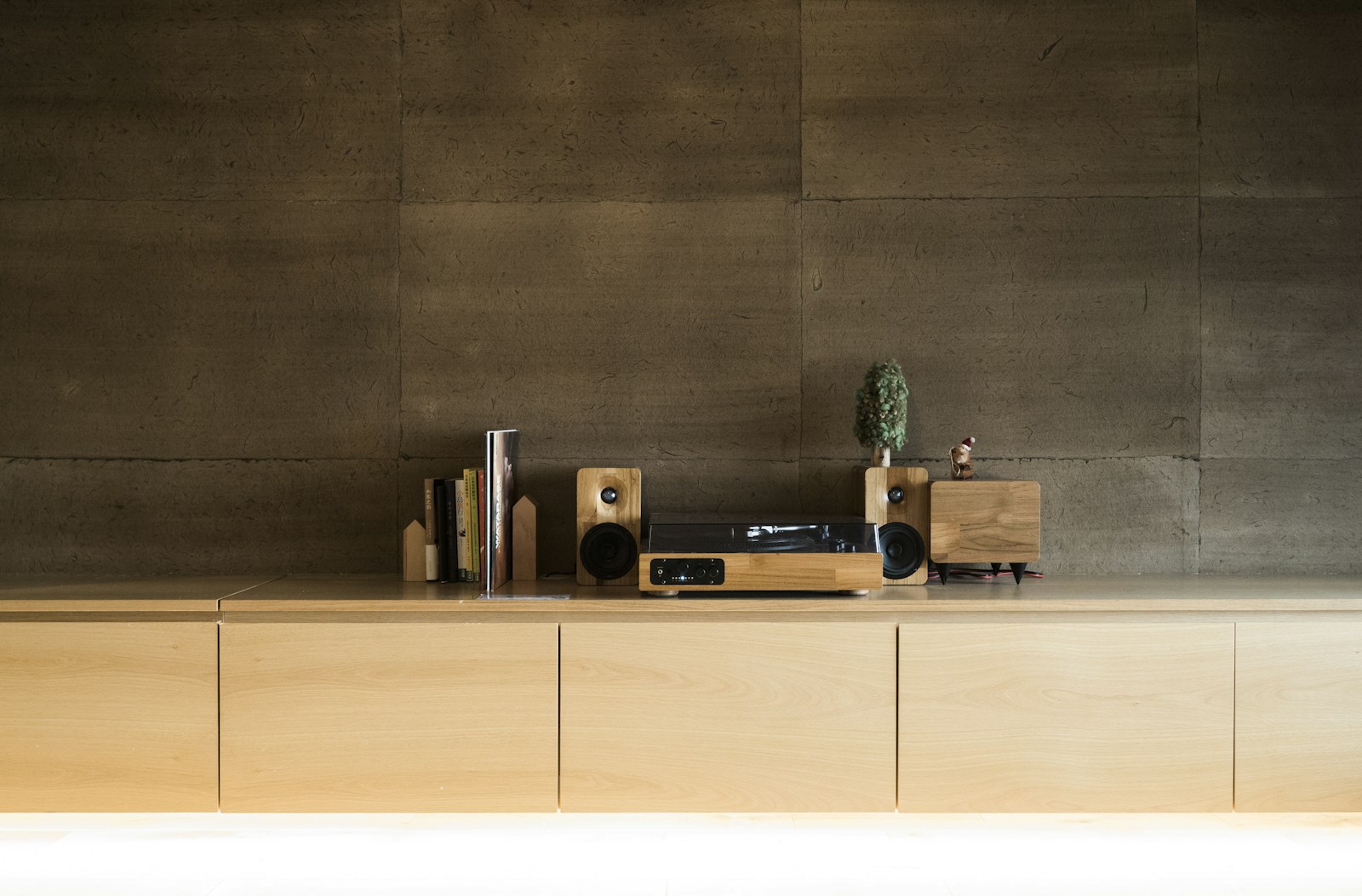
Ceramics, linen, fibers: where to place heat sources
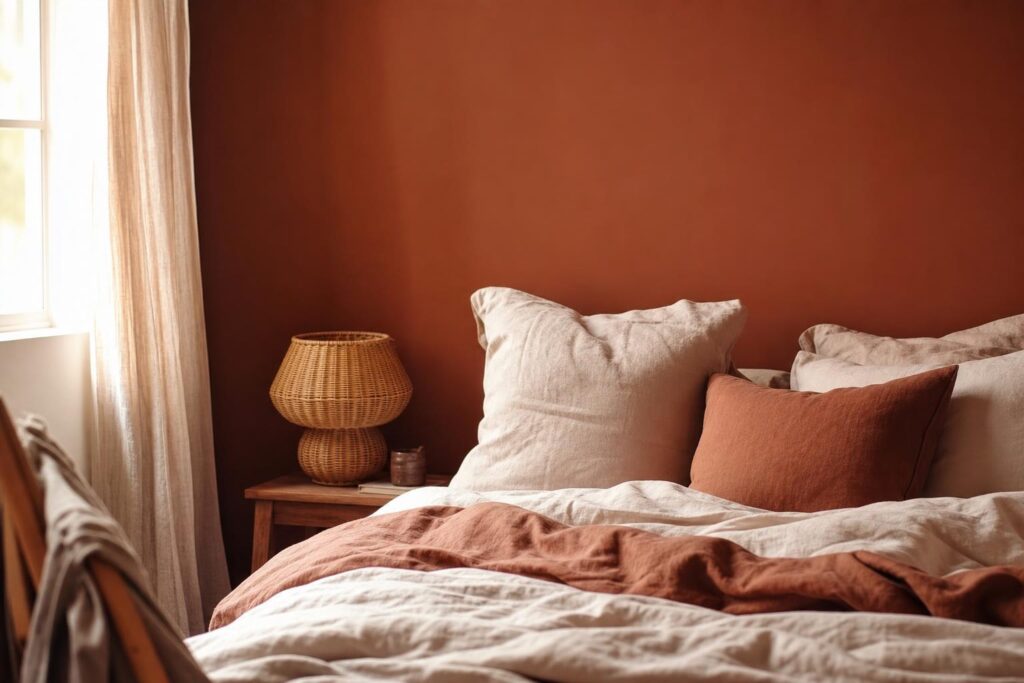
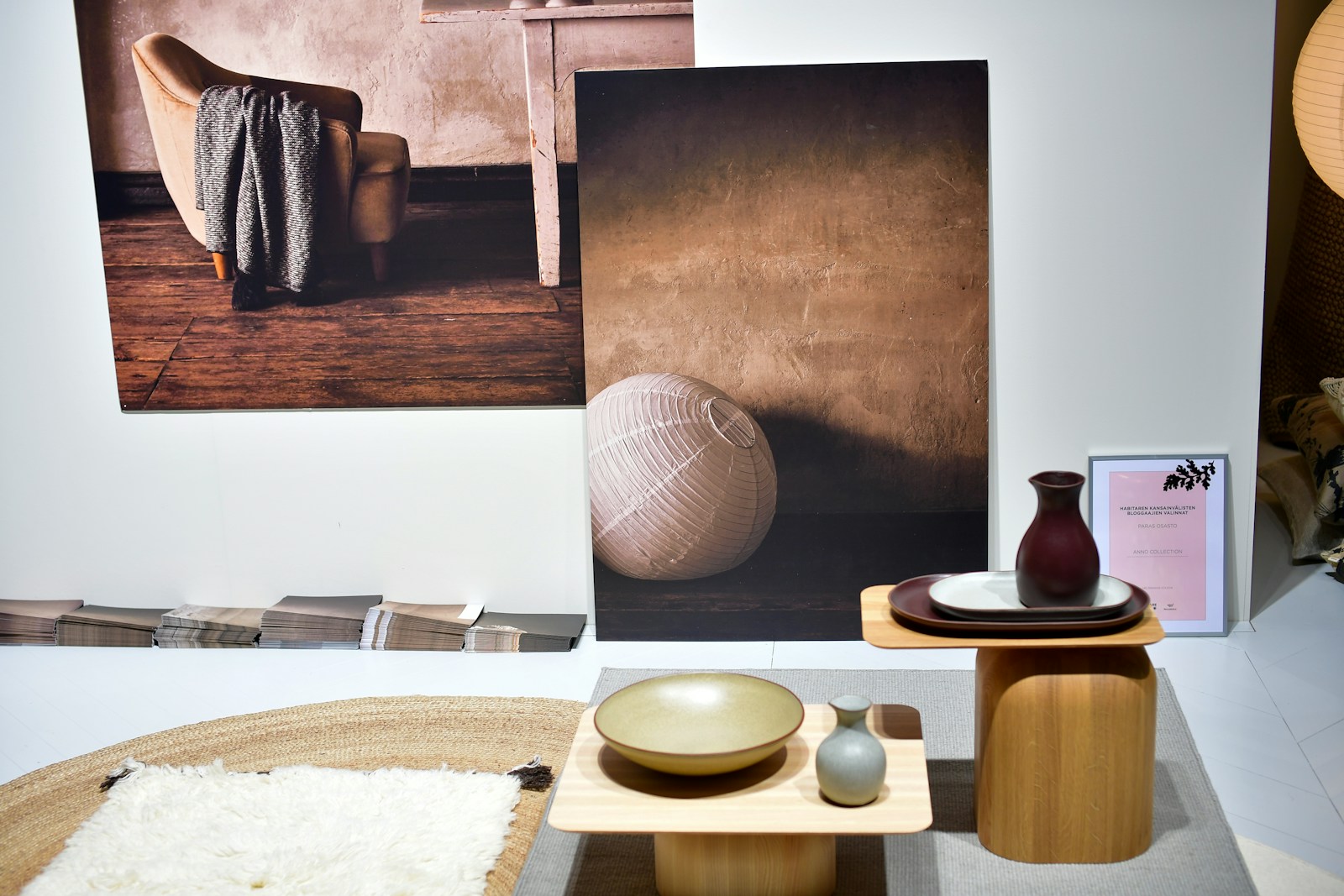
Heat is not distributed evenly; it settles in specific areas. Three locations almost always work: the light First — a lampshade made of woven fiber, rattan, or paper diffuses an amber light that no spotlight can provide; textiles then, a crumpled linen throw, a long-pile rug, heavy curtains that hang well; the hand-turned objects Finally, ceramics, terracotta, basketry, whose slight imperfection humanizes an otherwise overly structured composition.
Three related topics deserve their own article, and we address them separately in the magazine: associations of complementary colors, THE white and beige living room and the wooden slat decoration. They do not fall under the definition of the contemporary but under its staging — that is why you will not find them developed here.
A contemporary interior without natural materials is a beautiful phrase without breath: technically correct, but we don't dwell on it.
Updating an interior without tearing everything down
Good news: transforming a room into a contemporary space doesn't require construction or a renovation budget. Four simple steps are usually all it takes—lightening the space, unifying the walls, refining the lines of detail, and increasing the number of light sources. These steps are done in this order, and the third one always surprises with its impact.
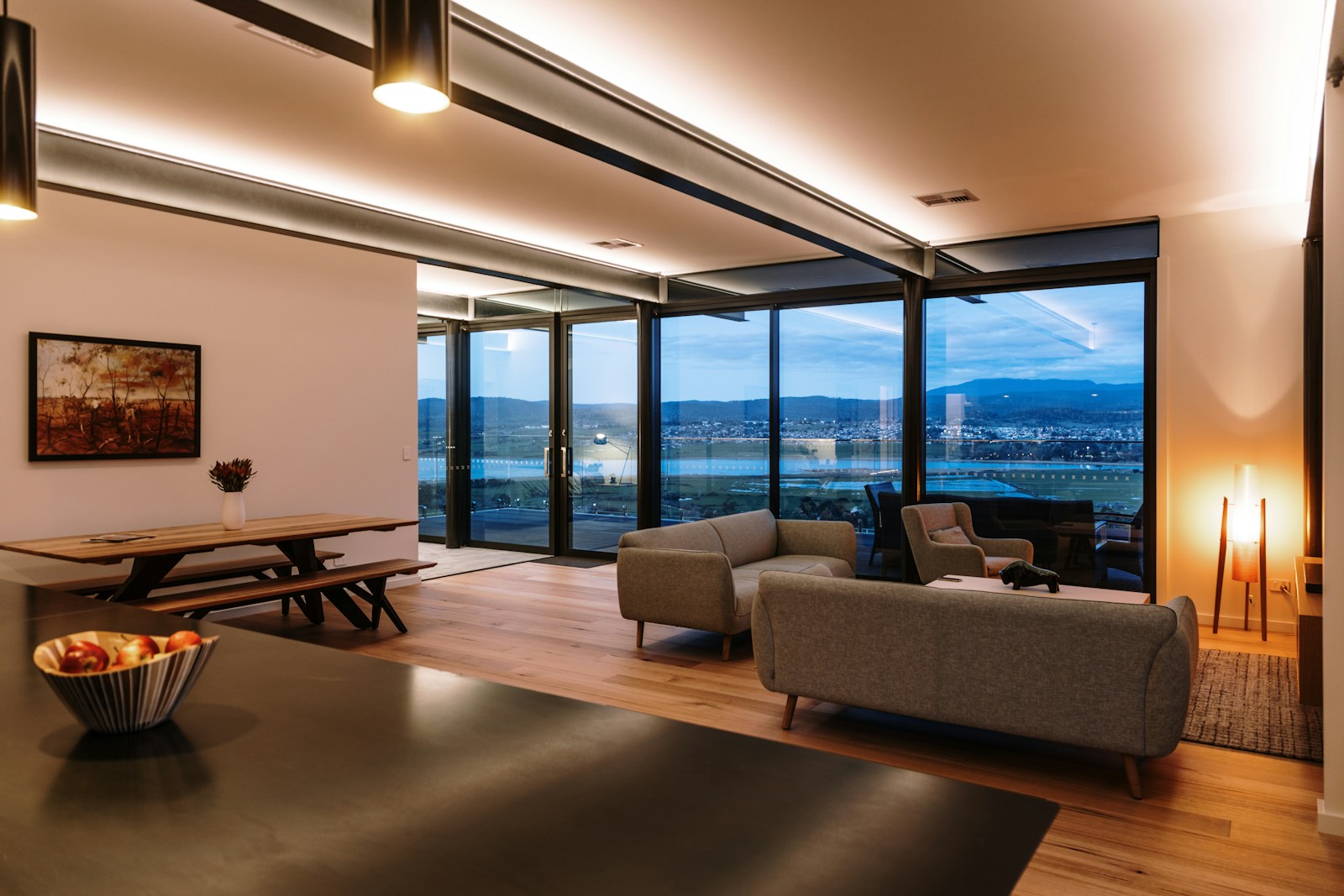
The four gestures that can turn a play around
- Lighten up before buying. Remove everything purely decorative from the room, live like that for three days, then only bring back what you truly need. This step costs nothing and does half the work.
- Unify the walls. A single neutral color from floor to ceiling, on all surfaces, including doors if they are solid. Friezes, half-height walls, and multicolored walls are the things that most quickly date a room.
- Go over the details. Handles, cupboard knobs, furniture legs, switches, baseboards: replace the ornate with straight and matte finishes. It's invisible object by object, but spectacular on the scale of the room.
- Multiply the light sources. Three low light sources are better than a central ceiling light: a floor lamp, a table lamp, a wall sconce, or a reading lamp. The space is sculpted, and the atmosphere ceases to be that of a corridor.
In what order should I proceed, and where should I stop?
Always starting with the most reversible and progressing to the most committed: we empty the space, paint, change the hardware, and add lighting. And we stop there, at least for a season, before replacing a single piece of furniture. Nine times out of ten, the urge to buy everything again disappears once the walls are unified and the light is redistributed—what was bothersome wasn't the furniture, but the visual clutter around it.
If a purchase is absolutely necessary, make sure it focuses on the structural component The sofa, the table, the low cabinet in the living room. One object with the right lines reorders everything around it, whereas ten small accessories "in the style" will never create a style. And if you extend this reflection outdoors, the question arises in exactly the same terms in the garden: we addressed it by comparing Zen, contemporary or natural garden.
💡 Tip — Before painting, test your neutral color on a large piece of cardboard placed successively against each wall, at different times of day. A contemporary color is judged in evening light as much as in midday light: that's when greys reveal their blue or green undertones.
The fake contemporary: what dates a piece
Certain reflexes instantly betray an interior that aimed to be contemporary but no longer is: glossy lacquer, a single ceiling light, an all-grey look, furniture bought from a matching collection, and imitation materials. None of these are crimes of taste—they are simply very telling markers of the era.
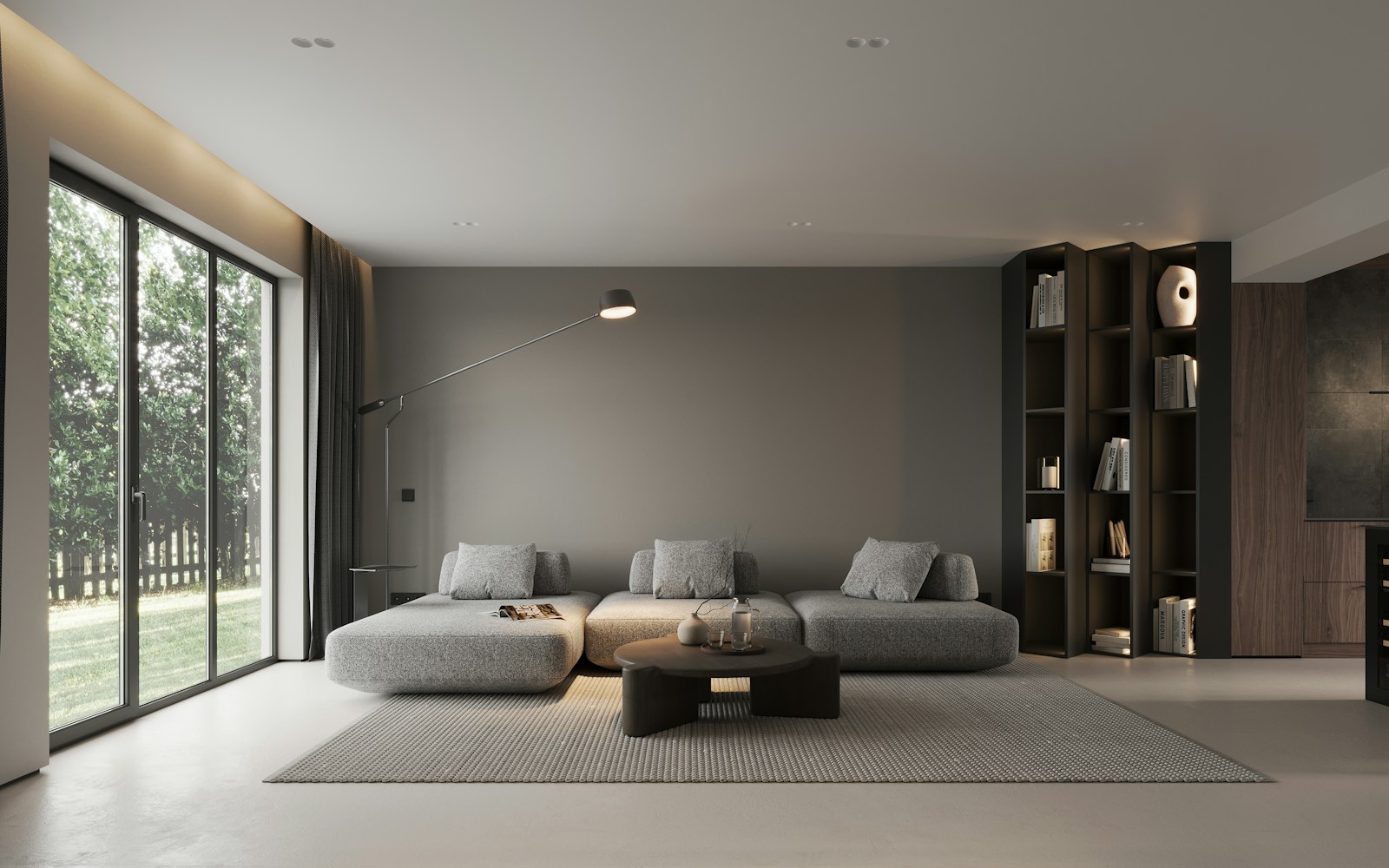
Five reflexes that betray you
- Glossy lacquer On large surfaces: kitchen fronts, cupboard doors, tabletops. It shows marks, reflects light harshly and belongs to a specific moment in interior design.
- The unique ceiling lighting A single central point compresses volumes and flattens materials. This is the most frequent and easiest aesthetic flaw to correct.
- The all-grey look Grey floor, grey walls, grey sofa, grey curtains. Grey is an excellent neutral provided it is paired with wood, ecru, and a dark color.
- The furniture is too similar. The same finish and design throughout the room create an immediate catalogue effect. Variations are necessary for a room to feel lived-in.
- Imitation materials Printed wood decor, faux marble, faux stone. Contemporary design relies on the honesty of materials; imitation is what betrays it most quickly.
The trap of the total look and the complete set
Buying a complete living room set—sofa, armchair, coffee table, TV stand, all the same wood, same color—seems like the safe choice. In reality, it's the surest shortcut to an interior that will look dated before its time, because it confines the room to a single style and a single era of manufacture. Contemporary design, on the other hand, mixes and matches: a table in one wood, seating in another material, an antique piece that didn't ask for it.
This is my favorite combination, by far: a contemporary base—unified walls, clean lines, well-distributed light—into which you slip one or two pieces with a history. A vintage sideboard, a worn rug, mismatched pottery. Nothing makes an interior feel more authentic, or more lived-in, than this contrast.
Want to know what will be contemporary next season?
See the current decorating trendsFAQ: Your questions about contemporary decor
What is contemporary style in decoration?
This is a style that follows the aesthetic codes of the present moment: simple lines, open volumes, straightforward materials, minimal ornamentation, and controlled contrasts. It doesn't correspond to any fixed era: its very definition is to move with the times, which explains why a contemporary interior from yesterday might seem dated today.
What is the difference between modern and contemporary decoration?
Modernism refers to a design movement that emerged in the 20th century, with a clearly identifiable body of work and aesthetic: clean geometry, industrial materials, and function above all else. Contemporaryism doesn't designate any specific period; it names what is being done now. The former is visually dated, the latter is constantly evolving.
Does contemporary design have a starting date?
No, and that's what makes it unique. A historical style has a starting point, while a contemporary style doesn't: it refers to the current state of affairs at the moment of speaking. Its reference point is constantly shifting, so much so that an interior described as contemporary fifteen years ago is no longer so.
How to make a contemporary decor feel warmer?
By adding natural materials without altering the lines: a raw, oiled wooden tabletop, linen or wool textiles, ceramics and wickerwork, and several low-level light sources instead of a ceiling light. The structure remains clean, the feeling becomes soft.
Can you mix antique furniture with contemporary decor?
Yes, and that's precisely what yields the best results. A contemporary base—unified walls, clean lines, well-distributed light—perfectly complements one or two antique pieces. The contrast in materials and designs makes the whole space feel lived-in, whereas perfectly matched furniture would look like a catalog.
Which painting should I choose for a contemporary decoration?
A large-format work rather than several small ones, a thin, matte frame or no frame at all. Abstract, graphic, or photographic subjects work naturally, but the decisive factor remains scale: a painting that is too small on a large wall weakens the entire composition.
Contemporary style isn't about buying décor; it's about being present in your home: lines that speak for themselves, open spaces that breathe, and materials that tell their true story. The rest—your belongings, your colors, that one-of-a-kind heirloom piece—is what will make this interior truly yours, not a relic of a bygone era.