Our article in brief
- A kitchen is decorated by layers : first the materials that are left visible, then the objects, finally the fabric and the plant.
- THE wall is the most cost-effective surface in the room: paint, battens, frames, decorative backsplash — the effect is immediate, the commitment minimal.
- THE open shelves They are useless if you put just anything in them: you only display what you use often, in only two or three subjects.
- Linen textiles, fresh herbs And patinated objects are what distinguish a lived-in kitchen from a showroom kitchen.
- Three easy-to-create atmospheres at home: modern but warm, wood and white, vintage and recycled.
There are two kinds of kitchens. The showroom kitchen, immaculate, where everything is perfectly in place and you wouldn't dare set down a glass. And the one you walk into at the end of the day: a linen cloth draped over the oven handle, three jars of lentils lined up on a shelf, a wooden worktop that's got a few marks but looks perfectly fine. I'll let you guess which one makes you want to stay.
When you're looking for a decorating idea When it comes to kitchens, we often think about layout, wall cabinets, and pendant lighting. These are all important considerations, but they aren't what gives a room its soul—and we dedicate separate articles to them. Here, I'm talking about everything else: the materials we choose to leave visible, the objects we don't hide away, the wall we dare to decorate, the fabrics, the plants. Decoration in the truest sense, the kind that can be done in a weekend without taking down a single door.
Kitchen decorating ideas: it all starts with the materials
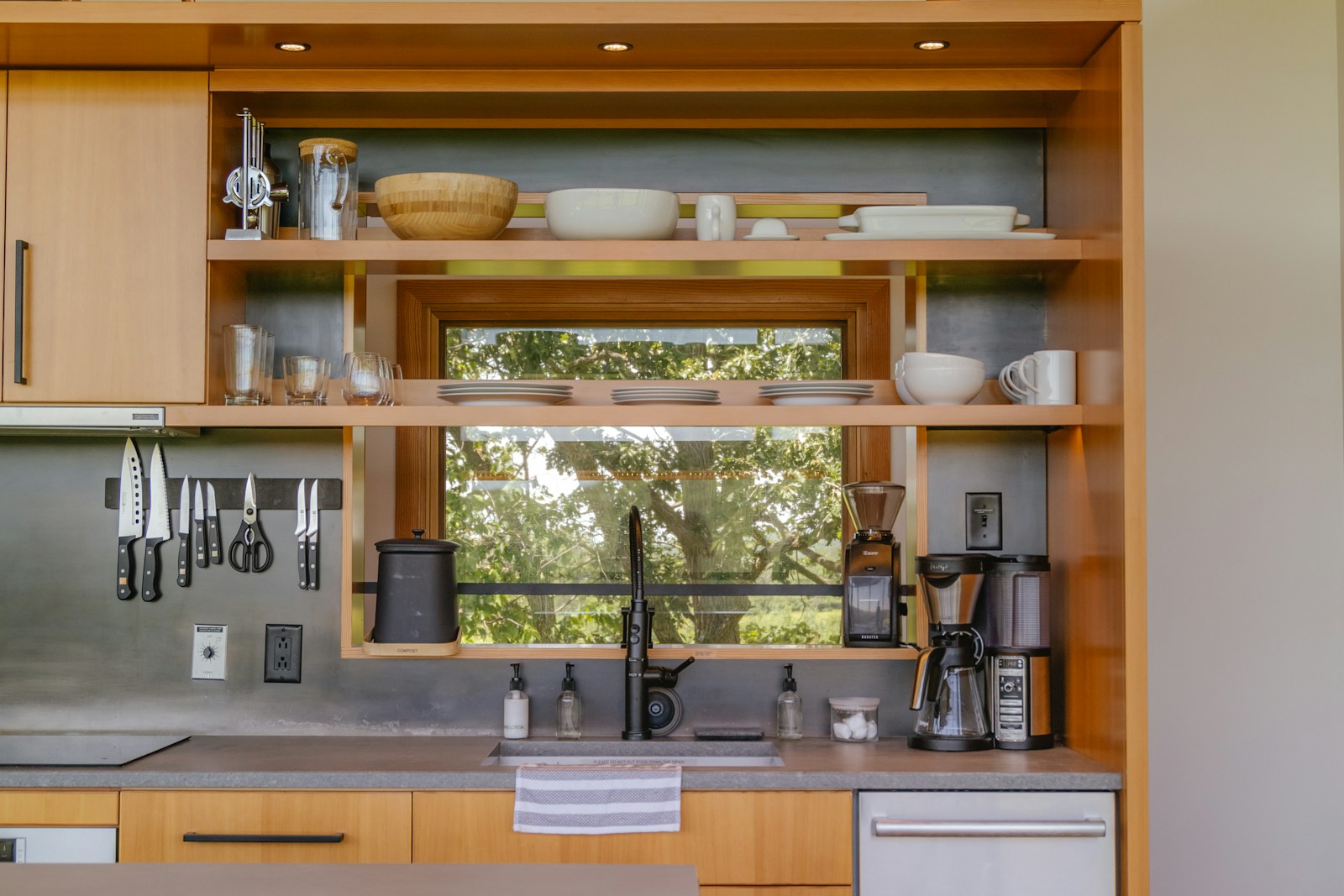
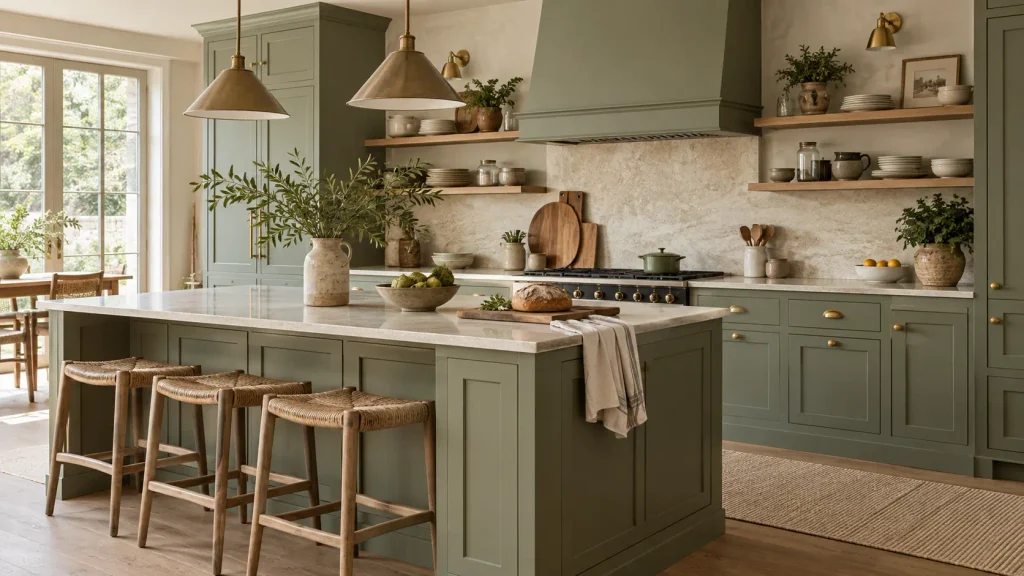
Before buying anything, look at what your kitchen already shows. A completely smooth room—matte melamine, stainless steel, resin—has nothing for light to catch on. This is where the feeling of coldness that is wrongly attributed to the color of the furniture comes from. Add two or three living organisms Often, that's all it takes to warm things up, without changing a facade. A living material is simply one that evolves: it develops a patina, scratches, and absorbs light instead of reflecting it. That's our first layer of decoration, and by far the most effective.
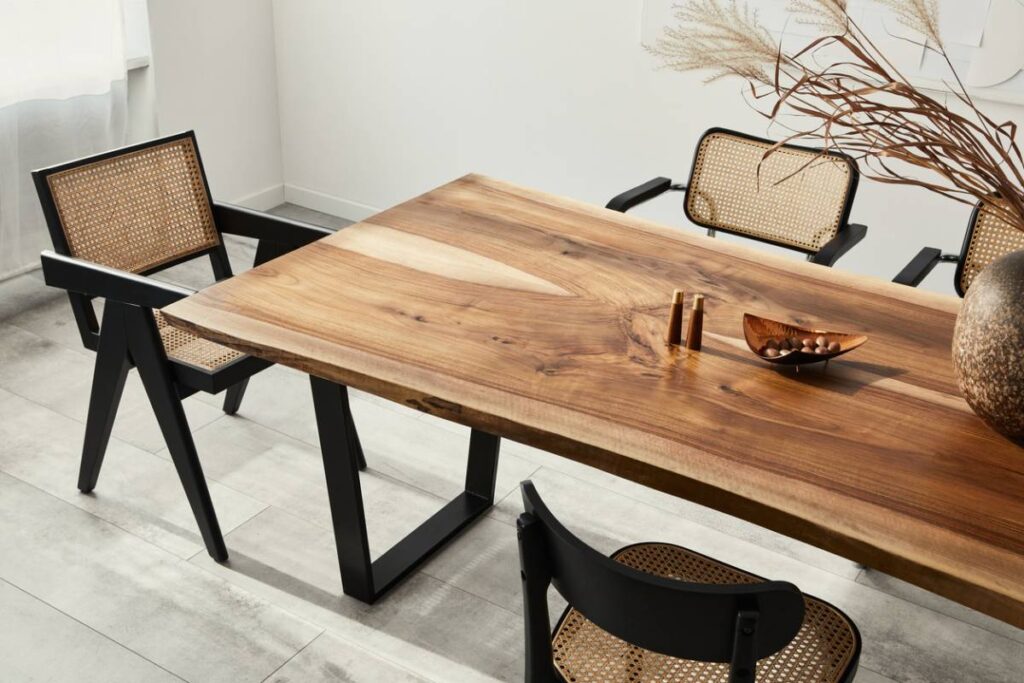
Raw wood, which warms up a kitchen in an instant.
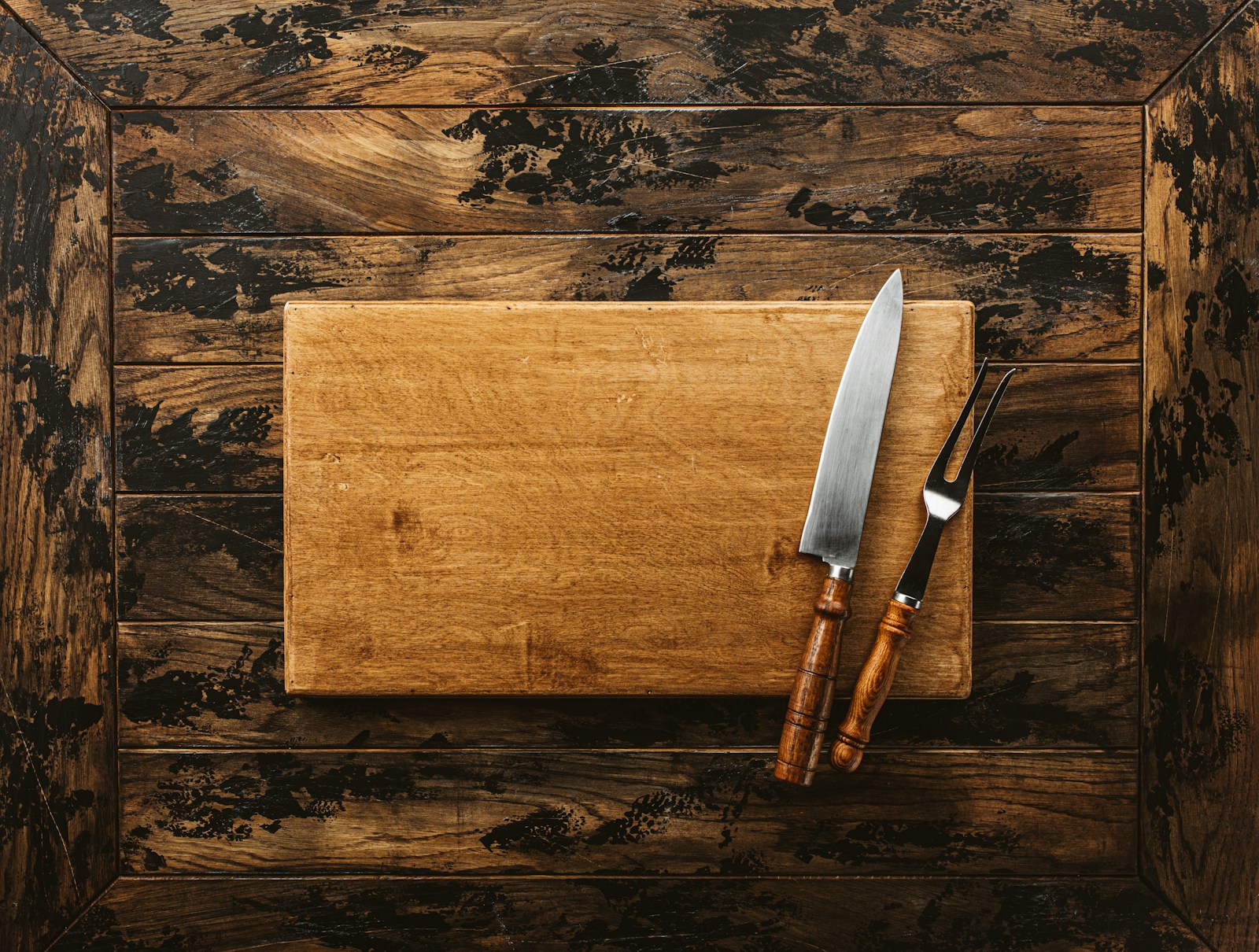
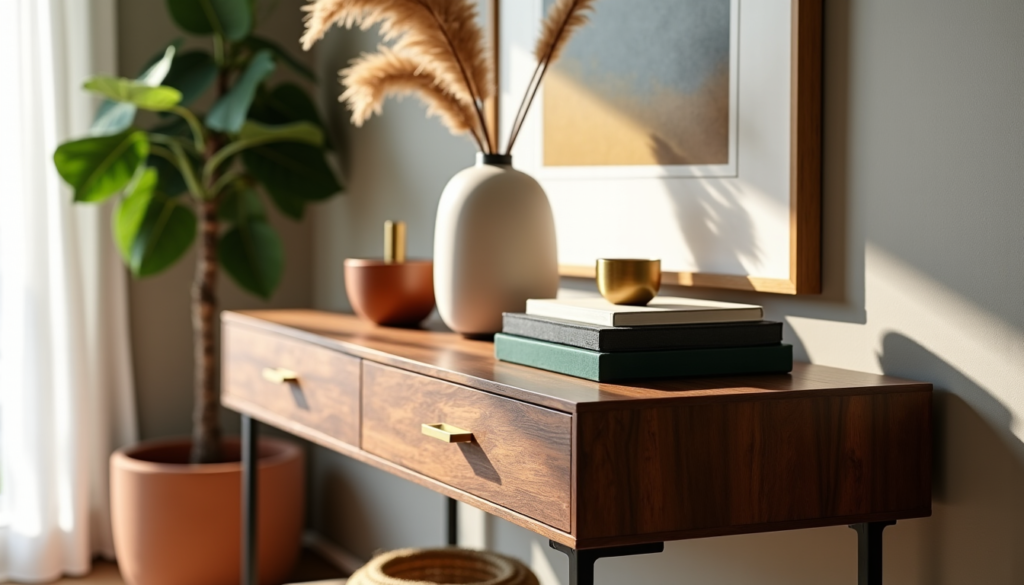
Wood is the most versatile material in the kitchen because it works on every scale. You don't need a massive worktop: three chopping boards leaning against the backsplash, a beech stool, an oiled oak shelf, a walnut knife block, and the room's atmosphere changes. Prioritize the oiled solid wood Rather than imitation laminate: it's the real grain and its depth that create the effect, not the printed pattern. And wood that shows marks isn't damaged wood—it's wood that's beginning to tell the story of your kitchen.
Terracotta, stoneware and ceramics: the trace of the hand
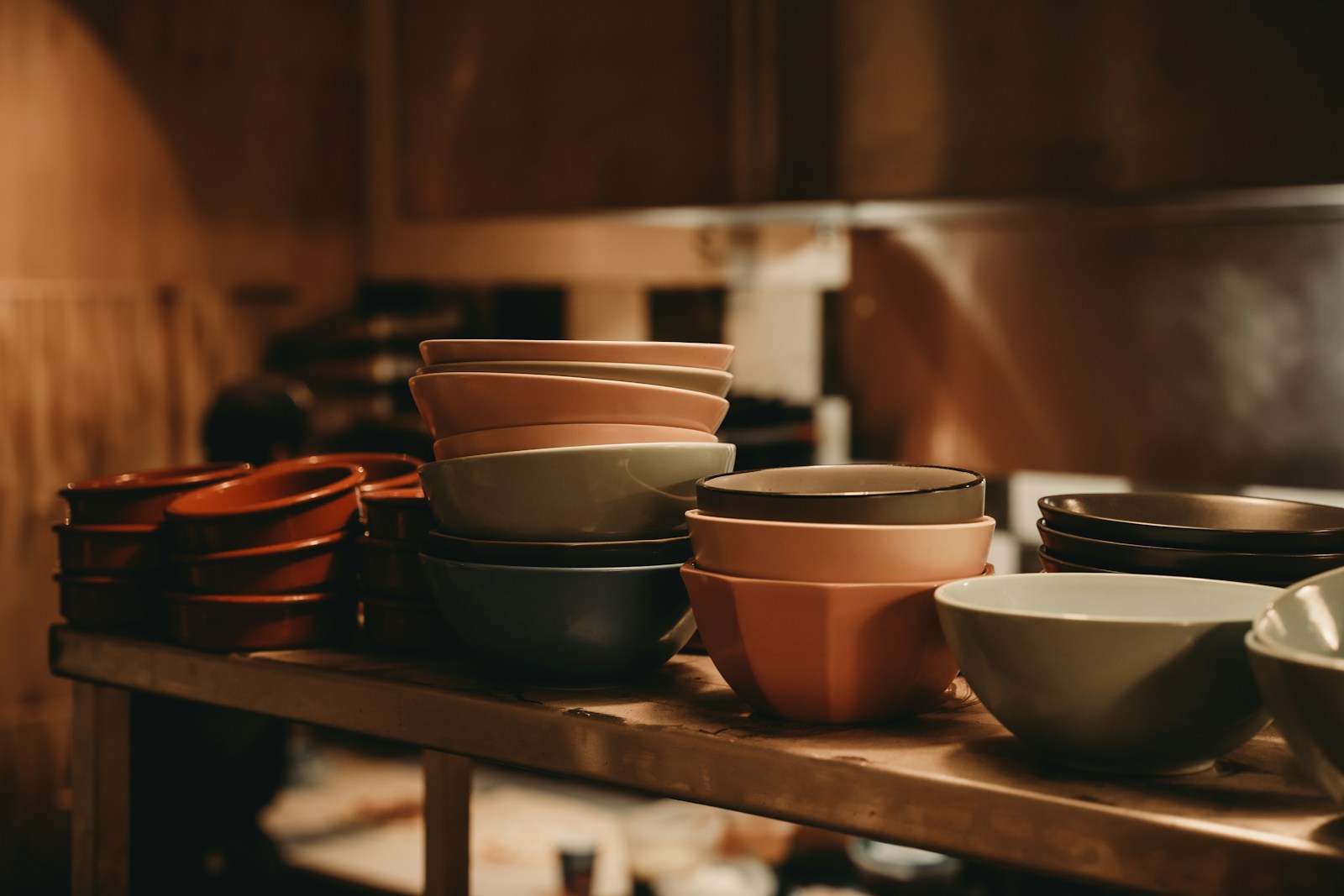
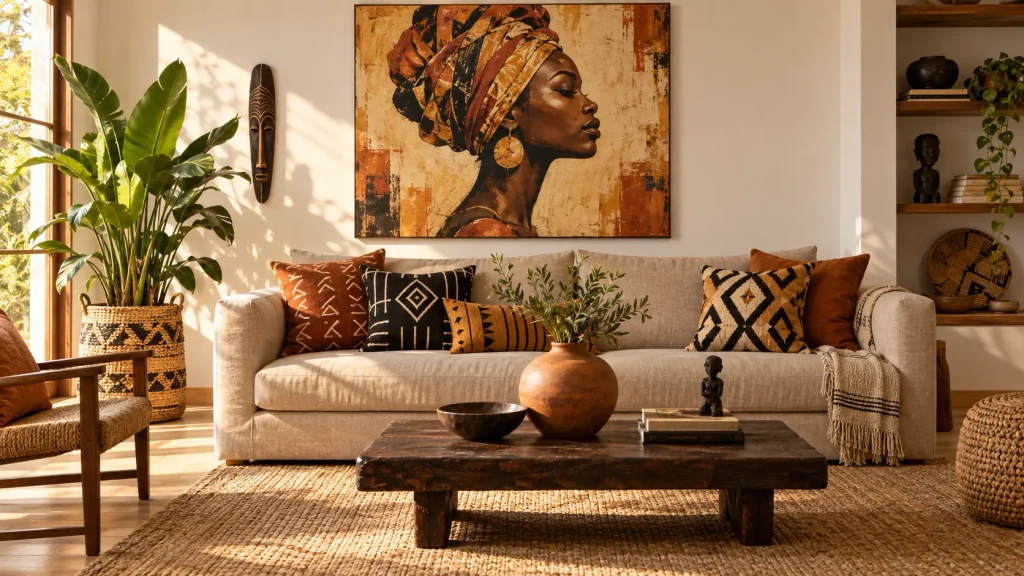
This is my favorite category because it ticks all the boxes: useful, beautiful, and full of history. A baking dish in terracotta, A stoneware pitcher, four mismatched hand-thrown bowls—these objects have uneven thicknesses, glazes that run slightly, hues that vary from one piece to the next. This is precisely what industrial production cannot achieve, and this is what makes a kitchen so touching. official list of crafts France boasts several hundred distinct crafts, including ceramics: finding a potter near you is often simpler than you might think. If this resonates with you, our guide to the... ethnic chic decor it carves the same vein of hand-shaped materials.
Brass, stone, and caning: the touches that age beautifully
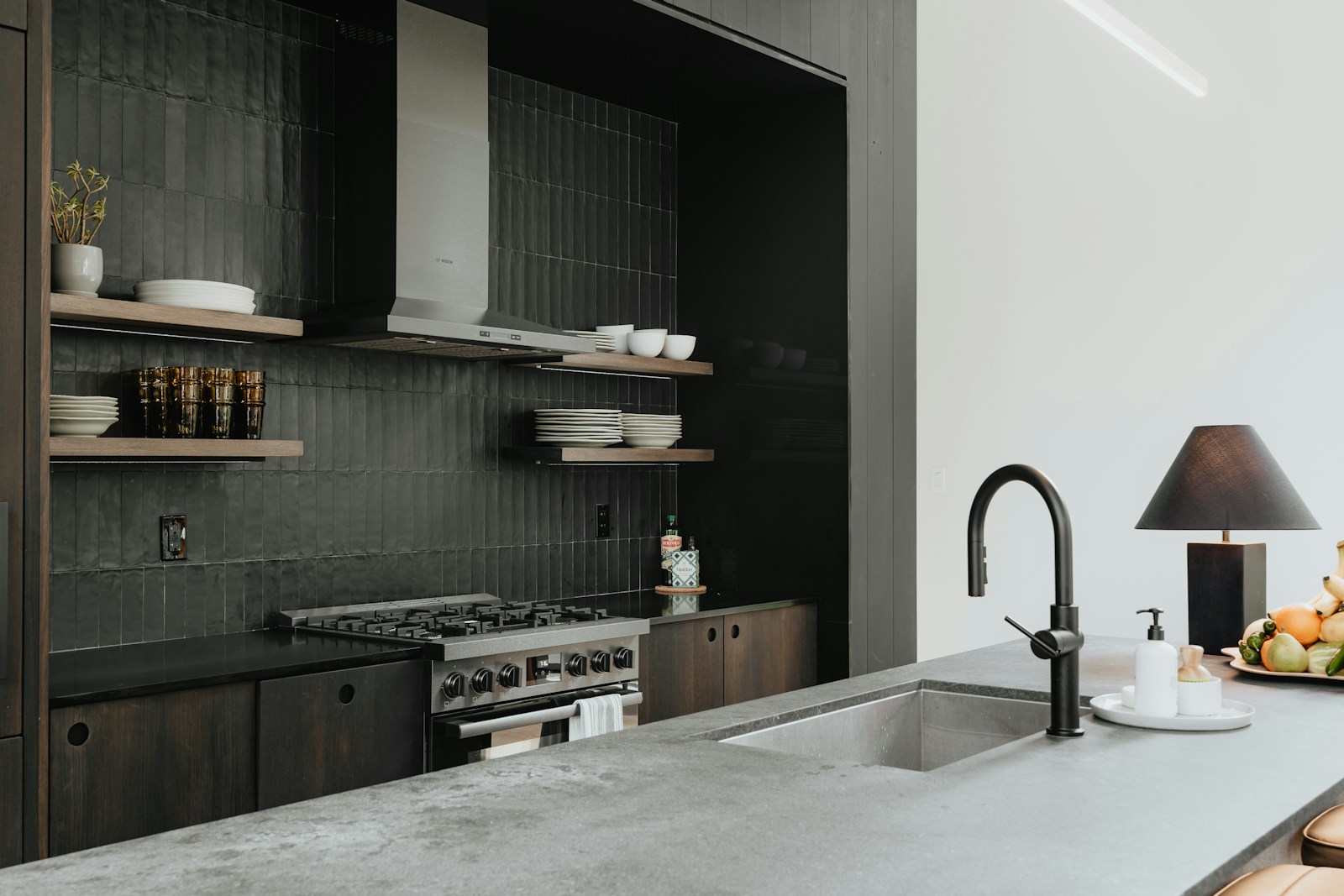
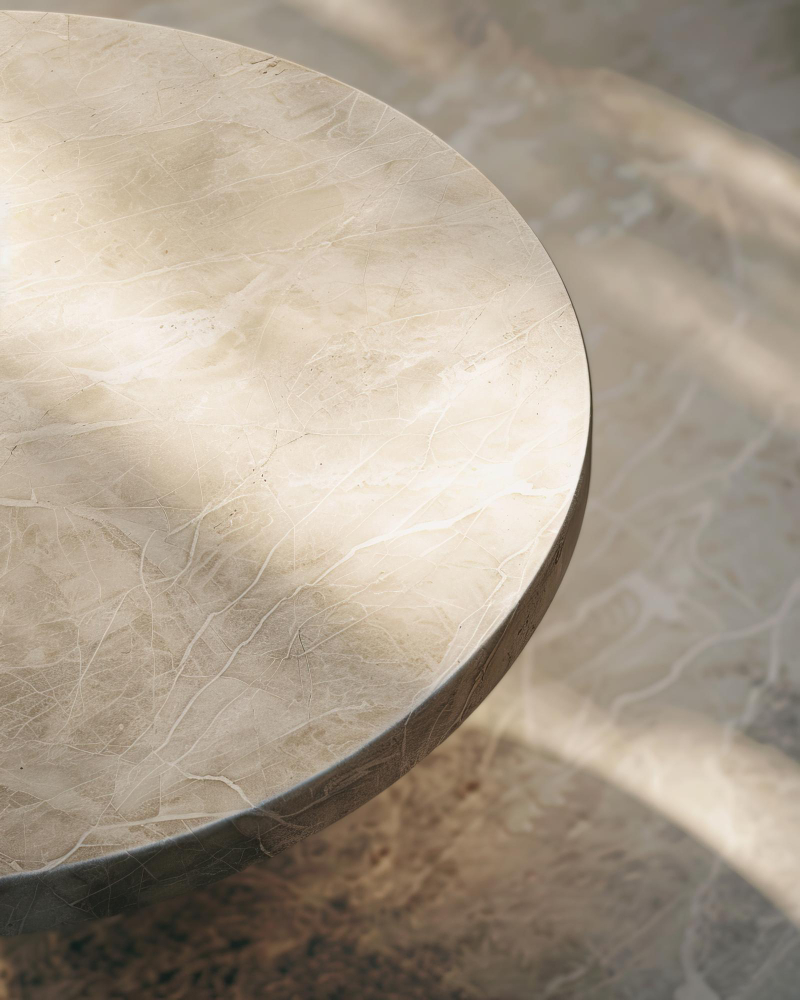
What remains are the accentuating elements, those that are used in small quantities. brass It gives a soft shine, very different from chrome: handles, faucets, small trays—it tarnishes over time, and that's precisely its appeal. natural stone — a mortar, a trivet, a marble slab — introduces a freshness and veining that no printed decoration can equal. caning And rattan, finally, lightens the space: a caned cabinet door, a hanging basket, a woven stool break up the bulk of the cabinets. The principle remains the same everywhere: two dominant materials, one accent.
| Matter | What it brings | Where to dare to use it in decor | What she is asking |
|---|---|---|---|
| Solid wood (oak, beech, walnut) | Warmth, veining, patina | Shelves, boards, stools, utensils | Oil or saturator, no standing water |
| Terracotta | Soft matte finish, warm hues | Oven dishes, jars, herb pots | Porous: clear water, little detergent |
| Stoneware and glazed ceramics | Depth of color, reflections | Dishes, salad bowls, wall tiles | Durable; dishwasher safe depending on the enamel |
| Brass | A soft sheen that develops a patina | Handles, taps, trays | It tarnishes — to accept or to polish |
| Natural stone | Freshness, unique veins | Mortar, trivet, board | Sensitive to acids (lemon, vinegar) |
| Cane and rattan | Lightness, transparency, braiding | Furniture doors, baskets, seats | Keep away from water splashes |
Video: 11 decorating tips for the kitchen (Secret Decoration Boot).
Kitchen wall decor: dressing up the wall without cluttering it
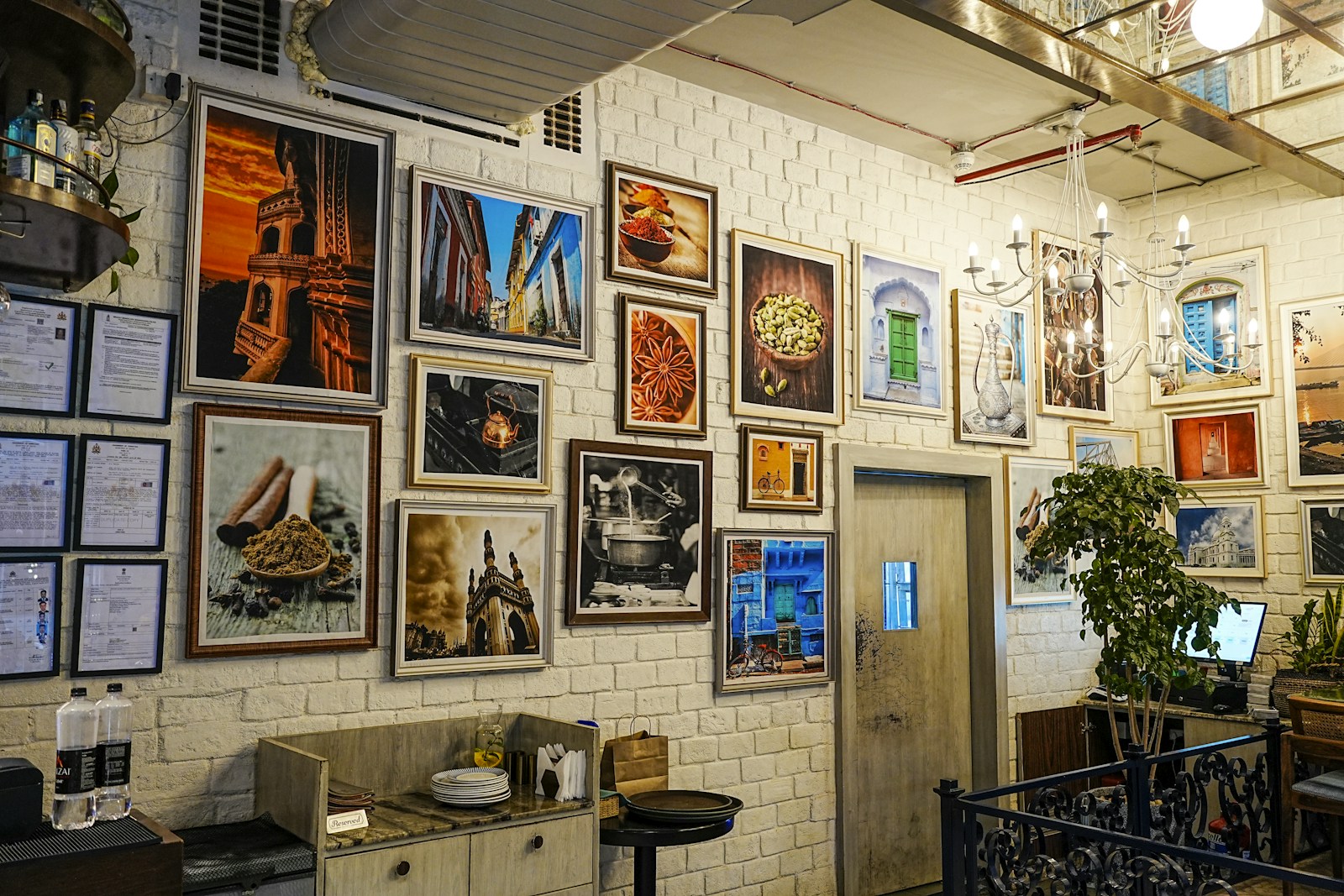
In a kitchen, the walls are the only large surface area that can be transformed without altering the plumbing or electrical wiring. It's the wall decoration which offers the best effort-to-result ratio in the entire room. The trap is the opposite of what you might think: it's not emptiness that makes a kitchen sad, it's clutter. Between the wall cabinets, the range hood, the outlets, and the window, there's often very little usable surface area left—and that surface deserves one idea, just one, and to be fully developed.
Painting, wallpapering or wood paneling: which to choose?
Three families of responses, three effects. The paint is the most reversible: a deep shade on just one free wall is enough to redefine the entire room, and earthy or vegetal tones work particularly well with wood (we detail the current trending shades in our feature). kitchen color trends). THE wallpaper, Reserved for areas without splashes, it provides a pattern that nothing else can replace — foliage, terrazzo, small tiles. wooden blocks Finally, vertical elements create relief and a beautiful sense of height, with the added benefit of being a material and not an image.
The backsplash: a decorative element before it is a protective one.
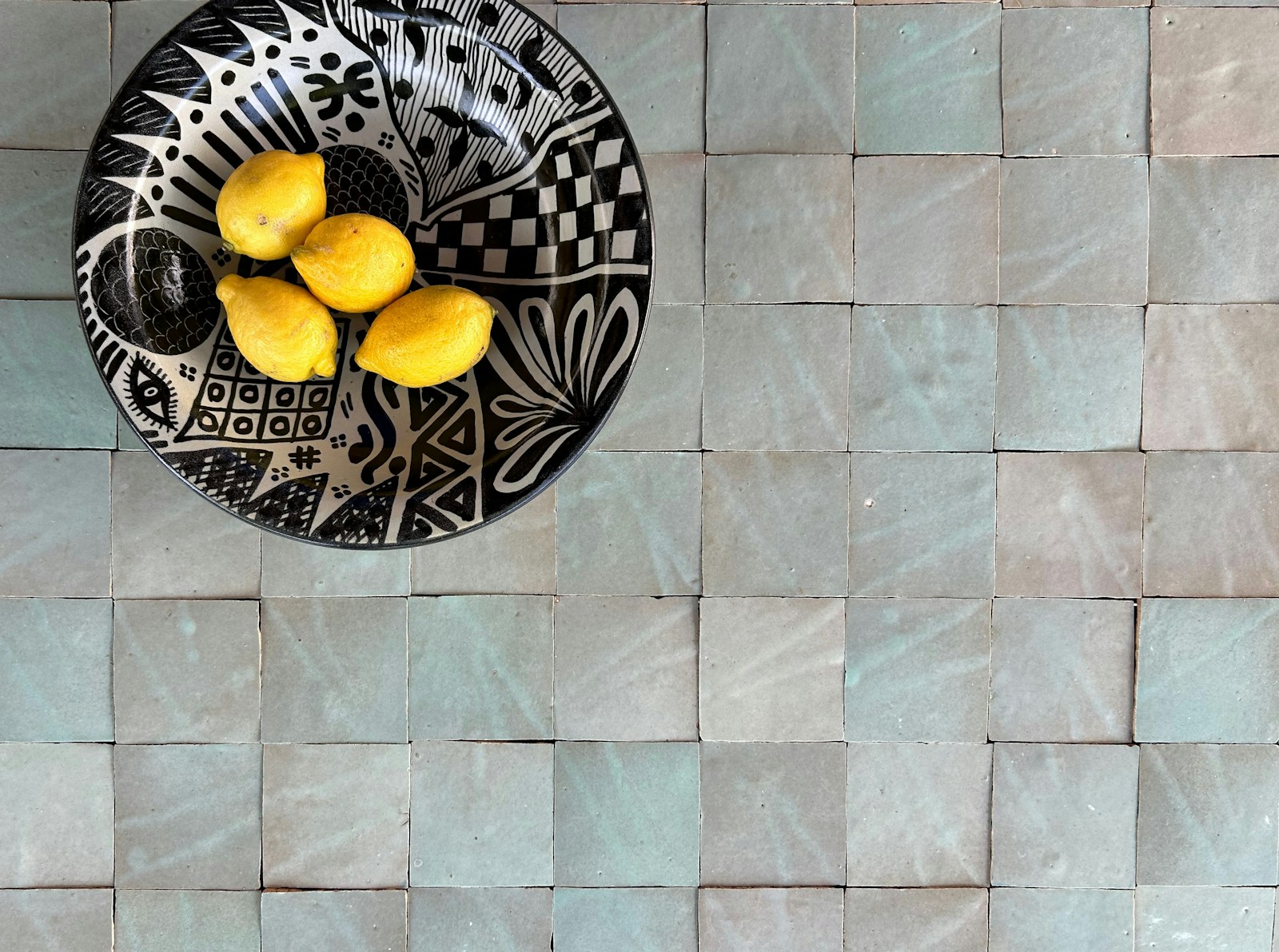
We almost always approach the backsplash as a technical problem: protecting the wall. Think of it instead as the kitchen's canvas, the one you see while cooking. A zellige Irregular in shape, capturing light differently with each tile; subway tiles laid vertically; deep glazed stoneware; a simple stone extending to the floor: the backsplash sets the tone for the room all by itself. For help choosing formats and color combinations, see our dedicated article on... kitchen backsplash ideas Let's get into the details. At least remember this: a discreet backsplash lets the objects take center stage, a strong backsplash requires decluttering around it.
Frames, boards and hanging objects: the wall as a notebook
Then comes the most personal part: what to display. The kitchen tolerates images very well, provided they are kept away from grease splatters. Here are a few tips that almost always work:
- A series of three frames of the same format and finish, aligned: more powerful than a mismatched collection. Botanical prints, market photos, children's drawings, all carefully framed.
- Of the brass or copper utensils Suspended from a bar or rack: it's decoration and storage at the same time.
- A slate or cork panel, provided it is actually used - otherwise it ages badly.
- An old cutting board, a woven basket, an enamel dish, all found at a flea market and placed flat against the wall.
- A mirror, yes, even in the kitchen: it reflects the light from the window where it is lacking.
💡 Tip — Before drilling, lay your composition on the floor, precisely to scale with the wall. In thirty seconds, you can spot the extra frame, the one that's out of proportion, and the spacing that looks just right. It's the step I always take, and it's saved me a lot of unnecessary holes.
Open shelves: showcasing what we actually use
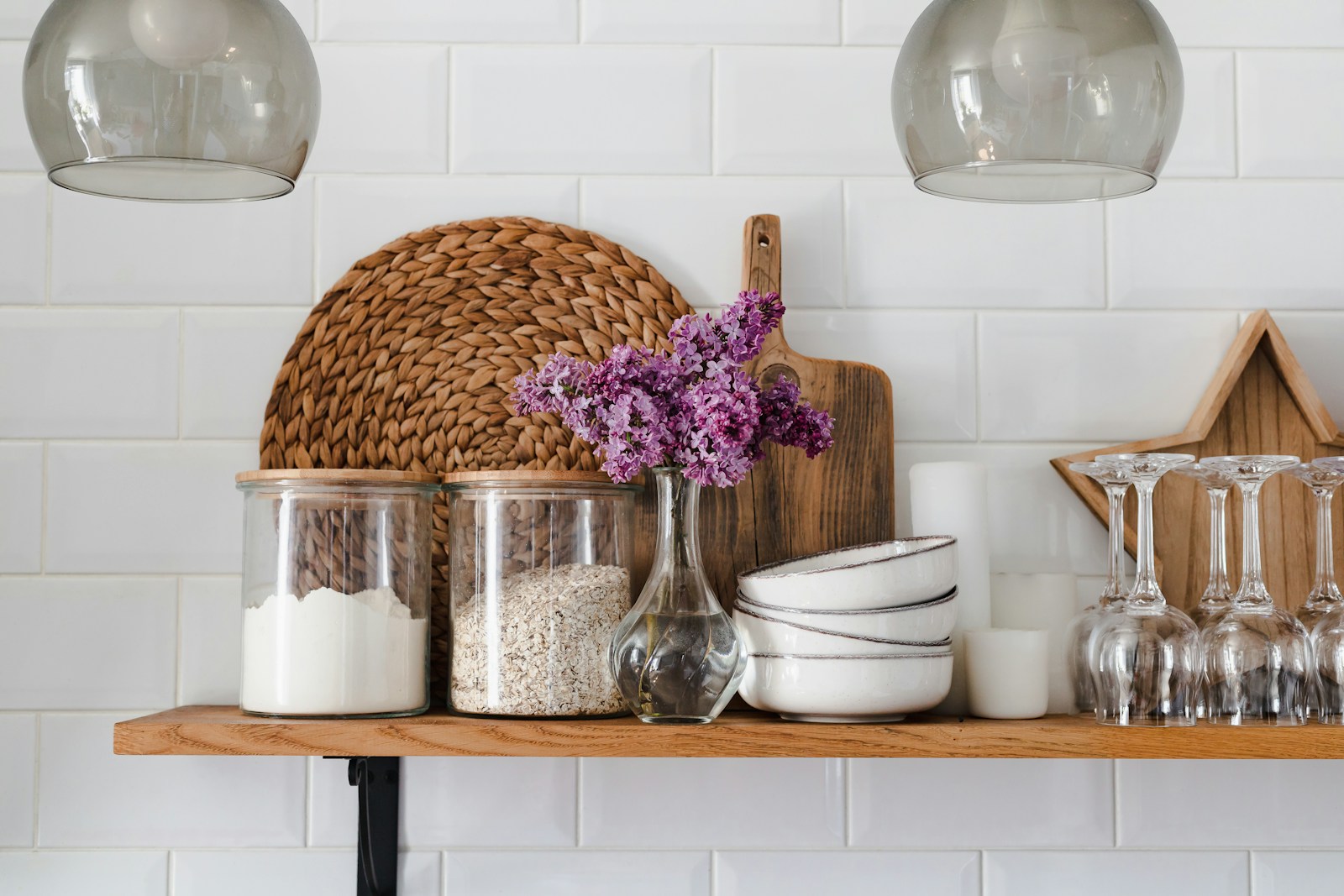
Open shelving is the most photographed decorating idea right now, and also the most often botched. The reason is simple: it's installed to "look pretty," then you just put whatever's lying around on it. But an open shelf isn't a cupboard without doors, it's a showcase. Everything in it is seen a hundred times a day. It doesn't require any more discipline than a cupboard — just a different sorting rule: here, we don't classify by category, we classify by what we agree to look at.
How to put together a shelf that looks just right?
A successful composition almost always follows the same principles. First, three heights Each shelf: one tall item (pitcher, plant, stack of plates), one medium, one short, and one wide. Then, a limited palette—two materials, three colors maximum, the rest in clear glass that doesn't count visually. Finally, some deliberate emptiness Leave about a third of the shelf free, otherwise the eye has nowhere to rest. And a detail that few people anticipate: keep the most accessible shelf for everyday items, otherwise you'll be rearranging the display every morning.
A successful open shelf doesn't show what you own: it shows what you use.
What should be left outside, and what should be put back behind a door?
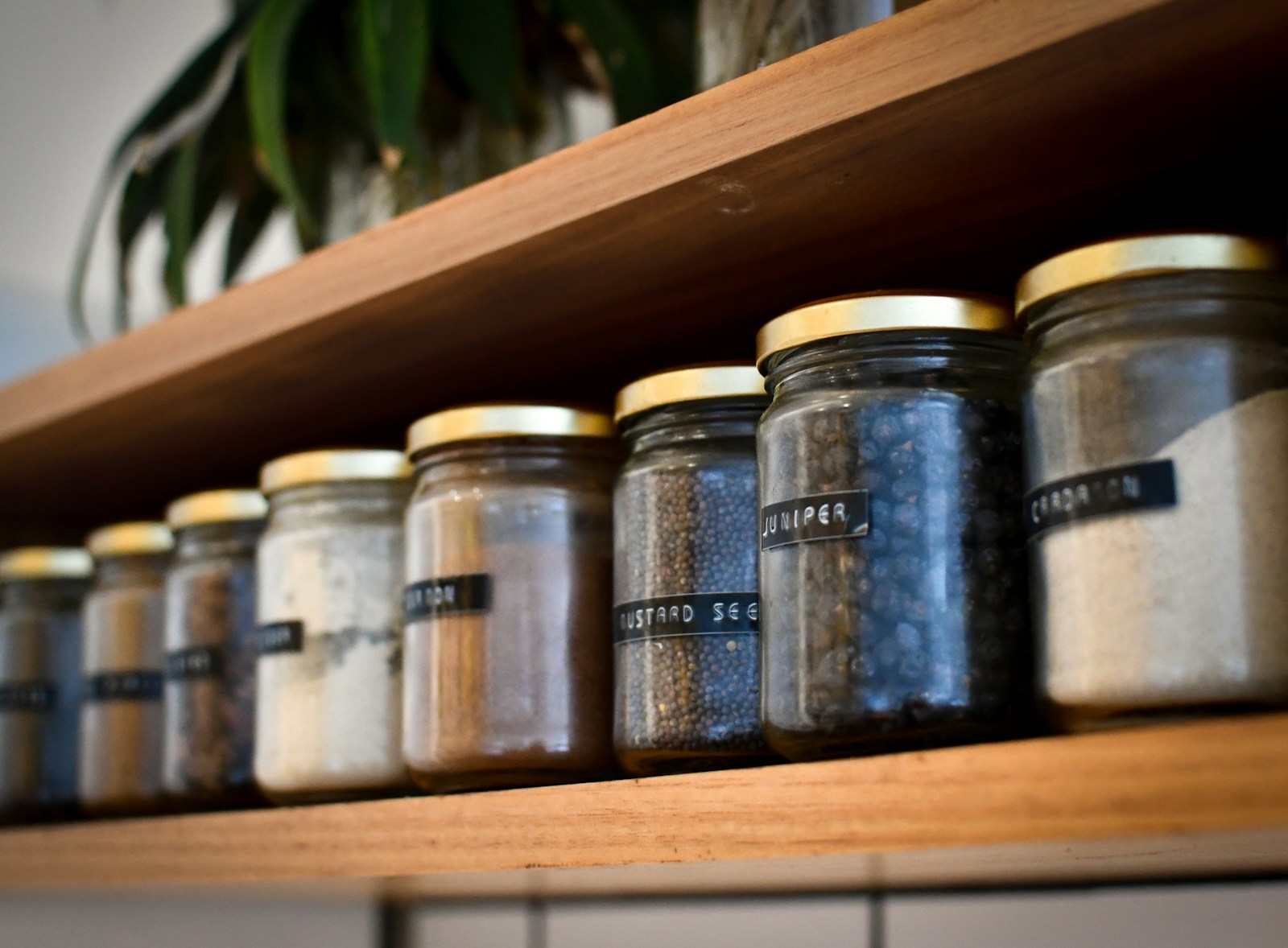
The sorting is done into two piles, and it's faster than you'd think. Out come the glass jars Filled with legumes, pasta, and grains—they add natural color and eliminate the need for garish packaging. Also brought out are the everyday dishes, the cutting boards, and one or two purely decorative items. What remains hidden are the plastics, bulky appliances, brand-name packages, and anything else that comes in multiples of twelve. For serving pieces and items only brought out for family meals, a closed cabinet works perfectly—the solid sideboard remains unbeatable in this area. As for dust, it's a real issue: what you use every week cleans itself through use, what you display without touching becomes dull within a month.
Textiles, herbs, and little nothings: the diapers we forget
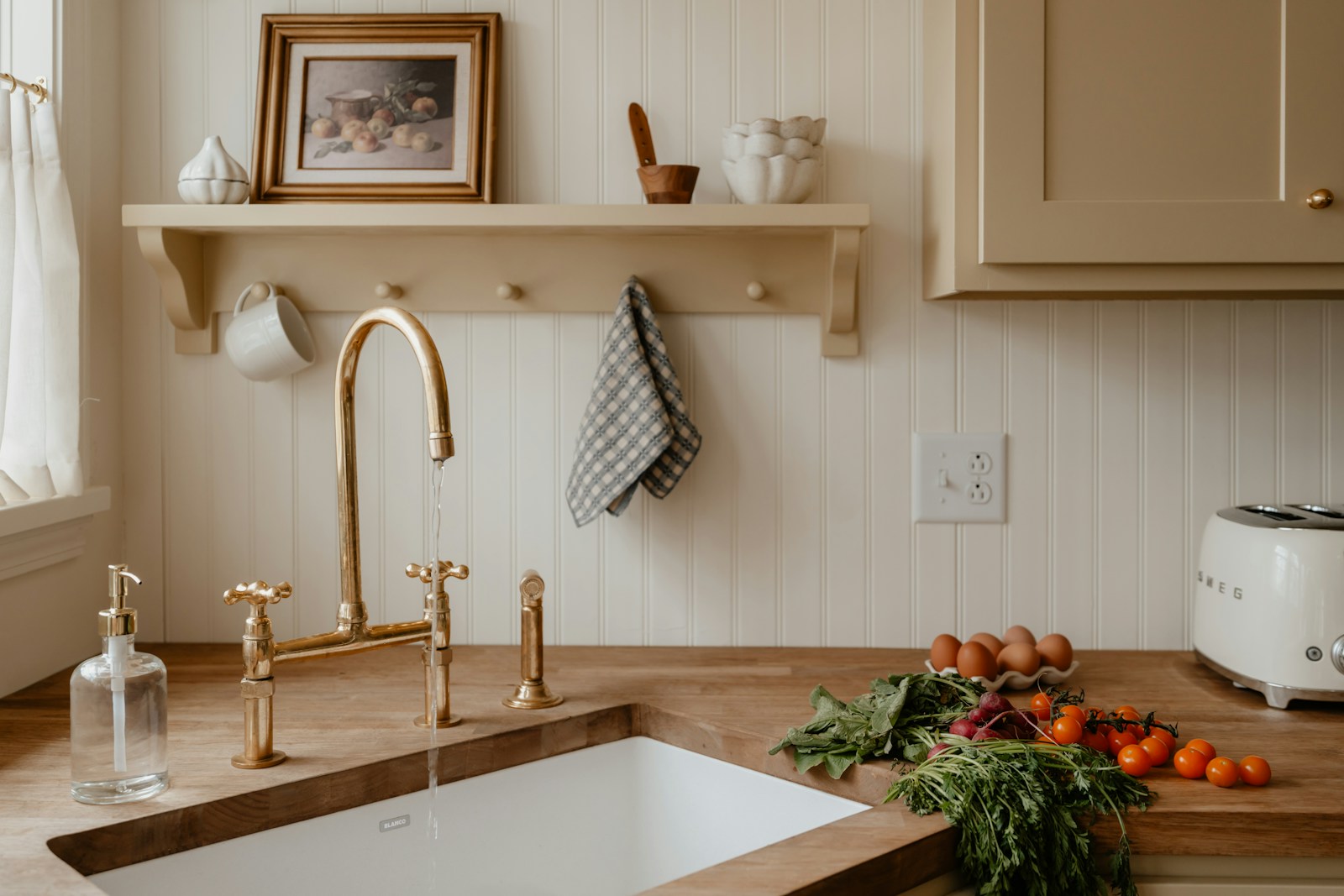
It's the layer that almost no one applies, and yet it's the one that transforms a kitchen into a lived-in space. In a living room, the presence of cushions, curtains, and a rug is taken for granted. In the kitchen, we've become accustomed to everything being washable, and the room loses its character. acoustic comfort as much as its visual softness: the tiles, glass and cabinets reflect all sounds. A little fabric, a little greenery, and the atmosphere is set.
Linen, cotton and braiding: fabric enters the kitchen
THE washed linen This is the ideal kitchen textile: it dries quickly, wrinkles gracefully, and develops a patina with washing. Here are a few practical uses to try this weekend:
- Of the linen dish towels presented as decoration — two shades, never twelve patterns — visible on a bar or a hook.
- A furniture curtain stretched on a rod under the sink or in front of a low shelf: the gentlest idea to hide clutter without a cupboard door.
- A kitchen mat A flat cloth, made of woven cotton or jute, placed in front of the sink: it absorbs sound, warms the floor and breaks up the geometry of the tiles.
- A tablecloth or table runner in crumpled linen if you are eating in, even on a work surface.
- Woven baskets as visible storage for vegetables that don't like the cold.
Which plants really thrive in a kitchen?
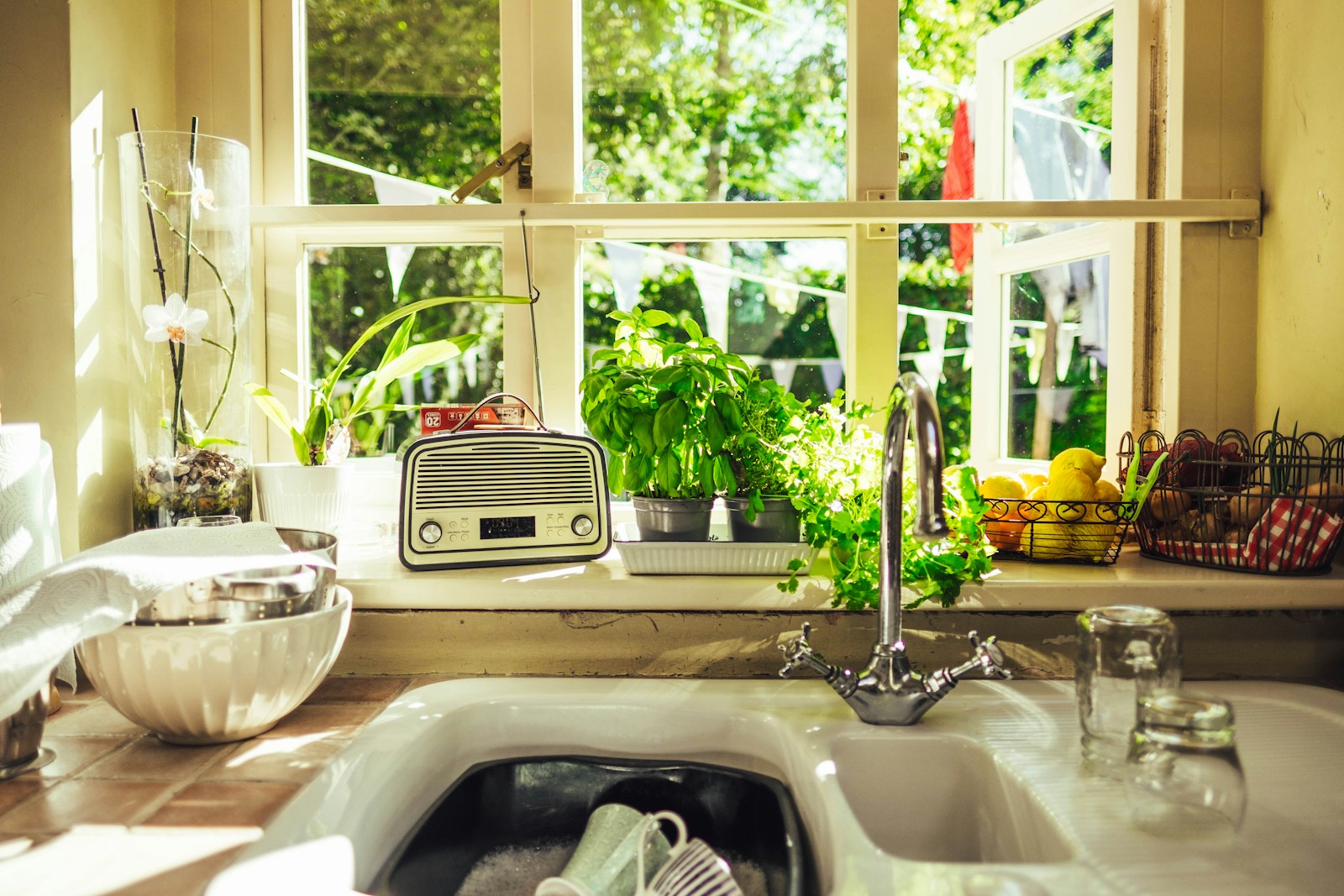
The kitchen is a room of contrasts for plants: high humidity at times, dry air the rest of the time, and temperature fluctuations near the oven. aromatic herbs They are therefore the best allies, in two ways—they decorate and they are useful. Basil, chives, mint, and thyme especially need plenty of light: without a nearby window, they will wither in a few weeks, and it's best to know this before getting attached. Repot them in terracotta pots rather than keeping them in their original tray; the effect is not comparable. For houseplants, choose those that tolerate steam and indirect light: pothos trailing from a high shelf, spider plants, small ferns. If you are unsure about a species or about yellowing foliage, consult the resources of the National Horticultural Society of France are a reliable base. And a bouquet of eucalyptus or dried flowers remains the most forgiving option of all.
Three kitchen styles to create at home
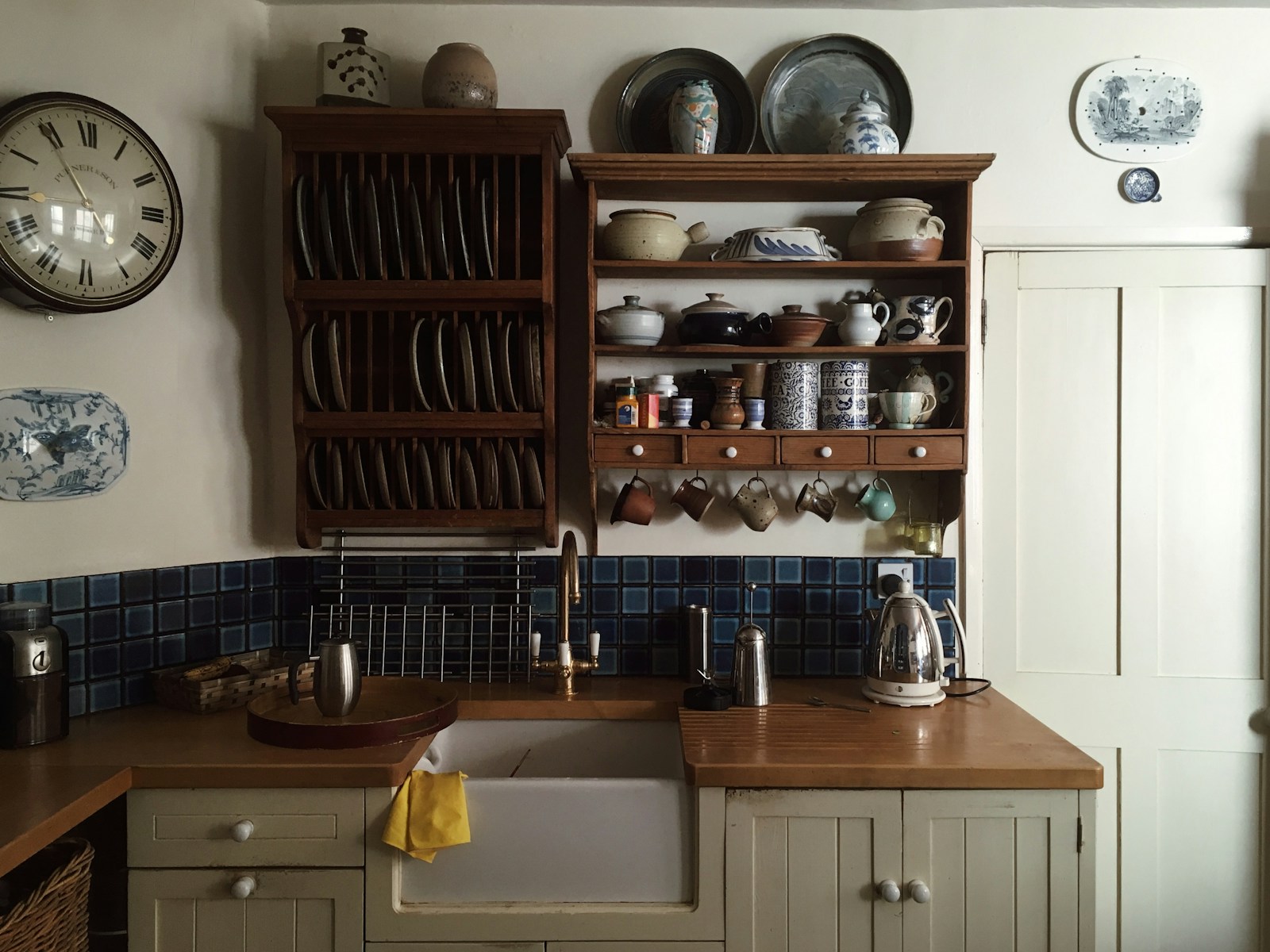
The layers are in place: materials, walls, shelves, textiles, plants. Now all that remains is to give them a common direction, otherwise the kitchen will resemble a collection of ideas. Here are three styles that work well with existing furniture, whatever it may be. The exercise each time involves choosing two dominant subjects and a palette of three shades, and then sticking to it — it is this constraint, and not the budget, that makes a room coherent.
Modern, yet warm cuisine
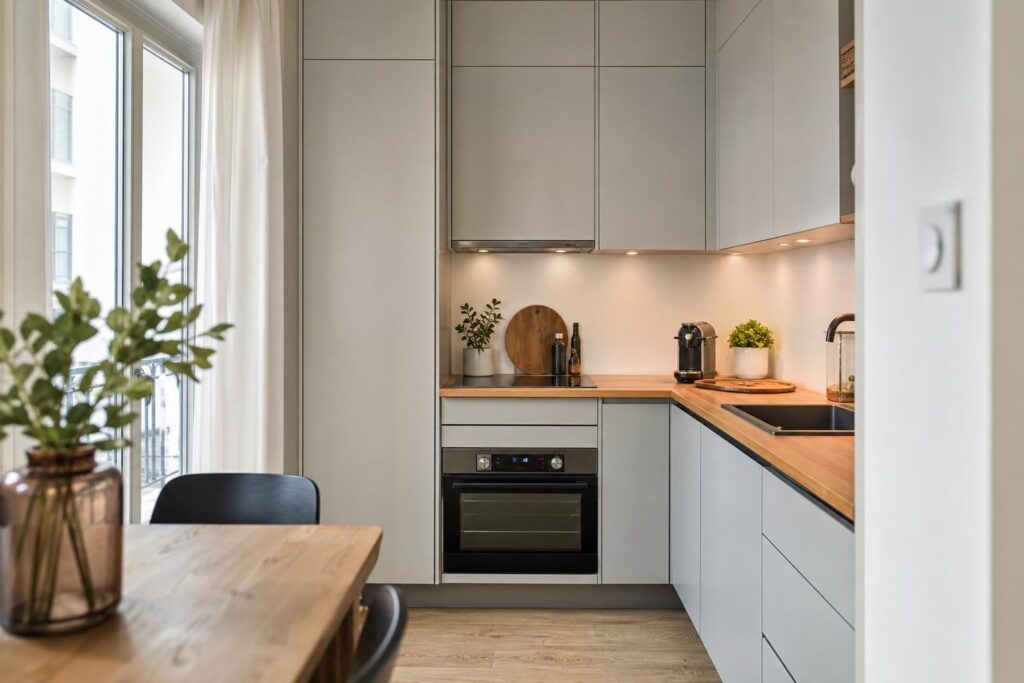
The criticism leveled at contemporary kitchens—smooth facades, invisible handles, clean lines—is never a problem of modernity, but of a lack of substance. Maintain the rigor of the lines and introduce three deviations: a solid wood shelf, Handcrafted ceramics instead of pristine white dishes, linen textiles. A deep hue on a single wall anchors everything. This is precisely the logic of Japandi style Clean lines, but materials that age well and that you want to touch. Modernity remains, coldness disappears.
Wood and white, like a family home
The easiest and most lasting atmosphere to achieve. White or off-white base on the walls, wood wherever possible—worktops, shelves, stools, utensils—and a single accent color in small doses: sage green, terracotta, deep blue. Add some mismatched items A few inherited pieces, a well-worn dishcloth—the only risk with this style is blandness; this is avoided by varying the wood types and finishes rather than colors. Light oiled wood next to dark waxed wood, and the room breathes.
Vintage and recycled: the kitchen with a story
My favorite, and the most accessible. An antique sideboard instead of a low cabinet, an inherited breadboard, repurposed jars, a chipped enamel dish, a mismatched chair: flea markets and yard sales are overflowing with kitchen items that cost little and make all the difference. The secret to avoiding clutter: a neutral and calm background, including walls and floor, against which the found pieces stand out one by one. And a simple rule of entry, the one I apply at home: an object only enters if I know where it will live and what it will be used for.
Want to fix the palette before you start?
See the current kitchen colorsYour questions about kitchen decor
How to decorate an empty kitchen wall?
Choose one idea and stick to it: a series of three aligned frames, an open shelf filled with jars and ceramics, vertical wooden slats, or a deep, solid color. Away from grease splatters, anything goes; above the cooktop, stick to washable surfaces.
What are the trendy colors for kitchen walls?
The dominant colors today are natural and deep: sage green, terracotta, clay beige, midnight blue, warm brown, often used on a single wall. They harmonize particularly well with wood and handcrafted ceramics, and age better than highly saturated tones.
How to repaint kitchen cabinet fronts?
Remove the doors and handles, degrease thoroughly, lightly sand to create a surface for adhesion, then apply a primer suitable for the surface (melamine, laminate, or wood). Finish with a moisture- and cleaning-resistant paint, applying two thin coats rather than one thick coat.
What are some decorating ideas for a white kitchen?
A white kitchen is a blank canvas: it needs texture, not color. Add solid wood, glazed ceramic, caning, and linen, then a single accent color on one wall or in the tableware. Three textures are better than three colors.
How to decorate a wooden kitchen without making it look heavy?
Create contrast and a sense of openness: light walls or a cool shade on one wall, a bright backsplash, ecru textiles, and white glass and ceramic shelves. Also, vary the wood species and finishes rather than adding more wood of the same shade everywhere.
How to set up a coffee corner in your kitchen?
Reserve a section of countertop or a serving cart, and gather everything in one place: coffee maker, cups on a small shelf, grinder, bean jug. A wooden tray defines the area, and a hanging decoration or frame marks it. The harmony of materials is what makes it so charming.
You don't need to do everything at once. Take the layer you're missing the most—often the wall, sometimes the fabric—and put it up this weekend. A kitchen doesn't become beautiful overnight: it accumulates, season after season, until it reflects the people who cook in it.