Our article in brief
- A teenager's room must fit four uses in a single room: sleep, work, entertain friends, play games or listen to music. That's what separates it from a small adult bedroom.
- We choose furniture that goes through adolescence : a bed that is no longer a child's bed, a desk at the right height, storage that is reorganized instead of being replaced.
- The walls remain evolving : a neutral base, a single colored panel, a perforated panel or frames — rather than a static decor to be redone in two years.
- The storage solution is designed for someone who doesn't tidy up: a gesture, a containeropen and within easy reach.
- And above all, the play consists of with him : you hold the structure, he chooses what is visible.
There comes a time, around twelve or thirteen years old, when the children's room becomes too small—not in square meters, but in terms of how it's used. The playmat is gone, a pair of headphones sits on the desk, posters are taped up during the holidays, and the door stays closed more often than before. Looking for a teenage boy bedroom decorIt is, in reality, trying to fit an entire life into a single room.
This is where most teenagers' bedrooms go wrong, and rarely in terms of style: they're designed like a miniature bedroom, when they actually function like a small apartment. They need to be used for actual sleeping, studying, having two or three friends over, playing games or listening to music—and for five or six years, from middle school to high school preparing for the baccalaureate. A teenager's bedroom, therefore, should be conceived as a set design. evolving, not like a finished set.
I suggest we build it in this order: first, the uses; then, the durable furniture; next, the coexistence of the office and the relaxation area; the walls that can be changed without repainting everything; and finally, storage perfectly suited to someone who won't tidy up. And the guiding principle, the only thing that truly determines its success: it must feel like a place they can call home.
Four uses in a room: work with it, don't replace it
Decorating a teenager's room starts with an inventory, not a color palette. List the four uses of the room—sleeping, studying, entertaining, relaxing—rank them by their actual importance in their life, then allocate a piece of furniture and a square meter to each. The style comes later, and it comes from them.
Why isn't a teenager's bedroom a small adult's bedroom?
An adult's bedroom has one dominant function: rest. Everything converges there; the light is soft, the materials are richer, and a bed, a bedside table, and a wardrobe are all that's needed. A teenager's bedroom, on the other hand, is simultaneously a dormitory, an office, a living room, and a playroom. Four functions that require different lighting, different flooring, and different seating heights—and that sometimes have to share nine square meters.
There's an added constraint that adult bedrooms don't have: the pace of life. Between middle school and high school, size changes, interests change, friends change. A highly distinctive decor—a theme, patterned wallpaper, a bed shaped like something—has a lifespan of two years. A neutral decor that can be easily personalized lasts the entire time. That's the real difference, and it's a difference in approach more than in taste.
A word to clarify: if your primary concern is space—fitting a bed, a wardrobe, and a desk into a narrow room—then it's a floor plan exercise, with dimensions for passageways and door swings. We'll cover that separately in a feature on furnishing a 9-square-meter bedroom, which is forthcoming in the magazine. Here, we're talking about functionality and decor.
Review its uses before opening a catalogue
This conversation lasts twenty minutes and saves months. The idea isn't to ask him, "What do you want?"—too broad a question, to which a teenager will answer, "I don't know"—but to describe his day with him. Where is he actually working right now: at his desk, in bed, at the kitchen table? Is he listening to music with headphones or speakers? When friends come over, where do they sit?
- Where do you actually revise, and what prevents you from doing so: the light, the noise, the space to spread out?
- How many screens, and where are they plugged in? A console, a laptop, a speaker, chargers?
- When your friends are there, how do you sit: on the floor, on the bed, on a chair?
- What is always left lying around, despite everything: the sports bag, the shoes, the clothes worn once?
- What do you want to see when you wake up — and what do you no longer want to see at all?
The answers themselves reveal the priorities. A teenager who plays online needs electricity and acoustics before they need an armchair. A reader needs a lamp and a shelf within easy reach of their bed. A musician needs a free wall and storage for a case. These are... uses, not boxes: sport, music, video games, drawing or revisions cannot be deduced from one's first name or gender, and we gain a lot by immediately putting the "blue and cars" reflex in the category of preconceived ideas.
What is decided together, what remains within your control
Composing doesn't mean giving him everything. The most sustainable division separates the structure of visibleYou take care of security, layout, furniture that will last for years, the quality of the bedding, and the electrical system. He takes care of accent colors, posters, textiles, what's hung, what's displayed. He chooses what's visible; you guarantee the room will still be functional in four years.
For decisions that are yours to make, the three-proposal technique avoids deadlock: rather than an entire catalog, show him three options that you all stand by, and let him decide. The choice is real, the framework holds. And if he has a deeply ingrained passion, it's best to channel it into something easily changeable—that's the whole point of our article on the bedroom of a teenager who is passionate about manga Passion is displayed, it is not painted on four walls.
A successful teen bedroom is not one that looks good in photos: it's one where they want to invite someone over.
Furniture that spans adolescence
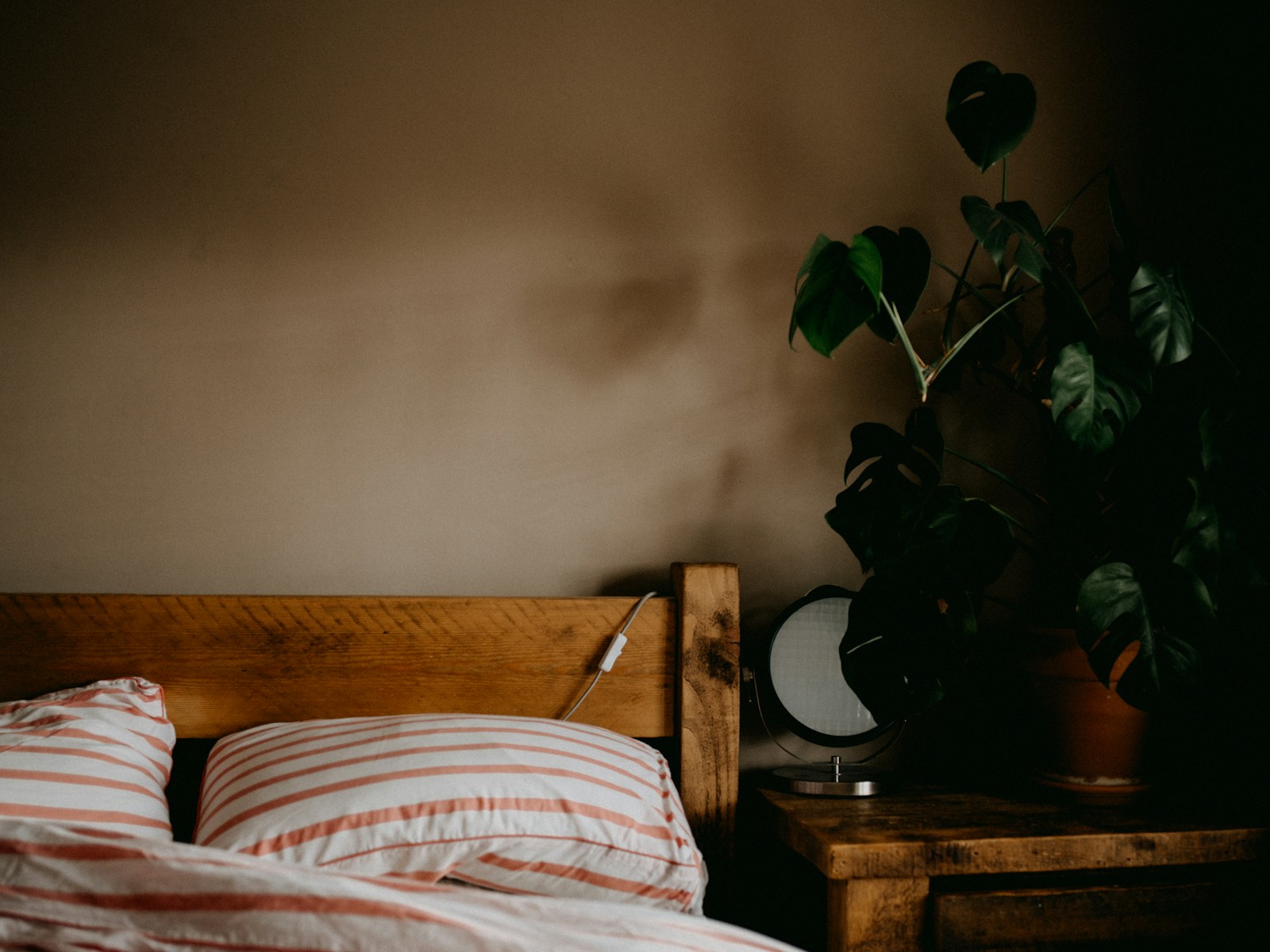
Three pieces of furniture define the entire room: the bed, the desk, and the storage unit. They determine whether the room will still be adequate in five years or if it will need a complete overhaul. The key factor isn't style, but rather the ability to withstand changes in size, needs, and function without being replaced.
The bed: moving beyond a child's bed without aiming too high
The first step, often, is to move out of the child's bed. A teenager grows quickly and sleeps poorly on a mattress that's too short: the 90 × 200 cm This size best accommodates growth, as a 90 x 190 cm bed becomes too small for a tall teenager. If the room allows, a 120 or 140 cm bed offers real comfort and can later be used as a guest room — but measure the available wall length before ordering, including the mattress and bed base.
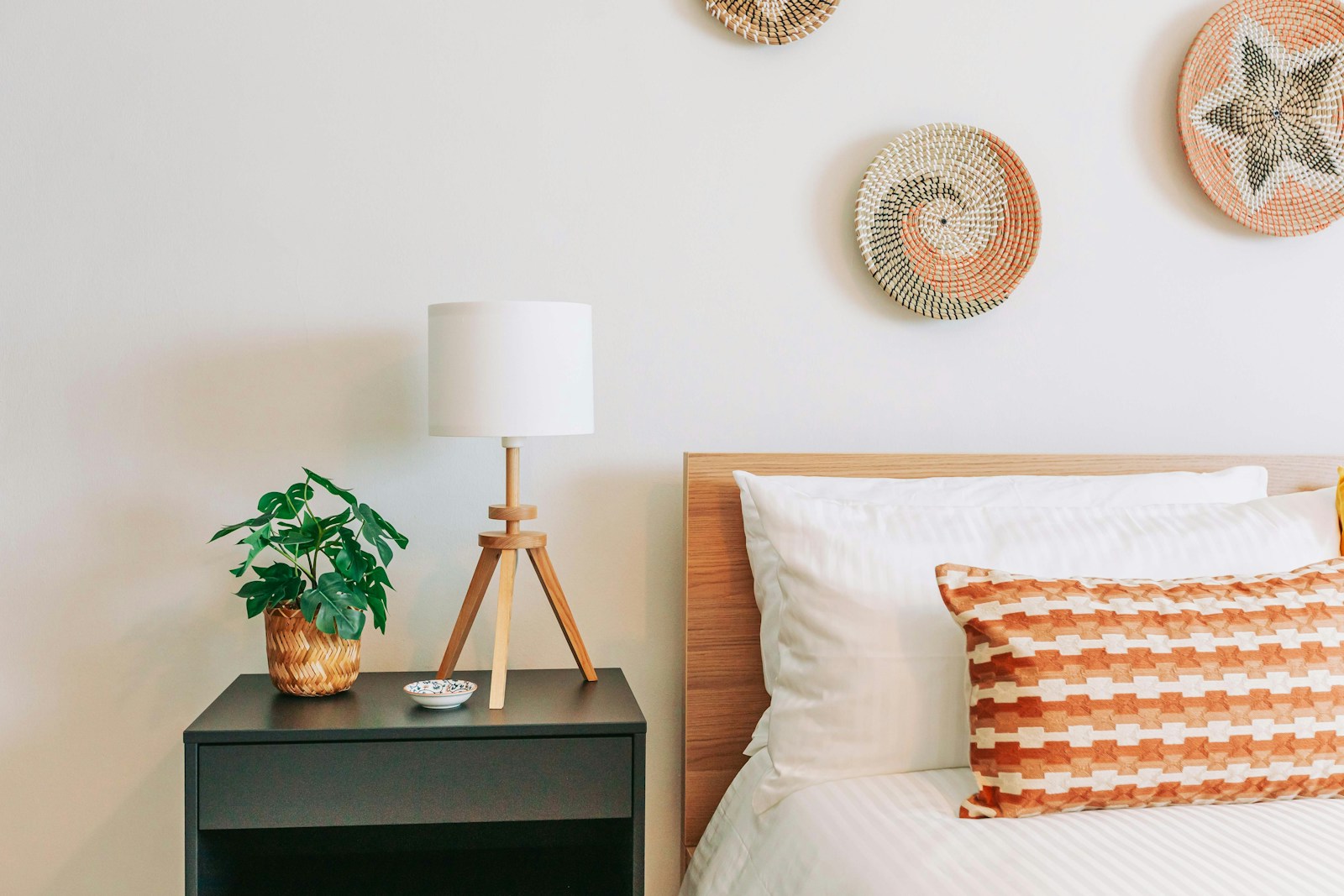
In terms of materials, I stick to what ages well: a solid wood or matte black metal frame, a headboard upholstered in washed linen, heavy cotton, or caning—a fabric that can be washed and replaced without affecting the furniture. Two formats deserve special mention: the storage bed, which offers considerable storage space beneath the mattress base, and the bench placed against the wall, which serves as a seat during the day as soon as you add three cushions. One single piece of furniture, two out of four uses.
Mezzanine bed or raised bed: under what conditions?
A loft bed frees up the most valuable space in the room: the space that can be given to a home office or relaxation area. However, it has two non-negotiable conditions. The first is headroom: allow approximately 90 cm to 1 m between the mattress and the ceiling to be able to sit up in bed without bumping your head, and the same amount of clearance under the bed frame for a comfortable desk—so measure your ceiling height A real inspection is required before any purchase, including the finished floor. The second condition is their agreement: a teenager who doesn't like ladders will sleep on the living room sofa.
These beds are subject to specific standards, which can be consulted on the side of the standardization work on bunk beds NF EN 747 for bunk beds, NF D62-100 for mezzanine beds, with requirements relating in particular to safety barriers and the documentation provided to the buyer. As for usage, I won't give you any house rules: the manufacturer's instructions This is the reference document, and it's the one that must be followed to the letter — maximum load, assembly, tightening to be rechecked, barrier height, and any wall mounting. Keep it; don't throw it away with the box.

The desk: the right height, the right depth
An office that's abandoned after a month is almost always an undersized one. Retail workspaces typically revolve around... 72 to 75 cm The height should be an adult height suitable for most teenagers, but not for a small twelve-year-old. The reference point is determined on the spot, while seated: feet flat on the floor, thighs horizontal, forearms resting on the ground without raising the shoulders. If it's not quite right, adjust using the chair—adjustable seats generally cover a range of about 42 to 48 cm—and an improvised footrest.
Depth is just as important: below 60 cm, a screen and an open notebook cannot coexist, and you end up working with your nose practically glued to the display. Between 70 and 80 cm, everything has room to breathe. A solid wood tabletop placed on adjustable trestles or screw-in legs remains the most adaptable solution: you keep the tabletop, you change the height. Regarding the workstation itself, INRS guidelines on working with screens These principles translate well to a teenager's bedroom: properly sized furniture, a screen positioned correctly in height and distance, and regular breaks.
| Use | What he's really asking for | The piece of furniture that spans adolescence | The classic trap |
|---|---|---|---|
| Sleep | A proper adult bed, peace and quiet, darkness | Bed in 90 x 200 cm (or 120/140 cm if the room allows), solid slatted base, fabric headboard | The themed bed, bought at age 8, was unusable at 14. |
| To work | A stable surface, light, space for a screen and a notebook | Tabletop with a minimum depth of 60 cm, adjustable chair, shelf directly above | The school desk was too low and deserted after a month. |
| Receive | Two seats and a comfortable floor | Bed end or bench, pouf, large rug | The convertible that's blocking all traffic |
| Play, listen | Plugs in the right places and fabric to absorb sound | Low, closed cabinet near the outlets, thick rug, lined curtains | The cables that run diagonally across the room |
Video: a tour of a teenage boy's bedroom in Scandinavian style (Decobyflo).
Office area and relaxation area in the same room
It's the balancing act of a teenager's bedroom: the same room must allow for two hours of focused concentration and also for complete disconnection. The instinct would be to partition the space. In reality, two zones can be easily distinguished by lighting, flooring, and furniture placement—without adding a single wall.
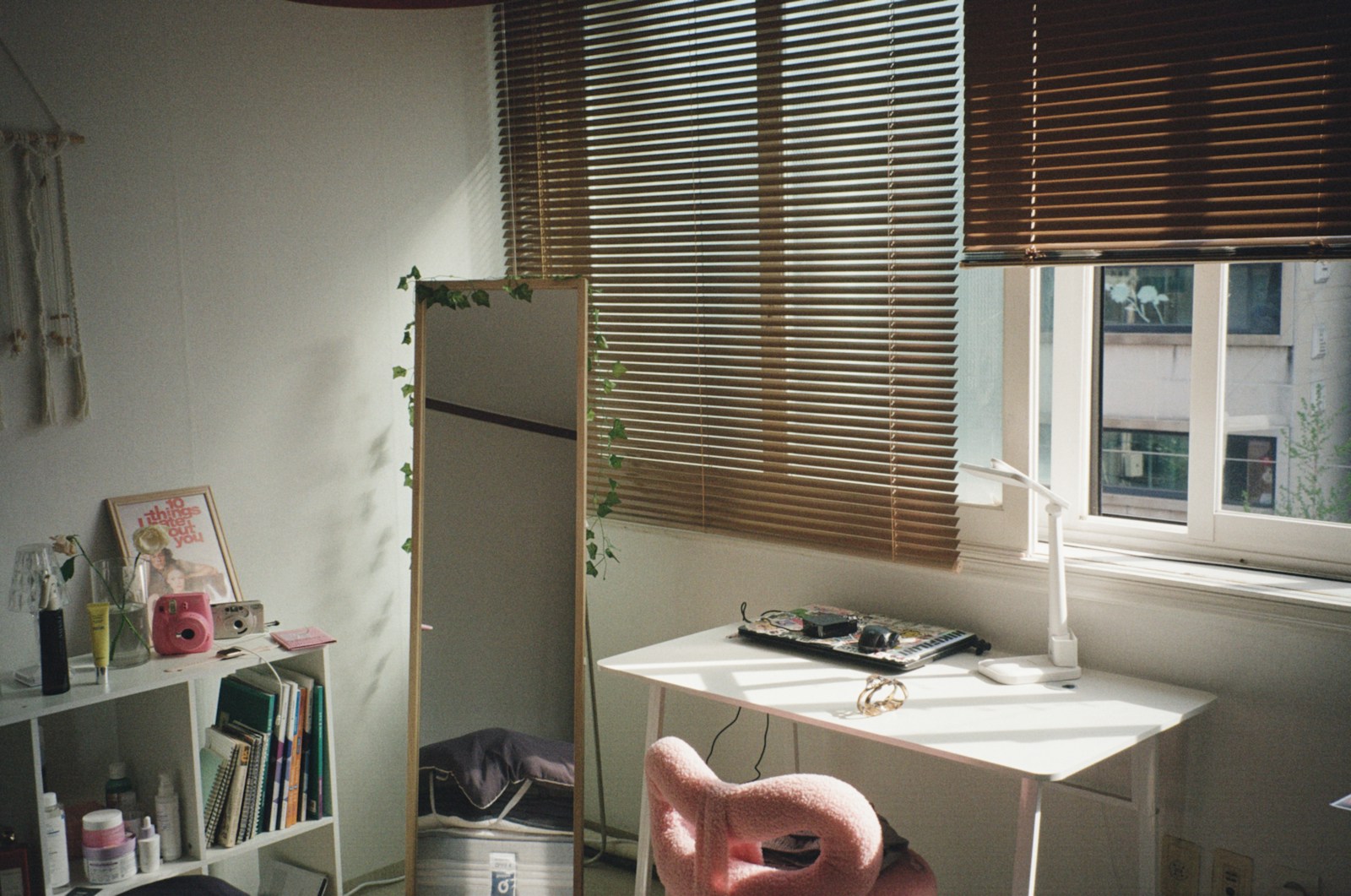
The office nook: the window to the side, the back covered
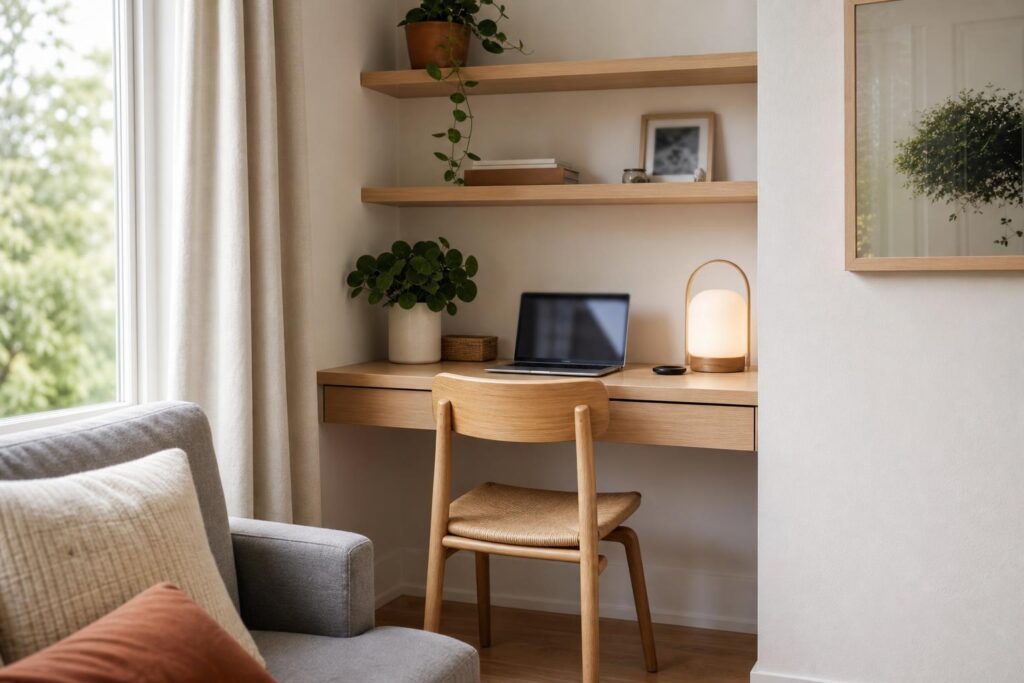
Three principles suffice. The window should be positioned at an angle, never directly behind you or directly in front of you: from the front it's blinding, from behind it it reflects on the screen. Your back, in fact, should be supported by something—a wall, a shelf, the bedpost—because it's difficult to concentrate when your back is to empty space and the door. And you should add an adjustable task lamp with warm light, essential as soon as your studying extends into the night.
The wall directly above the desk is the most useful square meter in the room: a narrow shelf, two hooks, a pen holder, and the work surface remains free. Also, plan for the electrical outlets in this precise spot rather than at the other end of the room—a power strip fixed under the desktop, with cables bundled in a fabric sleeve, avoids the tangle of wires that discourages any tidying up.
The relaxation area: two seats are better than one sofa
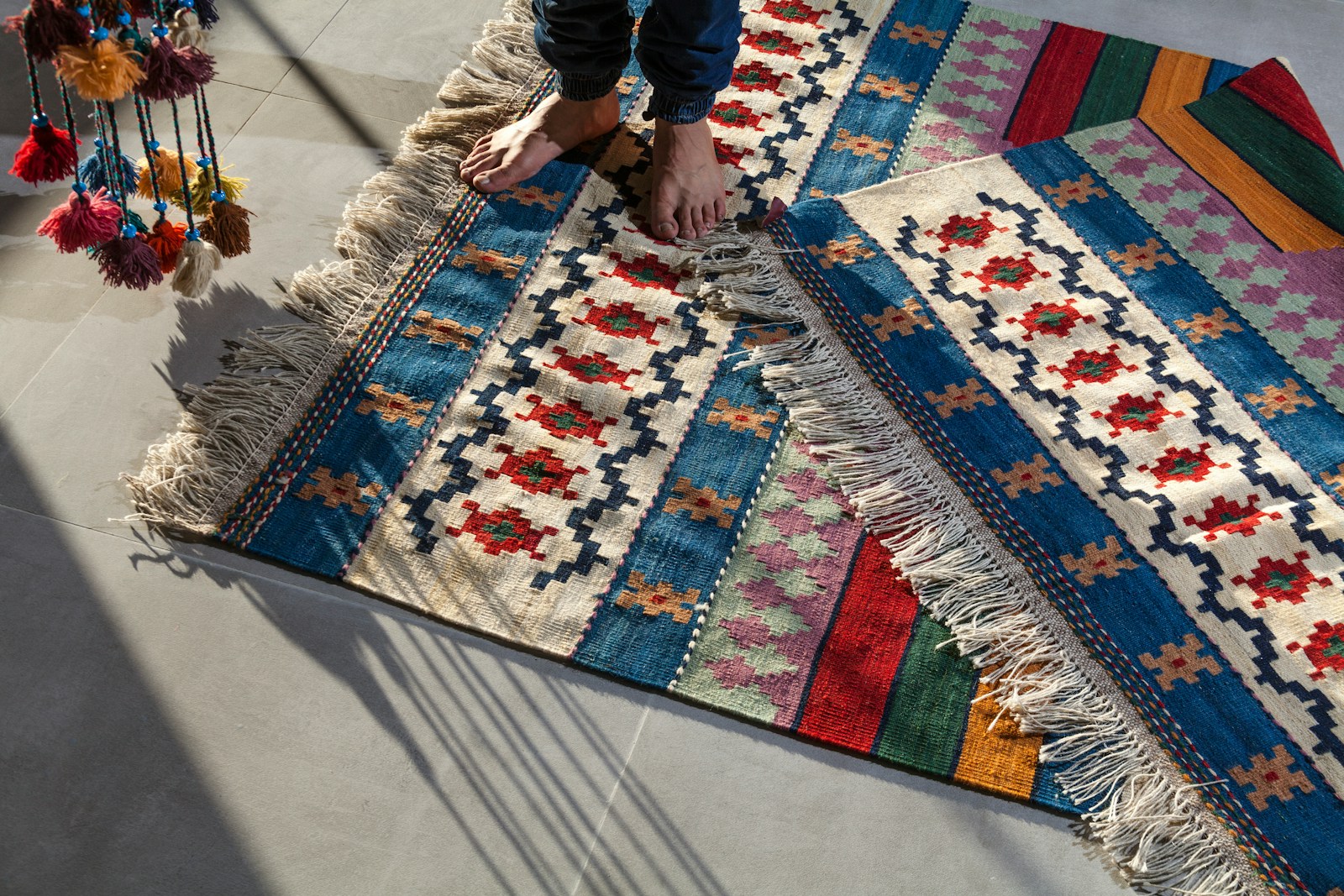
It's the function we systematically forget, yet it's the one that matters most at this age: being able to entertain. A sofa bed often obstructs the flow of traffic for infrequent use. Two lightweight seats do a better job: a large canvas or leather pouf, a low armchair, a footstool, a beanbag chair pushed against the wall. Add a large rug — he's the one who gives permission to sit on the ground, and the teenagers sit on the ground.
A guest room also requires a small surface for seating: a low stool, an upturned wooden crate, a rattan side table. Something to place a glass, a game controller, a book. And separate lighting from the desk: string lights, a table lamp, a natural fiber lampshade—a ceiling light alone creates no atmosphere and simply defines the hallway lighting.
How to separate the two areas without using partitions?
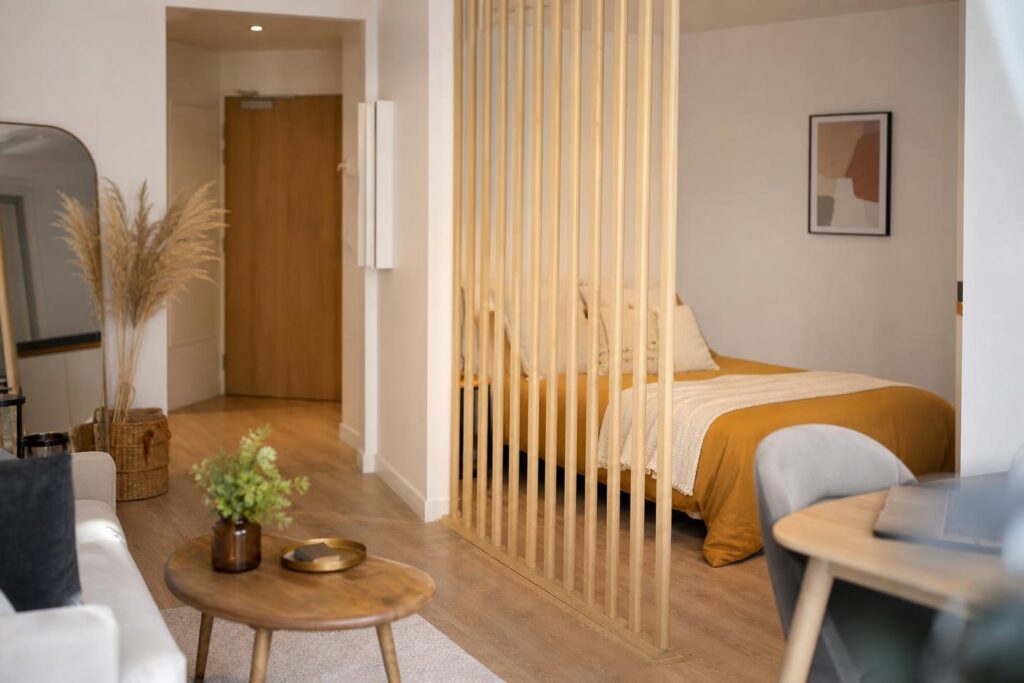
First, with the flooring: a rug defines a zone more effectively than a screen. Then, with light, by giving each corner its own light source. Finally, with the orientation of the furniture: a desk facing the wall and a chair facing the room stand with their backs to each other and are enough to separate the two spaces. A low open shelf, a tall headboard, or a linen curtain on a rod complete the partition when the room is truly narrow.
Then there's the sound, which permeates everything and is the real issue of coexistence with the rest of the house. We absorb it through textiles: thick rugs, lined curtains, a corkboard or fabric stretched over the shared wall, books on a full shelf. Nothing spectacular, but the difference is clear—and often more effective than yet another conversation about volume.
Walls and colors that evolve without having to redo everything
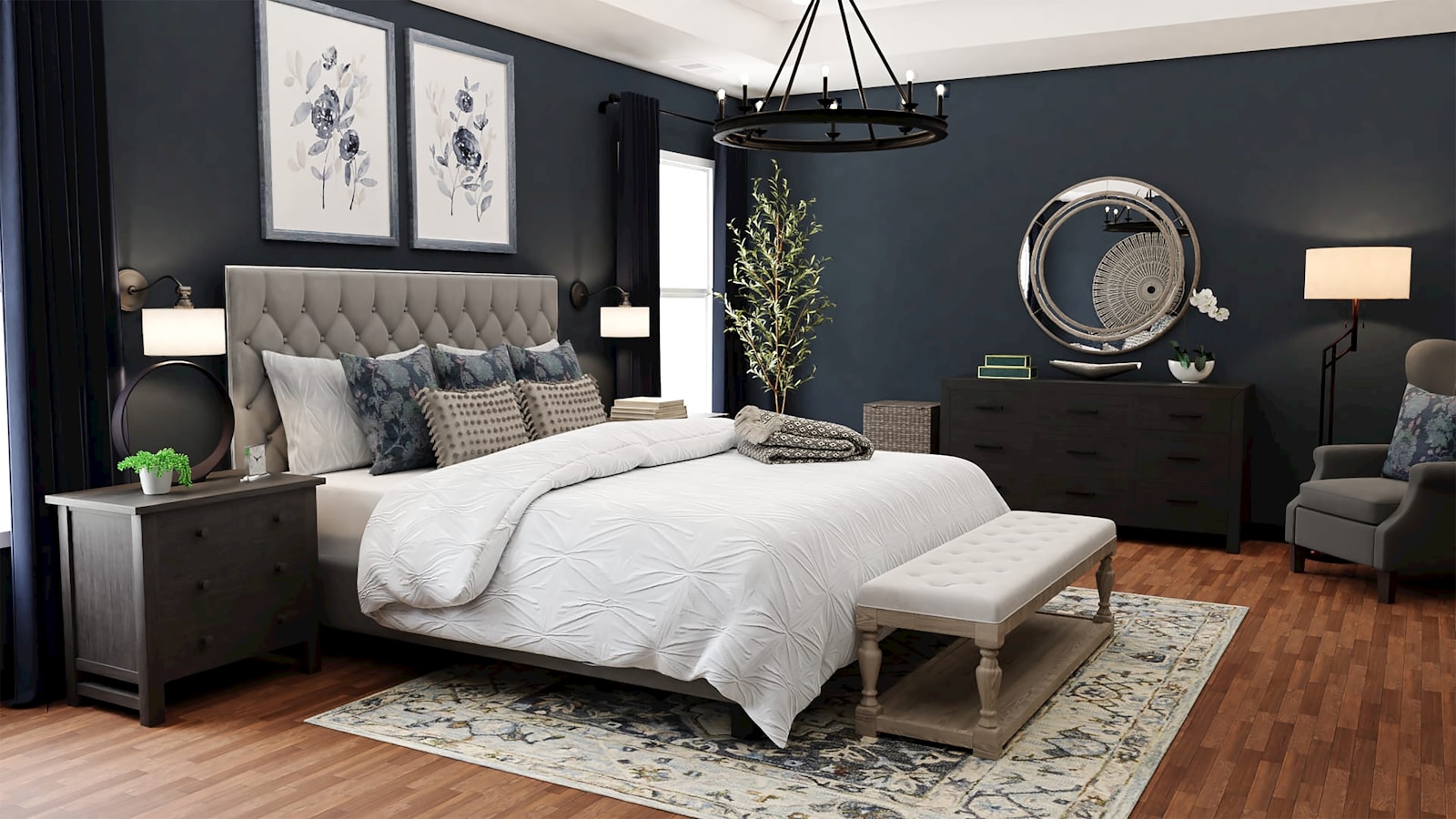
The wall decor in a teenager's room has a very simple requirement: it must be changeable without any construction work. Therefore, a neutral base is maintained on most of the walls, color is concentrated on a single wall, and an entire surface is reserved for items that can be hung, taken down, and replaced as their interests evolve.
What color should I choose for a teenage boy's bedroom?
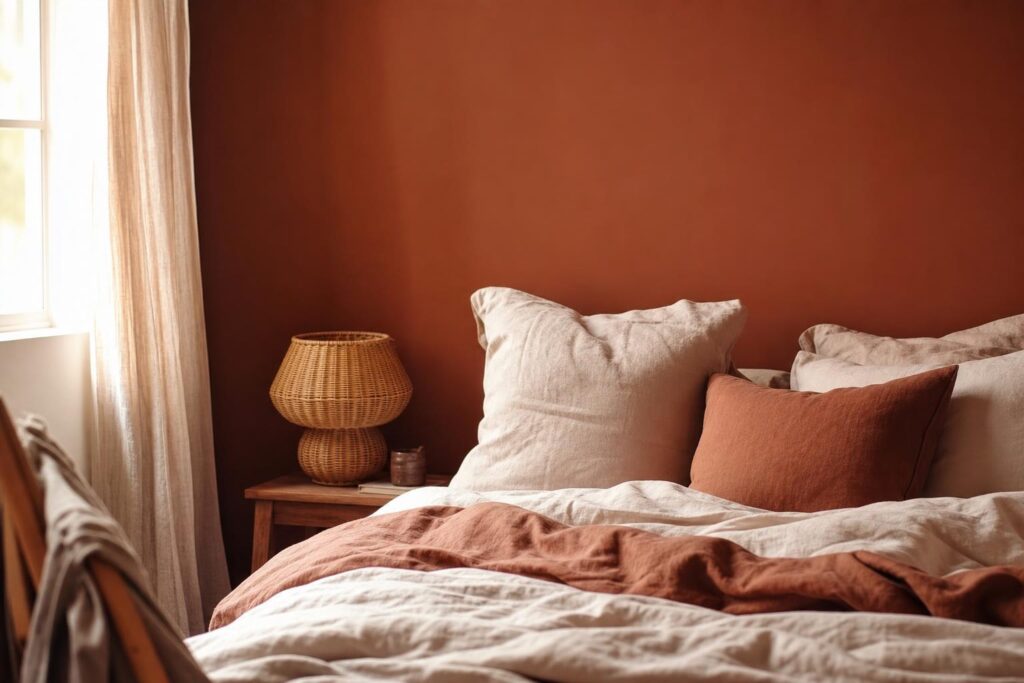
There's no obligation to use blue, and certainly not the boys' section of a paint store. The formula that ages best involves two steps: a light and warm base—off-white, linen, greige, a very slightly pinkish gray—on three walls, then a single painted panel in a deep shade. Slate blue, forest green, olive green, taupe brown, muted terracotta, anthracite grey: these shades have the advantage of being immediately adult, therefore not becoming childish at sixteen.
The colored panel goes behind the bed or on the far wall: it adds depth without darkening the work surface. Black works very well in small touches—a mirror frame, a pendant light, a curtain rod, a leg—and much less so in large areas in a dimly lit bedroom. Always test a sample on the wall in question, looking at it in the morning and evening: a color is judged in the room's natural light, never on a color chart. To expand your palette, consult our notebook of decor trends 2026 provides good leads for deep colors, and the spirit of a Scandinavian bedroom remains the safest neutral base to accommodate any accent color.
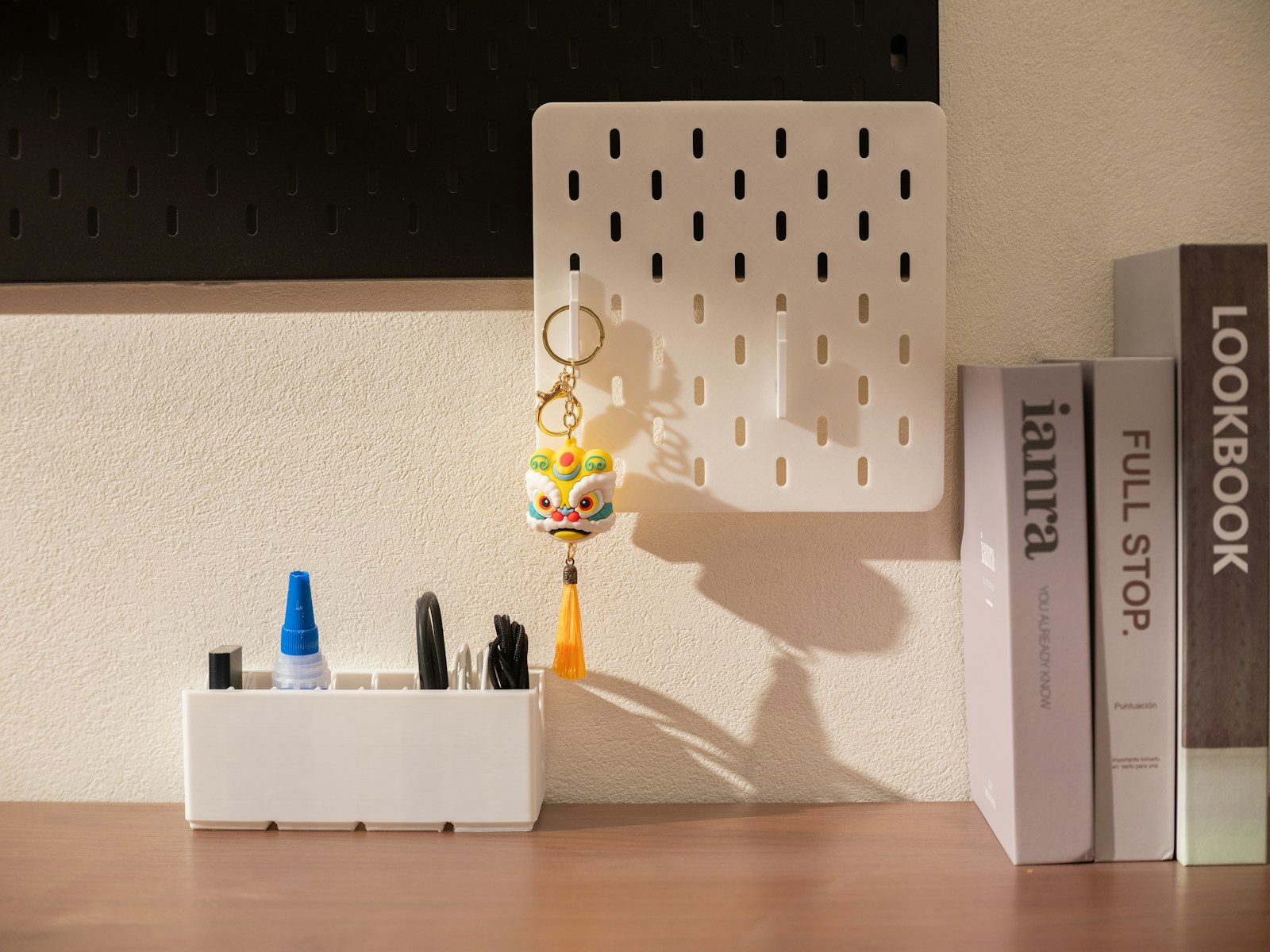
The wall that changes: perforated panel, frames and posters
This is the action I recommend in almost every teenager's room: dedicate one surface, just one, to free display. perforated panel Made of wood or metal, with hooks and shelves that can be moved at will. A corkboard for concert tickets and photos. Two horizontal battens with clips. A picture rail or narrow shelf where frames rest without being fixed. The support remains, the contents change three times a year, and nothing is pierced each time.
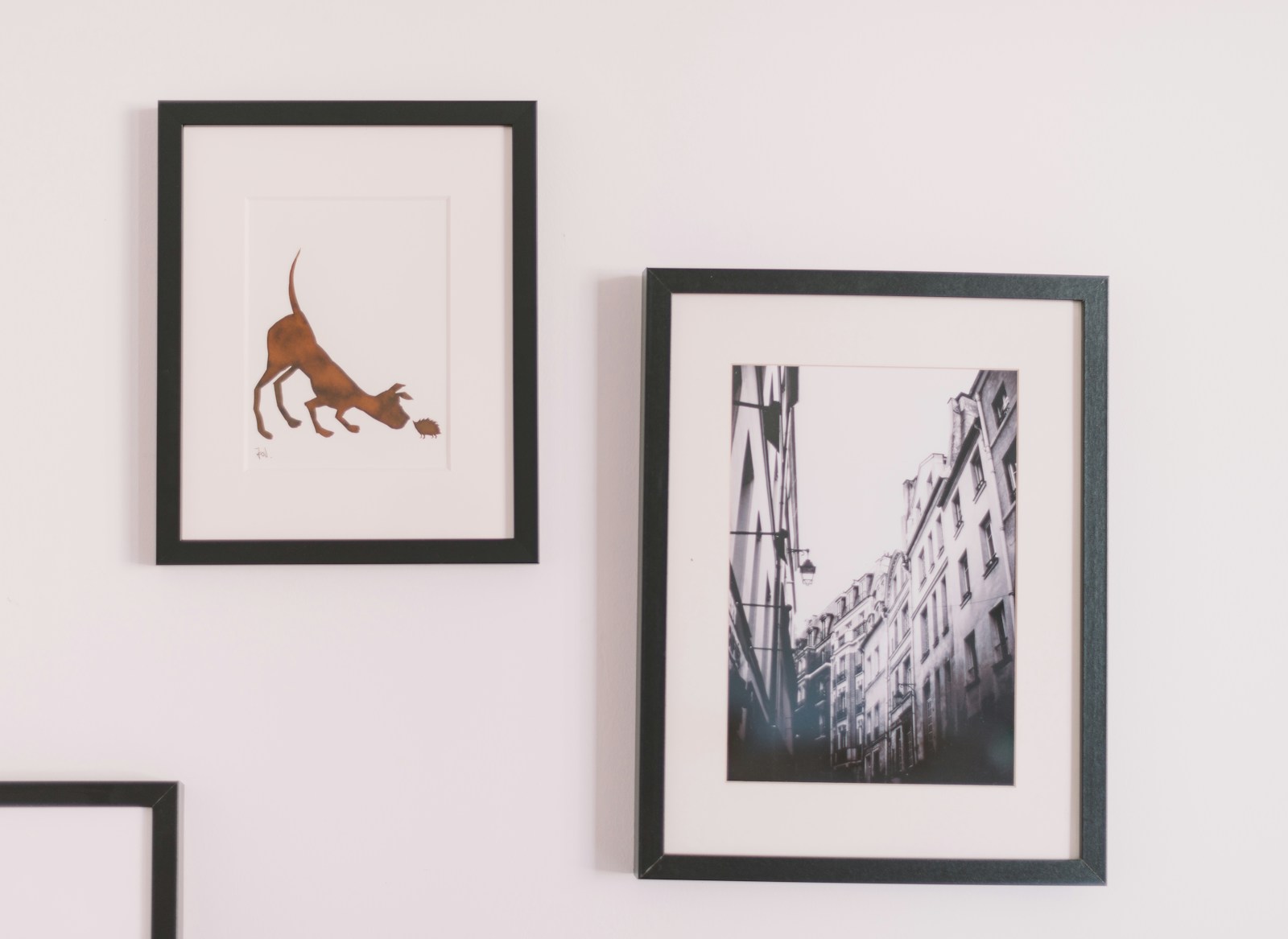
For posters, a series of identical frames—light wood, thin black—transforms a wall of posters into a cohesive display: you change the image, never the frame. And forget about wallpaper with childish patterns, that expensive false friend that's hung once and quickly becomes a source of resentment. At a pinch, a section of textured plain wallpaper, or a panel of wooden slats, provides the same materiality without the pattern.
- Reversible without leaving a trace : repositionable adhesive dots, colored masking tape, frames placed on picture rails, garland on adhesive hooks.
- Reversible with a hole : perforated panel, cork, cleats, metal grid, wall shelf — a few dowels, but a support that lasts for years.
- Avoid if you want to be able to change : patterned wallpaper, large format stickers on fresh paint, chalkboard paint on an entire wall, frieze at child height.
Storage solutions for someone who doesn't tidy up
A teenager's storage isn't judged by its volume but by the number of actions it requires. An open basket into which things are thrown always wins out over a lidded box stacked under another box. The rule is simple: if tidying up requires more than one action, the item will end up on the floor.
The single gesture rule
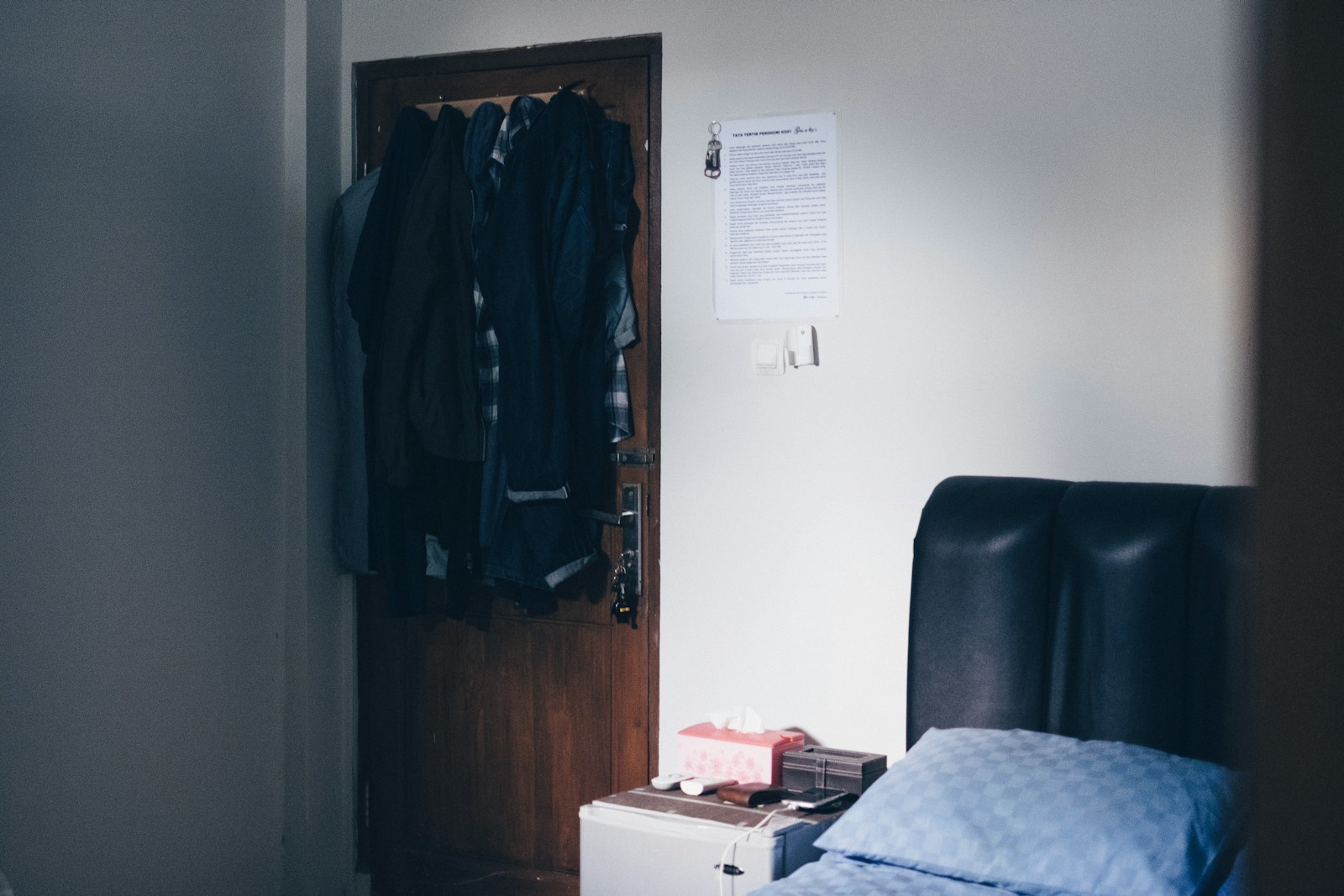
In practical terms: fiber or canvas baskets instead of closed boxes, hooks at shoulder height instead of hangers for coats and bags, open shelves instead of swinging doors that require clearance, a laundry hamper placed exactly where clothes are changed—not in the bathroom at the other end of the hall. Every action eliminated is a step closer to keeping the room tidy.
Regarding wardrobes, the reasoning changes with age: teenagers' clothes are longer and bulkier, the wardrobe rail is raised, and three drawers for small items of clothing are rarely needed. well-chosen bedroom wardrobeWith sliding doors for tight spaces and adjustable shelves, it can accommodate this change without needing to be replaced. The rest is going up: anything over 1.80 m high is almost always wasted space, perfect for items used only twice a year.
The five key elements of a teenager's bedroom
Observe a messy teenager's room: it's almost never a general mess, it's always the same five categories of objects that have no designated place. Give each category a specific spot, and you solve most of the problem without ever raising your voice.
- The school bag : a sturdy hook near the door, or a dedicated stool — not in the middle of the passage.
- The shoes : a low open container or a small shelf at the entrance to the room, where you can aim without bending down.
- Cables and chargers : a wastebasket near the sockets and a fixed power strip, so that nothing goes diagonally.
- The clothes have been worn but are not dirty : that's the famous chair. Embrace it with two hooks or a wooden ladder leaning against the wall.
- Water bottles, glasses and packaging : a tray or a small basket, emptied in the same movement as the laundry.
This type of storage has another advantage: it can be reorganized without having to be replaced. Baskets change contents, hooks change position, shelves are reassigned — and the room follows its successive passions, without the room needing to be redone.
💡 Tip Before repainting or buying new things, do a two-step sort with him: what will remain visible, and a box of "childhood archives" that goes up to the attic instead of the dumpster. Repeat this process once a year, at the start of the school year. It's often this simple act that unlocks everything else: the room feels freer, and nothing has been forcibly taken from him.
Want to rethink the house room by room, using the same method?
Discover our guide to furnishing your homeFAQ: Your questions about a teenage boy's bedroom
How to decorate a teenage boy's bedroom?
Start with its needs before style: a proper bed, a desk at its height, two seats for its friends, and storage within easy reach. Keep a neutral base on most of the walls, concentrate the color on a single wall, and leave a blank space for it to personalize.
What color should I choose for a teenage boy's bedroom?
Blue isn't mandatory. A light, warm base on most walls, then one accent wall in a deep shade—slate blue, forest green, taupe, or charcoal gray—and touches of black. Always test a sample on the wall in question, under the room's actual lighting.
Which bed should I choose for a teenager?
An adult bed rather than a child's bed: a 90 x 200 cm bed grows with your child, while a 120 or 140 cm bed is suitable if the room allows. A storage bed provides extra space, and a daybed offers seating during the day. Measure the available wall length before ordering.
How to transform a child's bedroom into a teenager's bedroom?
First, change what's outdated: the bed, the desk height, the childish patterns. Keep the furniture neutral, repaint just one wall, replace the stickers with picture frames. And declutter with him, keeping a box of belongings rather than emptying the room without his agreement.
How to organize a teenager's bedroom?
Reduce the number of actions: open baskets instead of stacked boxes, hooks instead of hangers, a laundry hamper where he gets changed. Give specific places to school bags, shoes, and chargers, then sort through everything once a year.
How to decorate a small teenager's bedroom?
Combine functions: a storage or raised bed, a desk that also serves as a bedside table, and storage that's high up rather than on the floor. Use a single color scheme, a large rug to define the relaxation area, and leave a clear passage in front of the wardrobe and window.