Our article in brief
- THE feng shui It is a Chinese tradition of spatial arrangement — literally "wind and water". Neither a science, nor a Western decorating trend.
- His vocabulary can be summed up in four words: the chi (the circulating breath), yin and yang, the five elements and the bagua, his framework for understanding housing.
- No proven effect is attributed to it here. However, a good number of its recommendations align with verifiable common sense in planning: declutter, clear the passageways, take care of the daylight, favour natural materials.
- Room by room, tradition has its preferences: clear entrance, sofa against the back, bed that sees the door, tidy kitchen, office that does not turn its back on the entrance.
- In terms of colours, the five elements translate into shades — a repertoire of ideas to be adjusted according to the light in your room, not a set of rules.
«"I moved my bed because of feng shui": the phrase circulates, and it elicits a smile before one even looks at the room in question—often now, in fact, more pleasant to live in. It is this discrepancy that makes this tradition interesting, and that it deserves a twofold curiosity: that of the culture that sustains it, and that of the design practices it suggests.
Because feng shui decor, as seen in magazines, often boils down to three plants, a mirror, and a fountain. That's a shame. Behind the term lies a coherent system of thought born in China, with its own vocabulary and internal logic. And there's also, for those who simply want to live better in their homes, a series of very practical recommendations that prove effective in practice—recommendations you can try at home this weekend.
I therefore propose two levels of interpretation: where feng shui comes from and what it says, and then how it applies room by room—entrance, living room, bedroom, kitchen, office. Without making any promises, and distinguishing each time between what is traditional and what is simply common sense in terms of layout. If you're starting from scratch, our guide to furnishing your home lays the groundwork before delving into this vocabulary.
What exactly is feng shui?
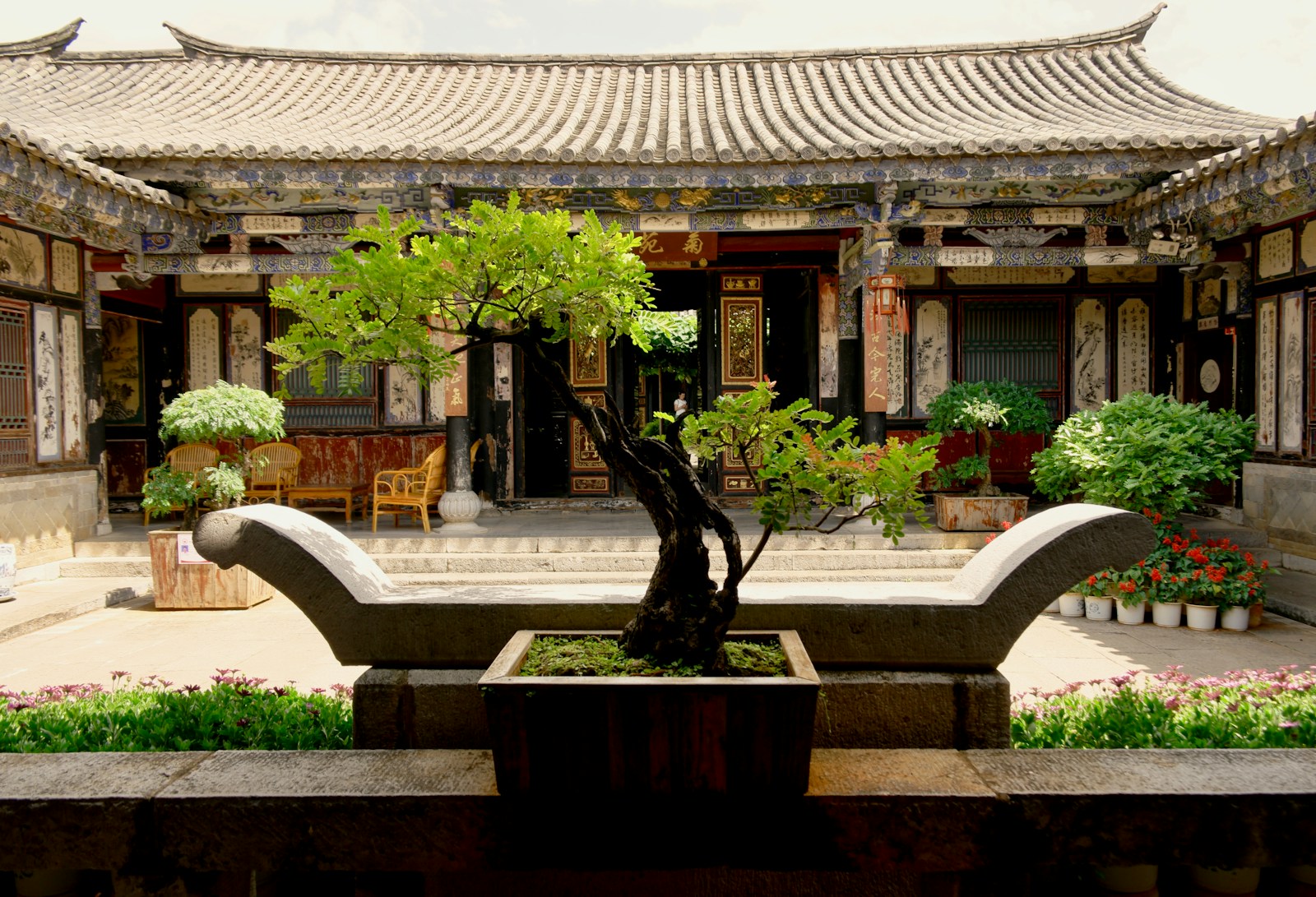
Feng shui is a Chinese tradition that focuses on how to position and organize a living space within its environment. The word itself translates as "wind and water": the Larousse dictionary It is defined as a way of life rooted in ancient Chinese cosmology, which seeks greater harmony between the individual and their environment. It is a philosophy of the site before it is a philosophy of the cushion.
Wind and water: a landscape-based perspective above all
Originally, it wasn't about decoration. It was about choosing where to place a building, a tomb, a village: which way the wind blows, where the water flows, how the surrounding landforms are positioned. This interpretation of the landscape is far from anecdotal in Chinese history, and it remains a vital practice: research has focused on the role of feng shui in Hong Kong's urban planning, where it still influences construction decisions. In other words, it's not a trend that originated in the decorating pages of the 2000s: it's a tradition that was imported, often with significant simplification.
This precision matters, and not just out of politeness. It explains why feng shui talks about orientation, thresholds, circulation and views long before talking about hues — and why so much "feng shui" advice that we read online, cut off from this logic, is pointless.
Chi, yin and yang: basic vocabulary
The word you'll come across everywhere is the chi (Or qiIn this tradition, the vital breath that circulates through a space is like the air in a house. A successful interior, according to feng shui, is one where this breath enters, circulates, and does not stagnate. Its counterpart also has a name: shar chi, the airflow deemed aggressive, associated with sharp angles and straight corridors.
THE yin and the yang These complete the toolbox: two complementary qualities, one rather dark, soft, and still, the other rather bright, lively, and dynamic. A bedroom is traditionally viewed as a yin space, a reception room as a more yang space. This isn't a measurement, it's a framework for understanding—and that's precisely how I invite you to approach it.
The five elements and the bagua, the housing grid
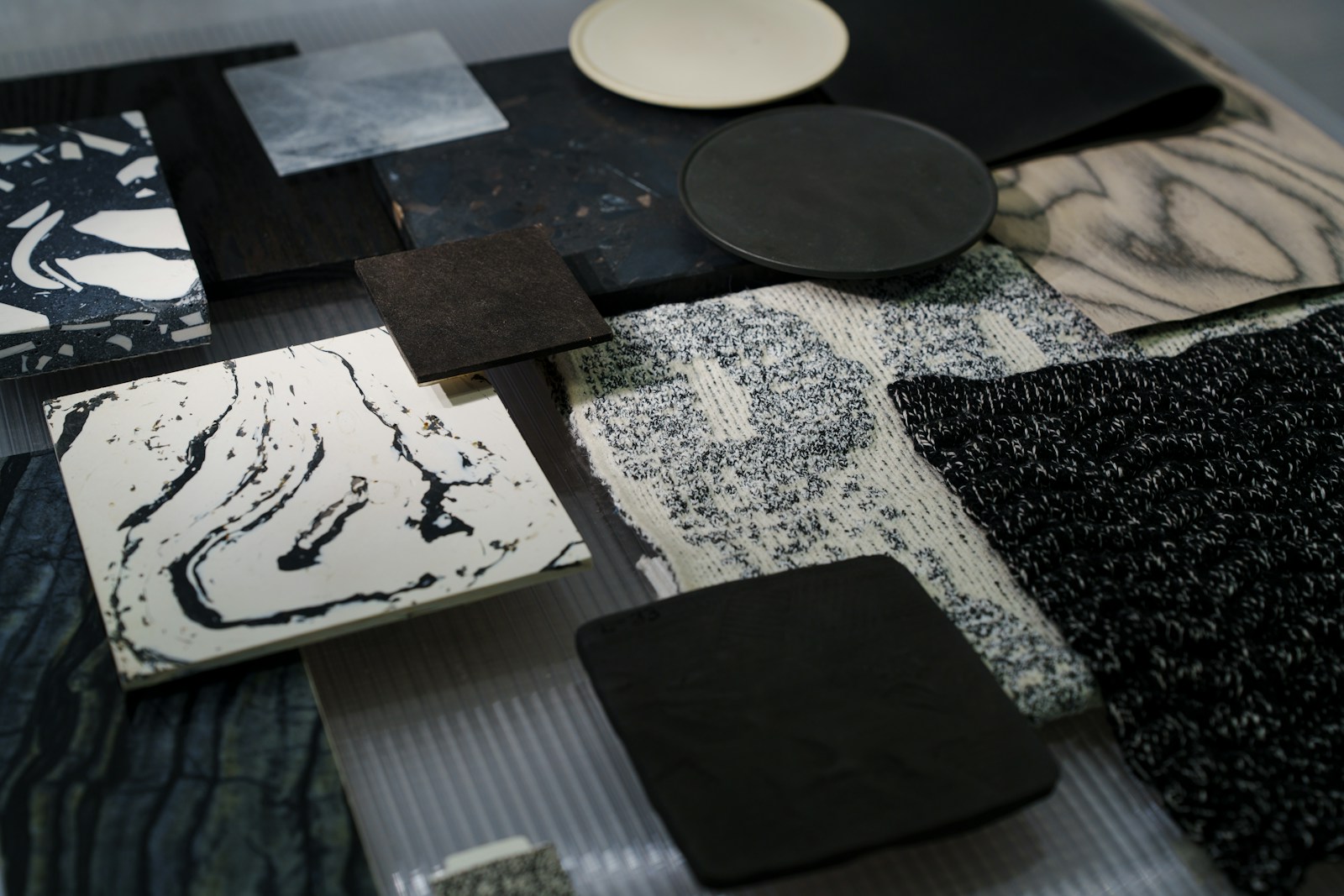
Tradition then classifies the world into five elements — wood, fire, earth, metal, water — which are expressed in an interior through materials, shapes, and colors. The desired principle is balance: neither a completely cold, mineral room, nor a room saturated with red and candlelight. Seen this way, it's a compositional tool, quite similar to what any decorator does when balancing materials.
THE bagua, Finally, there's a grid of eight sectors that practitioners of this tradition place on the floor plan to associate each area with a different aspect of life. This is where I stop abruptly: the tradition attributes influences on health, money, or relationships to these sectors, and there's no basis for presenting this as fact. I'm describing it because the term keeps popping up, not to encourage you to rearrange your living room hoping for some effect.
A word, too, about a very common misconception: feng shui is Chinese, not Japanese. The clean aesthetic often associated with it in France owes much to Japanese minimalism and contemporary movements such as... Japandi style. The two can coexist in your home, but they are two distinct cultures, each with its own history.
Feng shui doesn't promise me anything. It offers me a way of looking at my space — and that's already a lot.
This, in feng shui, aligns with common sense in layout.
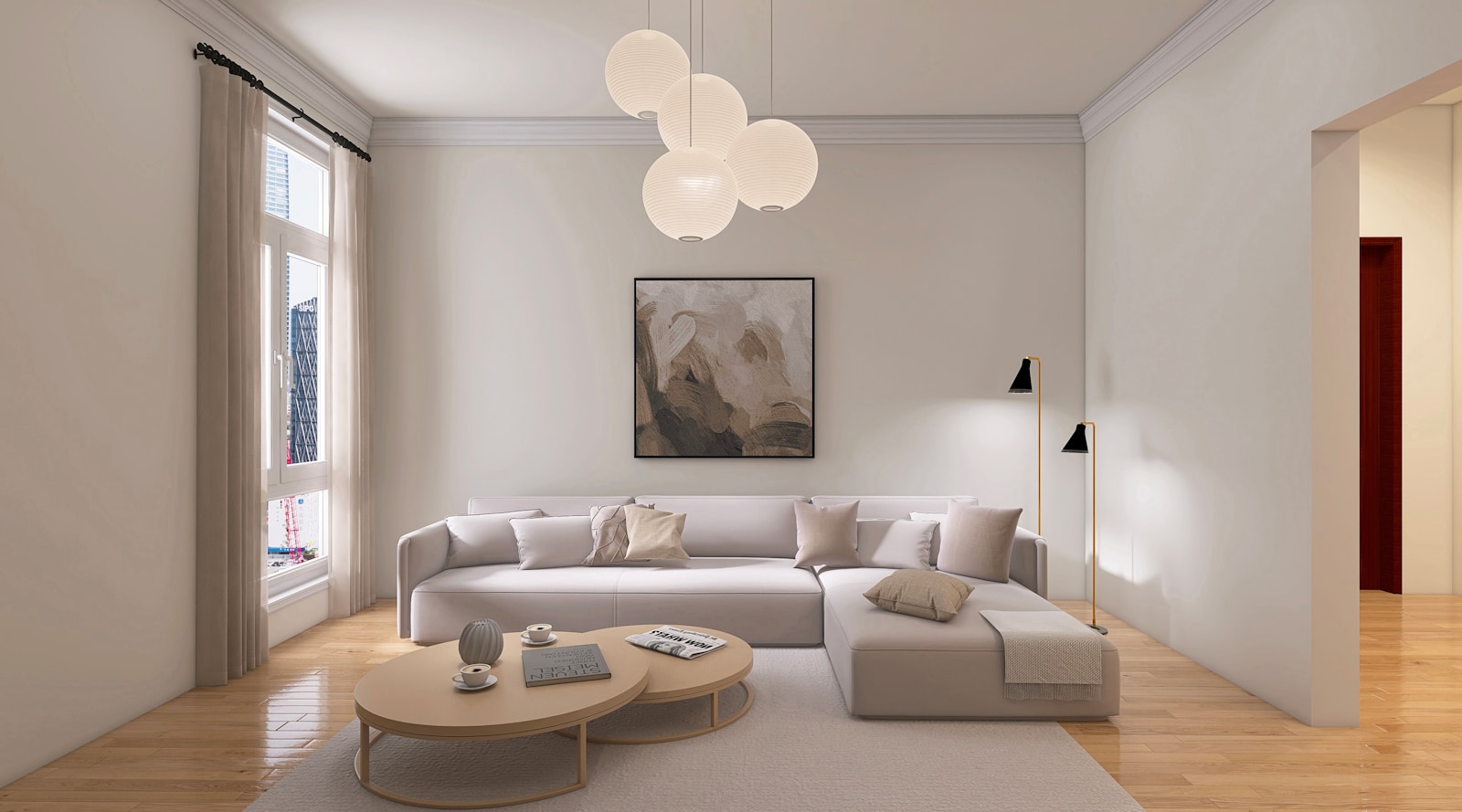
Here's the part I really like. When you remove the promises, what remains in feng shui is a foundation of layout recommendations that you can judge for yourself, in your own home, in just one evening. They don't work because some invisible force is at work; they work because a clear room allows you to move through it without having to slalom, cleans up faster, and photographs better.
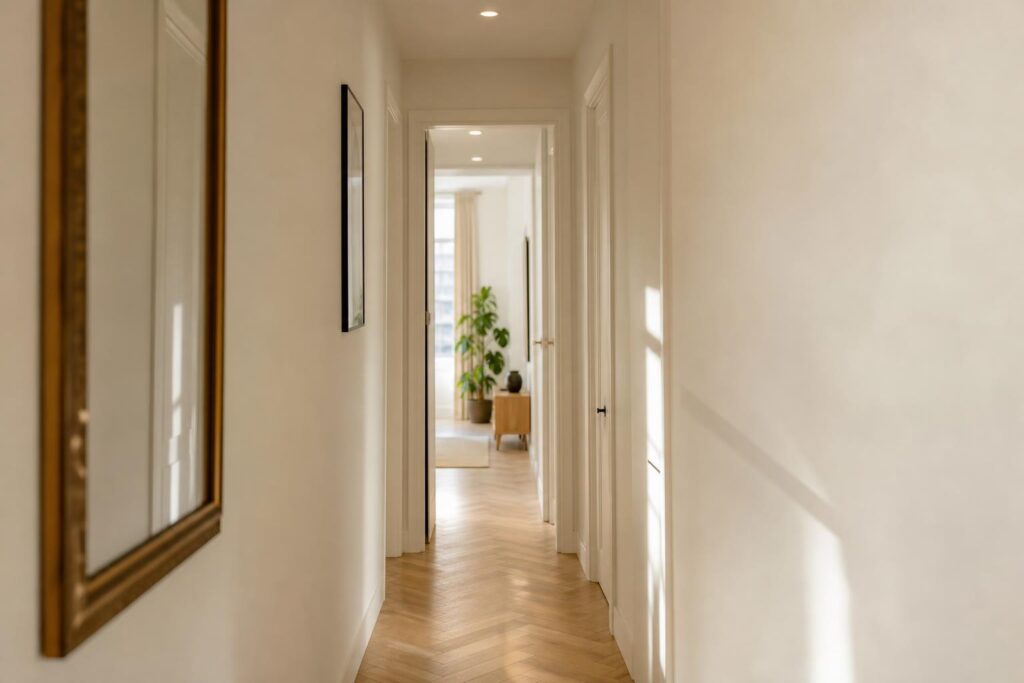
Clear and unclog the passageways
This is the one point on which absolutely everyone agrees, practitioners and interior designers alike. Tradition says that clutter blocks chi; experience simply says that a hallway where you bump into things and an entryway piled high with shoes make a home unpleasant. The test is foolproof: walk through your home from the front door to the back window. Every place where you have to turn sideways is a place that needs rethinking.
- A comfortable passage in front of traffic areas, rather than a few centimeters gained on an oversized piece of furniture.
- No door blocked halfway: a door that does not open fully is a room that is only half used.
- The floor should be as free as possible — tradition insists on it, and so do your bare feet.
- Sharp angles softened by an object, a plant, a textile: feng shui sees this as a positive influence. shar chi, I mostly see shinbones.
- A closed storage unit for each room, so that the decluttering lasts beyond Sunday evening.
Daylight, natural materials, plants
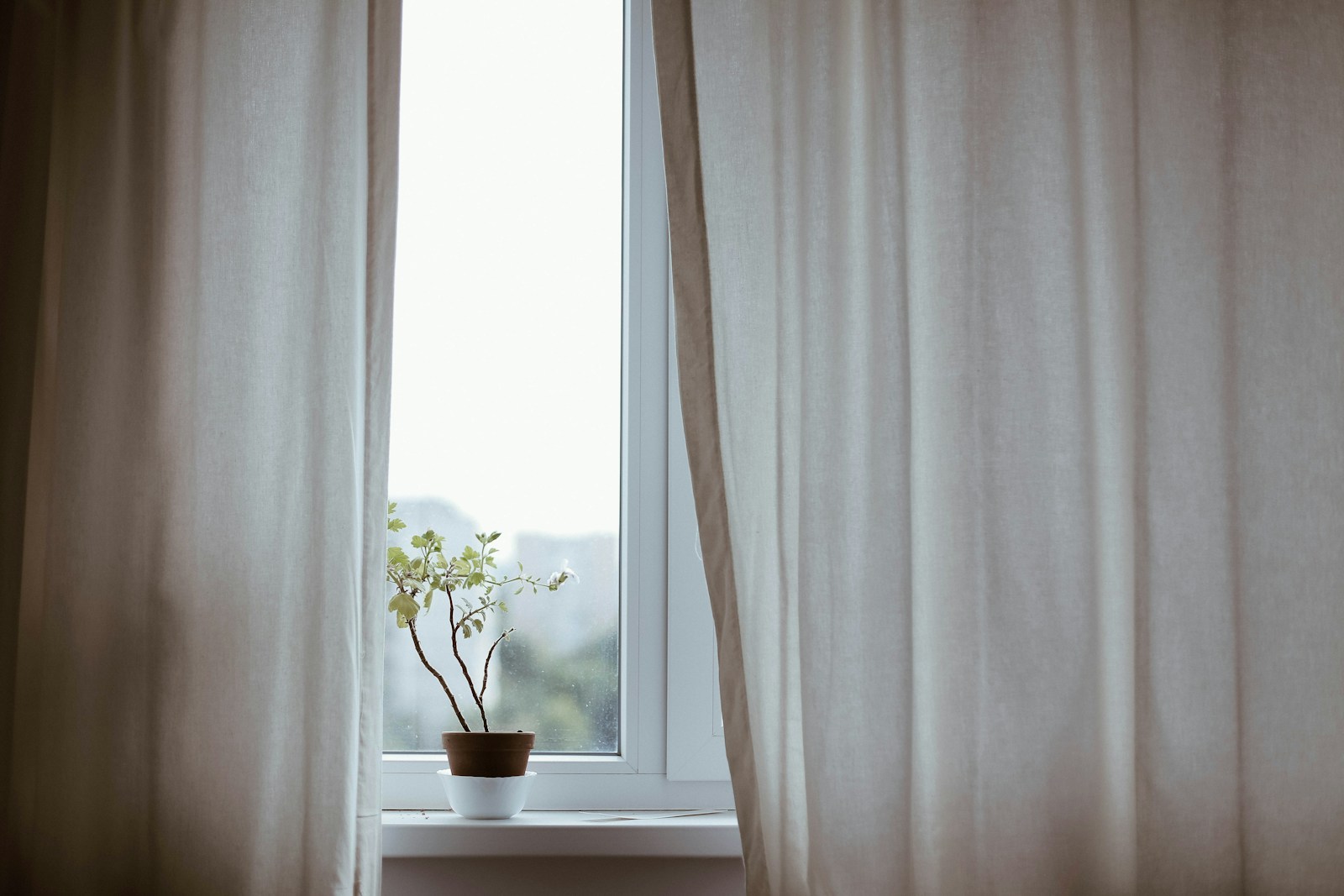
Tradition favors natural light and natural materials; here again, the recommendation stands on its own. An unobstructed window changes the perception of a room more effectively than any object purchased for the occasion. Sheer curtains in linen Rather than an opaque curtain, a mirror placed to reflect daylight and not to furnish a wall, multiple low lamps rather than a single ceiling light: these are gestures of decorator as much as of feng shui.
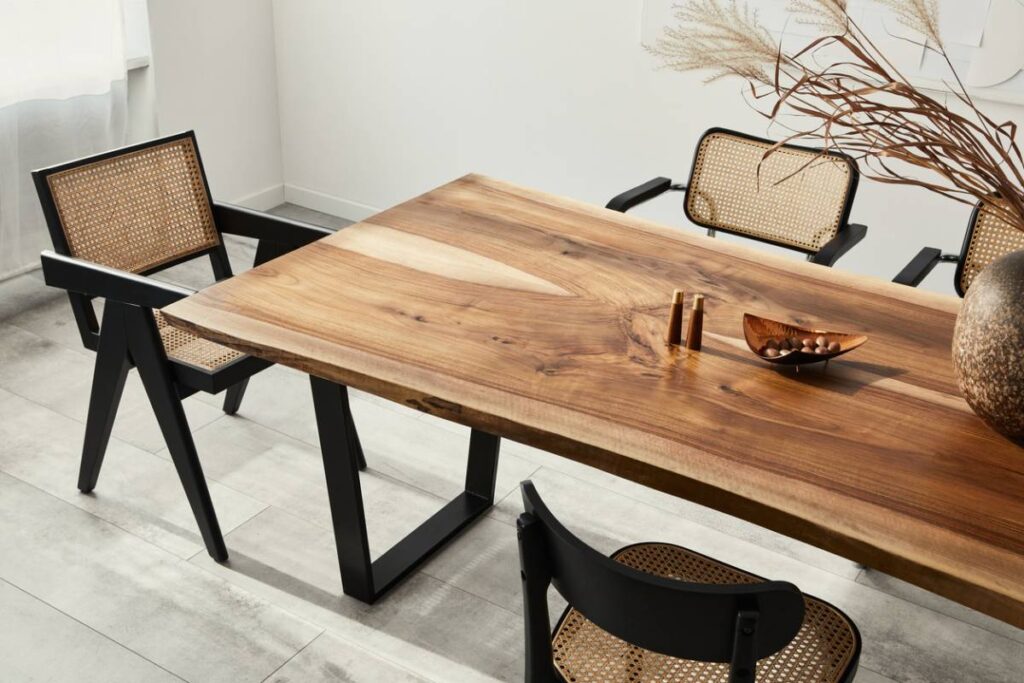
The same logic applies to materials. The drink Solid wood, terracotta, woven rattan, wool, stone: these materials offer a variety of textures that laminate doesn't, they age well, and they tell a story of origin. As for plants, tradition associates them with the vitality of a space; for my part, I mainly find that an interior without greenery seems static. Choose them according to the actual light in the room, not according to a sector of the bagua.
Do you have to believe in feng shui to be inspired by it?
No, and that's precisely the point. You can read feng shui as a repertoire of design solutions refined over centuries by people very attentive to space, without subscribing to its cosmology. That's the stance I'm taking here: I say "according to feng shui" when it's tradition speaking, and "based on experience" when it's verifiable. You keep what resonates with you, you leave the rest, and no one expects you to believe it.
In this video: an overview of the most frequently cited feng shui recommendations for the home (Lamaisonauxsecrets channel). Consider it an introduction to the tradition, not a demonstration.
Entrance, living room, kitchen: the transitional spaces
Feng shui reasons room by room because each space has a function and a different relationship to circulation. Let's start with the three rooms where we pass through, where we receive guests, where we work—those that tradition interprets as being more on the yang side.
The entrance, the threshold to which tradition is most attached
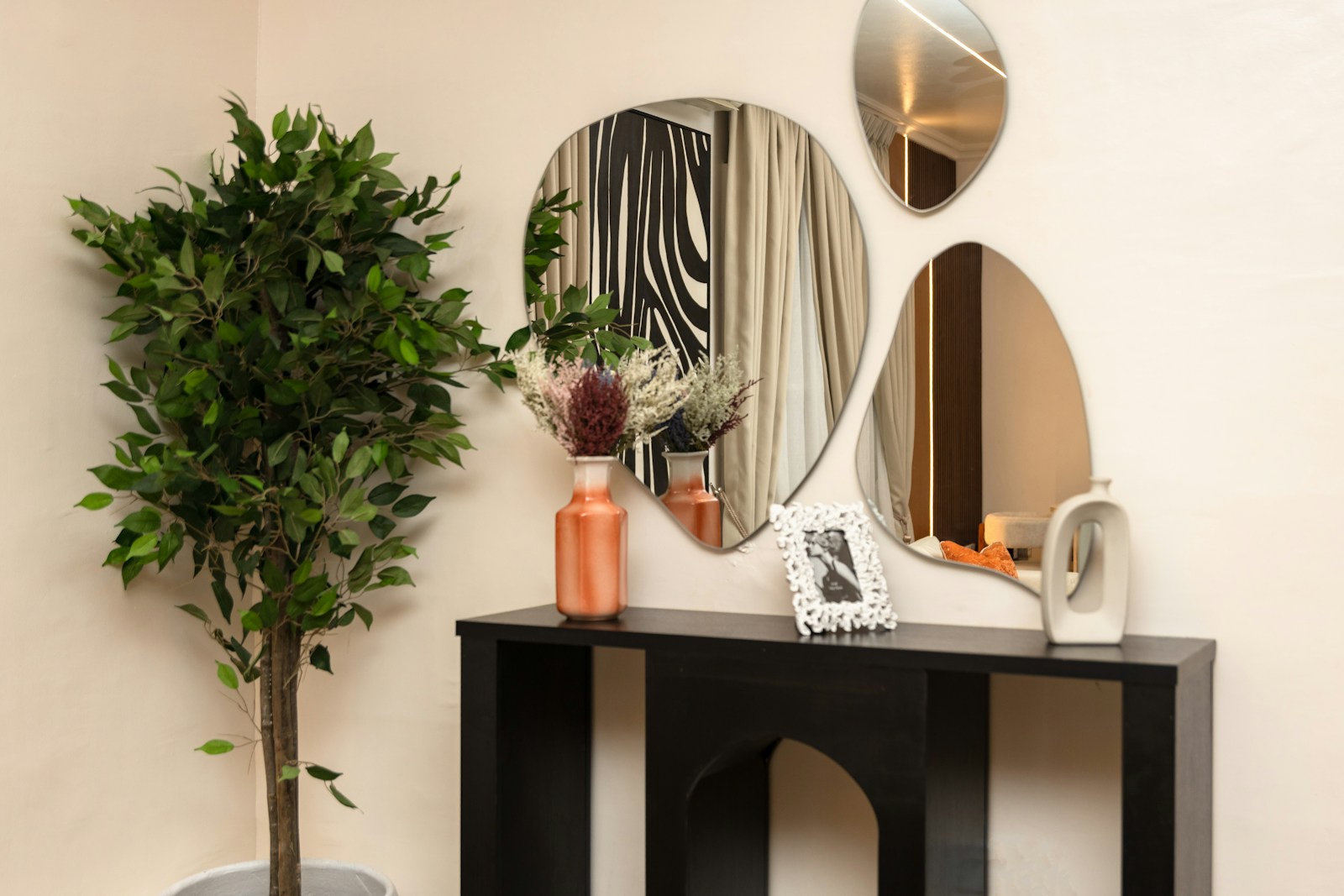
This is the key room in feng shui: according to tradition, it is through the’entrance Let the chi enter the home, and anything that obstructs it will then be paid for in the rest of the house. Translated into design language, this gives remarkably practical guidelines: be mindful of where you step, place your belongings without piling them up, and find something pleasant to look at upon entering the home.
- A door that opens wide onto a clear floor and bright lighting.
- A hook for coats and a storage area, to prevent keys from migrating throughout the entire accommodation.
- A mirror, yes — but placed on a side wall to widen the passage, never facing the door: tradition considers that it sends the chi out.
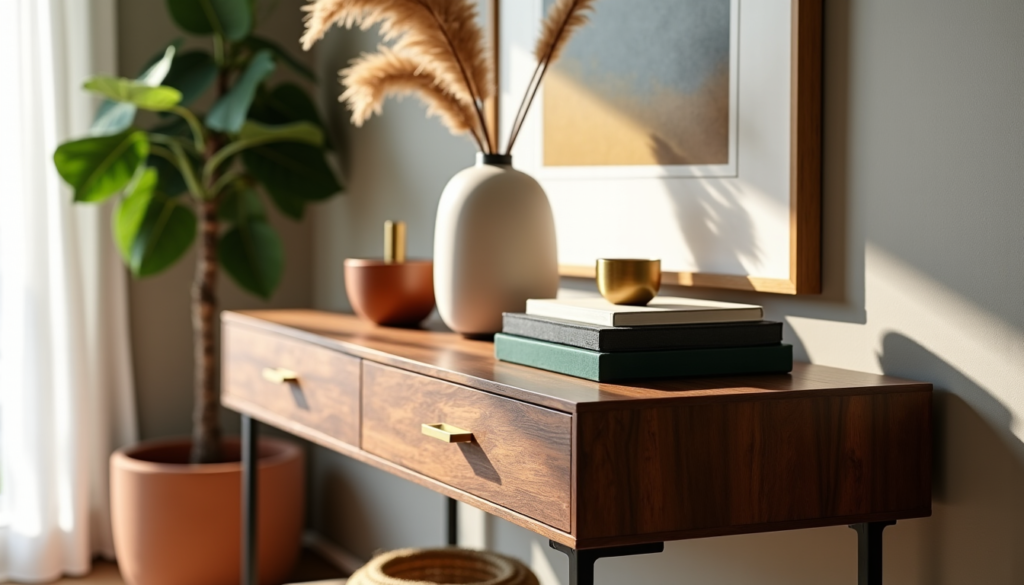
- A shallow console table and a washable rug rather than a bulky piece of furniture that you have to walk around sideways.
The living room: place the seating back-to-back, round off the lines
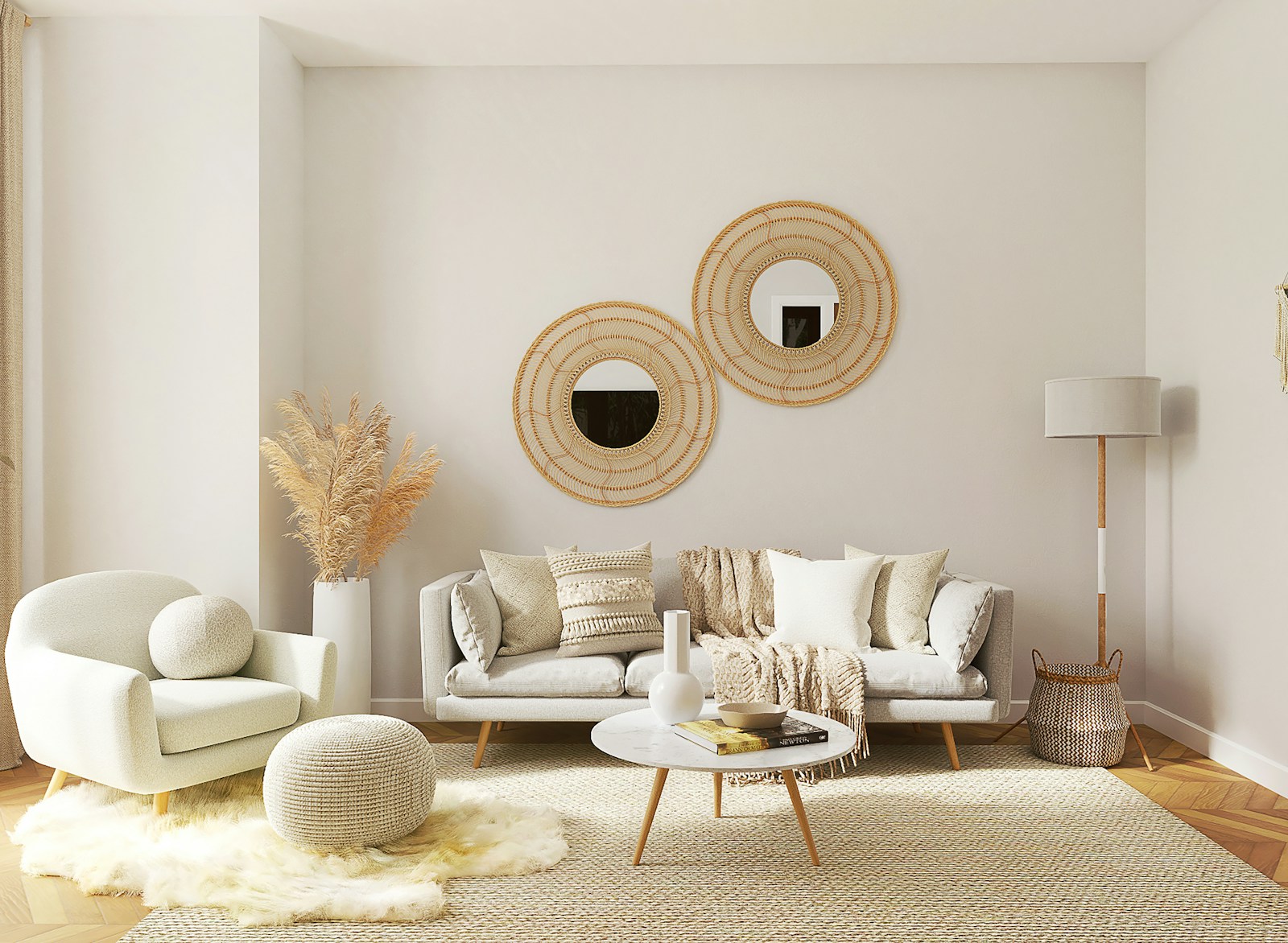
The most well-known recommendation can be summed up in one sentence: the couch It leans against a solid wall and doesn't turn its back to the door. Tradition speaks of protection and air circulation; in practice, we find a very mundane reality—we're more comfortable when we can see who's entering, and a floating backrest in the middle of a room cuts the space in two. If your layout requires it, a low console table or a bookcase behind the sofa will provide it with a more defined back. Our guidelines for Choosing the right sofa The same applies here: proportions do more for comfort than exact orientation.
The rest follows the same logic: rounded shapes, a coffee table with softened corners, seating angled towards each other to encourage conversation, and several low light sources instead of a single central light. Tradition also suggests avoiding exposed beams above seating. While there's no hard and fast rule, it does encourage a more open and airy feel.
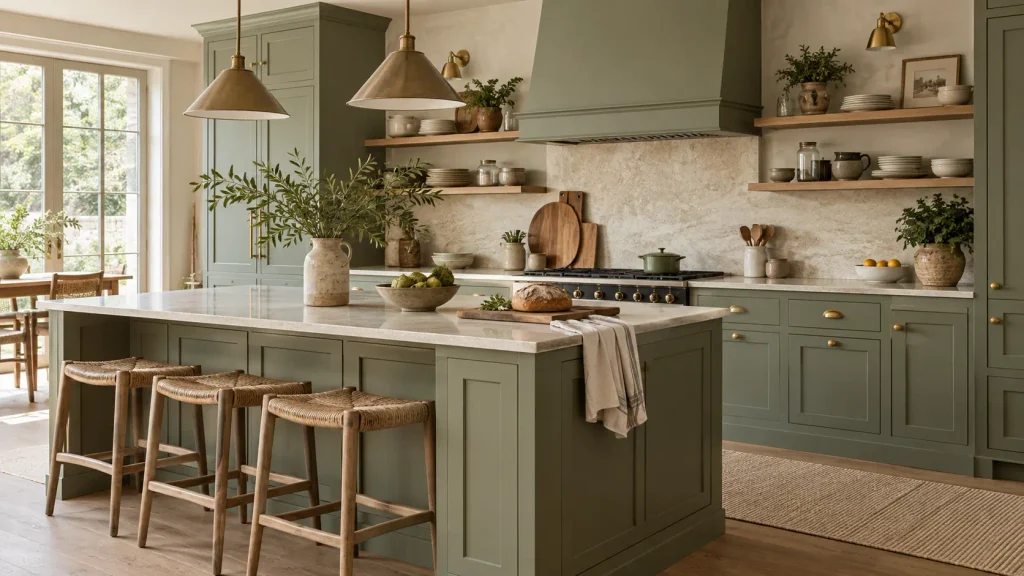
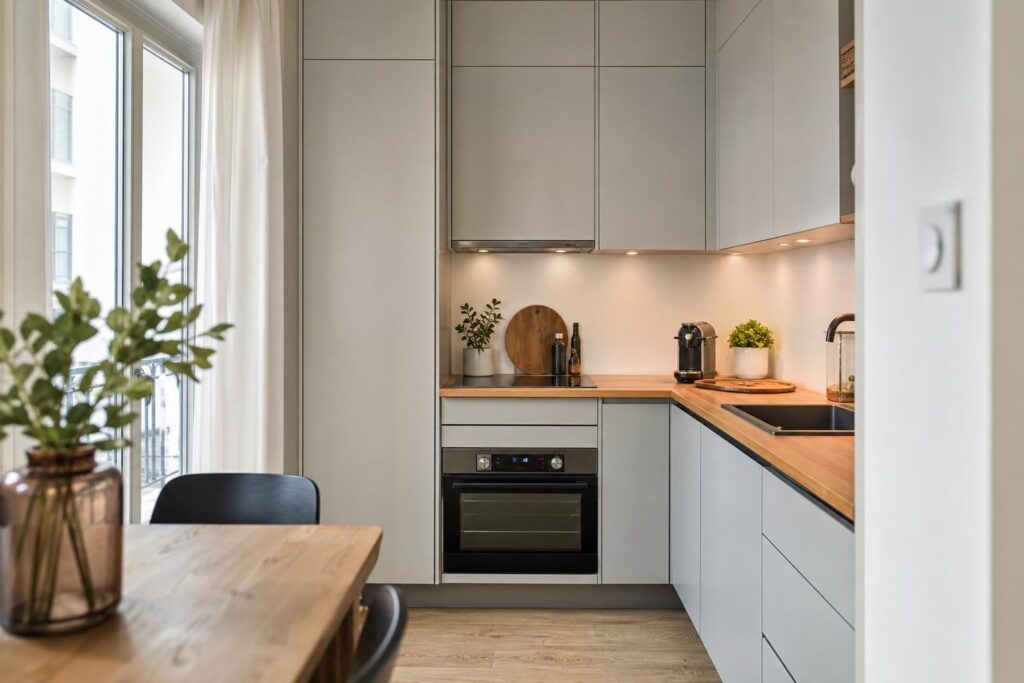
The kitchen: tidy, easy to read, never with your back turned.
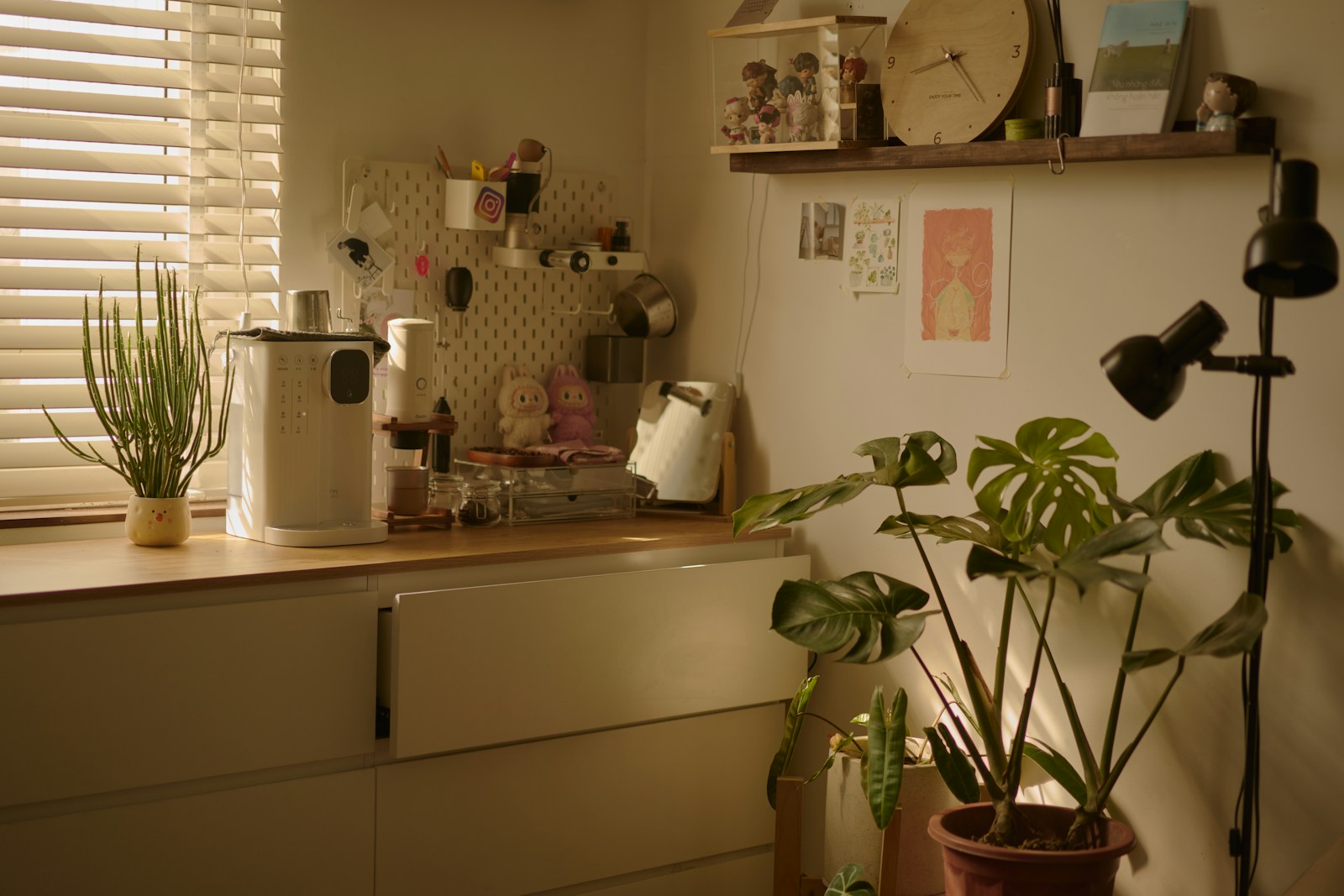
In this tradition, the kitchen is an important room, associated with food and the home. Two recommendations are frequently made: avoid cooking with your back to the door or the living area—a matter of comfort and conviviality as much as symbolism—and avoid placing the cooktop directly next to the sink, as fire and water are considered opposing elements. A work surface between the two is, in fact, what any kitchen designer recommends, for purely practical reasons.
For the rest: clear work surfaces, tidy appliances, and a touch of warmth somewhere—an oiled wooden countertop, a terracotta shelf, a linen tea towel. A feng shui kitchen isn't an empty kitchen; it's a kitchen where everything has its place.
💡 Tip Before buying anything, walk through your home with a notebook, including the front door, and note only the places where you feel cramped. Nine times out of ten, the list can be solved by moving three pieces of furniture and emptying a closet. It's free, and it makes the biggest difference.
Bedroom and office: the two most requested rooms
These are the two most frequently requested searches, and that's no coincidence: the bedroom and the office are the rooms where we are alone with ourselves, the ones where a poorly designed layout is most quickly noticeable. Traditionally, they are both considered places of retreat, to be treated with more care than the living room.
Where should you place your bed in a feng shui bedroom?
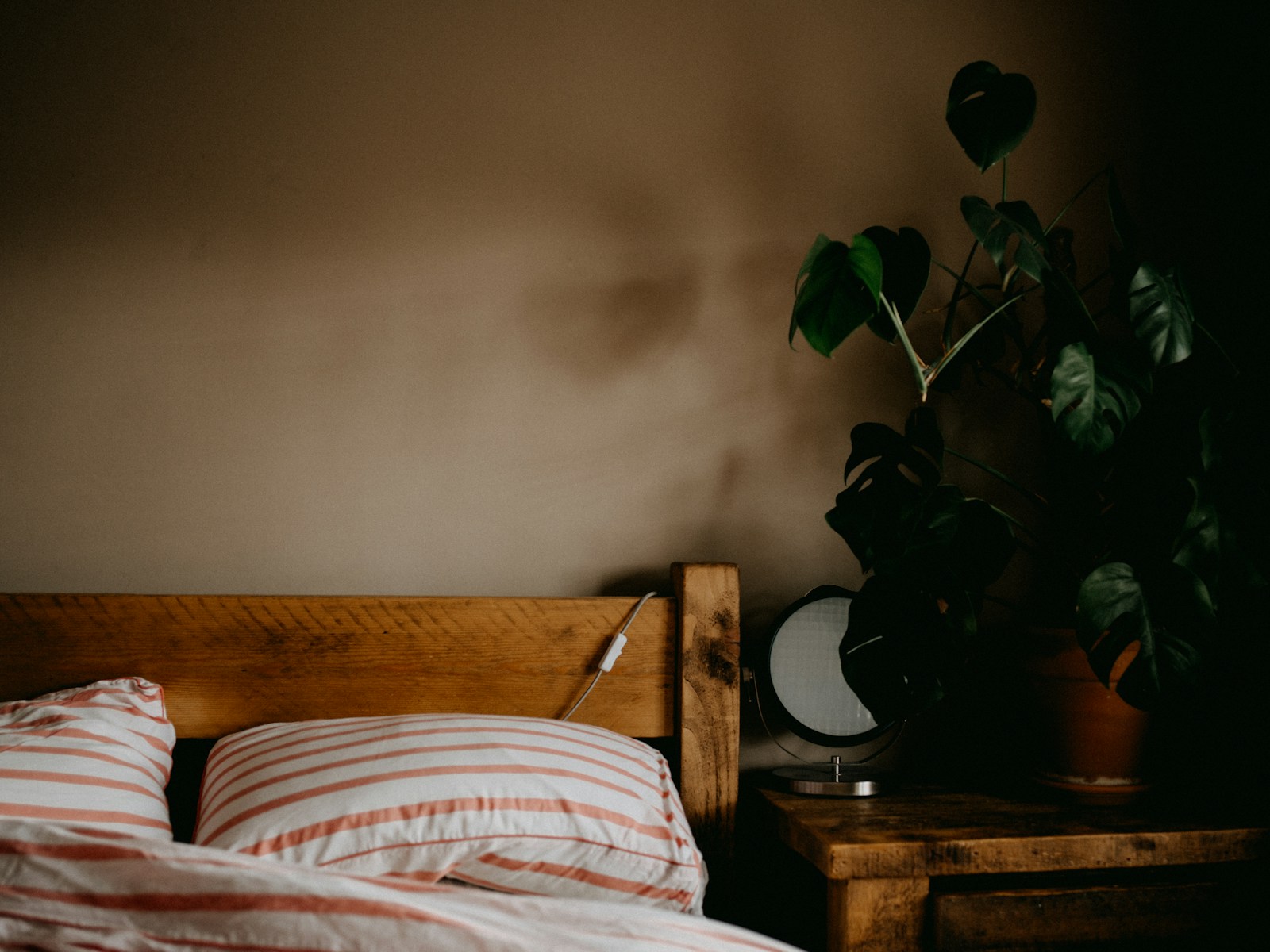
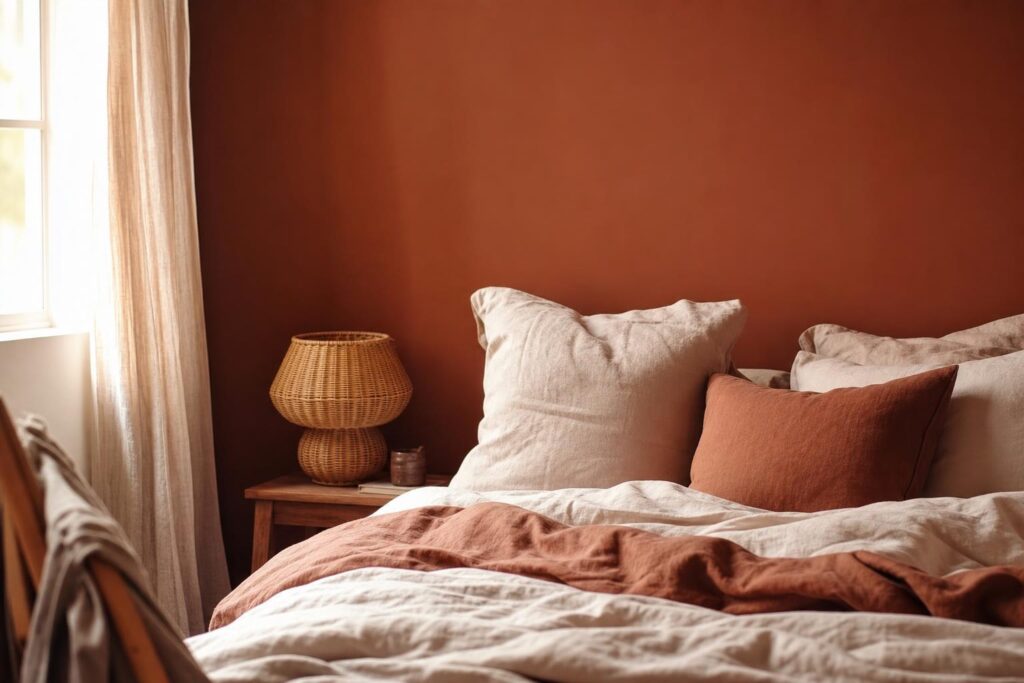
The most frequently cited rule of feng shui is called the command position: from the bed, You should be able to see the door without being directly in its path. I won't tell you that this improves sleep—it hasn't been proven, and I won't venture a guess. However, most people readily confirm one thing: seeing the entrance to the room from your bed provides a feeling of security, And that's already a good reason to try.
- Headboard against a solid wall, never under a window or in an open corner.
- The door is visible from the bed, but the bed is offset from its alignment.
- A passageway on both sides of the bed, and two bedside tables if space allows: tradition sees it as a balance, couples see it as peace.
- Nothing heavy hanging above their heads, nothing stored under the bed.
- A mirror that doesn't reflect the bed, and if possible no screens in the room.
The rest of the room follows the yin palette: muted colors, soft textures, low and warm lighting rather than a ceiling light, and a thick rug underfoot. It's very close to what we look for in a Scandinavian-inspired bedroom, through a completely different cultural path — the convergence is interesting in itself.
The office: seeing the door, having a wall behind you
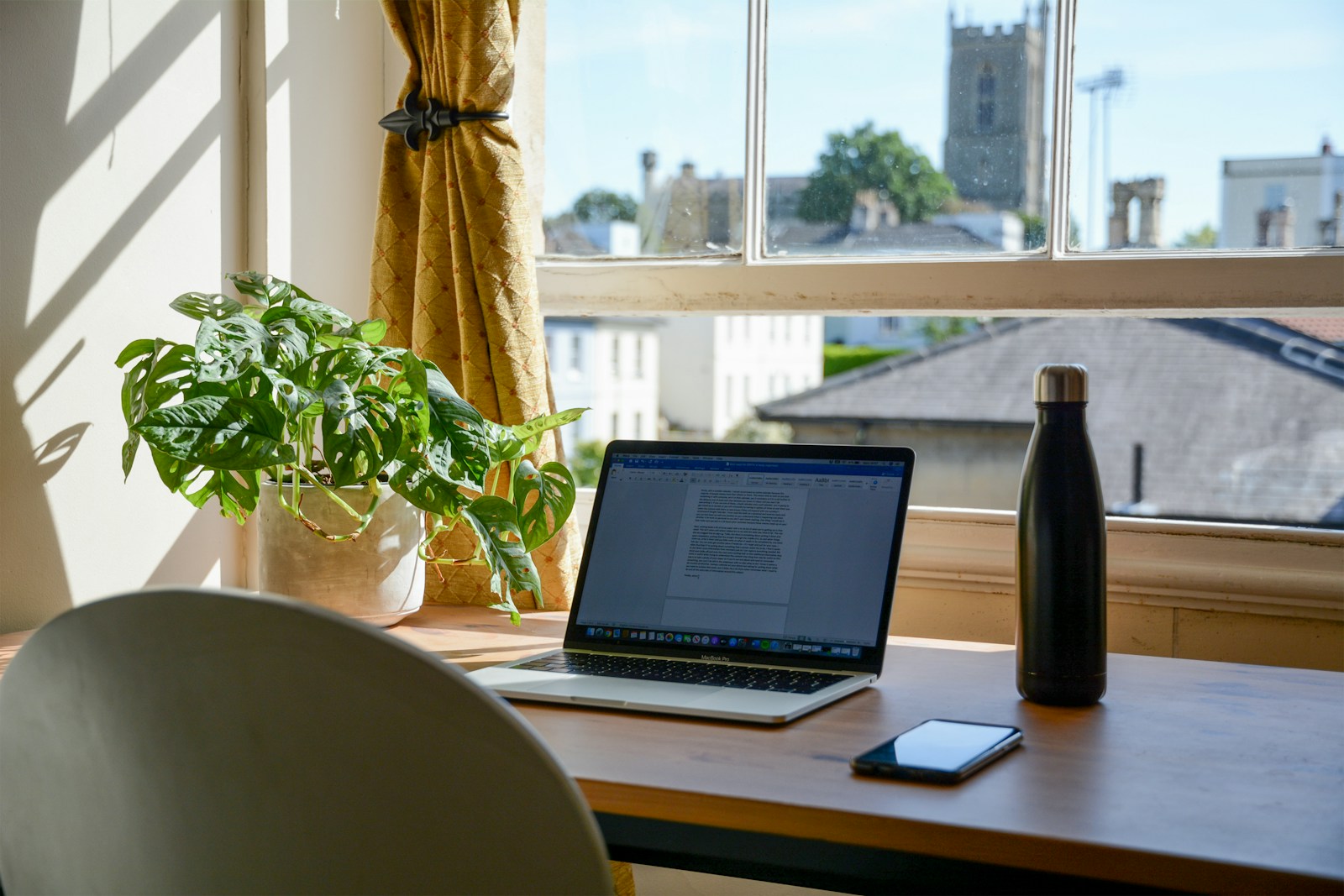
THE desk The same commanding position is maintained: seated, with a wall behind you and the door in your field of vision, rather than your back to the room. Again, the traditional explanation speaks of control and support; the prosaic explanation is that you work poorly when you can be surprised from behind. Ideally, the work surface should be positioned perpendicular to the window: daylight arrives from the side, without glare or reflection on the screen.
Add what tradition associates with this room, and which costs nothing: a clear work surface at the end of the day, closed storage for papers, a plant within sight, and a natural material at hand—a solid wood tray works very well. If the desk is set up in a corner of the living room or bedroom, a rug or a screen is enough to mark the boundary: feng shui sees this as two separate functions, and above all, it provides a way to close out the day.
Colors and materials: the feng shui palette, without dogma
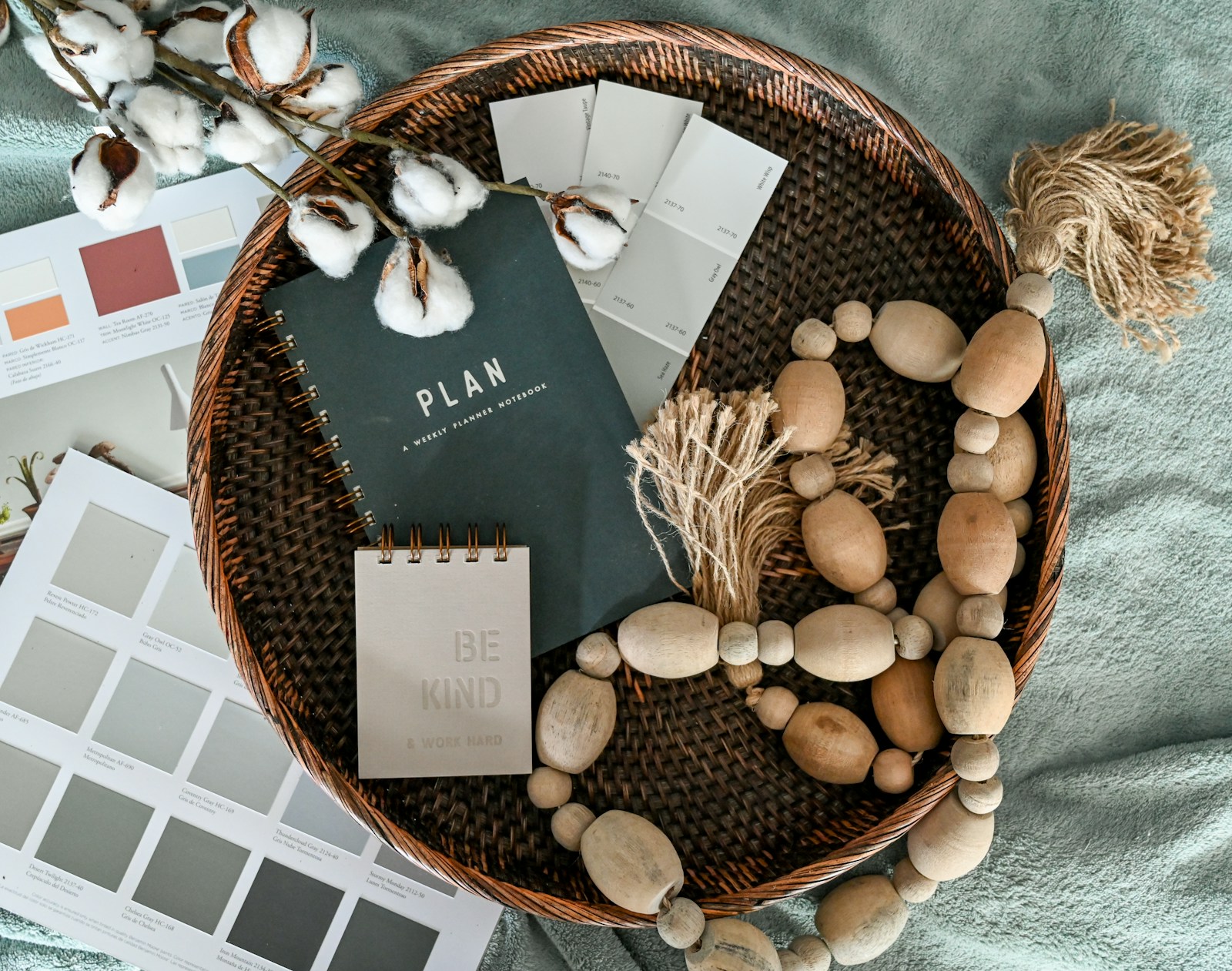
The most frequently asked question after the bed question is: what colors are best for Feng Shui decor? The tradition doesn't dictate a specific palette; it links hues to the five elements and seeks their balance within a single room. In other words, there's no universal "Feng Shui color," but rather combinations that should be adjusted to the orientation and lighting of your room.
The five elements translated into colors and materials
Here is the table of correspondences as tradition presents it. I give it to you as a repertoire of compositional ideas — hues, materials, shapes — and not as a prescription: none of these links has a proven effect on anything in your life.
| Element | Related shades | Materials and shapes | Rooms where tradition readily places him |
|---|---|---|---|
| Drink | Greens, sea green, olive green | Raw wood, rattan, bamboo, plants, vertical lines | Living room, children's room, office |
| Fire | Reds, oranges, terracotta | Wool, candles, leather, triangular shapes | Dining room, reception rooms |
| Earth | Ochre, beige, brown, sand | Terracotta, ceramics, stone, low and square shapes | Entrance, living room, kitchen |
| Metal | White, grey, gold, copper | Brass, brushed metal, mirrors, round shapes | Office, bathroom, hallway |
| Water | Deep blues, black, slate grey | Glass, smooth and reflective surfaces, curves | Bedroom, bathroom |
What colors are suitable for a feng shui living room?
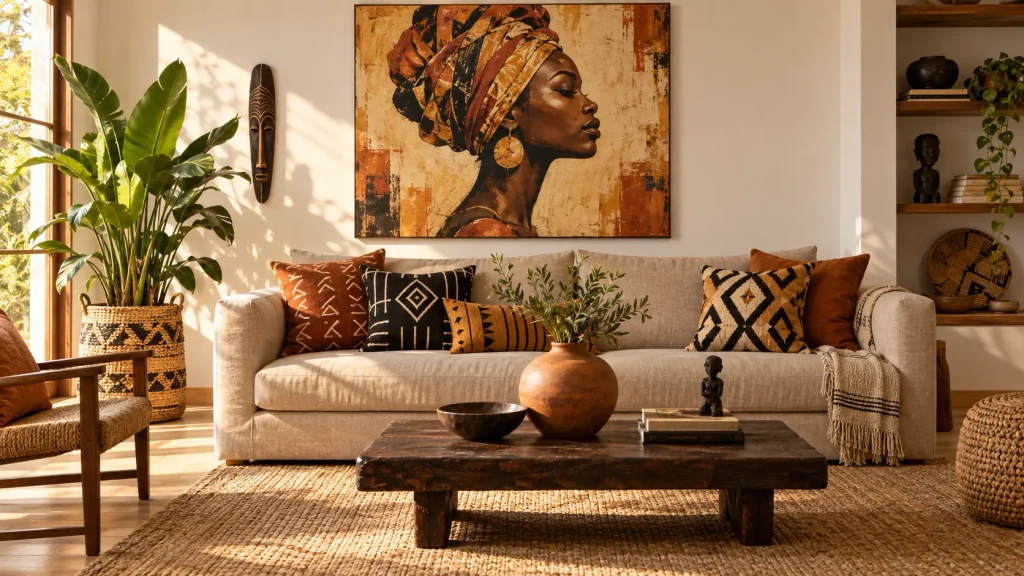
For a living room, tradition advises dominating with earth tones—beiges, ochres, sand, soft browns—and adding touches of one or two other elements: a leafy green, a hint of terracotta, a touch of brass. Three color families are generally sufficient to create a cohesive look in a room; beyond that, you lose the clarity that feng shui seeks.
Two reflexes are valid, regardless of any tradition. Test the shade on a section of wall and look at it at three different times of day: a north-facing room and a south-facing room will not appear the same color. And keep the brightest tones for rooms where people gather, and the more muted tones for those where they relax—this is what the yin/yang principle dictates, and it is also confirmed by our observations on the color trends by room.
And if you only take one thing away from this whole article: start by decluttering, clearing out the space, and letting in the light. What feng shui calls letting the chi flow, you might simply call letting your home breathe. The results will be visible from the very first night.
Want to renovate your interior room by room, without changing everything?
Read our guide to furnishing your homeFAQ: Your questions about Feng Shui decor
How to activate Feng Shui energies?
Traditionally, the flow of chi is encouraged by decluttering, clearing passageways and doorways, balancing the five elements through materials and colors, and letting in natural light. While these practices haven't been proven to have a direct effect, they do make a home objectively more pleasant to live in.
How to position your bed according to Feng Shui?
Tradition recommends the commanding position: head of bed against a solid wall, door visible from the bed but off its direct line of sight, never under a window. A passageway is left on both sides, and nothing heavy should be suspended above. Many find a considerable sense of security in this position.
How to practice Feng Shui at home?
Begin by decluttering and clearing the flow of movement, room by room. Then, place the seating and bed against a solid wall, keeping the door within sight. Next, carefully select materials and colors according to the five elements. Traditionally, the plan is interpreted using the bagua (a set of symbols).
What colors should you choose for a feng shui living room?
Traditionally, a dominant palette of earthy tones—beige, ochre, sand, soft brown—is favored, accented by one or two touches of another element: vegetal green, terracotta, brass. Three color families are sufficient. Always test the shade on a section of wall at different times of day.
How to design a feng shui office?
Position the desk so that you have a wall behind you and the door in your line of sight, rather than facing away from the room. A work surface perpendicular to the window will prevent glare and reflections. Add closed storage, a plant, and a clear work surface.
Are feng shui and Japanese decor the same thing?
No. Feng shui is a Chinese tradition of spatial arrangement, while Japanese decor stems from a different culture and aesthetic codes, such as minimalism or the Japandi style. The two can coexist in an interior, but they are indeed two distinct heritages.