Do you dream of authentic cuisine that is off the beaten track? cellular concrete kitchen can prove to be an innovative solution, combining functionality and aesthetics for custom-made fittings. This material, increasingly popular in our interiors, allows us to create warm and personalized spaces. Let's take a look at the characteristics, strengths and weaknesses of cellular concrete kitchen to help you determine if it fits your ideal kitchen project.
Our article in brief:
Cellular concrete transforms your kitchen projects by combining personalized aesthetics and practical functionality, for unique spaces.
- Innovative material with a honeycomb structure, recognizable by its white color and offering a exceptional thermal insulation
- Implementation 30% faster than conventional techniques thanks to its lightness and ease of cutting
- Remarkable versatility allowing the creation of custom shapes (islands, worktops, shelves) with great creative freedom
- Some limitations: relative fragility, need for specific fixings and initial cost higher than traditional materials
In this article
What is cellular concrete and why use it in the kitchen?
Cellular concrete is a unique building material composed primarily of sand, cement, lime, and water, to which a blowing agent (usually aluminum powder) is added. This unique composition creates a porous honeycomb structure that traps air in the form of microbubbles, while maintaining remarkable strength.
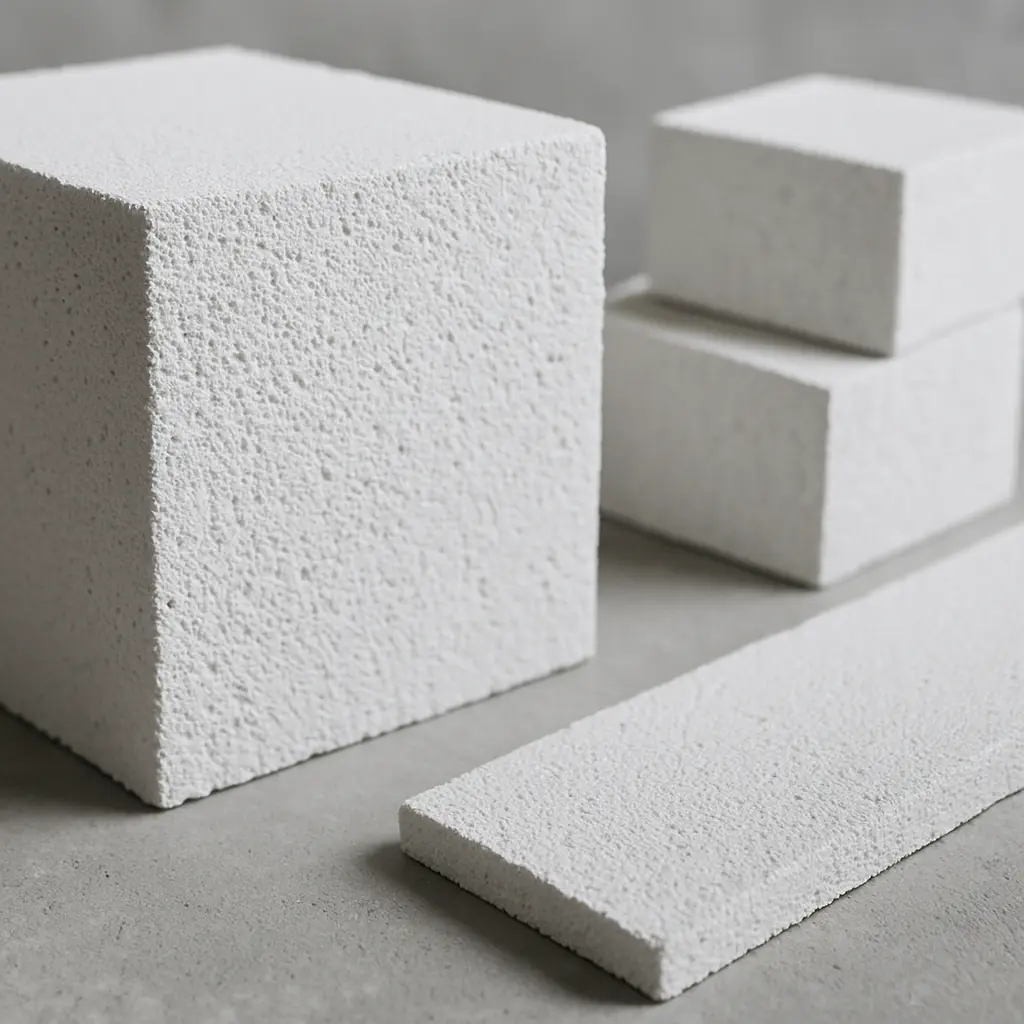
Recognizable by its characteristic white color, this material comes in different forms: solid rectangular blocks, tiles or panels of varying thicknesses (from 5 to 30 mm), or elements calibrated with great precision. In France, you will sometimes hear it referred to as Siporex kitchen, which is actually a historic brand.
Its lightness is one of its major advantages, making it much easier to handle during kitchen renovation work. Compared to traditional concrete blocks, cellular concrete allows for clean cuts with a simple coarse-toothed saw, without the need for complex, specialized tools.
The thermal and ecological advantages of a cellular concrete kitchen
The honeycomb structure of cellular concrete gives it exceptional thermal insulation, up to 8 times greater than that of a traditional concrete blockThis property is particularly valuable in a kitchen, a room subject to significant temperature variations during meal preparation.
| Property | Cellular concrete | Traditional concrete |
|---|---|---|
| Thermal conductivity | 0.08 to 0.14 W/mK | 1.15 to 1.75 W/mK |
| Weight | 400 to 800 kg/m³ | 2000 to 2400 kg/m³ |
| Fire resistance | Excellent (class A1) | Good |
| Ease of cutting | Very good | Difficult |
From an environmental point of view, cellular concrete offers significant advantages. Its manufacture requires less raw material than other types of concrete and consumes less energy than brick production. This material also generates less waste on the construction site, its precise cutting limiting unusable offcuts.
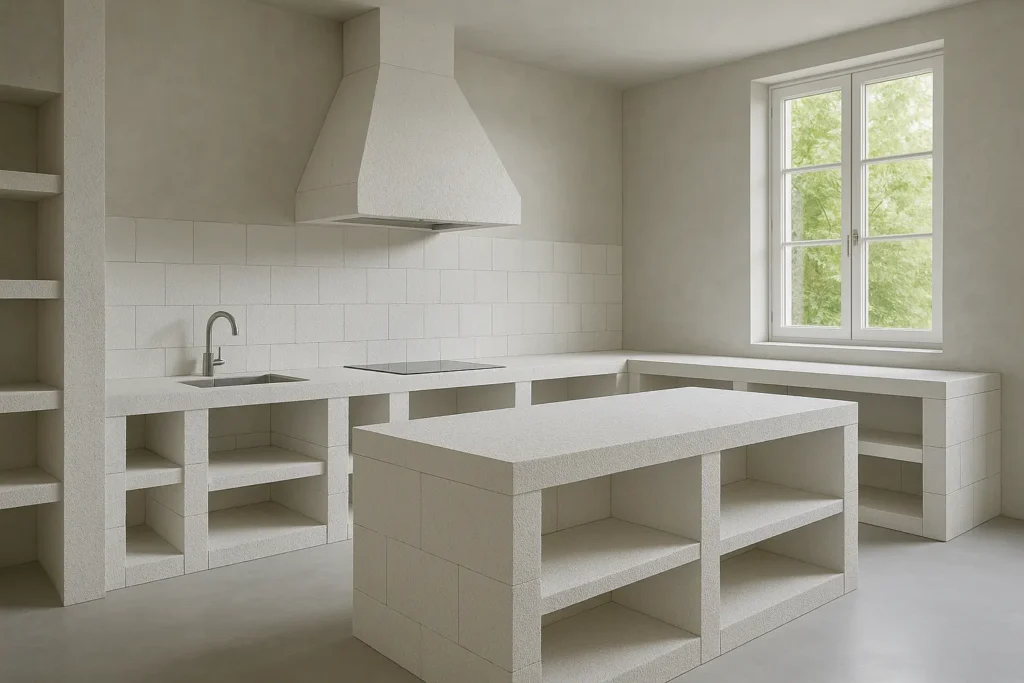
Its excellent thermal phase shift significantly improves summer comfort in your kitchen, naturally regulating the interior temperature. At a time when energy efficiency is becoming paramount, these characteristics make cellular concrete a relevant choice for sustainable and responsible kitchen design.
Practical advantages of fitting out a kitchen in cellular concrete
Ease of implementation for all your projects
One of the most appreciated qualities of cellular concrete is its ease of use. Unlike traditional materials, it is assembled with a thin joint using a special glue, and some models can even be clipped together. This ease of implementation allows an estimated time saving of 30% compared to conventional techniques, significantly speeding up your kitchen design work.
Its lightness simplifies transport and handling, reducing the strain on construction sites. You can easily shape it to create custom shapes, perfectly suited to your specific needs, without waiting for highly specialized professionals to intervene.
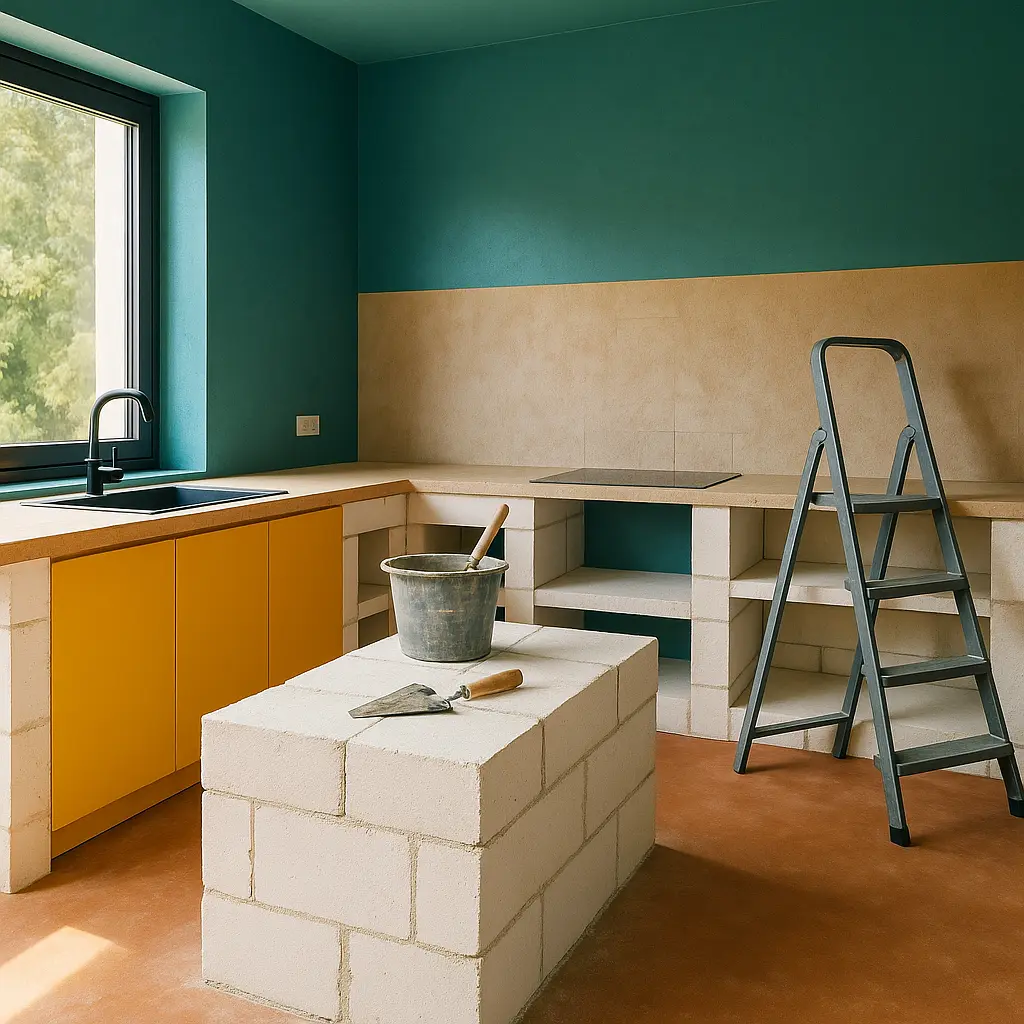
Versatility and personalization of your culinary space
- Creation of a fully customized central island
- Creation of work plans to the exact dimensions of your space
- Built-in shelving construction to optimize storage
Cellular concrete offers you exceptional creative freedom when designing your kitchen. Its ability to adapt to all configurations, even the most complex, allows you to consider unique and functional arrangements. Whether you want rounded or cubic shapes, this material lends itself to all your decorative desires.
Finishes and aesthetics for a unique kitchen
After construction, cellular concrete accepts all types of coatings, giving you great freedom in the choice of finishes. After applying a leveling coating, you can opt for paint, tiles or even wood cladding depending on the desired atmosphere.
This versatility makes it an ideal material for creating a contemporary or industrial-style kitchen, while maintaining the warmth and authenticity of a personalized space. Its smooth, even surface makes it easy to apply finishes, ensuring an impeccable aesthetic result.
The limitations and disadvantages of a cellular concrete kitchen
Relative fragility and necessary precautions
Despite its many advantages, cellular concrete has some weaknesses. This material remains relatively brittle and has a risk of chipping during handling or movementIts sensitivity to cracks is greater than that of traditional concrete blocks, requiring special attention during the construction phase.
This relative fragility requires careful and methodical handling to avoid damage. In a Siporex kitchen, where shocks can be frequent, this characteristic deserves to be taken into account before embarking on your development project.
Technical constraints to anticipate
- Need to use specific dowels and anchors for fixings
- Particular delicacy for elements that have to support heavy loads
- Limited acoustic performance sometimes requiring additional sound insulation
Installing wall units in aerated concrete kitchen requires suitable fixings. Wall units, in particular, require special anchoring to ensure their stability over time. The relatively limited sound insulation can also be a disadvantage in a kitchen open to the living room.
Financial aspects to consider
Cost is another potential barrier. Cellular concrete has a higher purchase price than traditional materials, with an additional cost of approximately 30% compared to classic concrete blocksThis larger initial investment can, however, be offset by the energy savings achieved thanks to its insulating properties and by the reduction in the need for additional insulation.
Practical tips for a successful Siporex kitchen
Essential preparation and planning
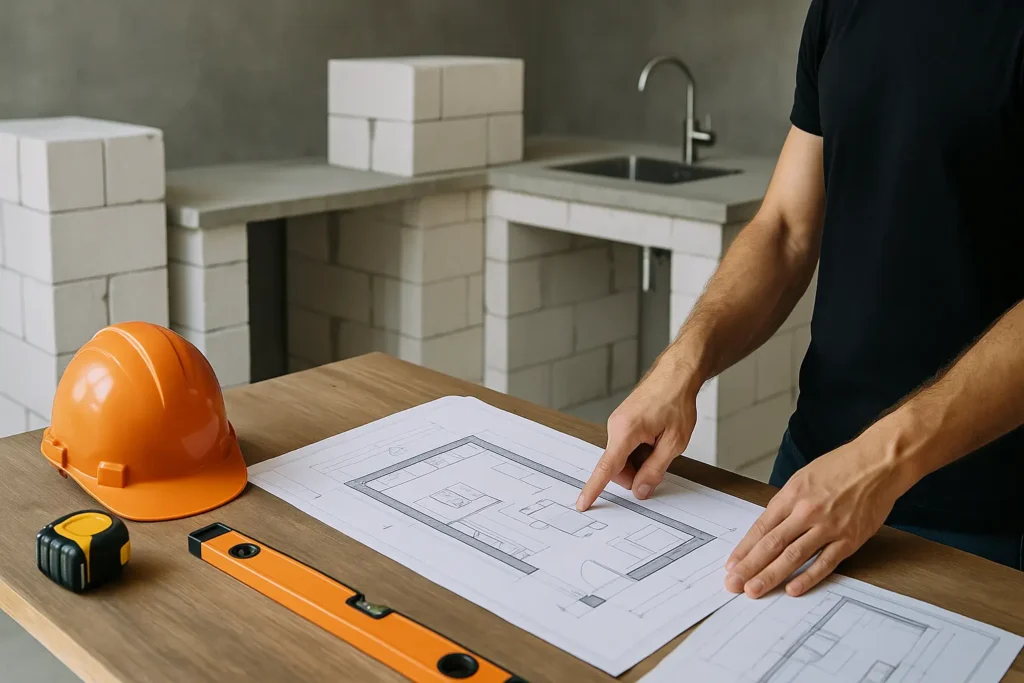
For optimal results, call on experienced professionals or do your research thoroughly before starting. Aerated concrete construction requires a perfectly flat surface and meticulous work, which significantly reduces the margin for error.
Careful preparation of your site and anticipation of technical difficulties determine the success of your project. Take the time to draw up precise plans and calculate the quantities of materials needed to avoid unpleasant surprises during the project.
Implementation techniques for a lasting result
Aerated concrete is ideally cut with a coarse-toothed saw, which allows for clean, precise cuts. Assembly is carried out with a special adhesive, applied in a thin, even layer. Carefully check the vertical level at each stage of construction to ensure overall stability.
Don't hesitate to combine cellular concrete with other materials to overcome some of its drawbacks. For example, The integration of wooden or metal elements can strengthen the structure while creating interesting aesthetic contrasts in your Siporex kitchen.
The most beautiful applications of cellular concrete in the kitchen
The possibilities offered by cellular concrete in kitchen are virtually limitless. Many homeowners have adopted it to create central islands with original shapes, impossible to achieve with traditional materials. These islands often become the focal point of the room, combining functionality and unique design.
Cellular concrete worktops, once covered with a suitable coating and water-repellent protection, offer a robust and personalized work surface. Some layouts incorporate open shelves built directly into the structure, creating a storage space that is perfectly integrated into the architecture of the Siporex kitchen.
In small spaces, cellular concrete can be used to create light but effective separations between the kitchen and other rooms, without visually weighing down the space or compromising the brightness. The combination of cellular concrete with wooden inserts or metal surfaces creates striking contrasts, perfect for a contemporary kitchen with a strong character.