Our article in brief
- The ceiling is the fifth wall of the house: the only surface that we paint white without ever questioning it.
- Perception rule to remember: one dark ceiling brings closer, A light ceiling distance. We therefore choose according to what we want to feel, not according to habit.
- Eight ways to dress it: color, the exposed beams, the paneling, the coffers, the moldings and the rosette, wallpaper, the treatment of a room under a sloping ceiling, and lighting.
- The light fixture acts as attachment point : it is he who gives the ceiling a reason to be looked at.
- False ceilings, insulation and recessed lighting cannot be improvised: these are matters for professionals.
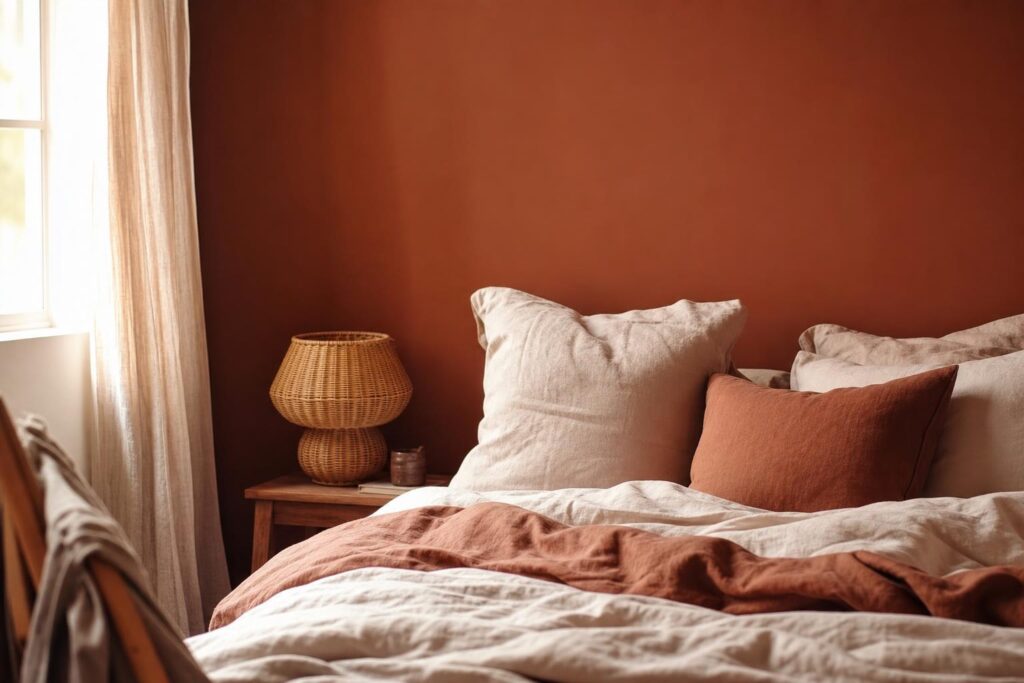
Lie down on the floor in the middle of an empty room and look up. The ceiling, it seems, is already decided: white, as always. And yet it's the largest surface in the room, the only one that no furniture will hide, the one we look at as we fall asleep and wake up. Repaint it a deep rosy brown without touching the walls: the room's character is transformed in a single day.
That's the whole point of the ceiling decoration This surface exists, it's immense, and we treat it as an oversight. In this article, I'll take you to the fifth wall—color and its effect on perceived height, wood and beams, paneling, antique moldings, wallpaper, coffered ceilings, the case of rooms with sloping ceilings, and the role of lighting. Each section will provide you with practical advice for your own home.
The ceiling, that fifth wall that we paint white without thinking about it
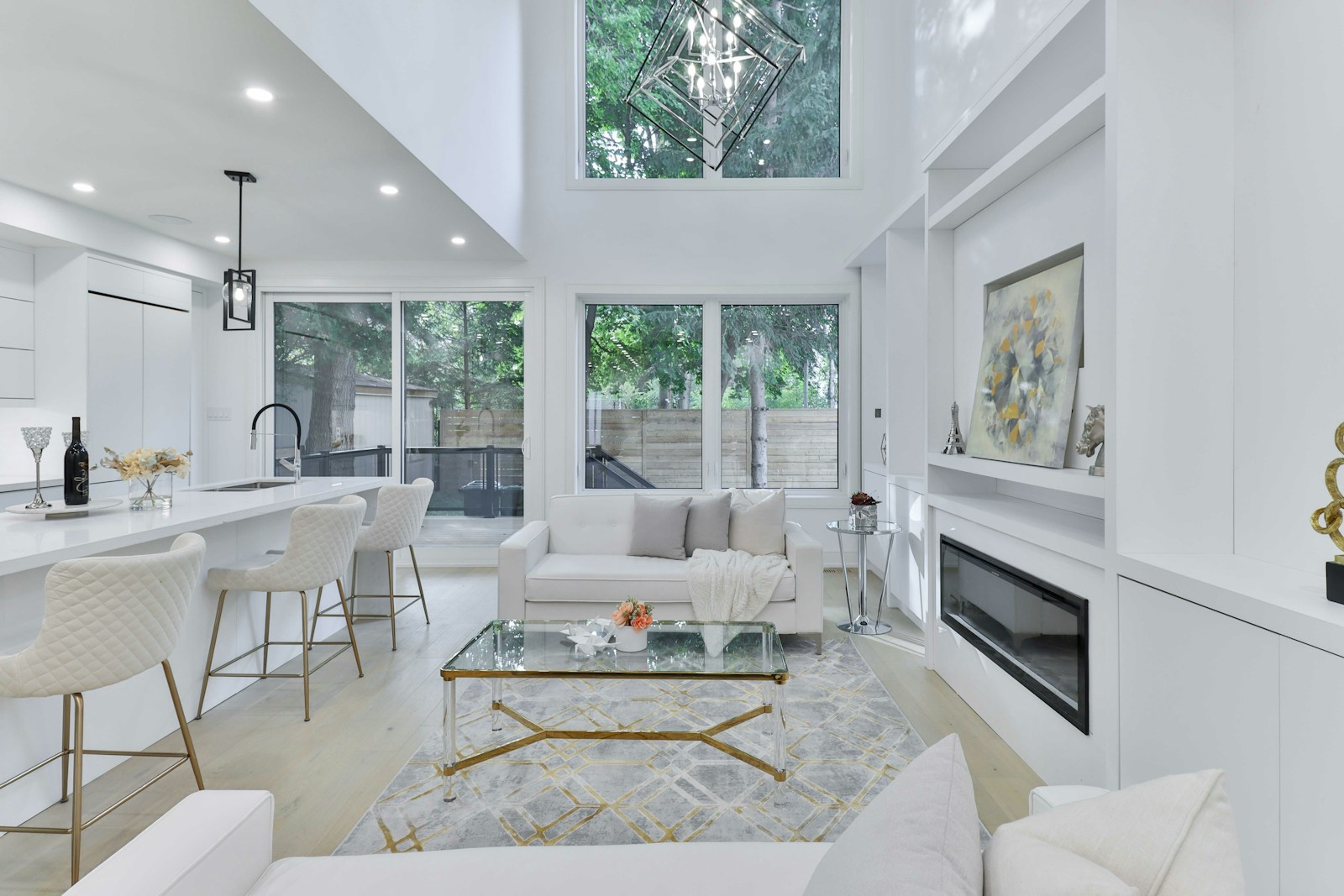
When decorating a room, we think about the walls, the floor, the textiles. The ceiling, however, is often given a knee-jerk reaction: a can of white paint and that's the end of it. Yet it often represents the largest and most open surface in the room—the one that reflects light onto everything else. Calling it the fifth wall, This is not a decorator's coquettishness: it is admitting that it contributes to the atmosphere as much as the other four.
Why does everyone paint their ceiling white?
Because white is simply useful. It reflects daylight downwards, visually eliminates the upper edge of the room, forgives imperfections in flatness, and never looks dated. In a dark apartment, a north-facing ground floor, or a room without many windows, this reflex often remains the right choice. The problem isn't white itself; it's never having asked the question. Many interiors would greatly benefit from a ceiling that doesn't try to disappear—off-white, very pale linen, or a warm, slightly pinkish gray already provide a depth that pure white overwhelms. The transition from wall to ceiling becomes a smooth blend instead of a sharp break, and the room suddenly appears more refined.
What the ceiling does to the light in a room
The ceiling is a reflector. All the light that enters through your windows, and a good portion of that from your lamps, bounces off it before reaching your eyes. A light shade reflects a lot and diffuses an even light, which can be a bit clinical if it's too white. A medium or deep shade absorbs, softens, and focuses attention on the room's light sources—a table lamp, a rattan lampshade, the flame of a candle. This is exactly what you want in a bedroom or reading nook.
Another thing one discovers while painting: the finishing The finish is just as important as the color. A matte or velvety ceiling doesn't reflect light and hides any irregularities in the surface; a satin finish catches the light and highlights every bump. On such a low-profile surface, a matte finish is almost always the best choice, except in damp rooms where a satin finish is justified for ease of cleaning.
Painting the ceiling a color: the effect on perceived height
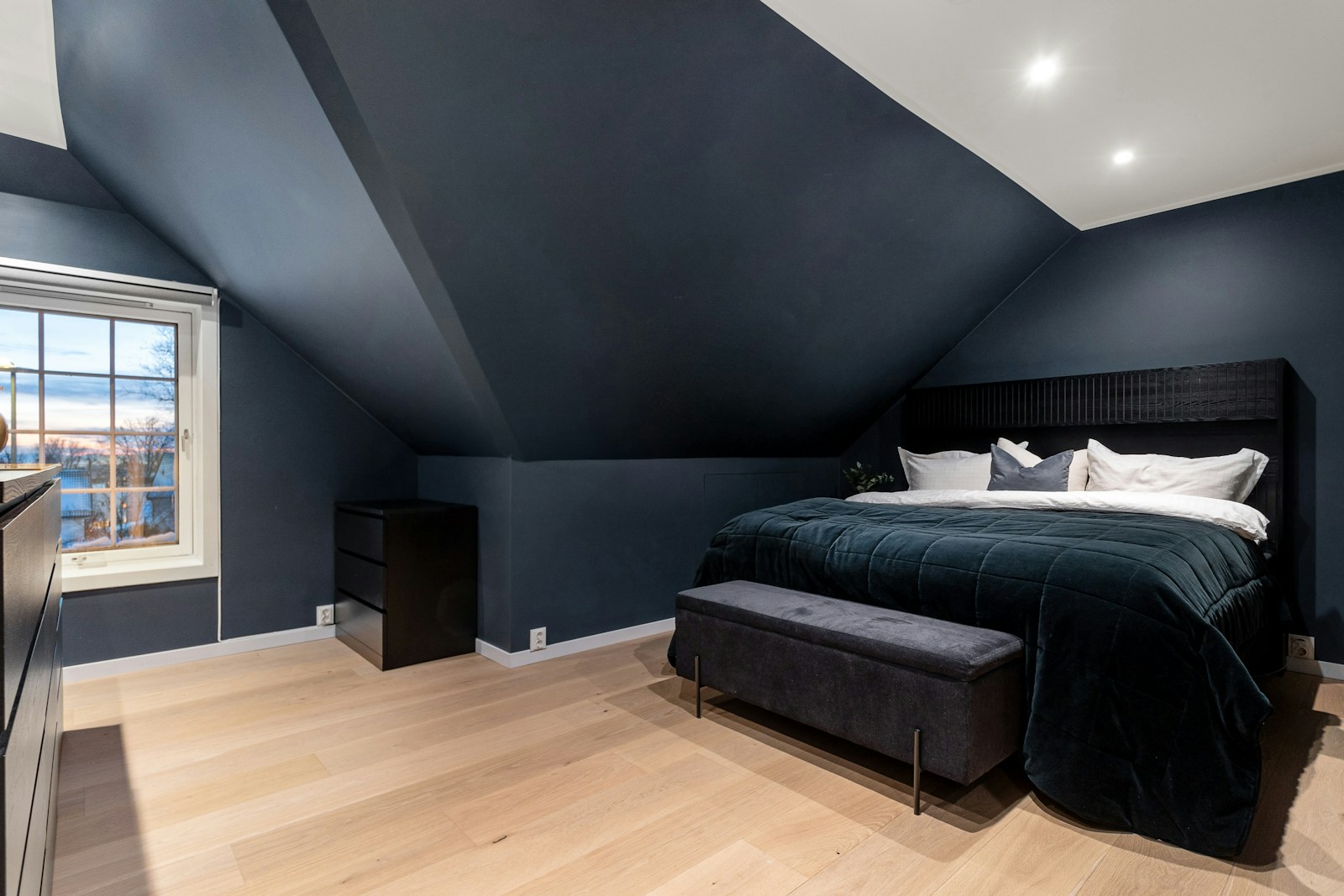
The question that always comes up is: won't it crush the coin? Short answer: yes, a little, and sometimes that's precisely what you want. Here's the principle, then the situations where it works in your favor.
A dark ceiling brings people together, a light ceiling separates them.
Our eye perceives dark surfaces as closer and light surfaces as farther away. dark ceiling So, visually, it descends towards you: the room appears lower, more compact, more contained. light ceiling Conversely, it moves back and leaves the space open. It's not a question of right or wrong, it's a lever. A room that seems too high, too bare, too much like a "waiting room" is often remedied from the top down. A room that's already low and dark, on the other hand, prefers to remain bright.
Two important points to consider before making your choice. First, intensity matters more than shade: a medium sage green doesn't create much of a visual difference, while a deep forest green makes a significant difference. Second, natural light is a key factor: a south-facing room can handle a strong color without becoming gloomy, while a north-facing room will quickly lose brightness. And nothing replaces testing the color in situ, as a color viewed horizontally on the ceiling always appears denser than on a color chart held in hand.
The ceiling is not something to be looked at, it is something to be felt: it is what decides whether a room envelops you or leaves you standing in the middle of the void.
When you want to bring the ceiling closer
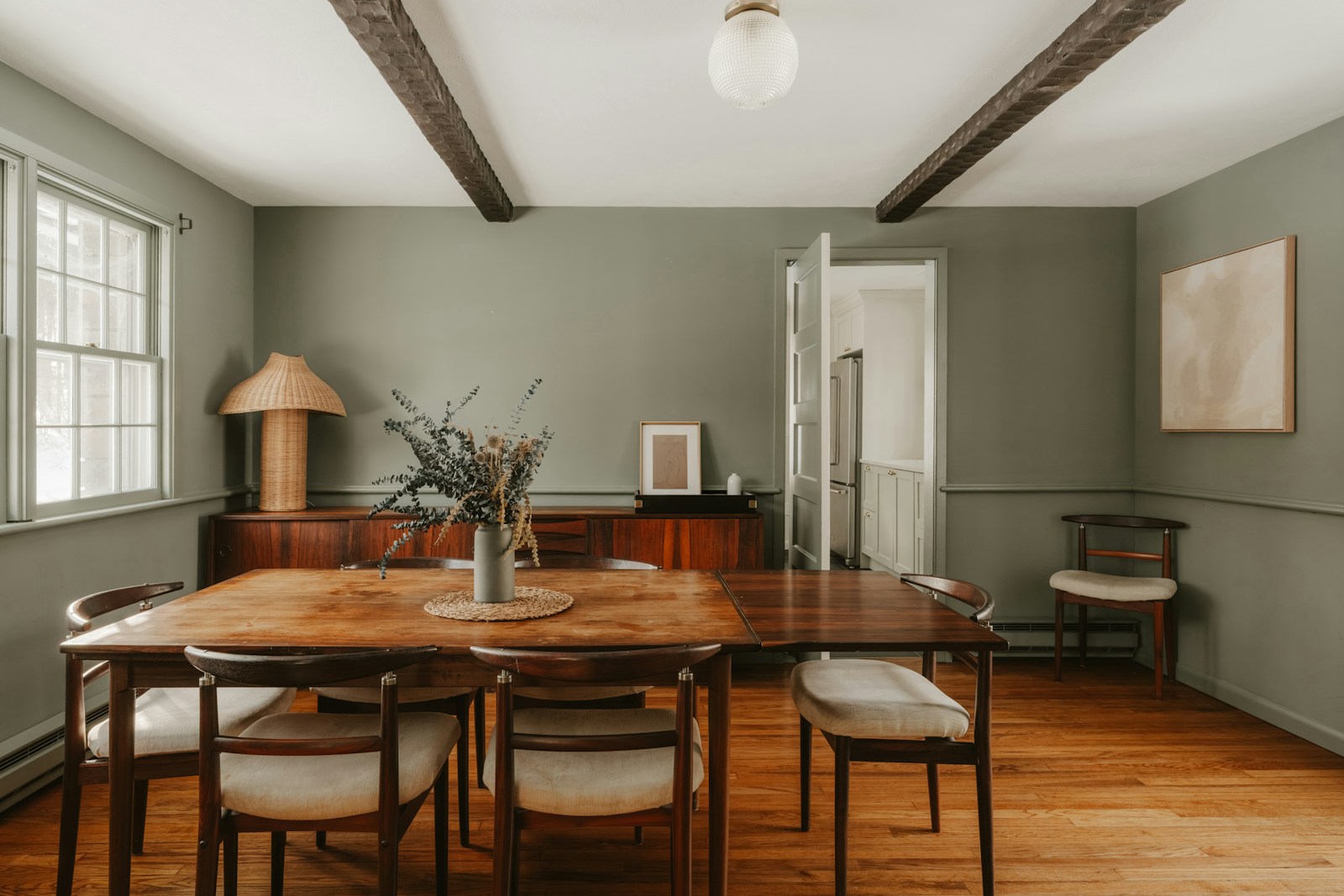
There are indeed situations where lowering the ceiling is the right move. An old living room with a ceiling height of over three meters, boasting a magnificent height but a still-cold feel: a deep color on the ceiling brings it back to a more human scale, and the furniture no longer looks tiny. A bedroom you want to create a cozy atmosphere: the color on the ceiling lowers a soft canopy over the bed, and the effect is immediate in the evening with the lights on. A secondary room without natural light—a dressing room, landing, or home office—where you've decided against bright lighting from the outset: it's better to embrace a warm, enveloping color rather than a grayish white.
In a bedroom, the ceiling color blends beautifully with a headboard wall in the same color family; we discuss this in our article on the adult bedroom paint in two colors. The principle remains the same: two values from the same family, never two competing colours.
Should the ceiling be painted the same color as the walls?
This is the safest and, in my opinion, most elegant option. A single color from floor to ceiling eliminates all breaks in the visual flow: the room becomes a single, unified space, the eye is no longer drawn to the wall-ceiling angle, and the result appears surprisingly larger than a white ceiling set against colored walls. This is the ideal solution for small, characterful rooms—a powder room, an entryway, an office. A softer variation: the same color on the ceiling in a slightly lighter shade, or the ceiling color extending a few inches down the upper part of the walls, like a frieze. This band lowers the ceiling without darkening it and provides the eye with a horizontal line to follow.
- Test in the exact spot. Paint a generous square on the ceiling, not on a wall, and let it dry completely: the color will darken.
- Watch it at three points. In the morning, at the end of the day, and then in the evening with your lamps on — it is often the evening that makes the difference.
- Check from the sofa or bed. The ceiling is judged from a seated or lying position, not from standing in the middle of the room.
- Next, decide on the walls. The walls are matched to the ceiling, and not the other way around, when the ceiling is coloured.
💡 Tip — Before you start, take a picture of the room with your phone and look at the picture: the device flattens the volumes and shows you the ceiling as a real surface, which your eye, used to it, no longer does.
Video: The technique for painting a ceiling neatly (Castorama channel).
| Ceiling treatment | Effect on perception | Where it works best |
|---|---|---|
| Pure matte white | Erase the upper boundary, move away, reflect maximum light | Low, dark rooms, basements, hallways |
| Off-white, linen, warm grey | The same effect, but softer: a blend instead of a sharp break. | Rooms facing north, natural interiors |
| Medium shade (sage, light terracotta) | Softens without crushing, warms the light | Bright bedrooms, dining rooms, and living rooms |
| Deep shade (midnight blue, forest green, brown) | Brings the ceiling much closer, reduces the volume | Very high ceilings, cozy bedrooms, bathrooms |
| Exposed wooden beams | It adds substance and rhythm, warms things up, brings them a little closer | Old houses, attics, characterful living rooms |
| Paneling installed on the ceiling | Regular pattern that stretches the gaze in its direction of pose | Hallways, verandas, rooms under the eaves |
| Patterned wallpaper | Draws the eye upwards, transforms the room into a showcase. | Entrance, bathroom, above a bed |
| Coffers, cornices and rosette | Creates relief and depth, structures the volume | High-ceilinged reception rooms, old apartments |
Wood on the ceiling: beams, paneling and coffers
While color is the quickest way to make a statement, wood is the most emotive. A visible timber frame tells the story of the house: its span, the age of the trees, the hand that hewed it. It's also the most forgiving material, because it ages beautifully. Three very different styles to be aware of.
Exposed beams: raw, lightened or melted
Faced with exposed beams, In reality, there are three approaches, and one must be clearly chosen. Leaving them raw, simply brushed and treated, when the wood is beautiful and the room is bright enough: this is the choice of character, the one that embraces the old house. Lightening them, with a stain or a very diluted paint that allows the grain to show through, when overly dark wood weighs down a low-ceilinged room: this maintains the rhythm of the beams while gaining light. Blending them together, by painting the beams and ceiling the same shade: the framework becomes a subtle relief instead of a pattern, and the space suddenly appears calmer and taller.
A simple guideline for making a decision: count the beams. Two or three large joists in a living room highlight their beauty. A tight grid of smaller beams in a room with a low ceiling softens the effect. And when the wood bears traces of age, peg holes, or an irregular chamfer, hesitate before covering everything: these imperfections are what reveal its age.
The ceiling paneling, taken from the chalet
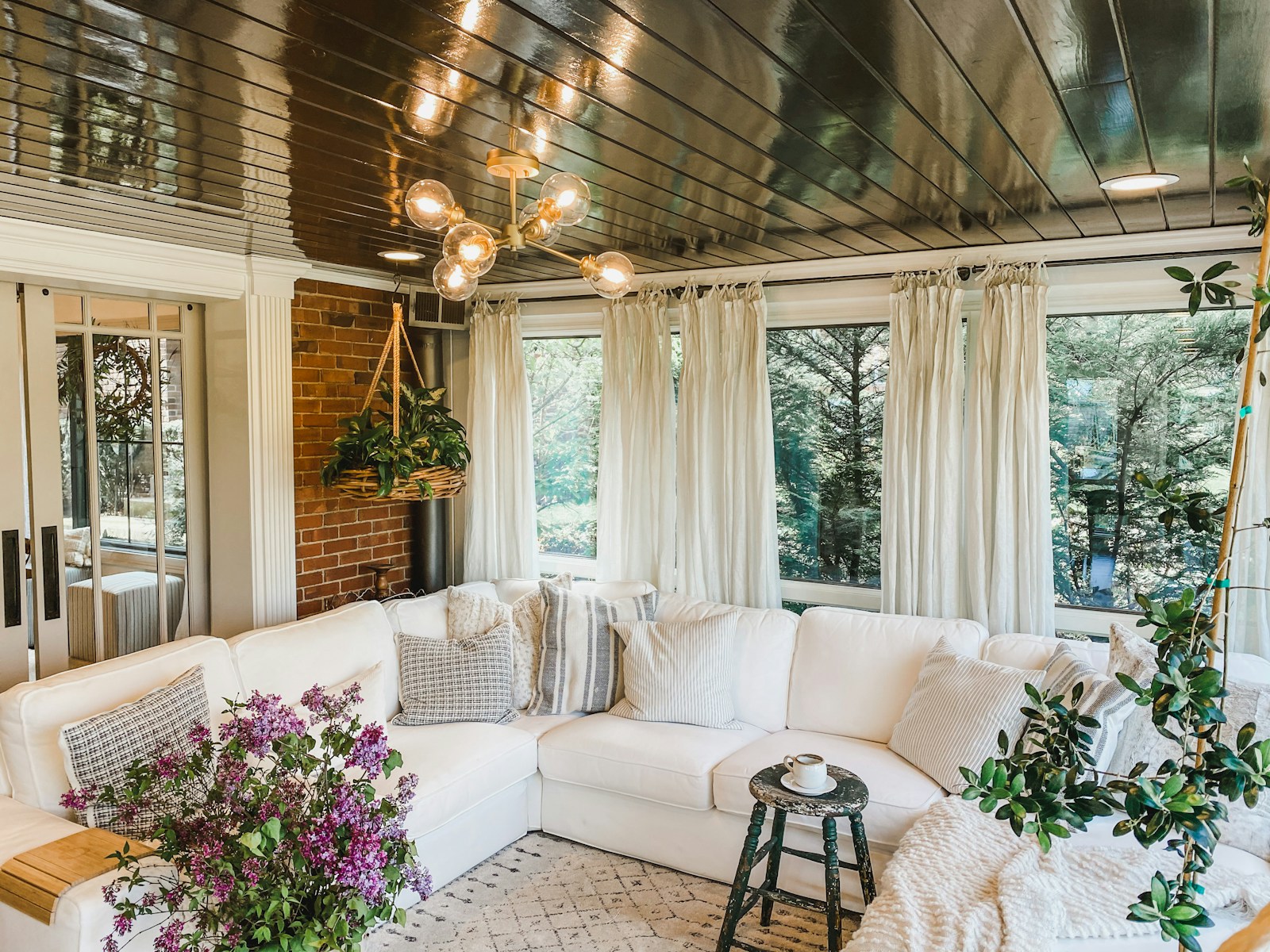
Wood paneling on the ceiling has long been associated with the vacation homes of the 1980s. It's making a strong comeback, provided two conditions are met: thin rather than wide planks, and a bold finish—light oiled wood, or wood painted to match the ceiling, leaving only the grain visible. This grain is, in fact, its main advantage: laid lengthwise in a room, the planks visually lengthen the space; laid crosswise, they visually widen it. It's a subtle addition to a conservatory, a service hallway, or a room with a sloping ceiling.
- Thin, painted blades : the pattern is visible, the wood is not imposing — the easiest to live with.
- Light oiled wood : immediate heat, very suitable for a bedroom or dry bathroom.
- Reclaimed wood Irregularities and patina, the most vibrant option, to be reserved for volumes that have character.
- Diagonal pose : dynamic, best kept for a small space, otherwise the room becomes noisy.
The boxes, the geometry that structures
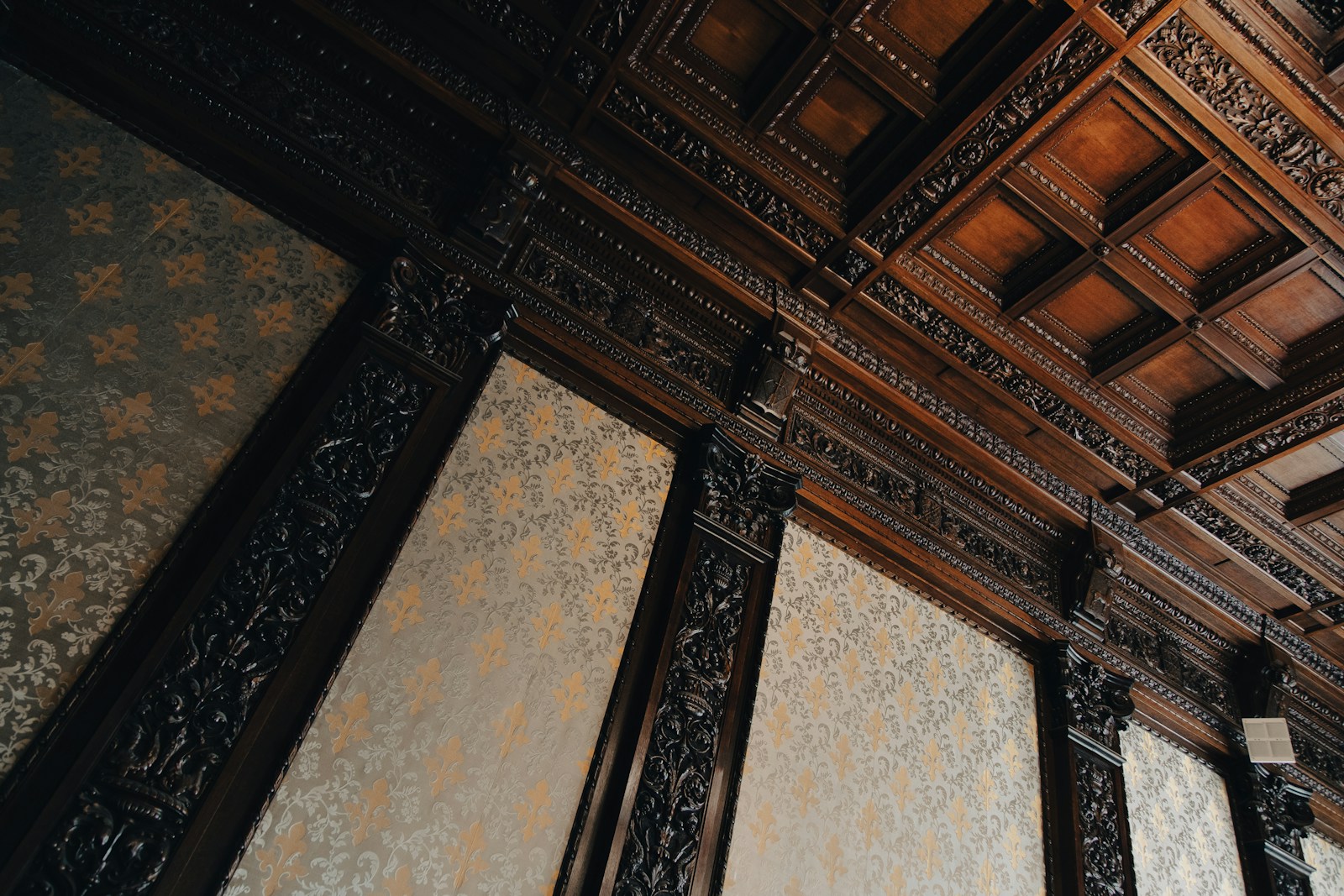
THE coffered ceiling The chic ancestor of all these ideas is a grid of recessed compartments, made of wood or plaster, that gives the ceiling real depth. It's seen in grand houses and reception rooms, and it requires height—a coffered ceiling in a low room eats up every last centimeter. At home, you can borrow its spirit with thin strips arranged in rectangles, painted the same color as the ceiling: the relief plays with the raking light and is enough to create the effect, without the resources of a castle.
Moldings, rosette and wallpaper: the ceiling decor
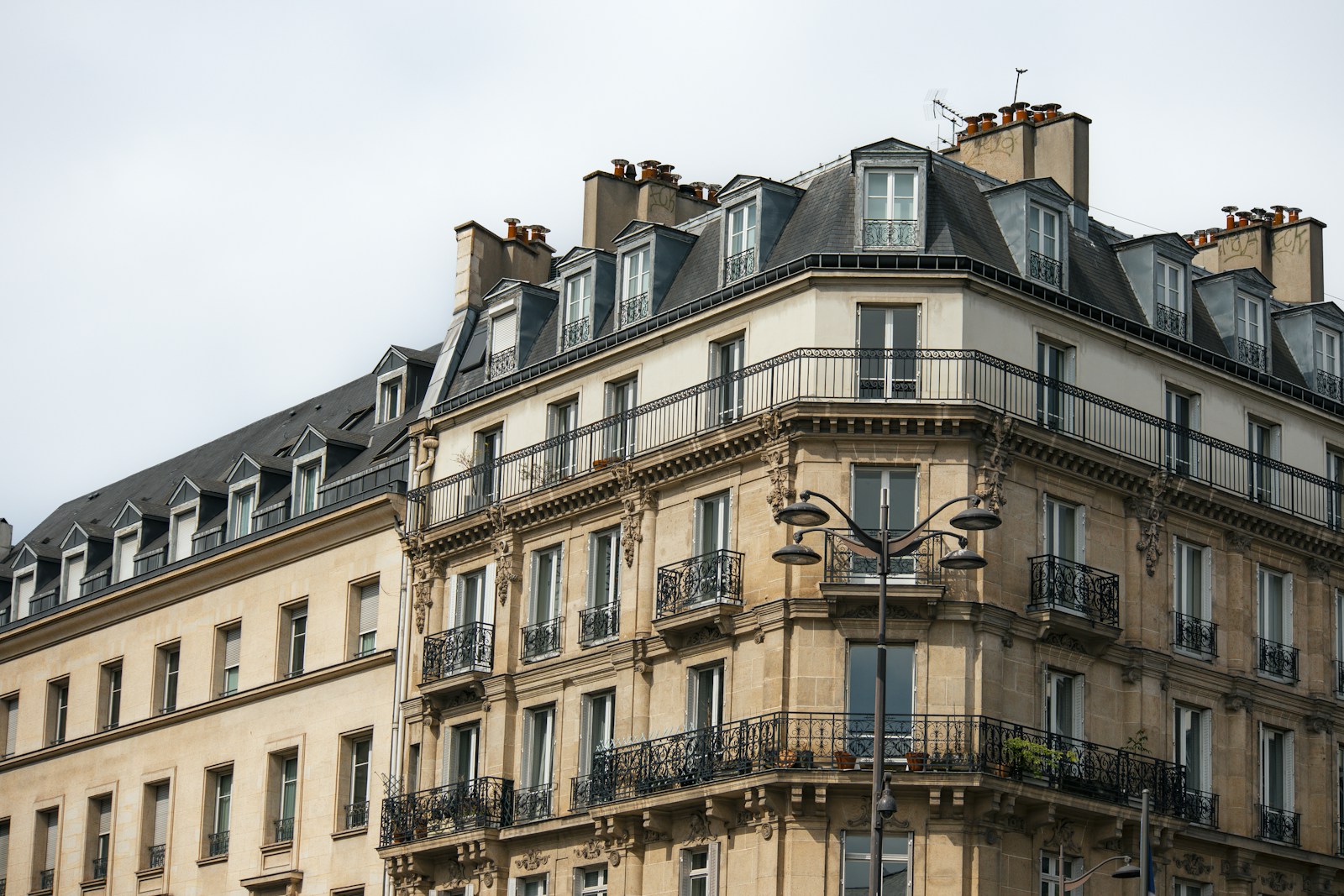
In older buildings, ceilings were rarely bare. Cornices at the junction of the walls, a rosette in the center to hold the light fixture, sometimes a plaster frieze: a whole ornamental vocabulary that was long removed, and which is now missed. gallery of plaster casts from the City of Architecture and Heritage It also preserves casts of sculptures and ornamental details from the 11th century.e in the 19the century: enough to measure to what extent these reliefs were part of the architecture, and not accessory decoration.
Cornice and rose window: a heritage that must not be erased
If your home has them, the first task is to remove the old paint: the accumulated layers obscure the details and eventually make them illegible. Patient stripping—or hiring a plasterer for more complex cases—restores the moldings' original shape, and it's often the most cost-effective decorating change in the entire room. If your old ceiling is worn, cracked, or damaged by damp, the issue becomes technical before it is aesthetic: we detail this project in our guide for renovating a lath and plaster ceiling.
What color should I choose for ceiling moldings?
Three schools of thought, all defensible. Tone-on-tone—moldings and ceiling in the same shade, same finish—allows the raking light to do all the work: it's the most contemporary and restful approach. Subtle contrast, with moldings half a shade lighter than the background, highlights the design without emphasizing it. And bold contrast, white moldings on a colored ceiling, transforms the relief into a deliberate graphic element; it's spectacular, but it requires moldings in good condition, because every flaw is visible. What I would avoid: gilding applied with a brush to modern reliefs, which ages poorly and sounds artificial.
Is wallpapering the ceiling a good idea?
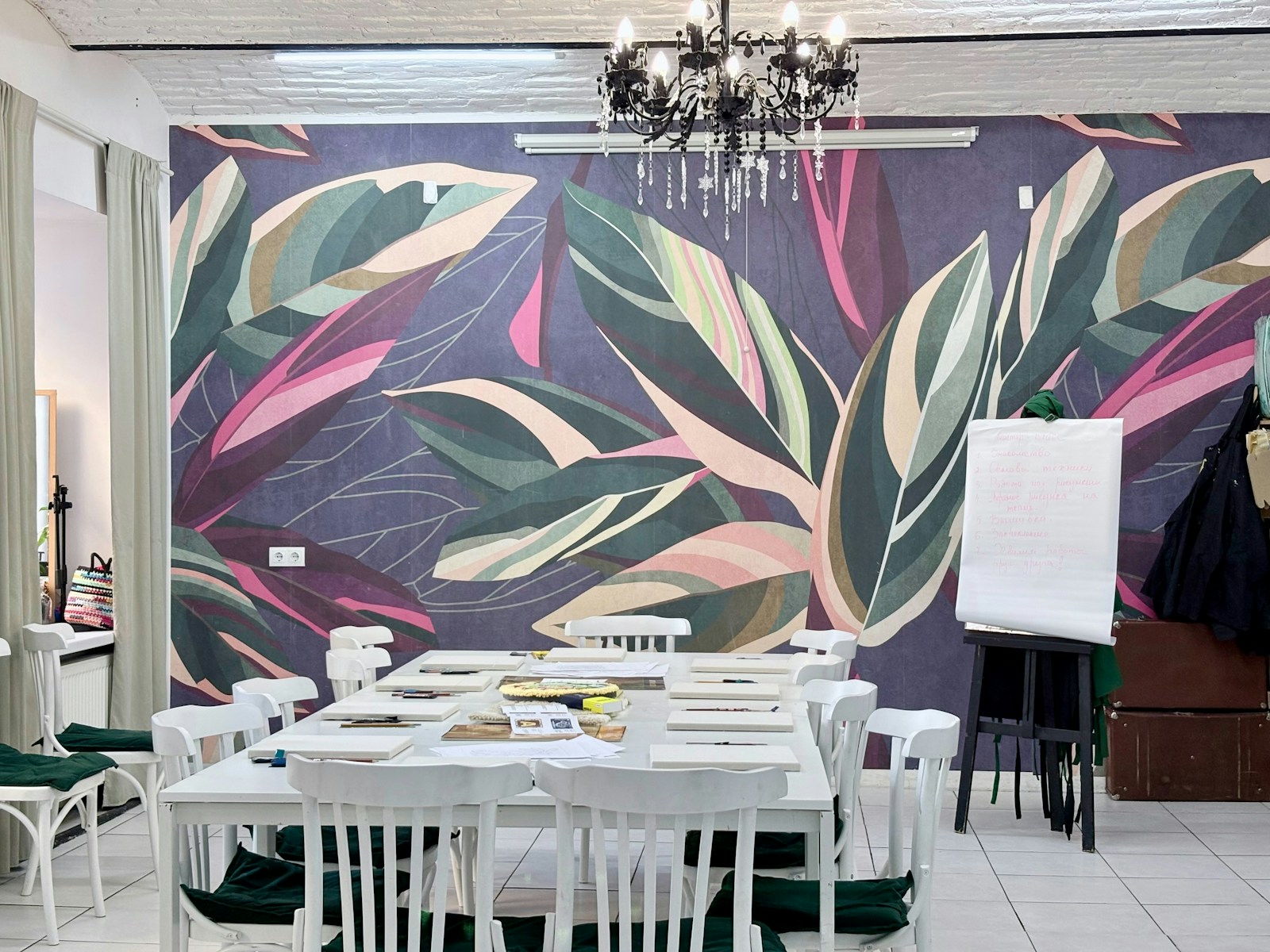
Yes, provided you choose the right part. The wallpaper on the ceiling It works beautifully in small spaces that we pass through or inhabit while lying down: an entryway, a bathroom, the ceiling above a bed, an alcove. It creates a cocoon, a sky-like effect, something that unfolds before us. In a large living room, however, it quickly becomes overwhelming. Two guidelines for patterns: a dense, small design is perceived as a texture and is less tiring; a large pattern requires distance and therefore height. If you are looking to visually enlarge a bedroom with wallpaper, the approach is slightly different, and we have detailed it in our article on Wallpaper that makes an adult bedroom look bigger. As for installation, just be aware that wallpaper on the ceiling requires two people to work on, and that non-woven wallpapers, which are glued to the wall, make the task much more manageable.
Sloping ceilings, mansard roofs, and lighting: the cases to decide
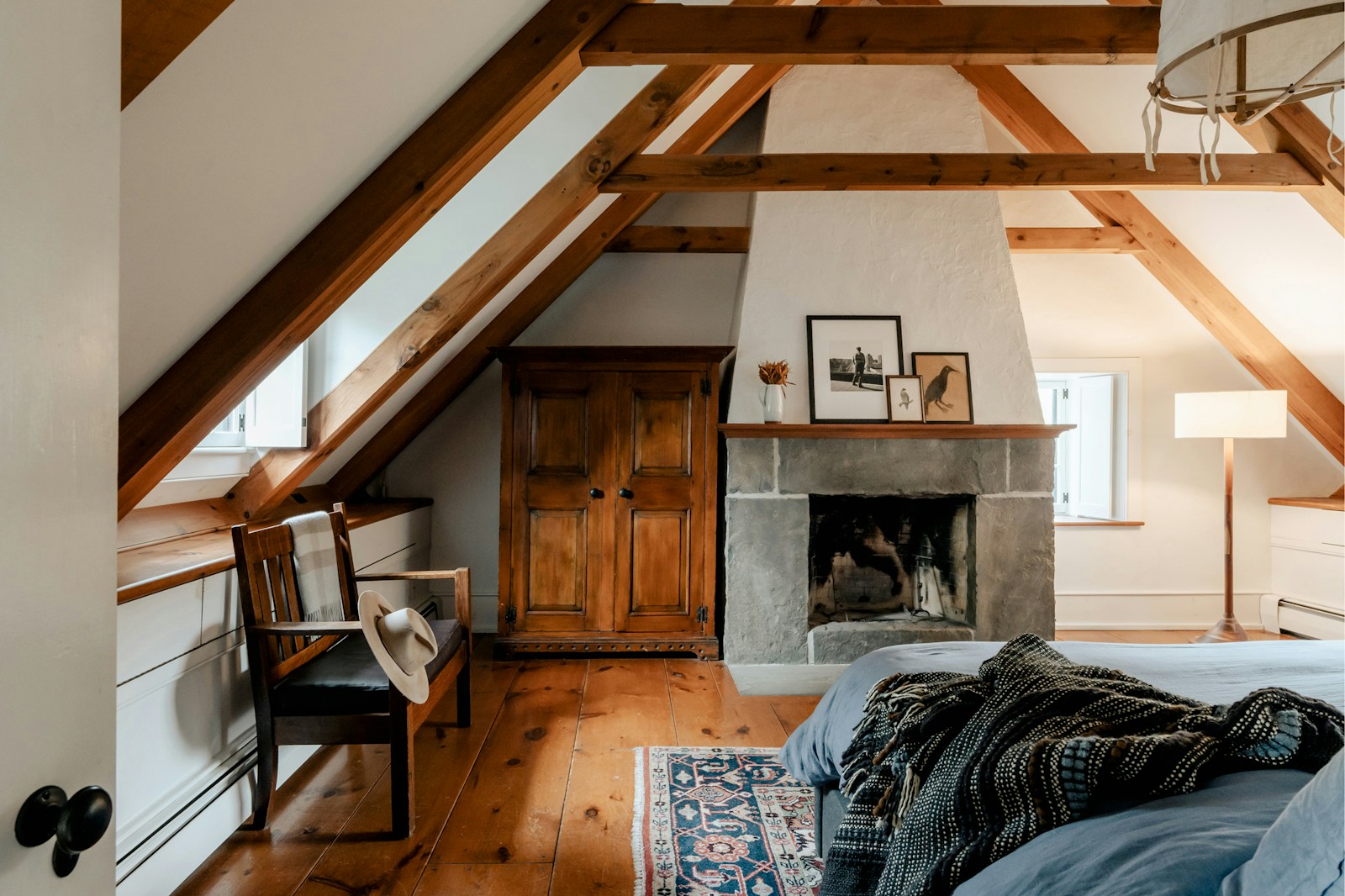
There remain situations where the ceiling isn't a perfectly horizontal plane, and where it becomes a support altogether: the light fixture. These are the two areas where we hesitate the most, and where a clear decision changes everything.
Where does the wall end, and where does the ceiling begin?
In a room with a sloping ceiling or attic, the real question isn't color but rather defining the boundaries. Two strategies are possible. The first: everything in the same shade, walls, sloping ceiling, and ceiling blending together. The angles disappear, the room becomes a single, continuous envelope, and the complex geometry ceases to be noticeable—this is almost always the winning choice in a small attic room. The second: emphasize the line, keeping the sloping ceilings light and only treating the upper level, or vice versa. This clearly defines the shape of the roof, which adds character but visually shrinks the space.
In both cases, beware of a pitfall: the gable wall, that triangular shape at the end of the room, behaves like a wall, not a ceiling. Painting it darker than the rest of the room makes it appear shorter; keeping it light makes it appear longer. And if your sloping ceiling is clad in wood, let the wood dictate the look and coordinate the rest of the decor with it.
The light fixture, the anchor point of the fifth wall

A decorated ceiling without a focal point remains a surface; with a pendant light, it becomes a composition. It's the light fixture that tells the eye "look up"—and incidentally, justifies the central ceiling rose. Three principles I systematically apply. One: the pendant light should be centered on its intended use, table or bed, not on the geometric center of the room. Two: the darker the ceiling, the lighter or brighter the light fixture should be, otherwise it disappears. Three: woven materials—rattan, bamboo, rush—cast shadows on the ceiling and extend the design well beyond the lampshade, as we explain in the section on... rattan and bamboo light fixtures. The specific case of a pendant light above a kitchen island, however, follows its own criteria and deserves a separate article.
Suspended ceilings, insulation, recessed spotlights: the limits of the professional
It's important to know where decoration ends. As soon as the project involves the structure, insulation, or electrical wiring, it's no longer a matter of aesthetics but a technical undertaking with its own specific requirements. At this stage, there's no room for DIY: you need a professional to conduct an assessment and provide a quote, who will tell you what's possible in your home.
- Create a false ceiling or a fallout, which affects the structure and the available height.
- Insulating from the ceiling, especially under roofs: performance, ventilation and vapor barrier cannot be improvised.
- Recessing spotlights or moving a light point: electrical work, to be entrusted to an installer.
- To treat a developing crack, a sagging or a trace of moisture: we look for the cause before repainting.
Finally, a word about the surrounding areas, so as not to mix things up: playing with optical effects by painting the walls of a narrow hallway, or decorating a living room wall with texture and objects, are two different projects from this one. Here, we're not leaving the ceiling.
Are you looking for the perfect shade for your fifth wall?
See our trend colorsYour questions about ceiling decoration
Can you paint a ceiling in color?
Yes, there's nothing wrong with it, and the effect is often spectacular. A colored ceiling slightly closes off the space and warms the light. It's best reserved for rooms with high ceilings or good natural light, or for those you intentionally want to be more intimate, like a bedroom or bathroom.
What color ceiling will make a room look bigger?
A light, matte shade, lighter than the walls, visually recedes the ceiling and opens up the space. Pure white creates the maximum impact, while off-white or a very pale linen shade produces a softer result. Another effective option is to use the same light shade throughout, without any breaks in the corners.
What color should I choose for a low ceiling?
For a low ceiling, a light, matte color is preferred, and above all, avoid a ceiling that is significantly darker than the walls, as this would make the room feel smaller. A light tone-on-tone effect, blending walls and ceiling, works very well: without a break in the ceiling line, the eye loses its perception of height.
What color should the moldings on a ceiling be?
Three options. Tone-on-tone, with moldings and ceiling in the same shade, allows the light to reveal the relief: this is the most contemporary look. A half-tone difference subtly highlights the design. A bold contrast, with light-colored moldings against a colored background, is spectacular but requires the reliefs to be in good condition.
What paint finish should I choose for a ceiling?
Matte or velvet finishes are generally preferred: they don't reflect light and hide imperfections, which are very visible under raking light. In a humid room like a bathroom or kitchen, a satin finish, which is more washable and more resistant to steam, is more suitable.
What color ceiling goes with exposed beams?
Two coherent approaches. A light background between the beams highlights the wood and brightens the room: this is the classic choice. Or, everything in the same shade, including the beams, to soften a very busy ceiling and make the space appear calmer and taller.
The painted ceiling is not a magazine invention: the vault of the Hall of Mirrors of Versailles, The painting by Charles Le Brun depicts thirty compositions above the visitors. No one is asking you to do the same. But the next time you lie down in your living room, look up: there's an entire surface waiting for you, and a room that can be transformed for the price of a can of paint and a weekend.