Our article in brief
- You don't light up a terrace with a lamp, but with four layers : a low ambient light, traffic lighting, a light placed on the table, and one or two points that highlight a tree or a wall.
- There color temperature More than power matters: a warm light awakens wood and terracotta, a harsh white light transforms the terrace into a parking lot.
- Solar string lights, lanterns, candle holders and candles create a real atmosphere without a meter of cable — it's the most affordable entry-level option, and often the most beautiful.
- As soon as there is electricity: equipment designed for outdoor useand a electrician for everything that connects.
- Shine the light downwards, adjust the intensity, and turn it off. The night also belongs to the neighbors, the insects, and the bats.
There's a specific moment, around ten o'clock in the evening in July, when the terrace decides its fate. Either the daylight fades and we instinctively go inside, the conversation cut short. Or something takes over—a string of lights above the table, two lanterns on the ground—and we stay for another hour without even realizing it.
That's the whole point of the...’terrace lighting, And that's where most outdoor spaces go wrong: they have one light, just one, screwed to the wall of the house, which overwhelms everything and invites nothing. I suggest the opposite: create several layers of light, choose their color, start with what doesn't require any wiring—and keep in mind that outside, the night doesn't entirely belong to us.
Light a terrace in layers, not in a single point.
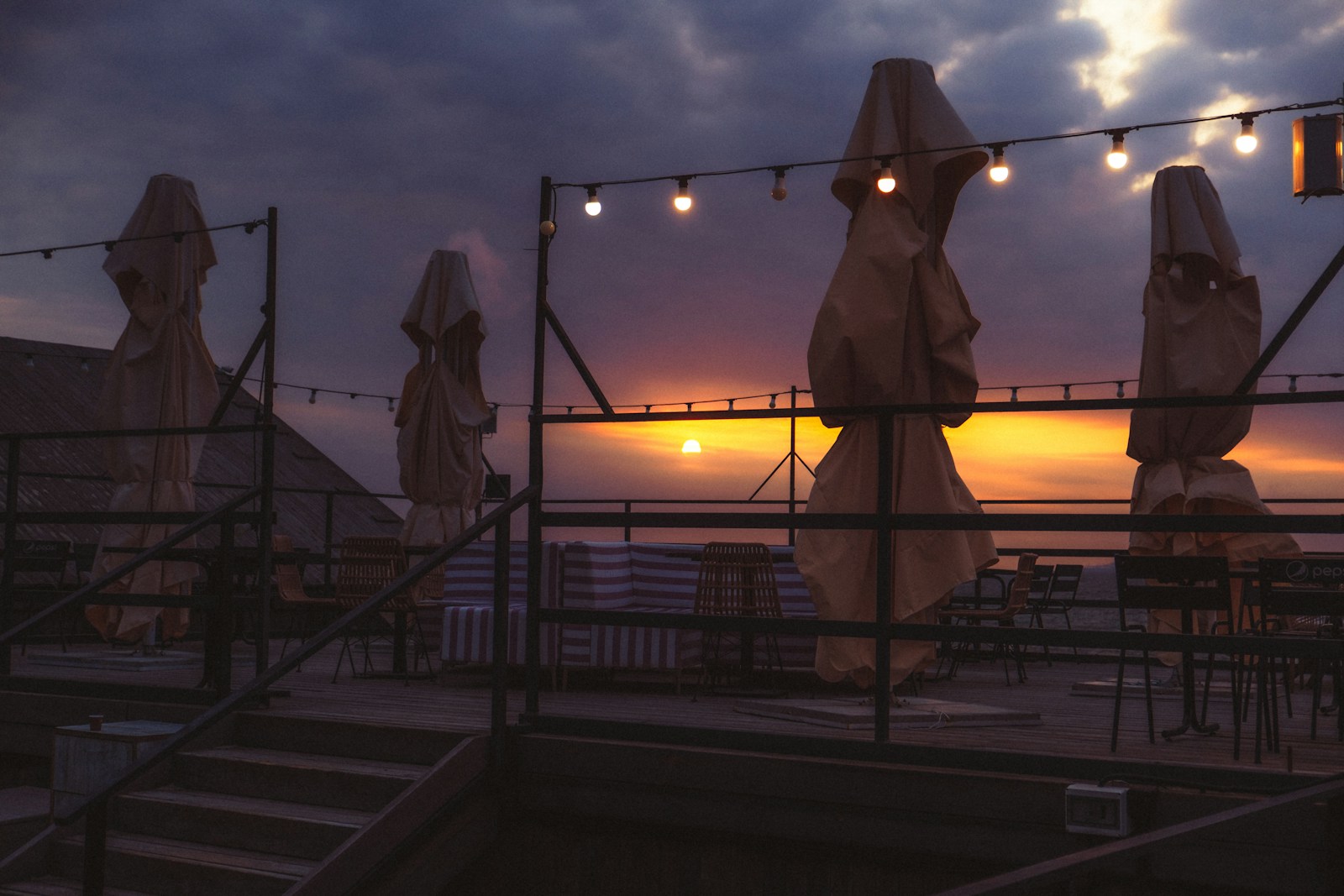
A successful terrace doesn't have just one light: it has four, layered. A low ambient light sets the scene, discreet pathway lighting allows for safe movement, a bright light shines above the table, and one or two spotlights highlight a tree or a wall. Each has its own role. None can replace the others.
This is exactly the logic we unconsciously apply in a living room: nobody lives alone under the overhead light. We turn on a table lamp, a reading lamp, a candle. Outside, we forget this reflex — and we end up with a spotlight on the wall that illuminates everything, therefore nothing.
The four layers of light on a terrace
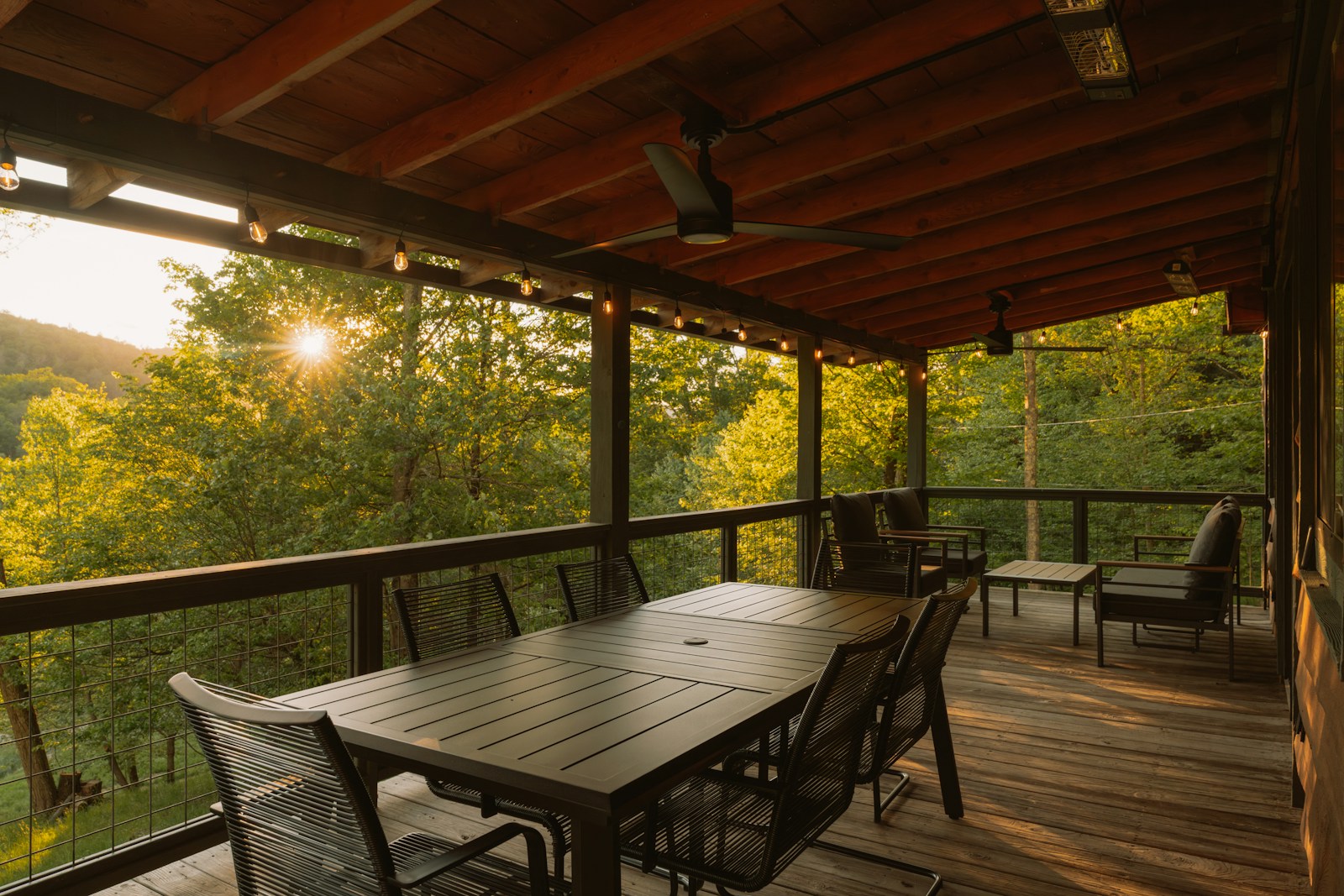
- The low atmosphere — the layer that does everything else. Lanterns placed on the ground, candle holders on a low wall, small portable lamps in pots. You don't look at it, you feel it: it's what gives the impression that the terrace is inhabited.
- The marking — the guiding thread. A few low points along the path, on a step, at the edge of a staircase or a pool. The aim is not to illuminate the ground, but to make it legible: one must be able to guess where to place one's foot.
- The table light — the only one that has the right to be truly useful. A hanging light if you have a pergola or awning, a string of lights stretched in a wave above the plates, or simply a lamp placed in the middle.
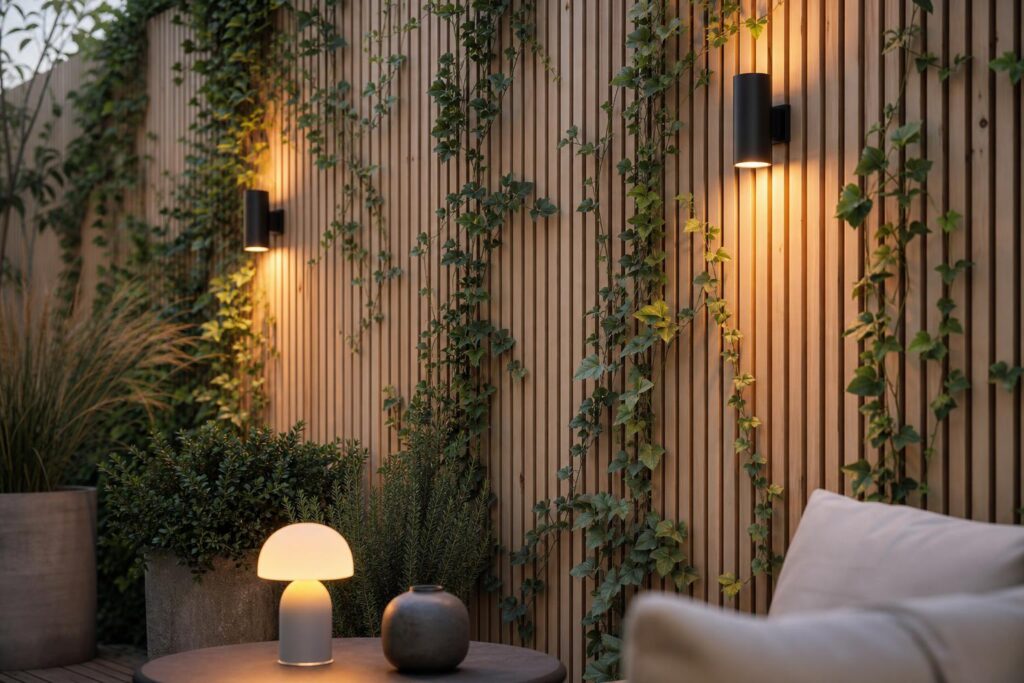
- The enhancement — luxury, and it's the cheapest of the four. A spotlight aimed at the trunk of an olive tree, a grazing light against a stone wall, a ray of light in a flowerbed. One or two points, never more: what creates the effect is the contrast with what remains in shadow.
| Stratum | What it brings | Possible sources | Where to place it |
|---|---|---|---|
| Low ambient light | The warmth, the feeling of being settled | Lanterns, terracotta candle holders, candles, small rechargeable lamps | On the ground, on a low wall, in pots — below eye level |
| Signage | Safety and spatial awareness | Low bollards, recessed spotlights, solar-powered ground lights | Along the walkways, on the steps, at the edge of the pool |
| Table | Functional lighting for meals | Hanging light under shelter, string lights, table lamp | Above or in the center of the table, out of the line of sight |
| Highlighting | The depth, the nighttime setting | Adjustable spotlight, grazing light source, flower bed lighting | At the foot of a tree, against a textured wall, in a flowerbed |
Why is one light on the wall never enough?
Because a single light source, necessarily powerful and necessarily high, flattens volumes and creates glare. It puts you in the light instead of in it. The result: faces are flat, the table shines, and everything three meters away falls into total darkness—so the terrace looks smaller than in broad daylight.
Multi-source lighting does the opposite. It creates zones, breathing spaces, shadowy corners—and it's shadow, as much as light, that gives volume. Light at knee and table height creates a bubble; full ceiling light creates a waiting room. The same principle applies indoors, as when choosing a bedside lamp to warm up a bedroom rather than relying on the ceiling light.
The right question is not "which light fixture to buy", but "where do I need to see, and where do I only need to feel".
How many light points should be planned?
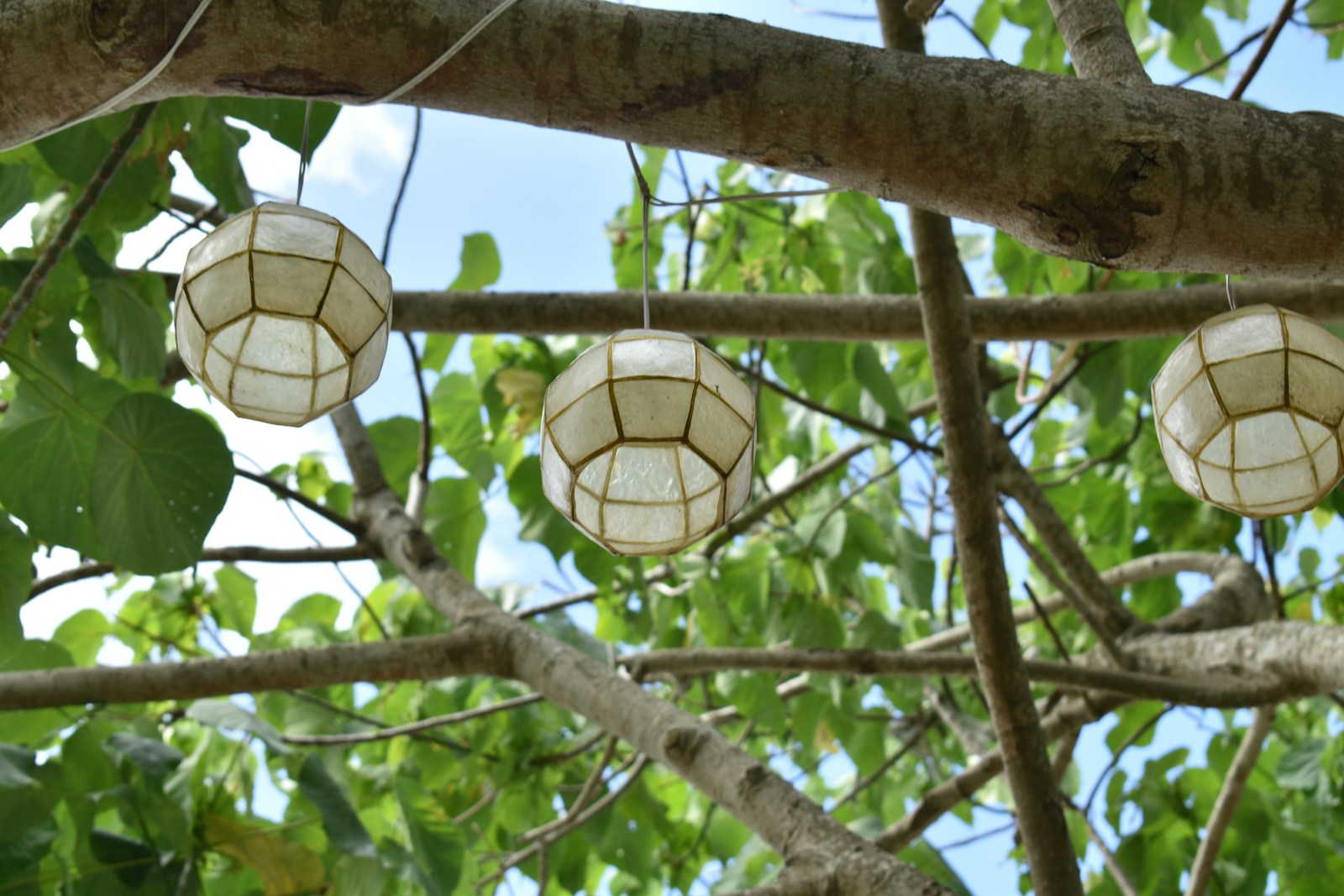
There's no such thing as a perfect number; there's a perfect inventory. Count your uses rather than your square footage. Moving around, sitting, eating, watching: four uses, therefore at least four light sources, possibly doubled in a large space. This is more reliable than any calculation rule because it's based on what you actually do outside in the evening.
Also, plan to be able to turn on only part of it. An aperitif for two doesn't require the same setup as a table for eight: if everything is on the same switch, you'll always be either in the dark or in broad daylight.
In video: an overview of the types of lighting for a terrace (BricolMaison).
Warm white or cool white: the color of the light changes everything
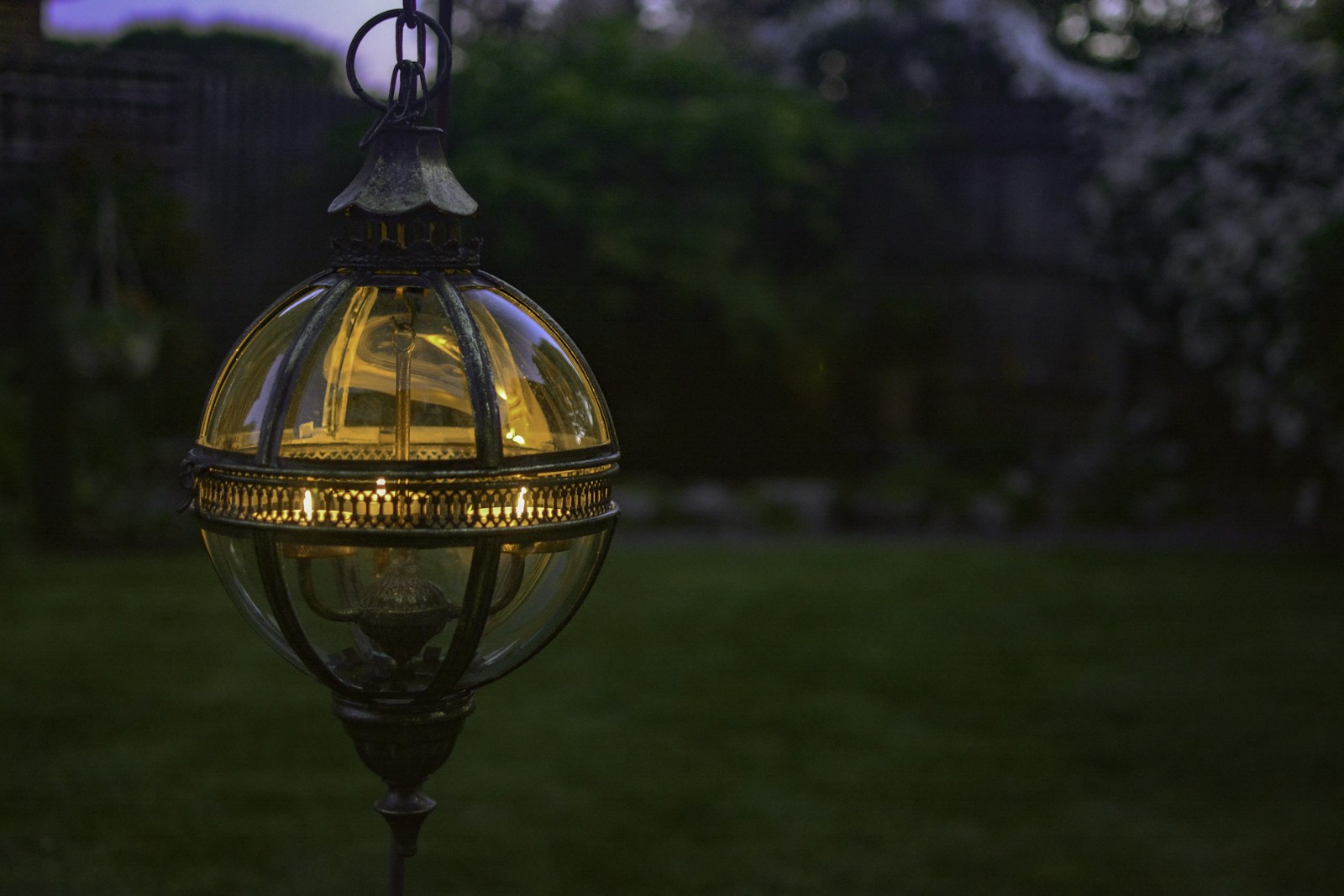
Before the power, even before the number of light fixtures, there is the color temperature The color of the light itself. This is the most invisible and decisive adjustment. Warm light brings out the color in wood, terracotta, and foliage; white and bluish light drains them of their color in a second.
What does "warm white" mean on the packaging?
Manufacturers print a label on the box: "warm white", "neutral white", "cool white", often accompanied by a value in kelvins. This isn't a standard to be followed, just a marketing guideline for comparing two light bulbs. Remember the direction of the scale: the lower the Kelvin value, the more the light tends towards golden yellow; the higher it is, the whiter and then distinctly bluish it becomes.
Outdoors, "warm white"—generally around 2,700 to 3,000 Kelvin depending on the range—is almost always the right choice. It's the color of a flame, of lanterns, of old-fashioned filament bulbs. It flatters skin tones, warms natural materials, and has another advantage I'll discuss later: it's also the most respectful of nighttime life.
The mistake that turns a terrace into a parking lot
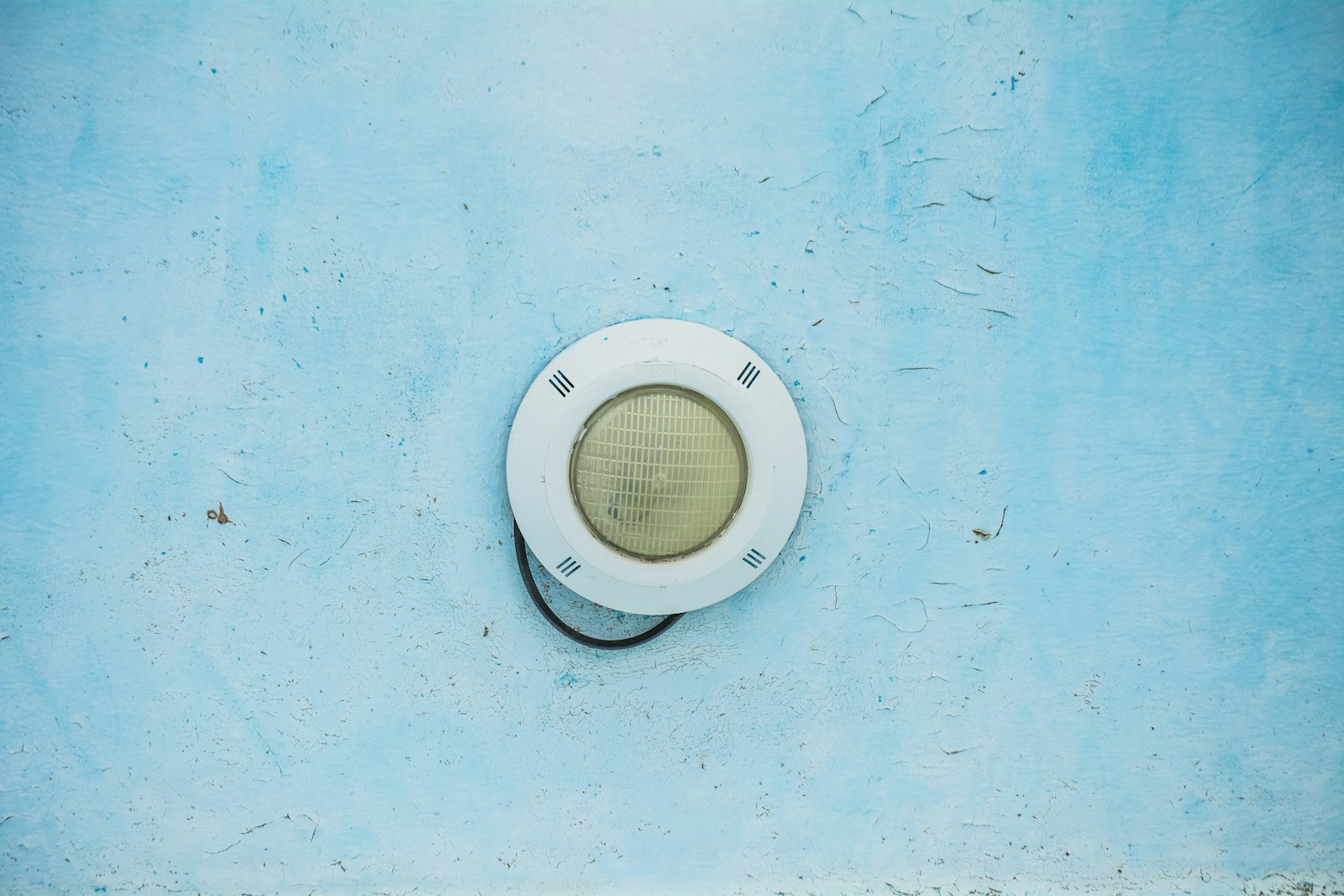
The cold white motion-activated spotlight, the one you install "just in case" and never replace. It's effective, it's reassuring when you take out the trash, and it's absolutely incompatible with a dinner party. When it switches on, it brings the aesthetic of a loading dock right onto your table.
The solution isn't to remove it, but to separate it: keep it as a service light, on its own circuit, and create a completely warm evening scene alongside it. The same reasoning applies to garlands : a string of cool-toned lights will never give the summer evening ambiance that is attributed to it, because that ambiance is not a question of the number of bulbs, but of a golden tint.
💡 Alex's Tip Before buying anything, go out one evening with a simple flashlight and walk around your patio. Shine it on the tree trunk from below, the stone wall from a distance, a step, the underside of the bench. In ten minutes, you'll know exactly where the light is helpful—and, more importantly, you'll see all the places where it's useless.
Lighting without electricity: solar power, lanterns and candles
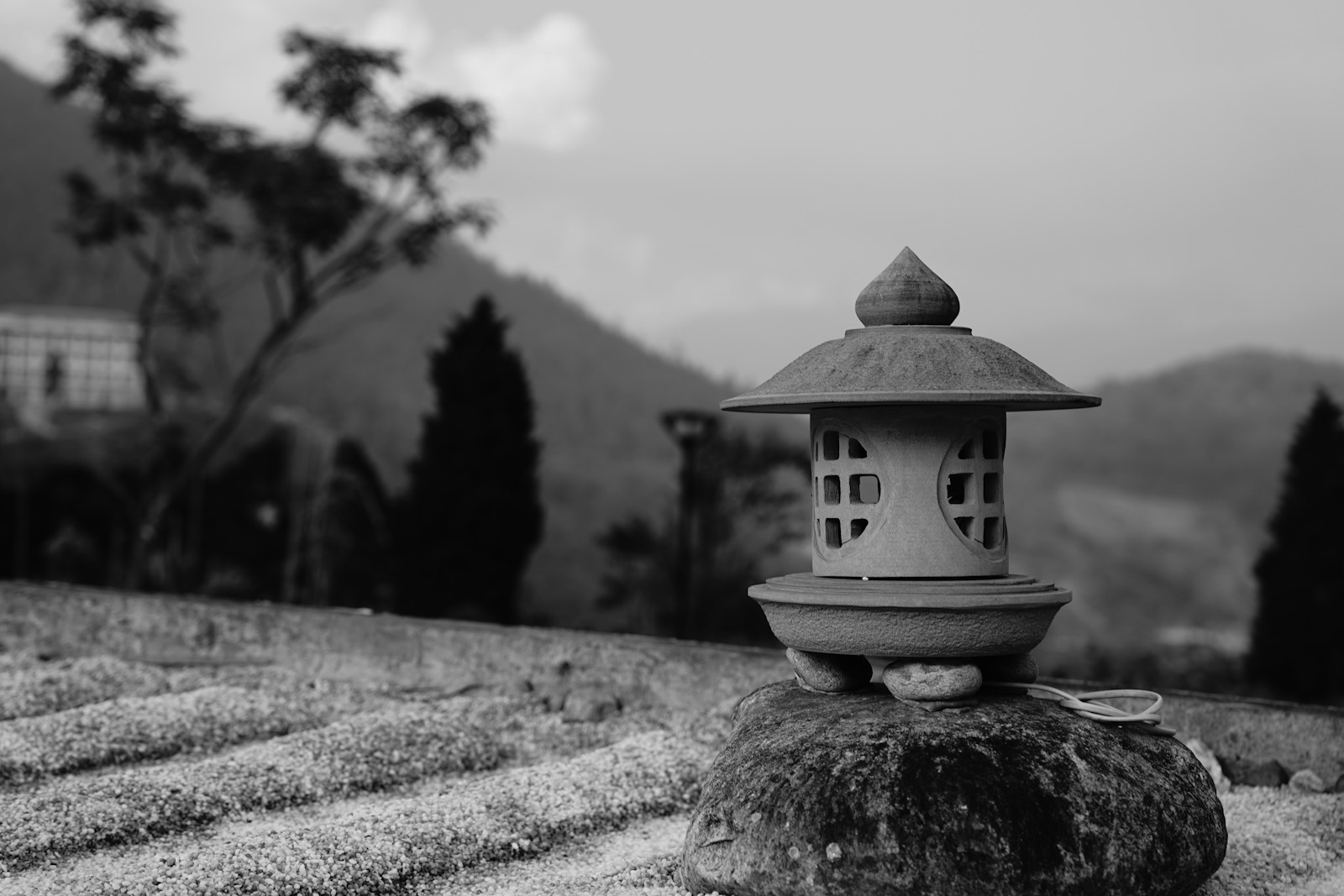
It's the best entry point, by far. No cables, no holes in the wall, no permission required: you can transform the ambiance of your patio this weekend, like a tenant, with objects that move and store themselves. Here are the categories of sources ranked from most accessible to most engaging.
- The candle and the candle holder — nothing simpler, nothing more beautiful. The movement of the flame cannot be imitated.
- The lantern — the same flame, but protected from the wind, therefore truly usable.
- The solar garland — a few meters of suspended light, a small panel placed in the sun, and the "table" layer is set.
- Solar-powered markers to plant — marking out traffic routes, without digging a trench.
- The rechargeable portable lamp — the most serious investment of the lot, and the most flexible: it follows the meal, the nap, the reading corner.
Solar power: what it succeeds at, what it fails at
Solar power is unbeatable for creating ambiance and providing pathway lighting: it's easy to install, portable, self-sufficient, and invisible during the day. However, it falls short when it comes to anything requiring consistent power. A panel that has spent the day in the shade of a wall or under foliage won't last through the evening, and autumn reduces its performance long before it shortens your dinners.
Two simple habits make all the difference. First, separate the panel from the light fixture whenever the model allows: the panel goes in the sun, the light goes where you need it—which is almost never the same spot. Second, judge a model on its ability to last an entire evening, not on its brightness in the first minute.
Lanterns, terracotta candle holders and candles
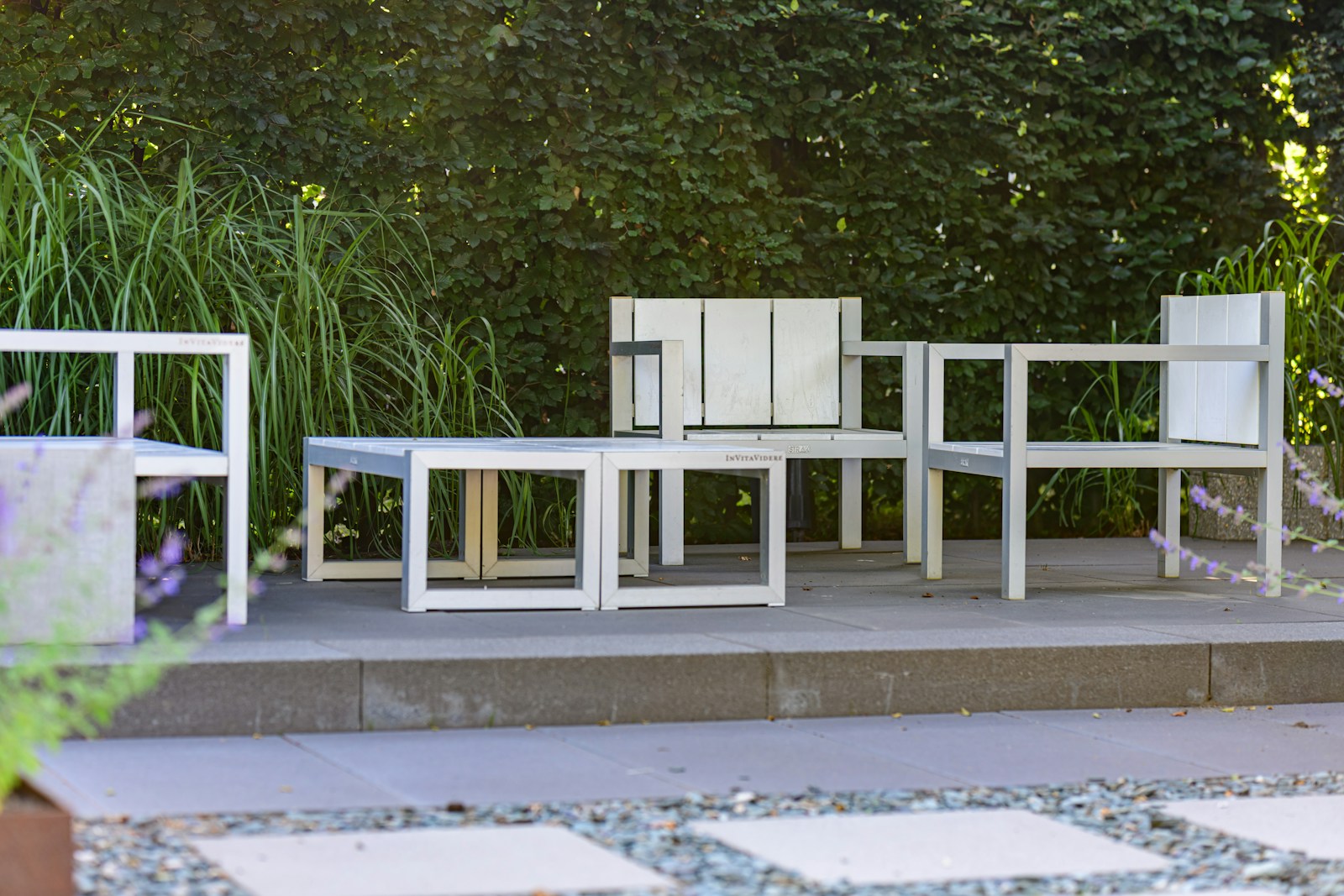
This is my favorite layer, the one that costs almost nothing and does everything. The flame flickers, so the shadow moves, so the patio breathes—no LED can replicate this shimmer. I especially love candle holders made of terracotta Breakthrough: the clay heats up, light escapes through the holes as tiny hot spots, and the object retains its beauty even when unlit, which is rare for a light fixture. We already discussed this in relation to... the candle lantern, this object that transcends cultures and eras without ever being dated.
Two simple rules: group rather than line up—three or five candles together create a source, six scattered candles do nothing—and always place your flames low, on the floor, a low wall, or a coffee table. A candle at eye level dazzles; a candle on the floor casts a pattern. And as with any fire, never leave a flame unattended near fabric, a cushion, or a shade sail.
Rechargeable portable lamps: the solution for renters
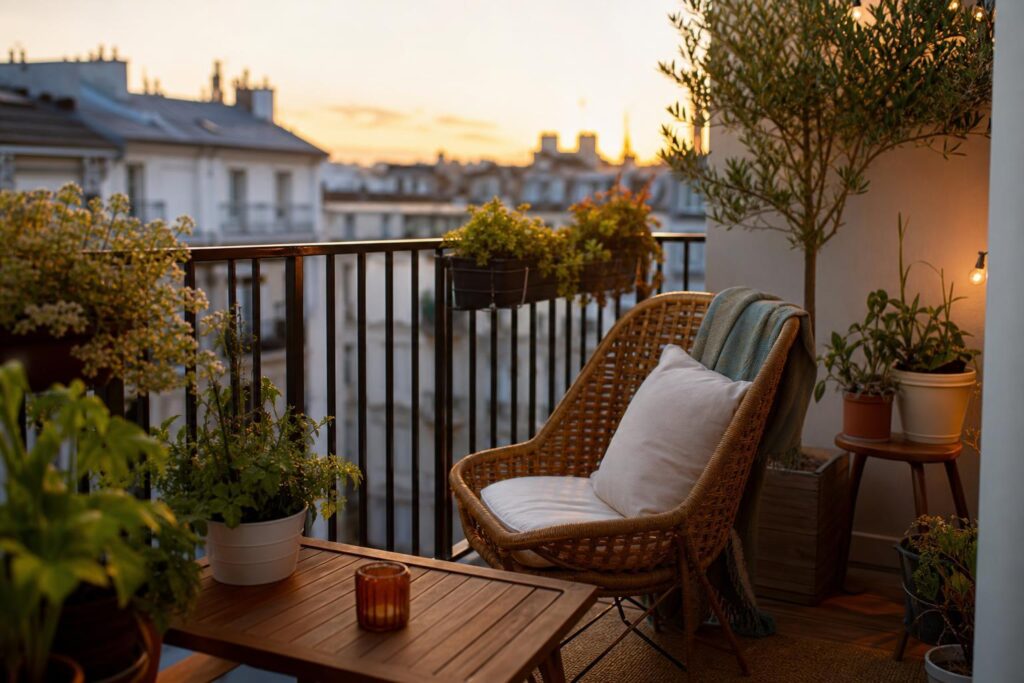
They've quietly changed everything. A rechargeable lamp sits on the dinner table, moves to the armchair for coffee, goes back inside in October, and then returns to the living room table. Many offer adjustable brightness, giving you two free moods: light for meals, then light afterward. On a balcony without an electrical outlet, or near a hammock set up for the warmer months, This is often the only viable answer — and it's not a last resort.
Switching to electric: what to decide before buying
Then comes the time when you want something permanent: a wall light on either side of the French doors, recessed spotlights in a wooden deck, an outdoor lamppost in the corner of the patio furniture. This is a different scale of project, and it's planned before the store, not after.
Equipment designed for outdoor use, without exception
This is the one point on which I will not compromise: outdoors, we only install equipment designed for outdoor use. Light fixtures, bulbs, junction boxes, connections, sockets: everything must be designed to withstand humidity, driving rain, frost, and temperature fluctuations. An indoor wall light "sheltered under an awning" is not an outdoor wall light, and a makeshift connection under a tarp is not a watertight connection.
Packaging indicates an IP rating: consider it a guideline for comparing two models, not a magic number. The truly appropriate level depends on the specific exposure of the location—exposure to wind, under shelter, on the ground where water stagnates, near a pond or swimming pool, a particularly sensitive case we mentioned when discussing…’a poolside area transformed into a haven of peace. This diagnosis is not a matter of cataloging.
Should we call an electrician?
For anything that connects to your existing setup, yes, absolutely. Hanging a string of lights on a hook and plugging it into an existing outdoor outlet is still within your control. Creating a light source, running a line to the back of the garden, embedding spotlights in decking, powering lighting near water: that's a job for a professional. electrician, who will assess on site what your installation allows.
I know this advice sounds overly cautious, to the point of being frustrating. And it is. But the outdoors is a breeding ground for water, soil, roots, and garden tools that might one day wander into the wrong place—and I have no desire to give you technical details here that depend entirely on a context I can't see. Instead, take advantage of his visit to ask him for a separate control point for each layer: it's the detail that will make your lighting livable on a daily basis.
Respecting the night: neighbors, nocturnal wildlife, and extinction
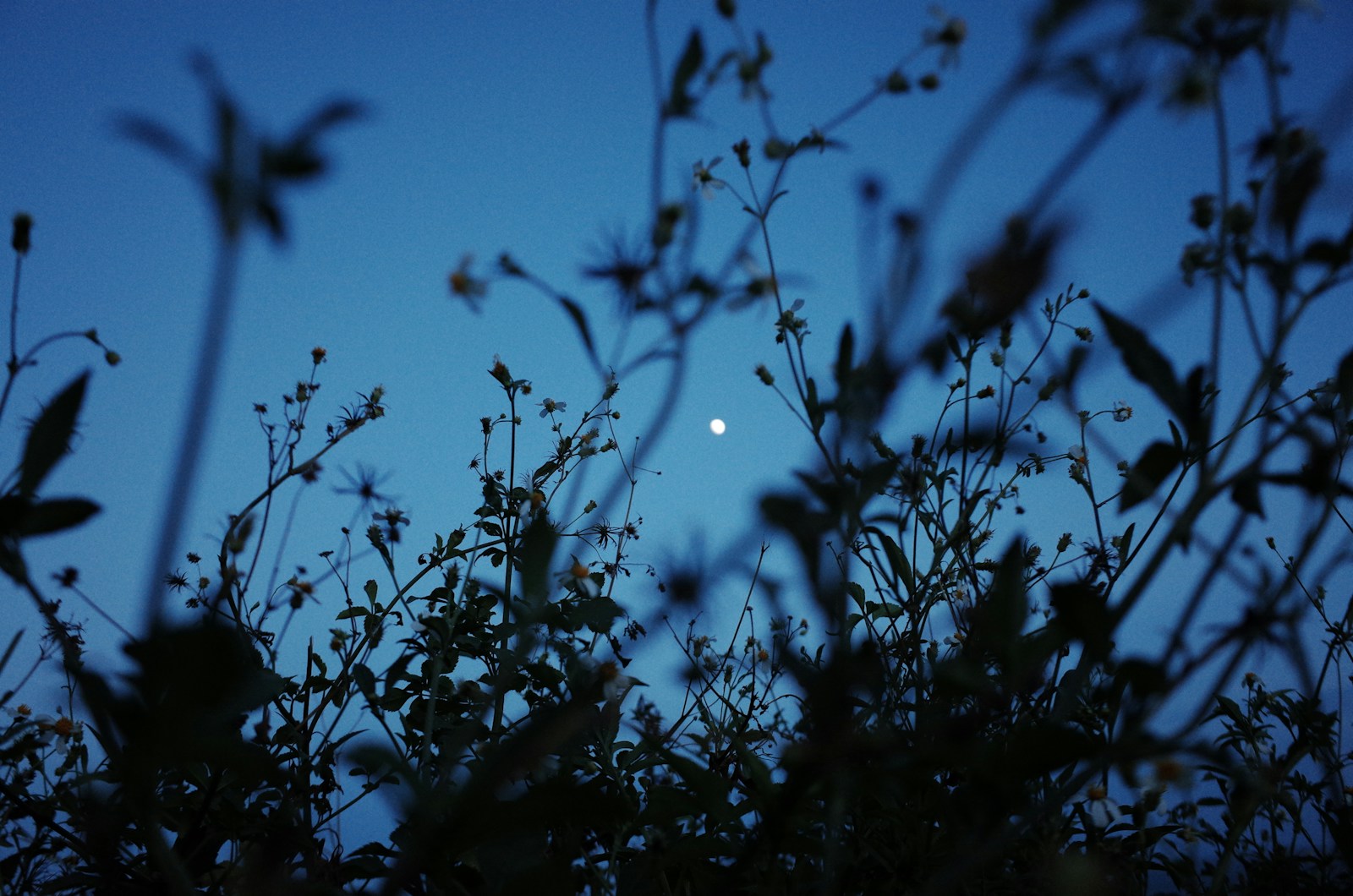
This is the aspect that decorating articles often overlook, which is a shame, because it makes patios more beautiful. Lighting outdoors is not the same as lighting indoors: your light travels through the hedge, rises into the sky, enters the neighbor's bedroom, and crosses paths with animals that have no other time to live than at night.
Direct the light towards the ground, never towards the sky
This is the number one tip, and it costs nothing: a downward-facing light illuminates what you need, while an upward-facing light illuminates the surrounding area. The French Office for Biodiversity also recommends that individuals... direct the lights towards the ground rather than towards the sky or plants, to illuminate only what is useful, and to favour soft and amber lights.
In practical terms: lampshades that are partially closed at the top, light sources hidden behind a low wall or planter, spotlights angled towards the base of the tree rather than its crown. This also benefits your visual comfort—a light source that isn't directly visible is far less tiring on the eyes than a bare bulb in your field of vision.
What light does to insects and bats
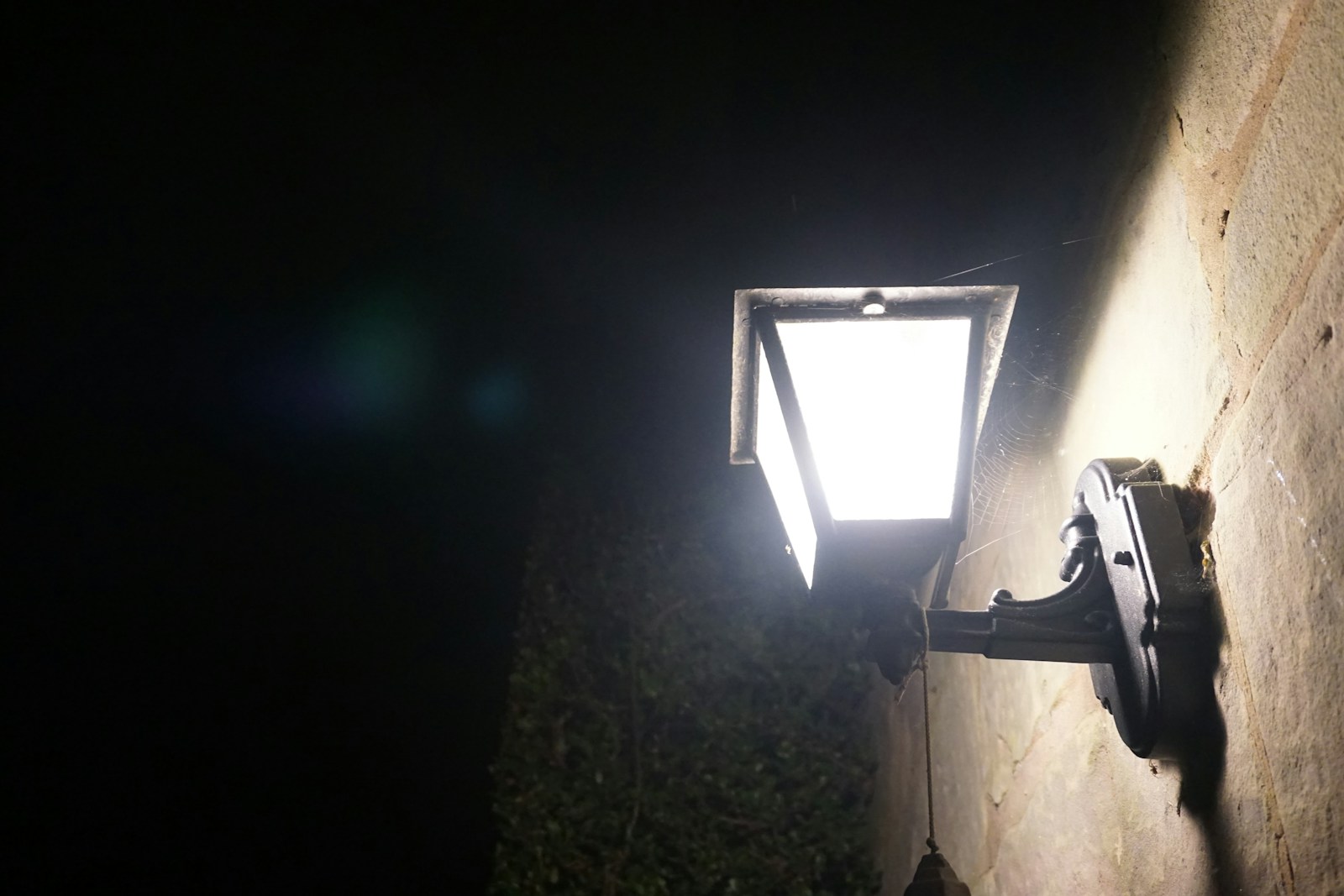
Moths circle light sources until they are exhausted. Bats, on the other hand, flee illuminated areas, which fragments their hunting territories. Migratory birds, which navigate at night, become disoriented in the halos of light. And the plants themselves are misled: too much light causes them to keep their leaves longer and become vulnerable to the cold.
Two simple adjustments are enough to significantly reduce the impact, and they align with the atmosphere you're aiming for anyway: lower the intensity and stick to warm tones—amber hues are less disruptive to wildlife than bluish whites. In other words, what looks beautiful on a terrace is also, in this case, what causes the least disturbance. This idea of a habitat that works with nature rather than imposing itself on it is precisely what we were looking for when exploring... how to integrate nature into contemporary architecture.
Turning off: the most elegant gesture
Patio lighting is meant for the hours when you're outside. After that, it's useless. Turning it off in the middle of the night is the simplest, most economical, and most respectful thing you can do—and it's also what gives you back the stars.
- A timer or a programmable outlet on the string lights: it switches off while you sleep, without you having to think about it.
- A presence detector rather than permanent lighting for the utility passage, well oriented and not overly powerful.
- Sources independent : we turn off the table lamp, we keep two lanterns, and the evening continues in a different way.
- No light shone towards a window, yours or the one opposite — this is the primary cause of tension between neighbors.
- During nesting and migration periods, we lighten the load: fewer points, for a shorter time.
Regarding the rules, the provisions relating to light pollution Regulations regarding neighborhood tranquility vary from one municipality to another, and some go further than others. If your project is ambitious—a lit facade wall, streetlights visible from the street—a call to your town hall will tell you what is permitted in your area. This also applies to condominiums, where regulations may govern the exterior appearance.
Start with the simplest layer: a flame, a glass, a little terracotta.
Discover the candle lanternYour questions about patio lighting
What height is needed for outdoor lighting?
There's no single ideal height: the useful guide is eye level. A wall light or pendant light should be placed high enough so that the bulb is never directly in your line of sight, whether you're sitting or standing. Below that height, opt for grazing light sources, directed towards the floor.
What lumen output should I choose for a terrace?
Packaging indicates lumens, which is the amount of light emitted. On a patio, you want fewer lumens per point but several points of light, rather than a single powerful spotlight. The right balance depends on the surface area, the color of the ground, and the intended use: compare the light output rather than relying on a single number.
How to calculate outdoor lighting?
Rather than calculating, make a list of uses: moving around, sitting, eating, watching. One light point per use, and you have your plan. Numerical calculation methods are the work of an electrician or lighting designer, who will take into account your actual installation and site.
What type of lighting should I choose for a wooden terrace?
Wood reflects light that is already warm: a hot light source warms it even more, a cold light source makes it appear dull. Opt for warm white light and grazing light sources that highlight the grain of the wood. The equipment must be designed for outdoor use, and any installation in the decking should be planned with a qualified electrician.
How to light a terrace without electricity?
Solar string lights and markers, rechargeable portable lamps, candles, and terracotta lanterns are all you need to create a truly inviting atmosphere. Solar lights require a full day of sunshine to last through the evening; candles provide a flickering flame that no LED can replicate. Group the light sources together and place them low.
What kind of lighting is needed for a covered terrace?
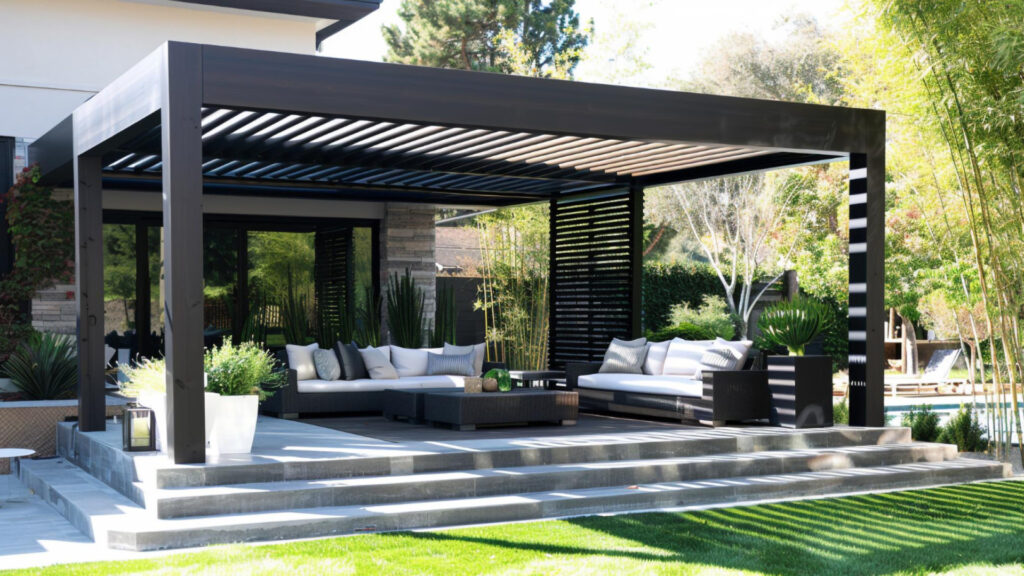
A covered terrace allows what an open terrace forbids: a hanging light above the table, a string of lights stretched under the rafters, wall sconces on the sheltered wall. However, the equipment should still be designed for outdoor use, as humidity and splashes circulate under the shelter.