Our article in brief
- Before choosing a finish, we look at the support Raw concrete block, concrete, tired plaster or low wall do not call for the same solution.
- Three families cover almost all cases: the drink (battens, screens, cladding, reed fencing), the mineral (facing, plaster, paint) and the vegetal (climbing plants, planters).
- The most economic are the woven panels, the paint on a sound wall and the climbing plants bought young; the most engaging are the complete cladding and the stone facing.
- A wall humid It is treated before it is dressed — otherwise the dressing hides the problem and aggravates it.
- Changing the exterior appearance of a wall visible from the street may require a prior declaration : a visit to the town hall avoids many unpleasant surprises.
There's that wall. The one you can see from the terrace table, grey, flat, and which reminds you at every summer meal that you should "do something." Concrete block never plastered, stucco stained by twenty winters, party wall that you didn't choose: in any case, it weighs on the atmosphere much more than you imagine.
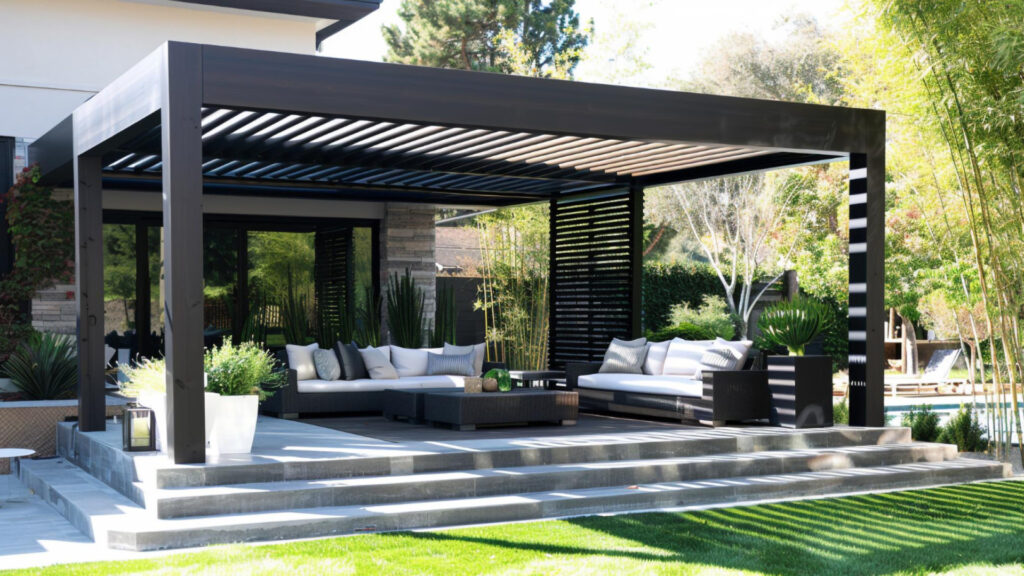
The good news is that’cladding an exterior wall It's almost never a major undertaking. At my place, a panel of battens and two jasmine plants solved the problem. Here, I propose to explore the solutions as I do for a project: first, understand the wall, then choose the material that suits it — wood, stone, plaster, color, plants, objects — and finally, the light, which has ten times more impact than you might think.
Before cladding an exterior wall: three things to consider
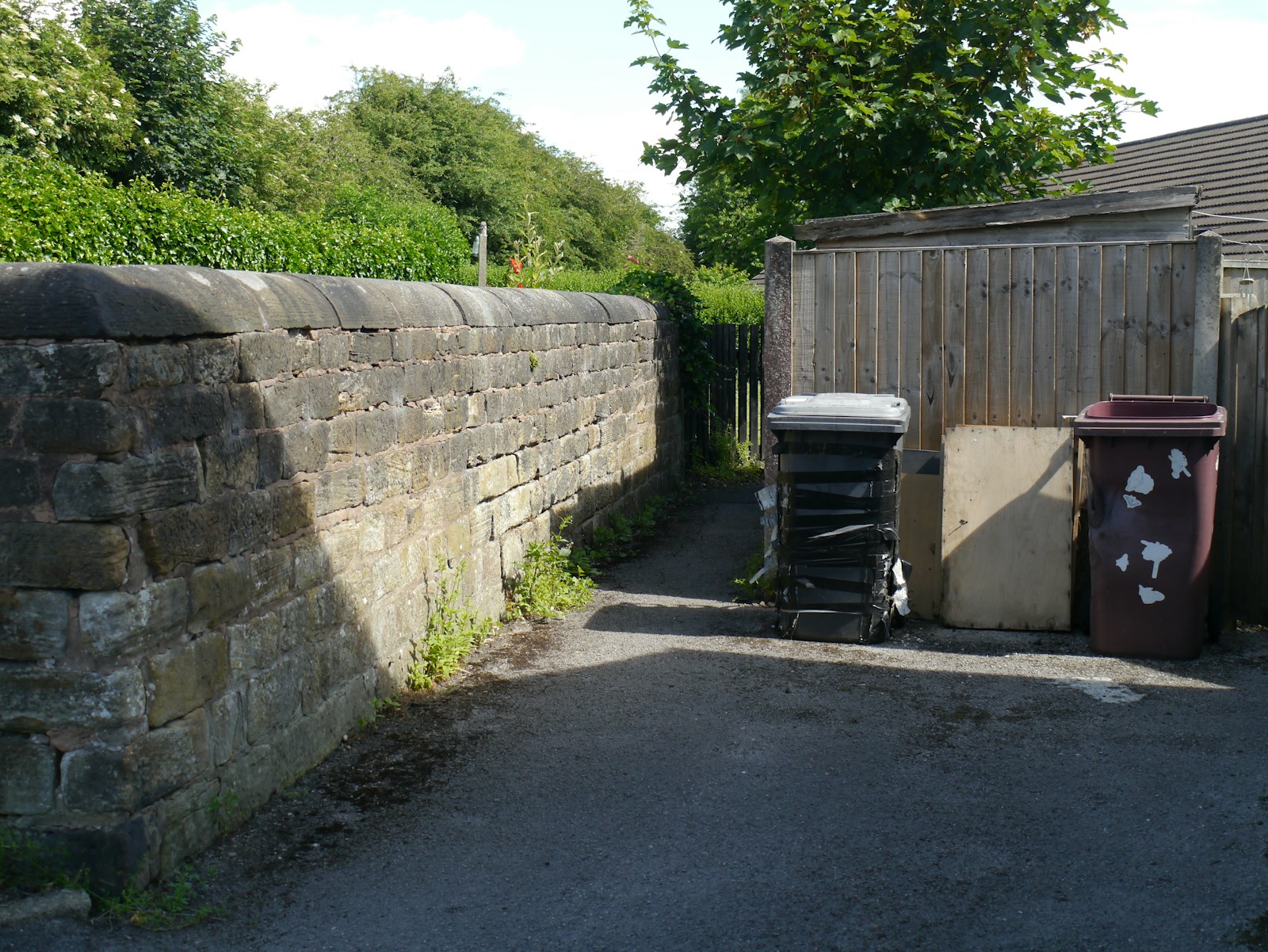
We all want to jump straight into the ideas. But a covering applied to a poorly designed wall will peel off, warp, or darken within two seasons. Five minutes of observation, a tape measure, and your hand placed flat against the wall: that's all it takes to guide the entire project and determine whether you're going for a light exterior wall decoration or a more substantial covering.
Concrete block, concrete, worn plaster, low wall: what are you dealing with?
THE rough concrete block It is porous and uneven: it absorbs paint and doesn't tolerate fine finishes well, but it accommodates plaster or a screw-in frame very well. concrete, It, on the other hand, is hard and sound: it can withstand almost anything, provided you drill with the right drill bit. old plaster The flour must be brushed and fixed first. Finally, the’cladding of a low wall obeys other rules: low, it is seen from above, so we take care of the hood and the edge as much as the face.
Also consider the exposure: in the south, wood grays quickly and a very dark color acts like a radiator; in the north, plants grow more slowly and mosses more quickly. This orientation alone eliminates half of the bad ideas.
Humidity, shared walls, permits: checks that prevent regrets
A dark stain at the base of the wall, whitish efflorescence, a musty smell: these are signs of dampness that needs to be treated. Before to decorate. Covering over it is like putting a band-aid on a leak. On a wall that doesn't breathe well, ventilated coverings are preferred — a framework that leaves an air gap behind the wooden slats — rather than a solid covering.
Two administrative points, then. If the wall is adjoining, It doesn't belong to you alone: you need your neighbor's permission before screwing or painting. And if the work alters the building's exterior appearance from the public road, a prior declaration of works It may be necessary, with stricter rules in protected areas. Cases vary greatly from one municipality to another: your town hall's planning department will respond within minutes.
What budget should be planned, from the simplest to the most demanding?
It's impossible to give an accurate price without knowing your wall: the surface area, the condition of the substrate, and the installation method all make a difference. However, the order of the solutions remains the same. From the lightest to the most striking, they range from woven panels and wall decor to full cladding and stone facing, including paint, plaster, and openwork wood.
| Solution | Material & effect | Constraint to be aware of | Relative budget |
|---|---|---|---|
| Reed screens, woven privacy screens | Bamboo, wicker, reed — immediate natural effect | Limited lifespan, needs to be renewed | The most accessible |
| Wall decor & lighting | Objects, pottery, mirrors, garlands — a personal touch | Don't hide the wall, accompany it | Very accessible |
| Paint or whitewash | Solid color, unified wall | Sound substrate required, facade product | Accessible |
| Climbing plants | Living, seasonal foliage | Patience (2 to 3 seasons), maintenance | Accessible, it improves with age |
| Wooden battens, wooden screen | Vertical blades, rhythm and shadow | Ventilated frame, wood suitable for outdoor use | Intermediate |
| Plaster or lime | Mineral matter, living grain | Technical skill, weather to watch | Intermediate |
| Stone cladding, complete siding | Relief, stone, slate, solid wood | Weight, layout, often a pro | The most engaging |
💡 Alex's Tip — Don't treat the entire wall in one go. Dress it up. a part — a panel behind the table, a lower strip, a square of battens — costs much less and often gives a more elegant result than a full covering. The rest becomes a background, not a problem.
Wood: the warmest (and most forgiving) cladding
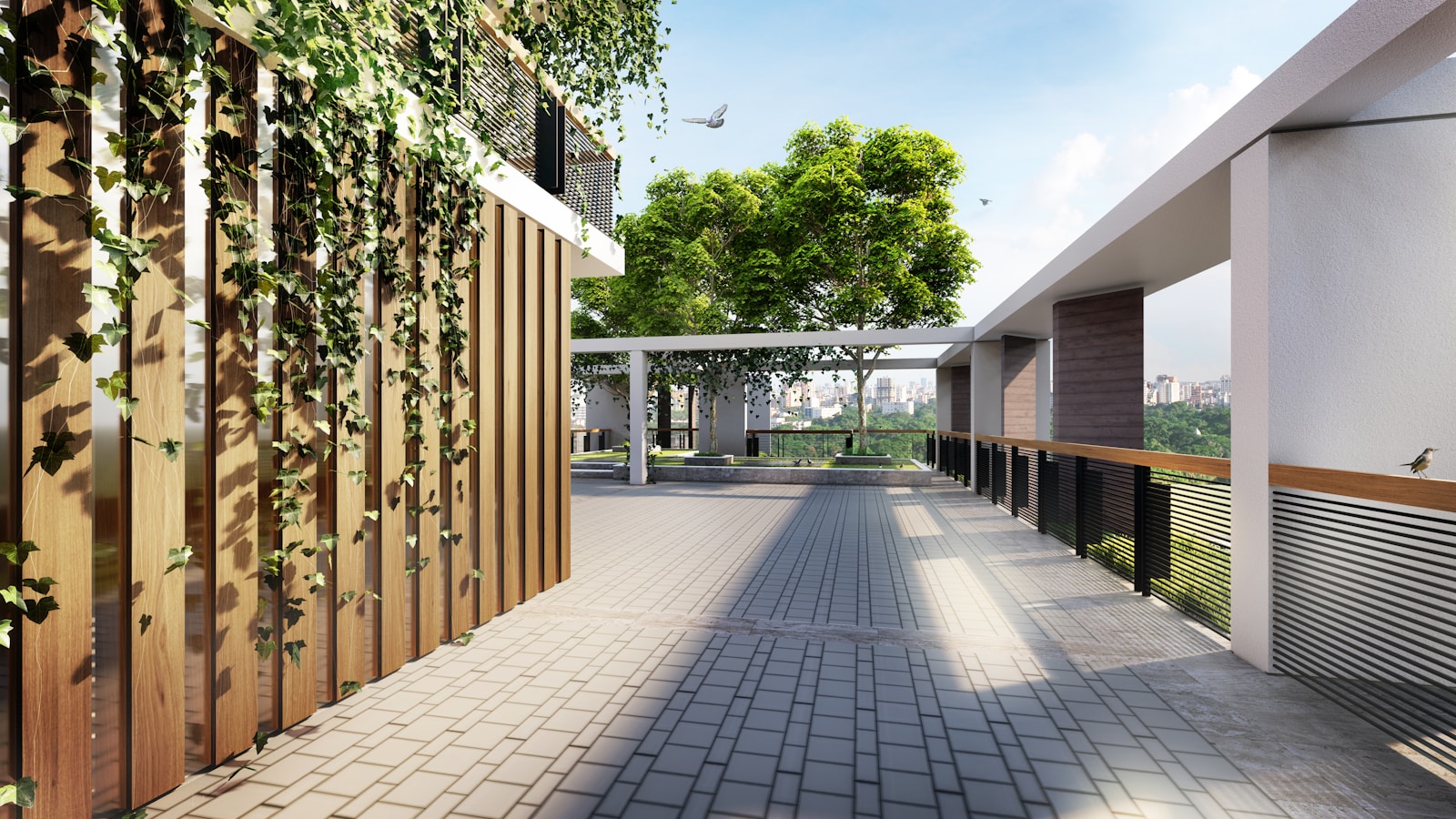
If I had to choose just one solution, it would be this one. Wood instantly warms up a mineral exterior, it can be worked without complicated machinery, and it ages with a silvery patina that many end up preferring to new wood. It's also the Exterior wall cladding The most modular: it covers everything, or just what is needed.
Battens, screens, cladding: three ways to install planks

The three look similar from a distance but have a completely different effect up close. Here's how I chose them.
- The spaced cleats Thin slats screwed onto two horizontal battens, with a regular gap between them. This is the most graphic approach, the one that creates rhythm and hints at the wall behind. Ideal for a wide, bland wall.
- The screen Same principle, but in a self-supporting or semi-fixed panel, often taller. It dresses up And hides an opposite wall, a meter, a garbage room.
- The cladding : overlapping or clapboard cladding boards that completely cover the masonry. This is the most protective and permanent option — therefore the one that requires the most care during installation.
In all three cases, the golden rule is the same: never screw wood directly onto masonry. A framework of battens creates a air blade a gap of a few centimeters that allows the wall to dry and the wood to expand and contract. It is this invisible air gap that makes the difference between cladding that lasts ten years and cladding that warps by the second autumn.
Video: how to clad an exterior wall with wooden planks, step by step (RENOV et dentelle channel).
What type of wood really holds up outdoors?
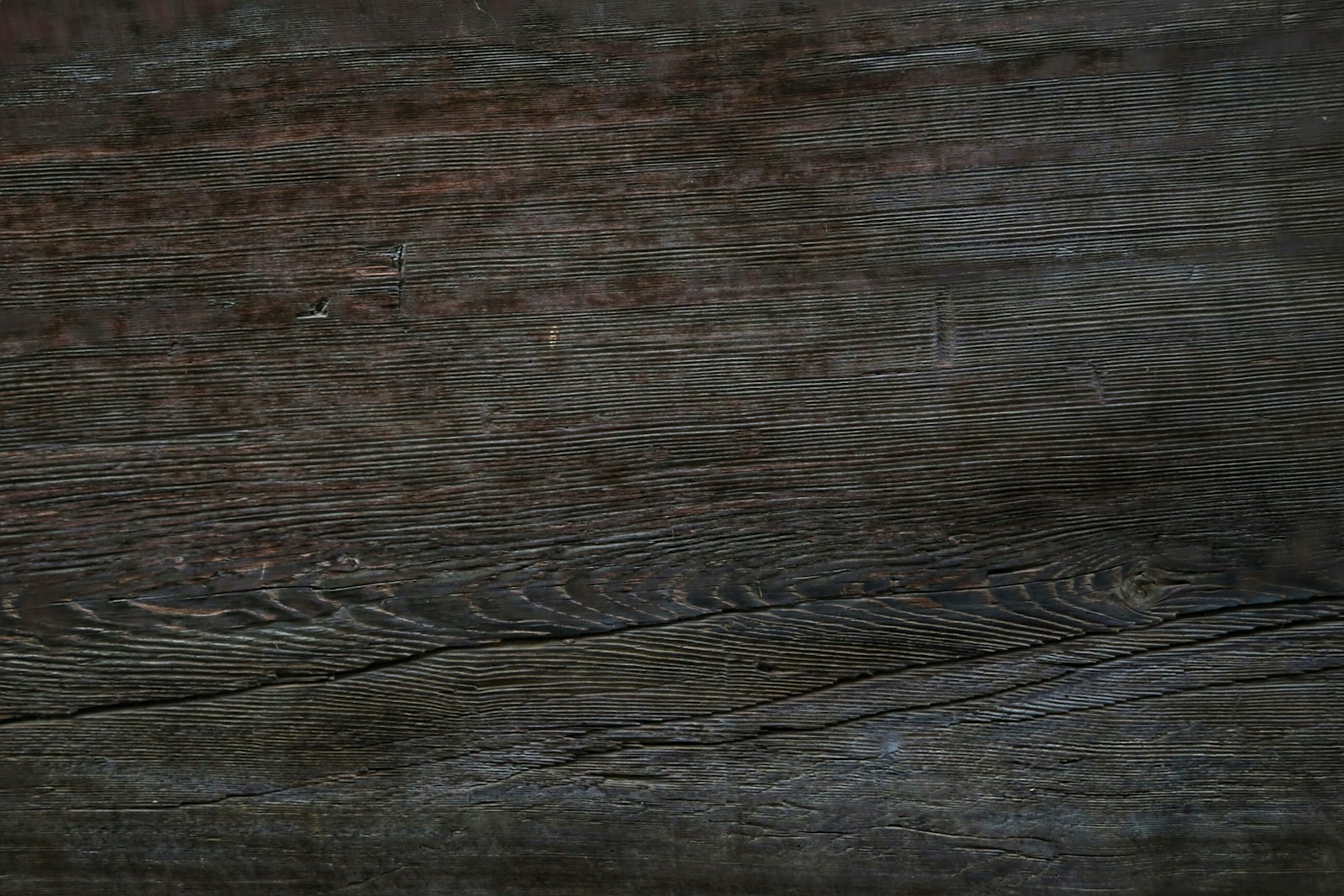
This is where many projects come into play. Indoor wood placed outdoors will darken and warp within a season. The benchmark is... job classes defined by the standard: for an exterior wall exposed to rain but without contact with the ground, we are in job class 3. In practical terms, one chooses either a naturally durable species or wood treated for this purpose.
In terms of fuel species, the Douglas fir, THE larch, THE chestnut tree Oak (with the sapwood removed) is a reliable and readily available option in France, while chestnut offers a rustic charm that's perfect for a garden. Tropical woods hold up beautifully but require careful attention to their origin: always ask for sustainable management certification. Pressure-treated pine remains the most economical solution for a fence.
Wood chosen for its intended use and placed on an air gap will require almost no further attention from you. Poorly chosen wood will demand something from you every spring.
Reed screens, privacy screens and woven panels: quick and easy cladding
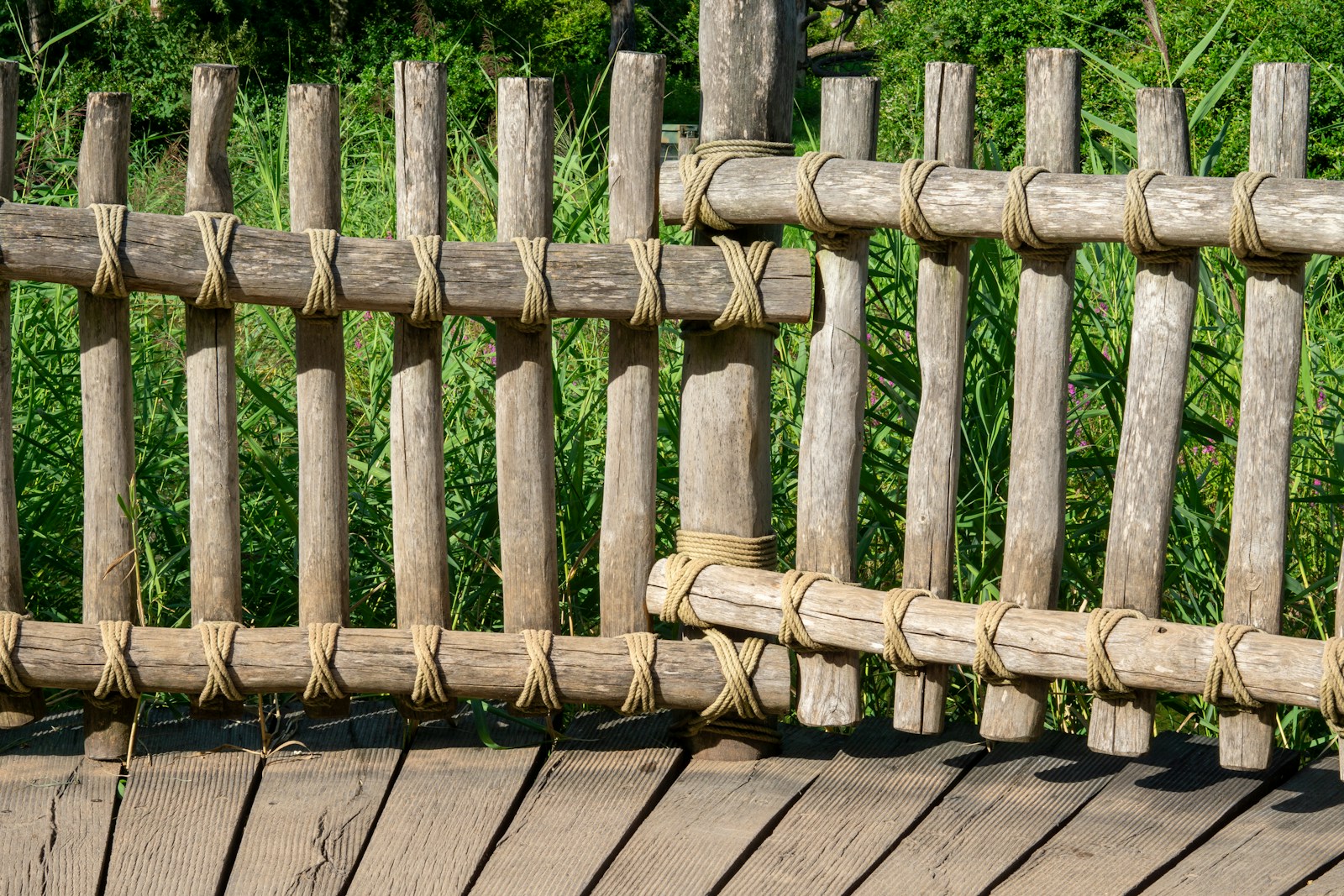
For cheap way to dress up an exterior wall And without any construction work, nothing beats natural panels: bamboo screening, heather fencing, woven willow, reeds. They can be attached to a lightweight frame or hooks, rolled up, and replaced. Their irregular texture instantly transforms a cinder block wall into a "holiday garden," and they provide a perfect backdrop for a few hanging planters.
Their limitation is well known: they don't last forever, especially in humid or windy climates. Therefore, I see them less as a finishing touch and more as an excellent habitable draft — a way to test an atmosphere before investing in cladding.
Stone, plaster, color: giving the wall a new look
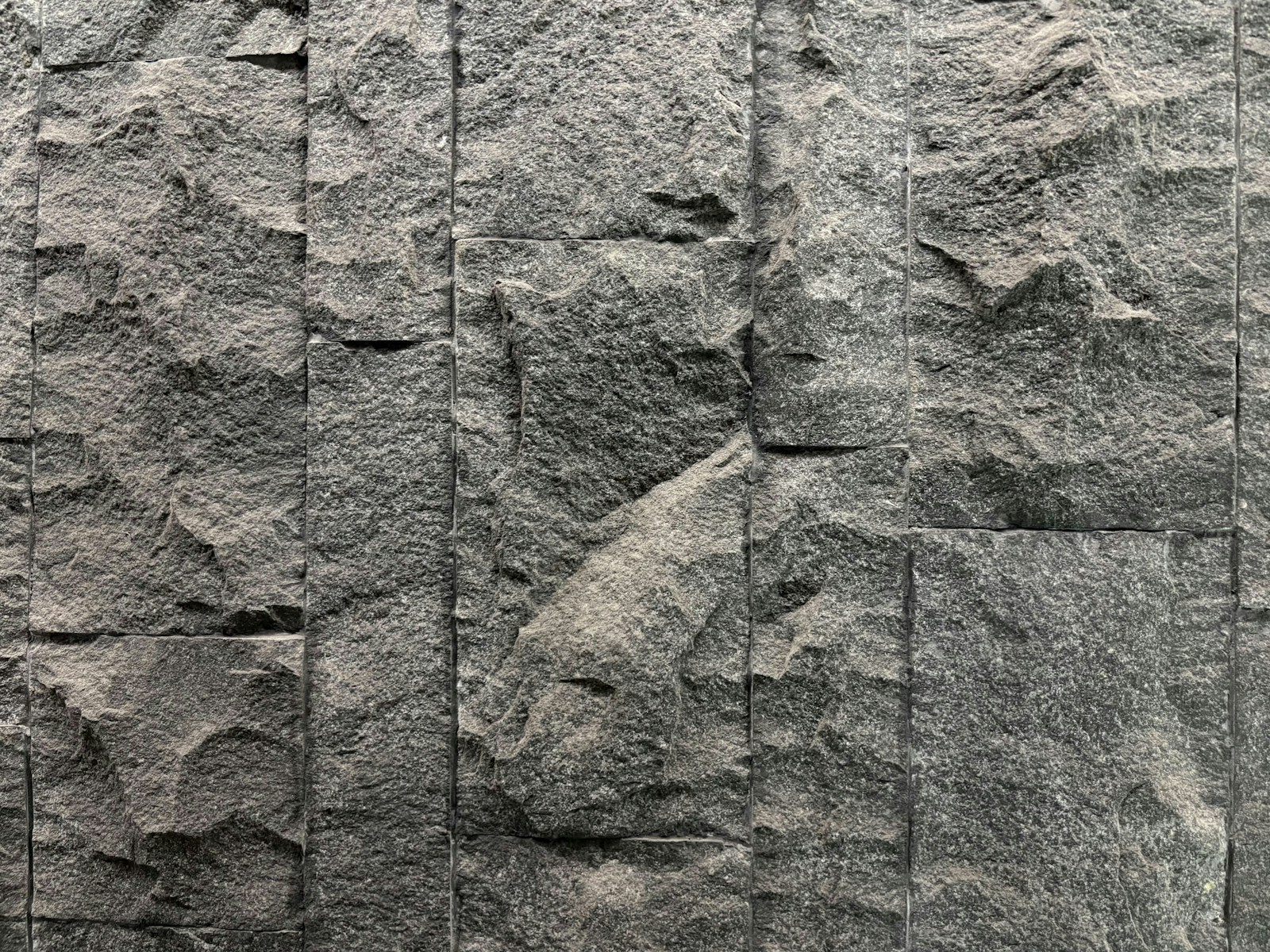
The other major family focuses not on adding an element, but on the material of the wall itself. We no longer hide: we transform. This is the most sustainable way, and the one that gives the exterior walls that tranquil presence of houses in the South.
Stone cladding, tiles, slate: relief that erases imperfections
A facing It is a thin, glued cladding: natural or reconstituted stone tiles, brick slips, slate strips, sawn rubble. Its main advantage is optical: the texture breaks up the light, and an uneven wall instantly becomes invisible. On a narrow section or a base, the effect is spectacular for a small surface area.
Two points to consider. First, the weight: heavy cladding requires a sound substrate and a suitable outdoor and frost-resistant adhesive mortar. Second, the design: dry-fit a few rows on the ground before adhering the cladding to avoid overly regular alignments that betray the reconstituted stone. And when choosing the color, look to older houses in your area rather than a catalog.
Plaster and lime: the Mediterranean technique
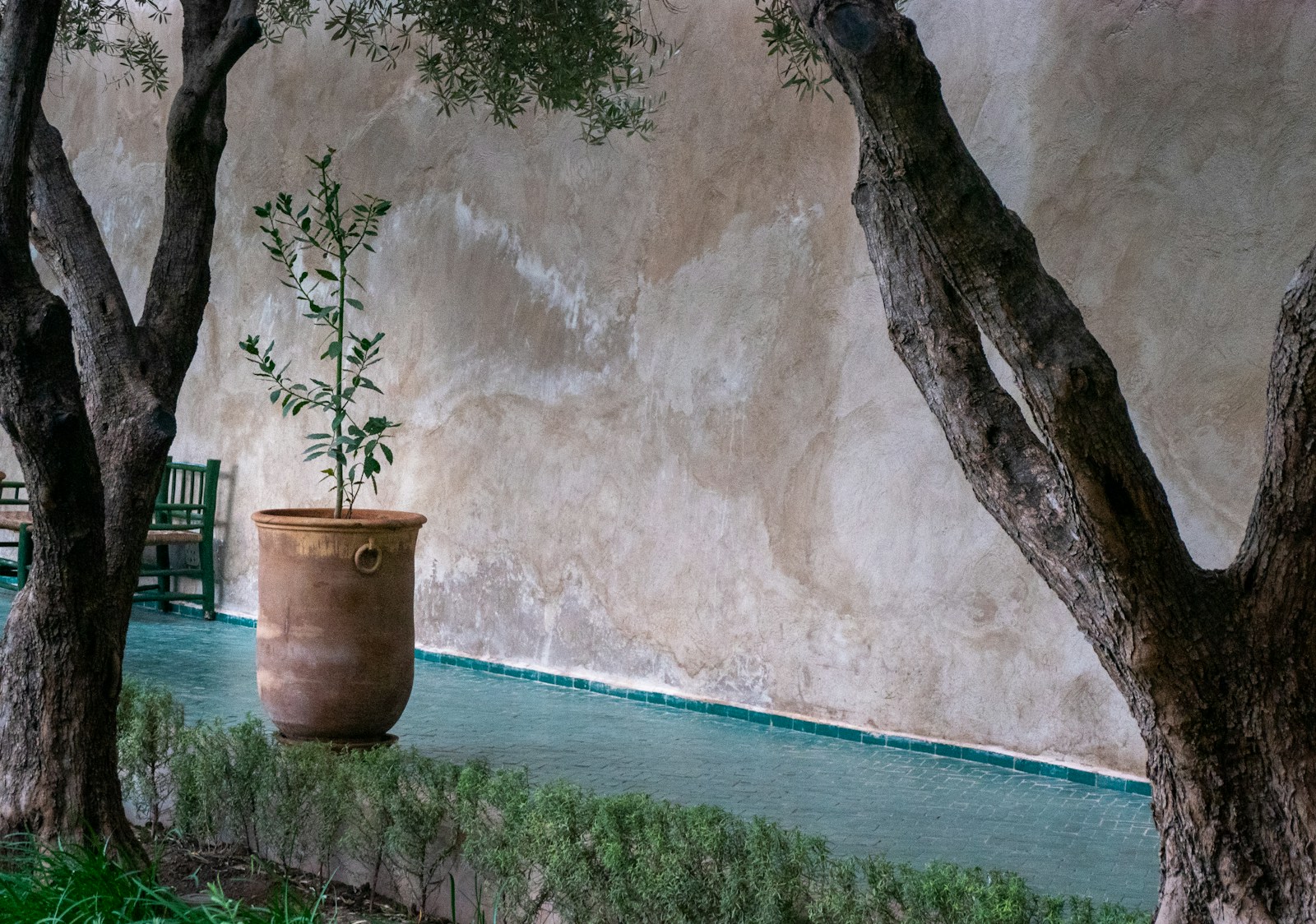
A lime plaster It doesn't just cover a wall; it gives it texture. Light catches it differently depending on the time of day, the nuances shift, and this breathable mineral material is particularly well-suited to old masonry that needs to exchange moisture. Whether troweled tightly, brushed, or scraped, the finish is just as important as the color.
This is the gesture I most associate with the Mediterranean style decor A pale ochre wash, a slightly uneven off-white, an earthy pink that reddens in the setting sun. Just be mindful of the weather — don't apply the plaster in direct sunlight, when there's a risk of frost, or on a waterlogged surface.
Exterior wall color: shades that work outdoors
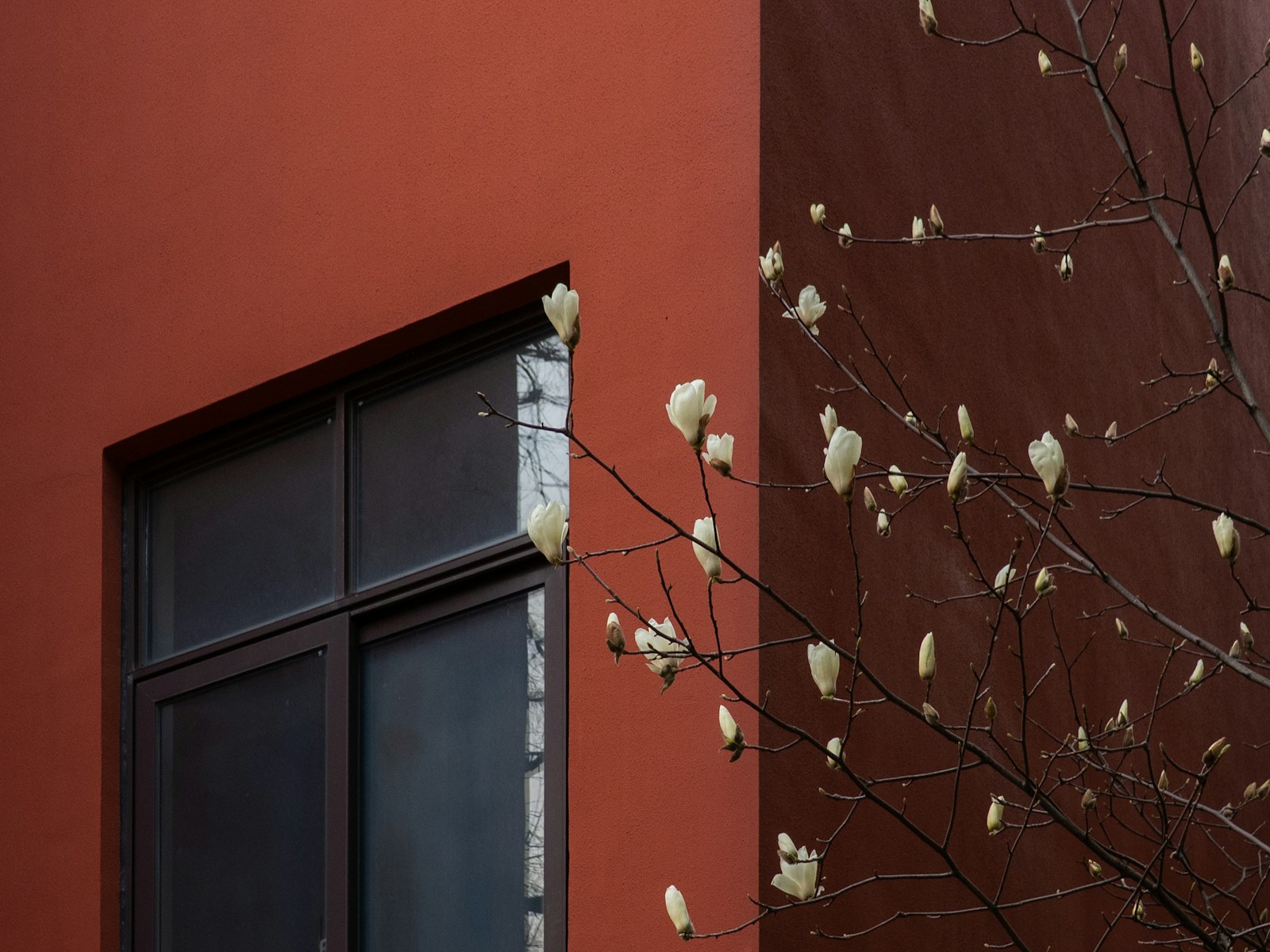
Painting remains the quickest way to change a wall, provided you use a facade product and a sound surface. The colors that work best outdoors are those that complement plants and stone rather than those that aim for a glossy finish.
- The lands — ochre, terracotta, brick, sand: they warm up and blend with wood, rattan, pottery.
- Deep greys — anthracite, smoky grey: they visually recede and transform each plant into a work of art. The safest choice for a large white wall it had become too prevalent.
- The soft greens — almond green, olive, sage: they extend the garden and erase the boundary between the wall and the flowerbeds.
- Off-whites — cream, linen: they enlarge a small terrace, but get dirty faster in the city.
The principle, if you're unsure: a shade dark digs deeper and brings the plants towards you, a shade clear It opens up and reflects the light. On a very large white wall, two similar shades are better than a single flat color: a darker lower band breaks up the height and anchors the whole thing.
Plants: the only covering that changes with the seasons
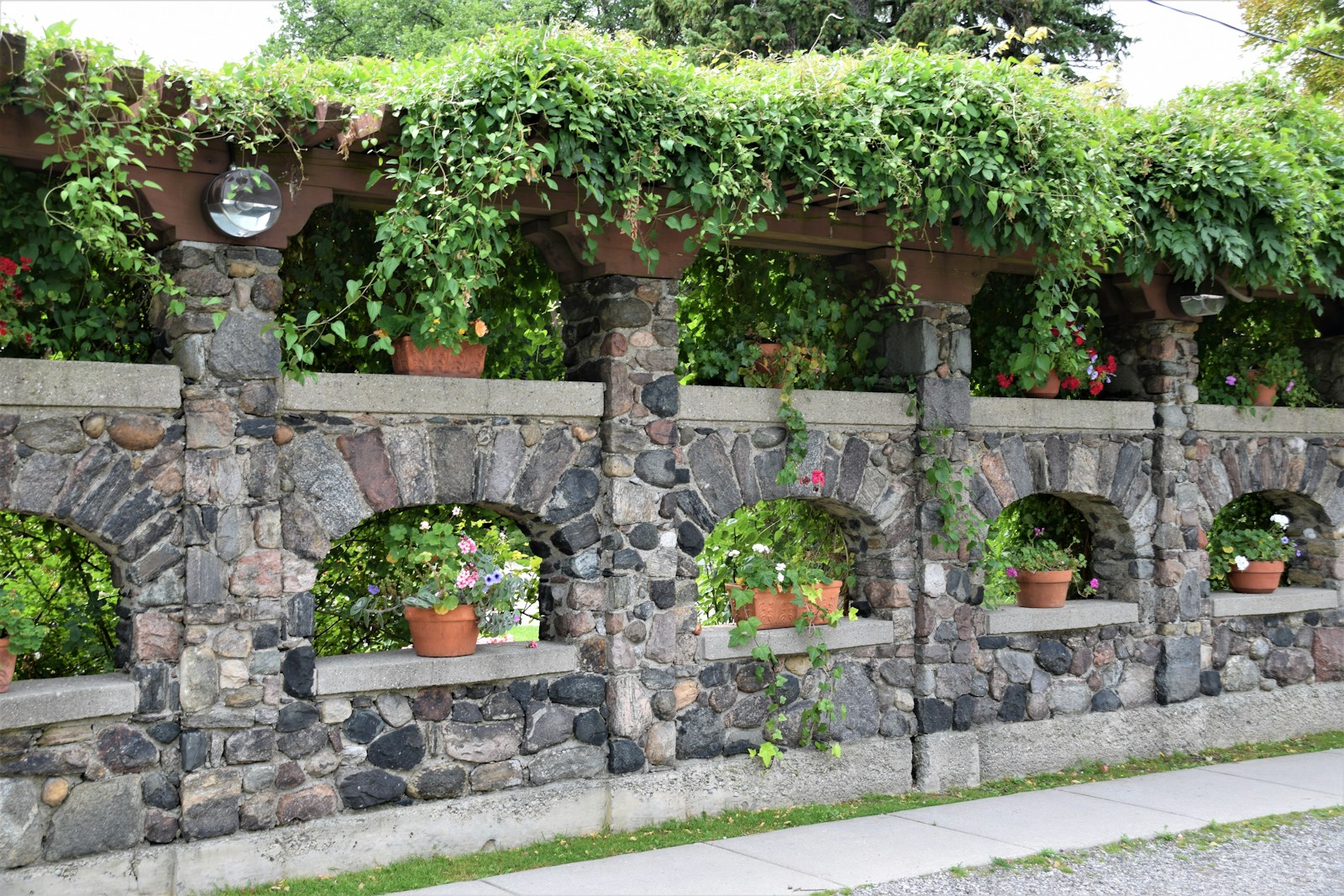
It's my favorite because it never feels like a final decision. A green wall moves, blooms, sheds its leaves, attracts birds; it also brings a bit of coolness where masonry traps heat. In return, it asks for the one thing money can't buy: time.
Climbing plants: the reliable choices and those to watch out for
To decorate an exterior wall with plants, two groups can be distinguished. Climbing plants with cleats (Ivy, Virginia creeper, climbing hydrangea) cling to the masonry on their own: quick coverage, no structure required, but they infiltrate fragile joints and are difficult to remove. Climbing plants twining or tendril-like (clematis, star jasmine, honeysuckle, climbing rose, wisteria) need support: more work at the start, much more control afterwards.
Choose plants primarily according to their exposure: star jasmine and roses in full sun, climbing hydrangea and ivy in shade, clematis with its roots in the shade and its leaves in the sun. And beware of overly vigorous plants: the tignone, whose disadvantages should be known, It is splendid in bloom but vigorous and heavy. On an old wall, wisteria deserves the same caution: its trunk becomes a lever.
Living walls, planters and pot shelves: climbing without drilling
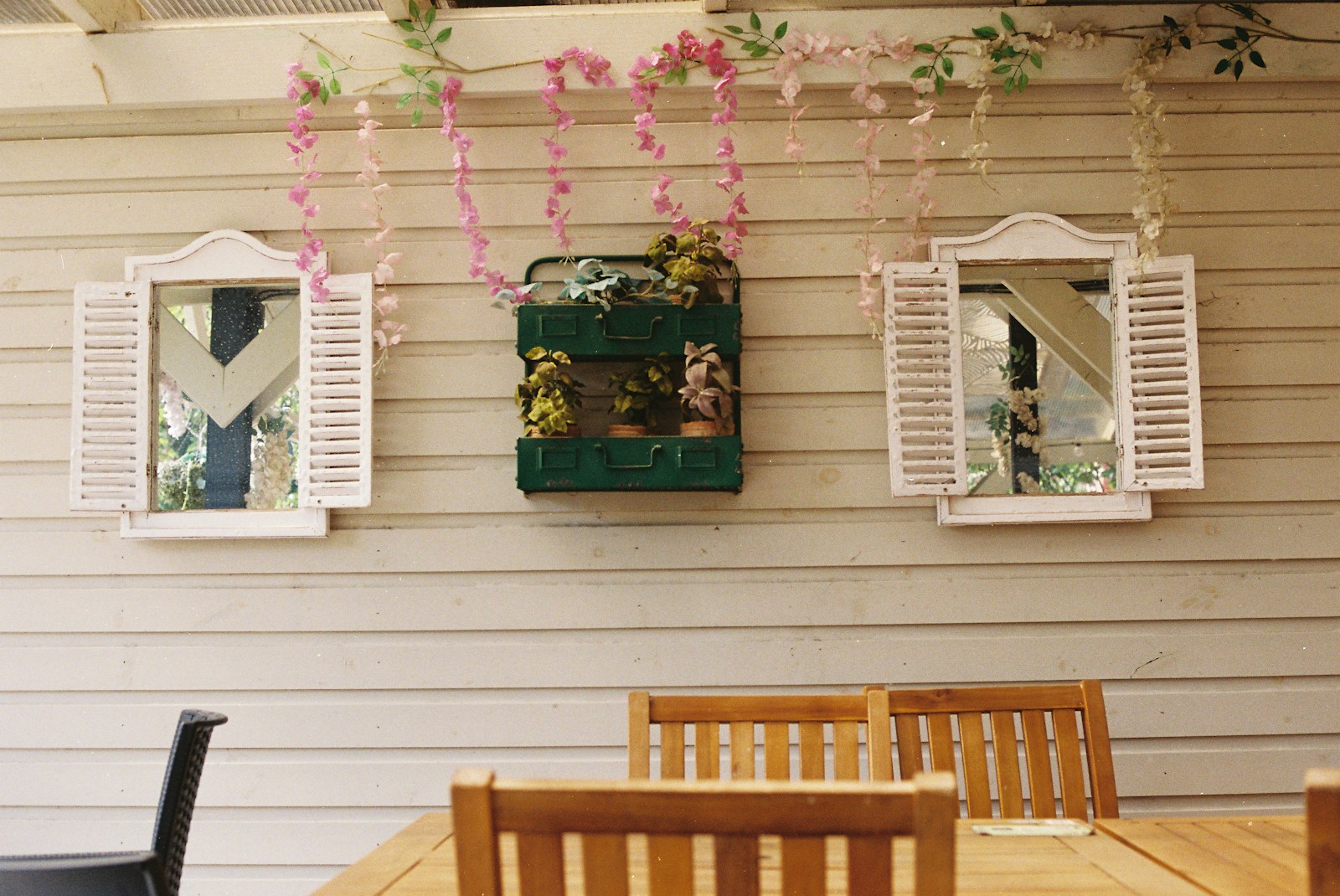
When drilling is impossible—shared wall, rental property, fragile masonry—self-supporting structures are used: a trellis on legs weighted down with large pots, a leaning wooden ladder, an outdoor shelf, or a tall planter filled with non-invasive bamboo. The wall remains intact, the result is immediate, and everything can be dismantled on moving day.
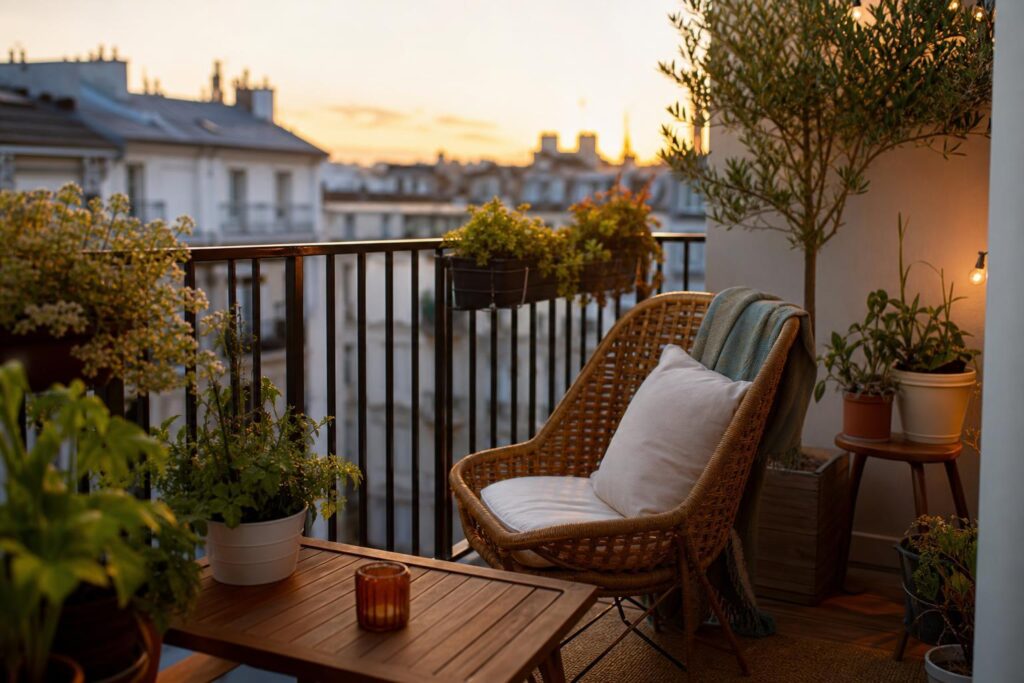
The mixed version works very well too: three pot heights, complementary materials, a few aromatic herbs within easy reach. It's exactly the logic of a flowery balcony in spring and summer, transposed to a garden wall. Technical green walls, with felt and integrated irrigation, give spectacular results but require real maintenance: best suited to modest and well-exposed areas.
Exterior wall decor: the touches that make it charming
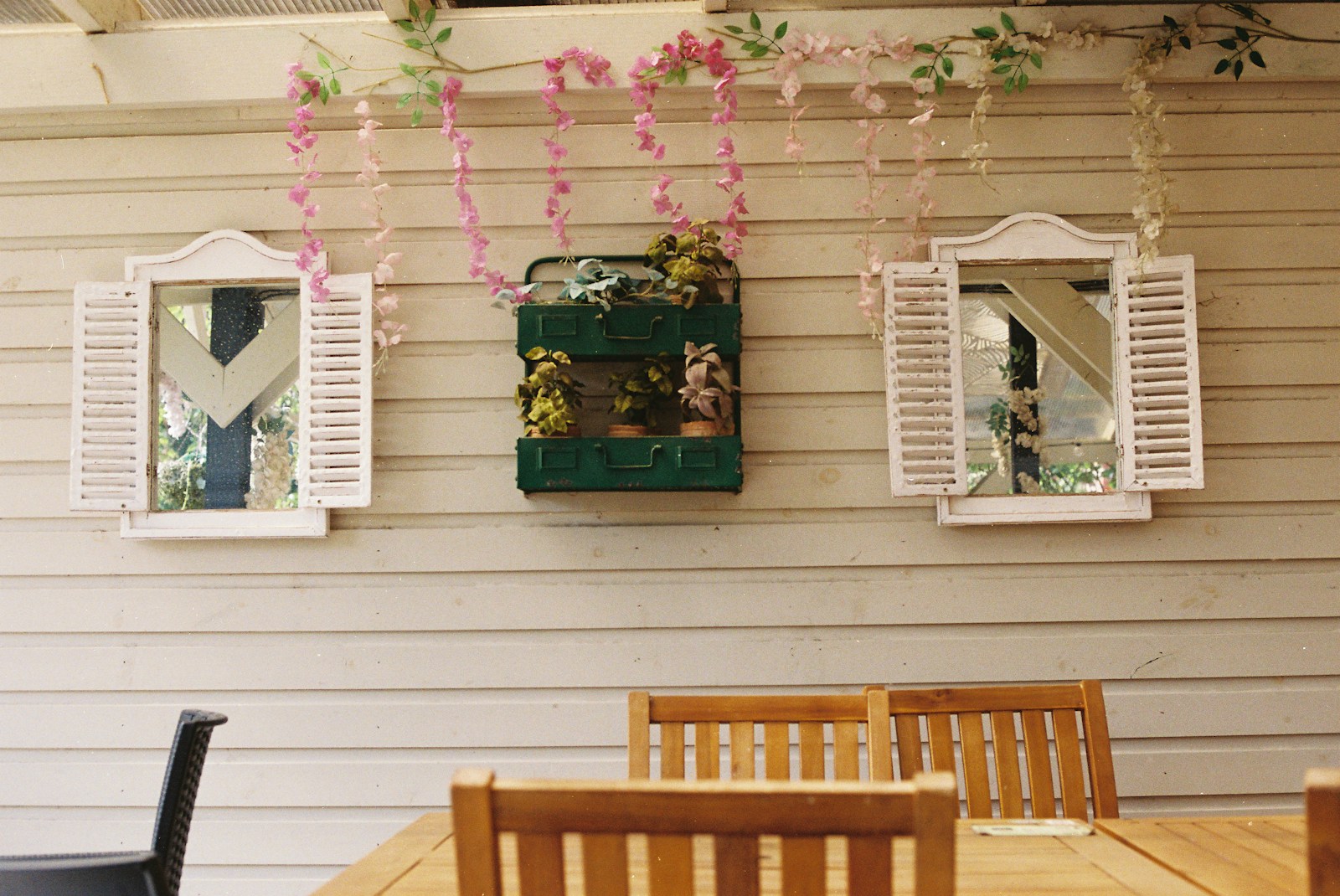
Once the base material is in place, what remains is the most personal layer: the exterior wall decorations. It's the cheapest, the most reversible, the one that tells the story of who lives there. Be careful though: outside, accumulation can quickly be interpreted as clutter. Three good deeds are better than a collection.
Objects, pottery, mirrors: compose without overloading
Some guidelines that almost always work on an exterior wall:
- A outdoor mirror or an old window with small panes: it opens a false perspective and doubles the light on a narrow terrace.
- A patchwork of woven baskets or wicker dishes, in three sizes, like a wall composition.
- Pottery and jars in terracotta, this ancestral material, Placed on consoles or in niches: the material heats the wall and ages beautifully.
- A macrame wall hanging, an outdoor rug hung, a carved wooden openwork panel: textiles and handwork to soften the masonry.
- A mural, a geometric stencil or a freehand painted stripe, if you have a taste for graphic gesture.
Two composition rules: hang at eye level sat, Since that's where you'll be looking at the wall, choose stainless steel fixings. A rusty screw will permanently stain a light-colored wall.
Lighting, the decorative accessory we often forget
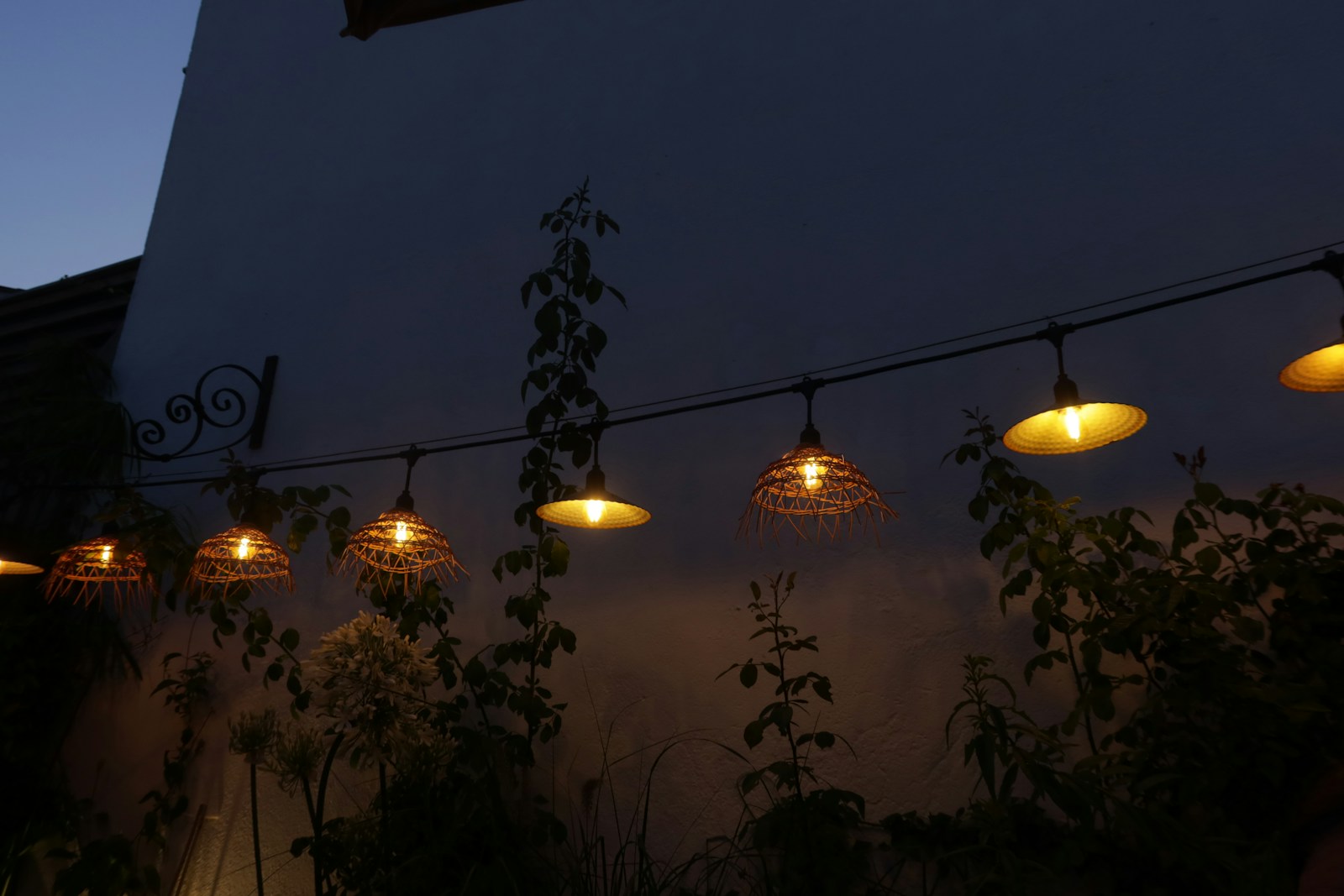
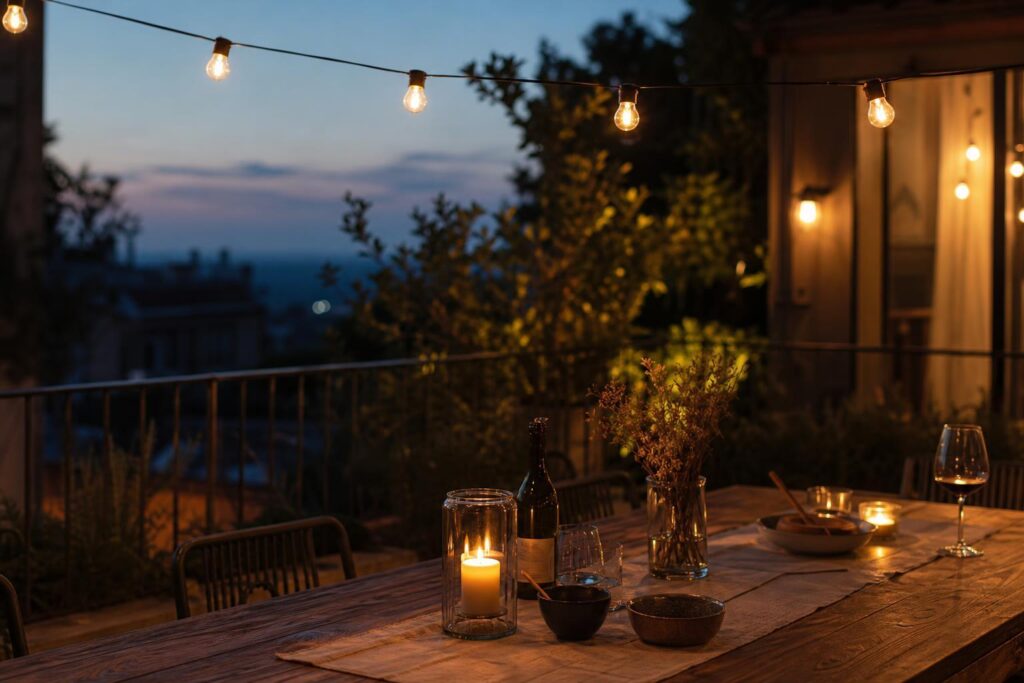
An exterior wall lives twelve hours a day in light you don't choose, and another twelve in light you do. That's where the greatest transformation happens with the least effort. An upward-facing wall light reveals the texture of the plaster; two low-angle spotlights highlight the relief of the cladding; a string of bulbs laid in a wave softens everything.
Opt for warm, low light, several small light sources rather than a single spotlight, and consider solar or stake lights when no power supply is available to the wall. An imperfect wall, when properly lit, becomes a decorative feature.
Start small, on just one section: a reed screen, a jasmine plant, a terracotta pot. It's usually by the third step that you realize you can no longer see the wall — you see the terrace.
What if the wall was just the beginning?
Bringing nature into its architectureYour questions about exterior walls
How to decorate an exterior wall without drilling?
Opt for freestanding solutions: a trellis on legs weighted down with large pots, a freestanding screen, a leaning wooden ladder, a tall planter filled with bamboo, or an outdoor shelf. A reed screen can also be attached to an existing structure. The wall remains undamaged, the installation is removable, and the result is immediate.
What materials should be used to clad an exterior wall?
Three main categories cover the essentials: wood (battens, screens, cladding, bamboo screens), mineral (facing bricks, brick slips, slate, lime plaster, facade paint), and plant-based (climbing plants, planters, green walls). The choice depends on the substrate, the exposure, and the budget you are willing to commit.
How to decorate an exterior wall cheaply?
Start with natural panels—reed screens, heather, woven willow—which can transform a cinder block in an afternoon. Add facade paint if the surface is sound, climbing plants bought young in pots, and a string of lights. Treating only part of the wall significantly reduces the cost.
How to clad an exterior cinder block wall?
The raw concrete block is porous: it's brushed, dusted, and then the choice is yours. A lime plaster or wash will permanently unify it; a framework of battens allows you to screw in battens or cladding with an air gap; a glued facing will conceal its texture. Reed screens remain the quick and easy solution.
What plants are suitable for decorating an exterior wall?
In sunny spots, star jasmine, climbing roses, clematis, or grapevines are ideal. In shady spots, climbing hydrangea, ivy, and honeysuckle are suitable. Climbing plants with tendrils will cover the ground on their own but can weaken old mortar joints; twining plants require a trellis and are easier to control. Always check the mature vigor of the plants before planting against an old wall.
What color should I paint an exterior wall?
Colors that complement the garden always win: ochre, terracotta, and sand to add warmth; anthracite gray to create depth and make plants stand out; sage or olive green to extend flowerbeds; and off-white to enlarge a small patio. A dark color recedes the wall, while a light one opens it up.