THE Japandi style seduced by its ability to create interiors that are both refined and warm. This decorative trend, which combines Japanese aesthetics and Scandinavian design, offers a perfect answer to our contemporary need for serenity. At La Maison Coloniale, we explored this harmonious fusion that transforms our living spaces into havens of peace. Discover with us how to adopt this minimalist yet warm style, which values natural materials and clean lines for a timeless interior.
Our article in brief:
THE Japandi style merges theJapanese aesthetics and the Scandinavian design to create interiors refined and warm meeting our need for serenity.
- Based on the principle of less is more, THE Japandi style favors uncluttered spaces where each element finds its rightful place
- THE natural materials like wood, linen and ceramics create a deep connection with nature
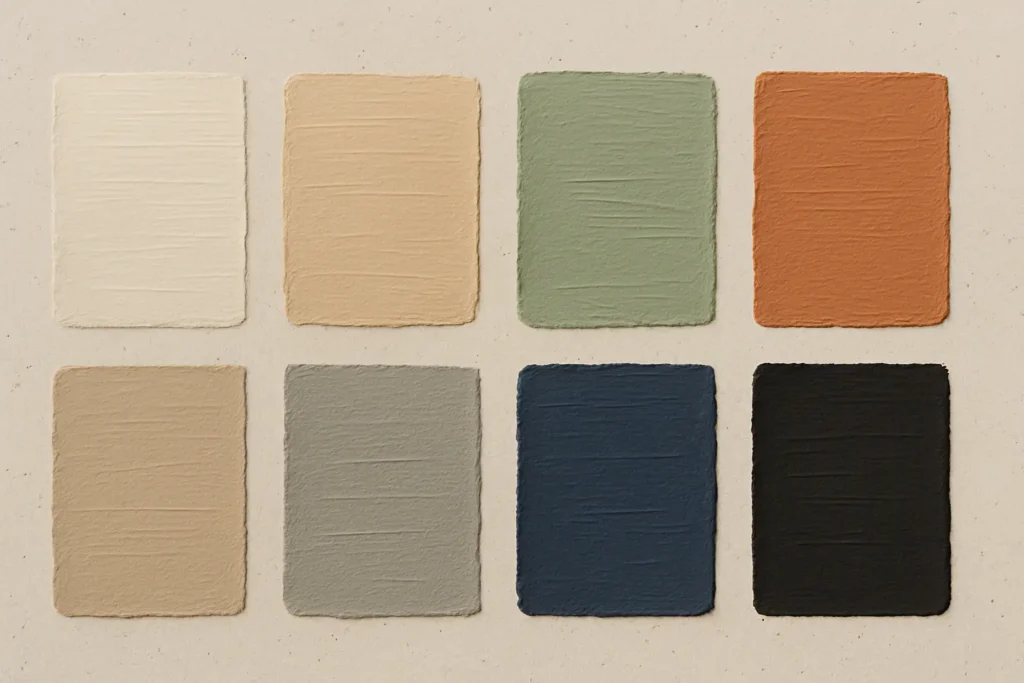
- THE Japandi style has a soothing color palette inspired by nature (off-whites, beiges, sage greens, indigo blue)
- Beyond aesthetics, it offers a philosophy of life valuing imperfection and authenticity
In this article
The fundamentals of Japandi style: between minimalism and authenticity
Japandi was born from a fascinating cultural encounter. When Japan opened its borders in the mid-19th century, Scandinavian designers were captivated by the Japanese aesthetic. Despite the geographical distance, these two cultures share common values: a love of natural materials, functionality, and simplicity. This fusion creates a perfect balance between Japanese wabi-sabi which celebrates imperfection and Scandinavian hygge which prioritizes comfort.
The principle of “less is more” in Japandi decor
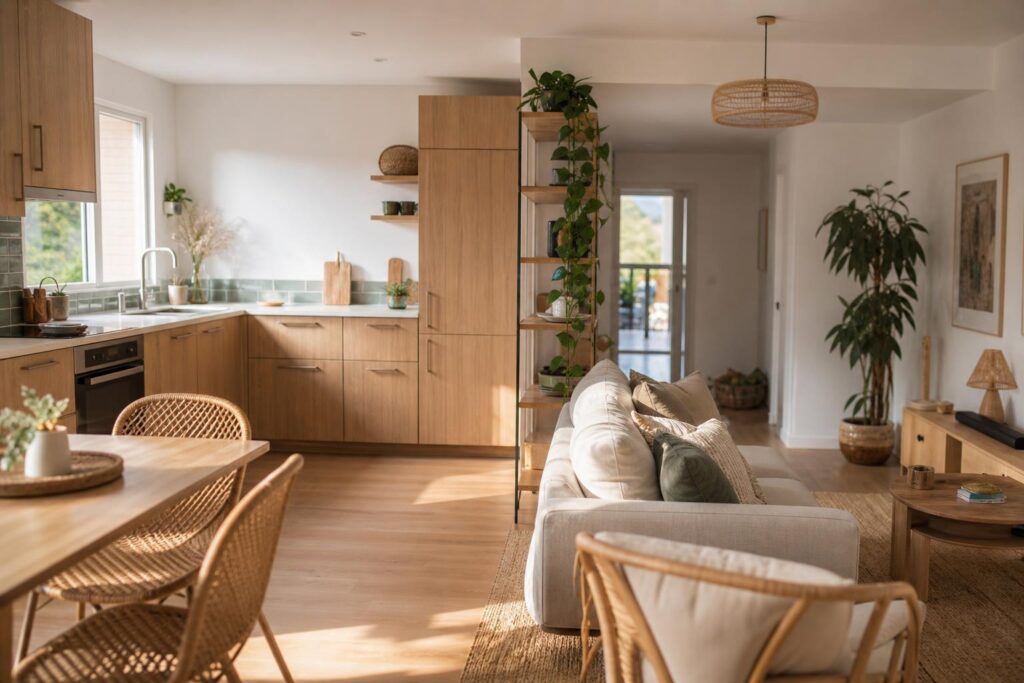
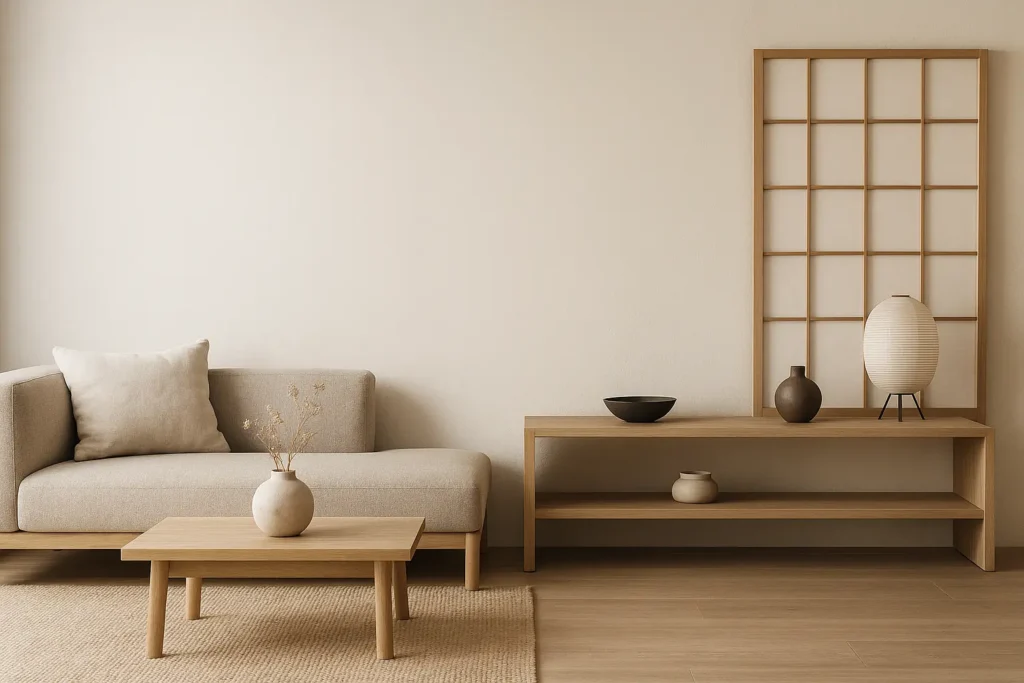
The minimalist approach is the cornerstone of the Japandi style. We favor uncluttered spaces where each element finds its rightful place. In this decorative approach, you will learn to select pieces that combine function and beauty rather than accumulating purely decorative objects. This soft and warm minimalism differs from the cold minimalism sometimes associated with contemporary interiors. Rather, it is an invitation to breathe, to create spaces that soothe the mind and encourage the flow of energy.
Natural materials as a signature of the Scandinavian Japanese decor style
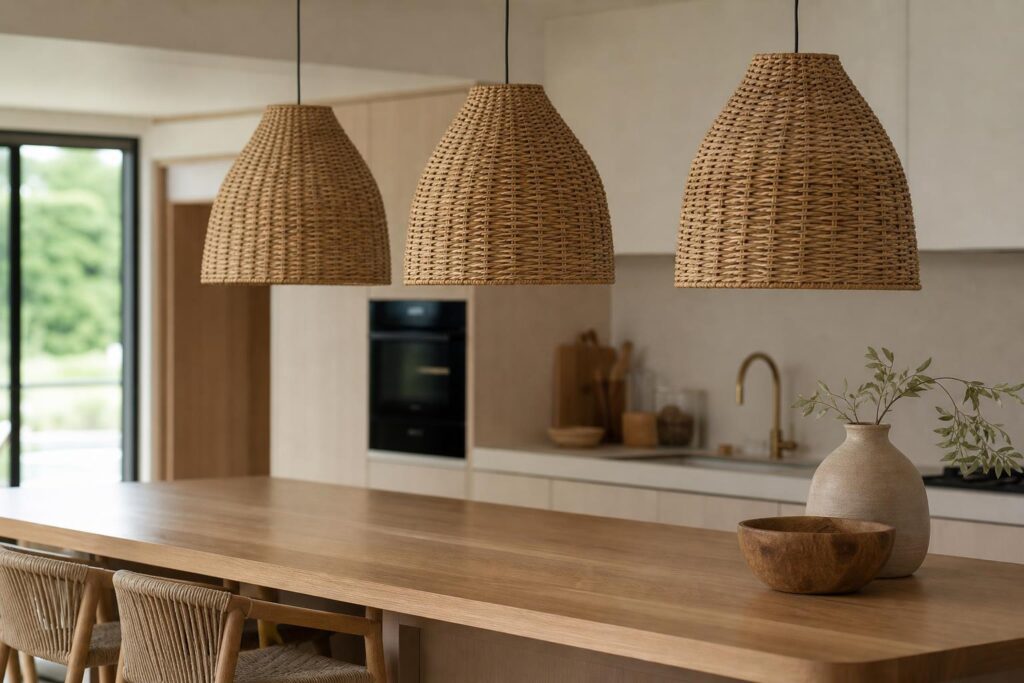
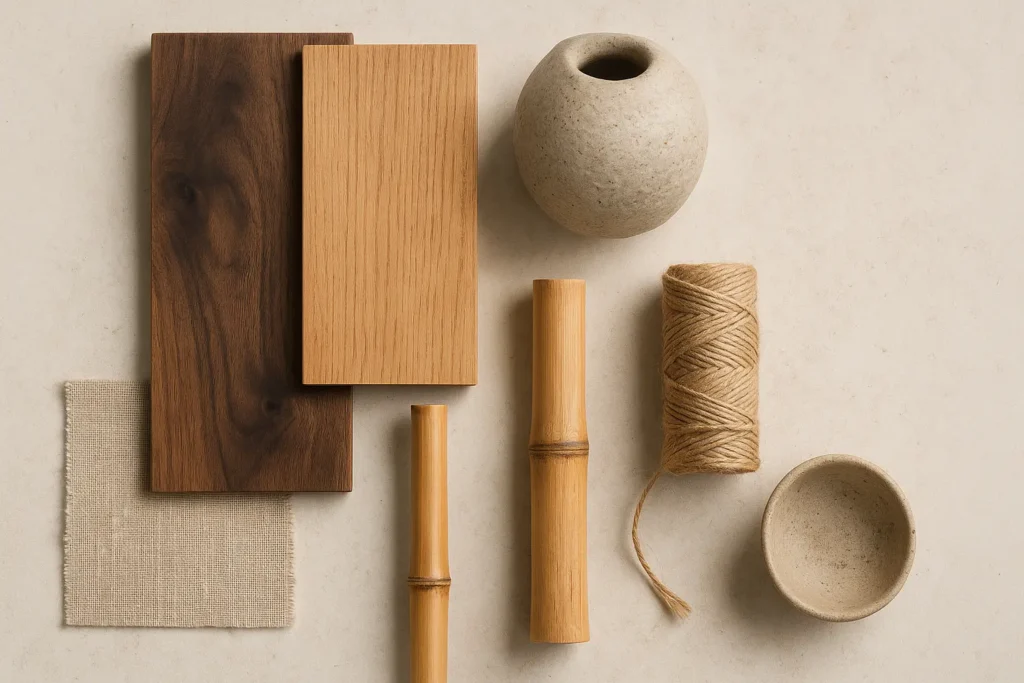
Raw and authentic materials define the identity of the Japandi styleWe recommend incorporating wood in all its forms: light oak, darker walnut, slender bamboo. These species create a deep connection with nature and bring warmth and character to your interior. Complete with natural fibers like linen, THE hemp or cotton for textiles, and stone, clay or ceramic for decorative objects.
| Japanese influence | Scandinavian influence |
|---|---|
| Dark woods (walnut, bamboo) | Light woods (oak, ash) |
| Washi paper, ceramic | Wool, linen, leather |
| Deep tones (indigo, black) | Light shades (beige, off-white) |
The soothing color palette of Japandi style
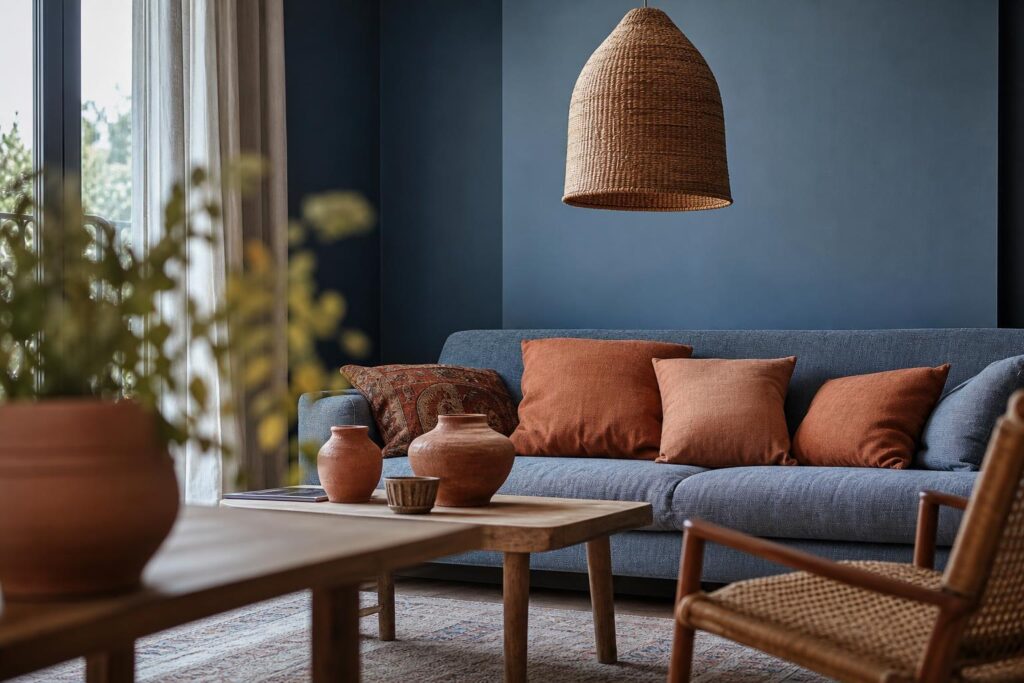
The shades of the Japandi style contribute greatly to the serene atmosphere of this style. We favor a color range inspired by nature : off-whites, beiges, taupes and grays for the base, enriched with trendy colors such as sage green, indigo blue, or terracotta ochre. Black adds touches of contrast that structure the space. This harmonious and balanced palette creates an environment conducive to relaxation and well-being.
Create a harmonious Japandi interior in every room
To fully adopt the Japandi style In your home, we offer a room-by-room overview. Each space can benefit from the calming influence of Japandi, with a few specific adaptations.
The Japandi-style living room: a space of serenity
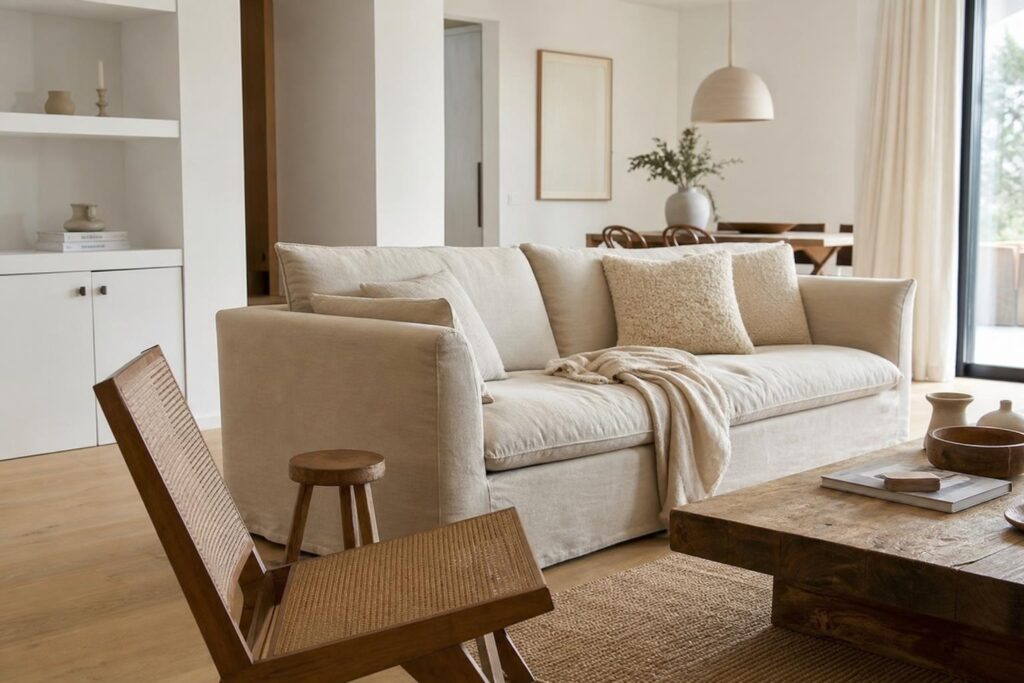
To arrange a authentic Japandi living room, start by selecting furniture with clean lines. A solid wood Japandi coffee table will become the focal point of the space, accompanied by a comfortable sofa dressed with linen or cotton cushions. Rice paper Japandi pendant lamps diffuse a soft light that envelops the room in a cozy atmosphere.
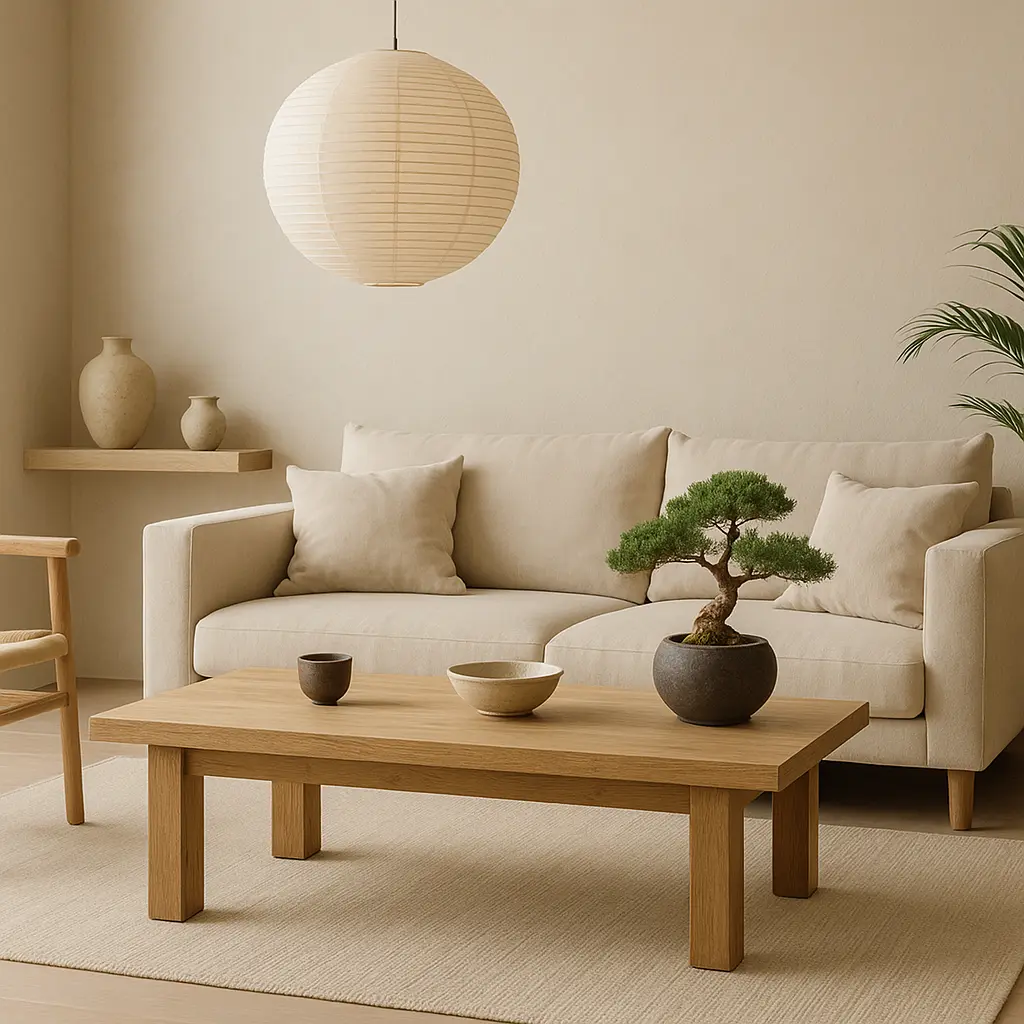
Here are our essential tips for creating a Japandi lounge zen:
- Favor low furniture that anchor the space and create a feeling of openness
- Incorporates some handcrafted items carefully chosen for their history and beauty
- Add indoor plants with graphic shapes like ferns or a small bonsai
The Japandi room: a haven of peace
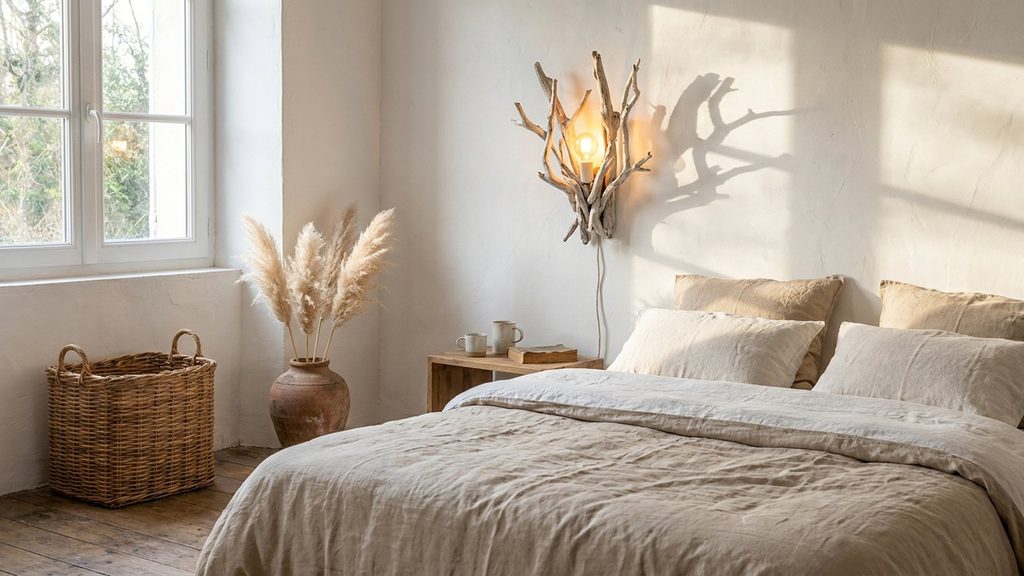
There Japandi style room invites calm and disconnection. We recommend a low bed in natural wood, a true centerpiece of this space. Dress it with crumpled linen in neutral tones for a cozy and authentic atmosphere.
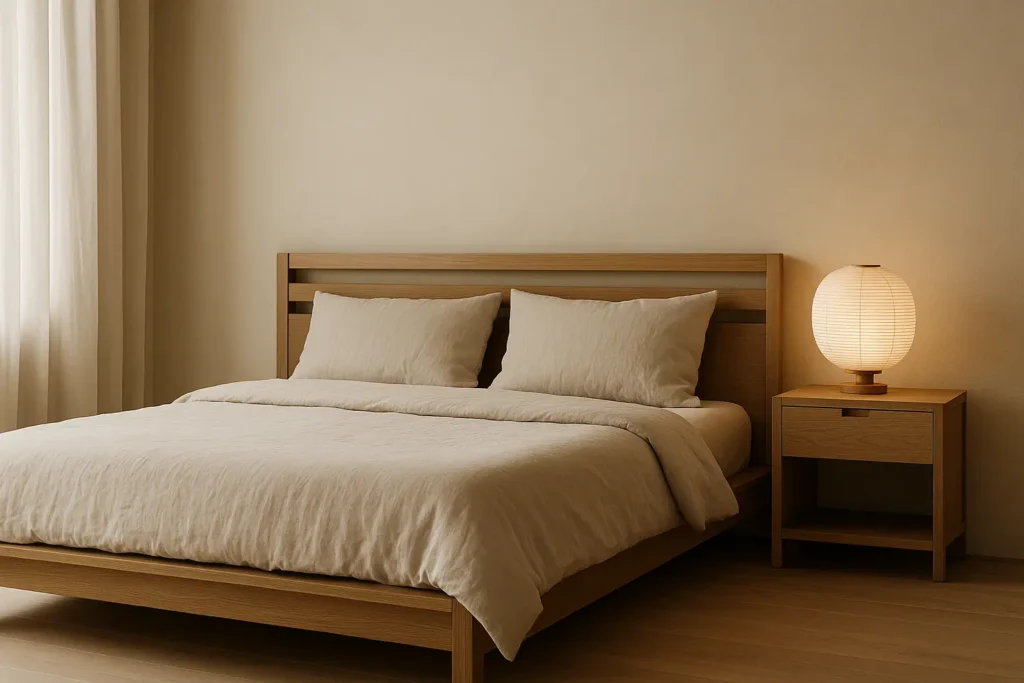
Storage should remain discreet and functional, preferably closed to preserve visual serenity. Indirect lighting, such as a washi paper lamp, completes this atmosphere conducive to restful sleep.
Japandi kitchen and bathroom: functionality and aesthetics
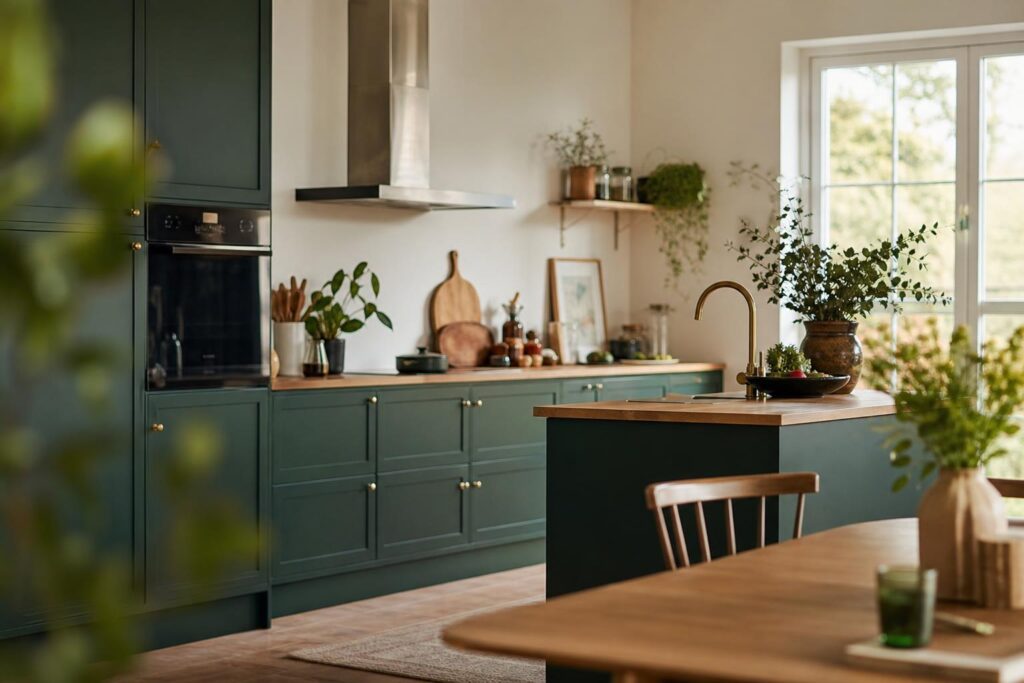
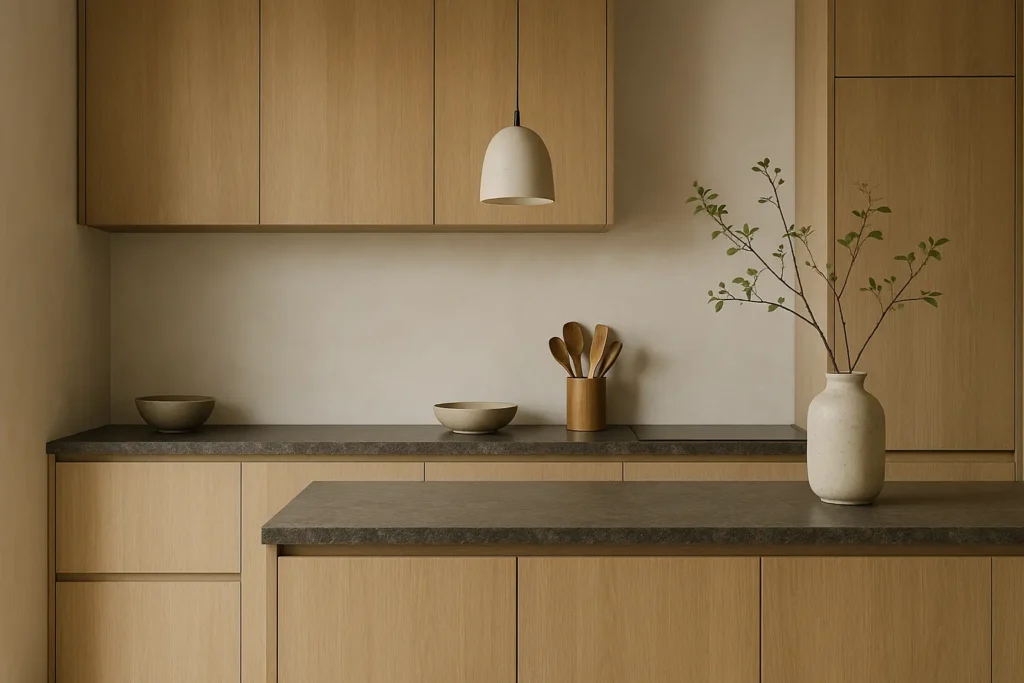
A Japanese cuisine Combine simplicity and practicality. Opt for smooth cabinet fronts, without visible handles, in wood or neutral tones. Natural stone or oiled wood worktops bring warmth and authenticity. Display a few beautiful objects like handmade ceramics or wooden utensils that tell a story.
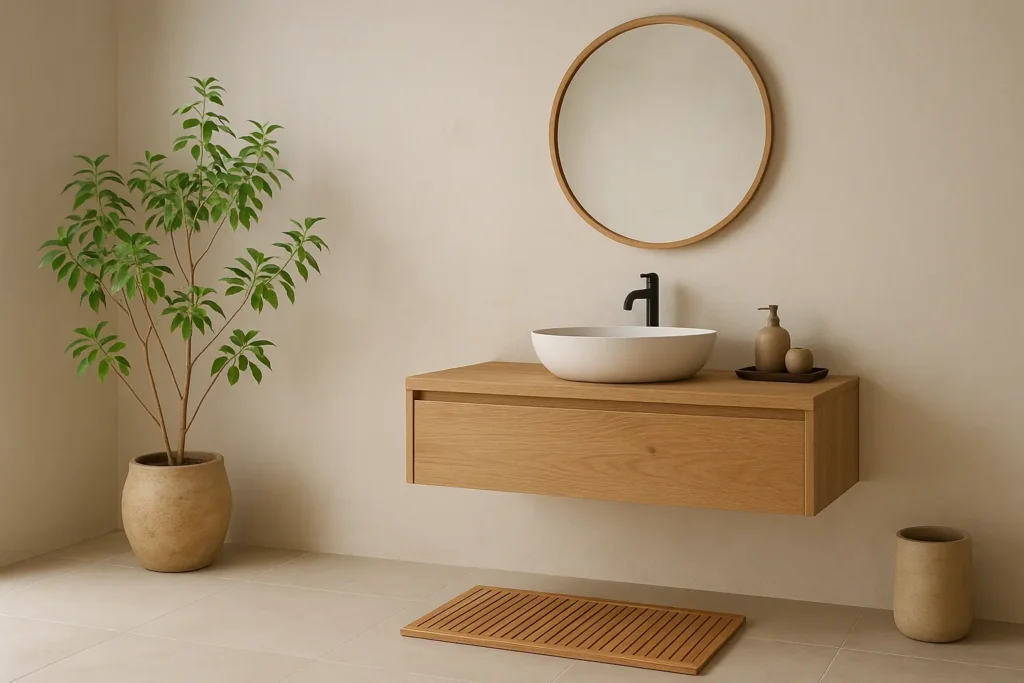
For a Japandi bathroom, seeks the balance between minimalism and a spa feel. A raw wood washbasin unit, a bamboo bath mat and a few green plants immediately create a Zen atmosphere. Matte ceramic or wooden accessories harmoniously complete this Japandi style bathroom dedicated to well-being.
The Japandi art of living: beyond simple decoration
Japandi transcends mere aesthetics to offer a true philosophy of life. We have adopted it at La Maison Coloniale because it responds to our quest for authenticity and a harmonious relationship with our environment.
The balance between empty and full in Japandi design
THE Japanese concept of "ma" (the space between things) constitutes a fundamental principle of Japandi. These breathing spaces allow you to highlight the chosen objects with care. To integrate this concept into your home, learn to declutter regularly and question the usefulness and beauty of each object. This approach brings beneficial visual and mental clarity.
The beauty of imperfection in Scandinavian Japanese decor style
The wabi-sabi philosophy invites us to celebrate irregularities, imperfect textures, and the patina of time. In a Japandi interior, we value pieces that tell a story: handcrafted ceramics with organic shapes, wood with visible knots, textiles in slightly faded hues.
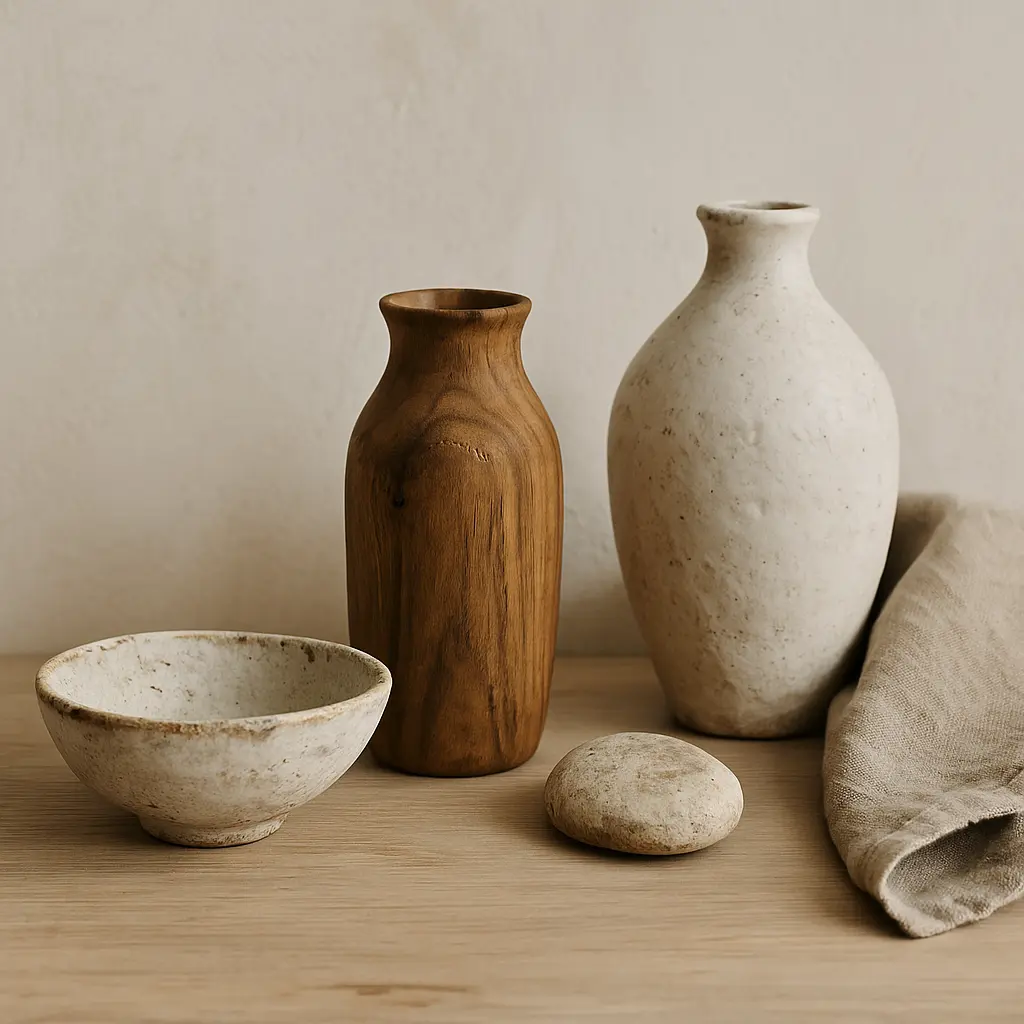
As the shabby chic style who appreciates the charm of wear, Japandi reconnects us with the authenticity of materials that evolve over time.
- Incorporates handcrafted objects which bear the mark of the hand that shaped them
- Choose materials that patina gracefully like wood, leather or stone
- Accept and value natural imperfections rather than seeking artificial uniformity
A conscious and sustainable lifestyle
There Japandi style decor encourages us to take a more thoughtful approach to our homes. Choosing less but better, prioritizing quality and durability, creating an environment that promotes well-being – these are the core values of this style. This approach fits perfectly with a more conscious vision of decoration, where each purchase is considered for the long term rather than subject to fleeting trends.
By adopting the Japandi style, you don't just transform the look of your interior, but you embrace a philosophy that values the essential. This harmonious blend of Japanese and Scandinavian influences creates a living environment conducive to serenity and rejuvenation, a true antidote to the frenetic pace of our daily lives.