Our article in brief
- A kitchen isn't lit from a single point: it's layered three layers — general, functional, atmospheric. The chandelier belongs to the third category, the one that gives character.
- THE natural materials — rattan, wicker, bamboo, blown glass, brass, ceramic, terracotta — warm up a room that is often smooth and cold, provided they are placed away from splashes.
- Typical installation guidelines: bottom of the light fixture at 65-80 cm of the island plan, 70-80 cm above a tabletop, a pendant light for every 60 to 80 cm of island.
- Regarding lighting: hot on the table and the island for ambiance, plus neutral above the work surface to see what we are cutting.
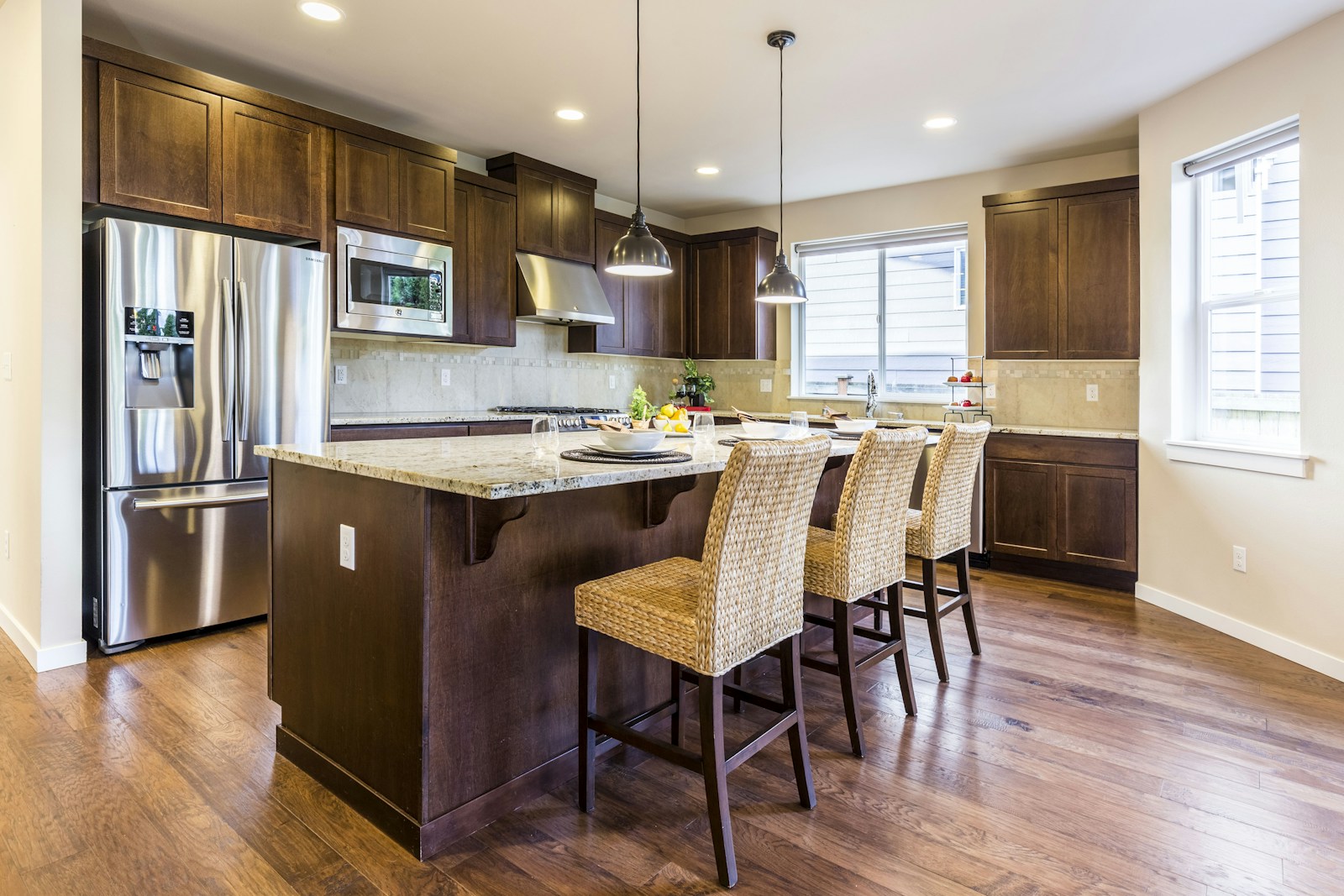
Last winter, I spent an evening in a kitchen that looked beautiful in photos but was frankly awful to live in: a single large overhead light in the center, a flat, white light, with shadows falling directly on the cutting board. That's when you realize that a kitchen chandelier is not an accessory placed at the end of the construction — it is what decides whether we want to stay in the room or pass through it.
The kitchen has become the room where we eat, where children do their homework, and where we end the evening: it requires lighting capable of changing its tone. I propose that we build it together—with warming materials, woven, blown, shaped, and with concrete reference points of height, number, and color temperature.
Chandelier, pendant light, ceiling light: what a kitchen really wants
Chandelier, pendant light or ceiling light: what are we talking about?
THE chandelierStrictly speaking, a luminaire is a multi-arm or multi-source light fixture, often branching, designed as a centerpiece. suspension It descends from a single cable and concentrates its light on a specific area: it's the queen of the island and the table. ceiling light stays glued to the ceiling or just below it, and illuminates a wide area without taking up space.
In common usage, "kitchen chandelier" most often refers to a pendant light, or a group of pendant lights above an island: it is this broad meaning that I retain here. A true chandelier with branches is perfectly at home in a kitchen, but especially above a large table and under a high ceiling.
Layered lighting: the three layers of a successful kitchen
This is the principle I repeat most often: a room is never lit by a single source. You layer light sources, each with its own function, each with its own switch if possible.
- The general stratum — Ceiling light, recessed spotlights or adjustable track lighting. The basic level, the one that allows you to put away groceries without bumping into things. Diffused, never dazzling.
- The functional layer — under the wall cabinets, above the sink. The light of the action: peeling, reading a recipe, checking on a dish. It should fall on the work surface, not on your back.
- The ambient layer — pendant lights above the island or table, a wall light near the dining area. The one that stays lit when everything else is off: that's where the chandelier comes in.
A kitchen with only the first level appears bureaucratic; a kitchen with only the third is charming and impractical. The balance of the three is what one feels upon entering a room without being able to explain it.
In a kitchen, light is not chosen like an object: it is designed like a path, from the worktop to the table.
In video: an overview of the sources to combine in a kitchen, layer by layer (BricolMaison channel).
Natural materials that warm the light
A contemporary kitchen features many hard surfaces—stone or laminate, smooth fronts, tiles, stainless steel—that reflect light without absorbing it. Lighting is often the only place where you can introduce greenery, earth, or blown glass: materials that absorb, filter, and add texture. That's why we don't primarily look for a brand, but rather a matter and one gesture.
Rattan, wicker, bamboo: woven light
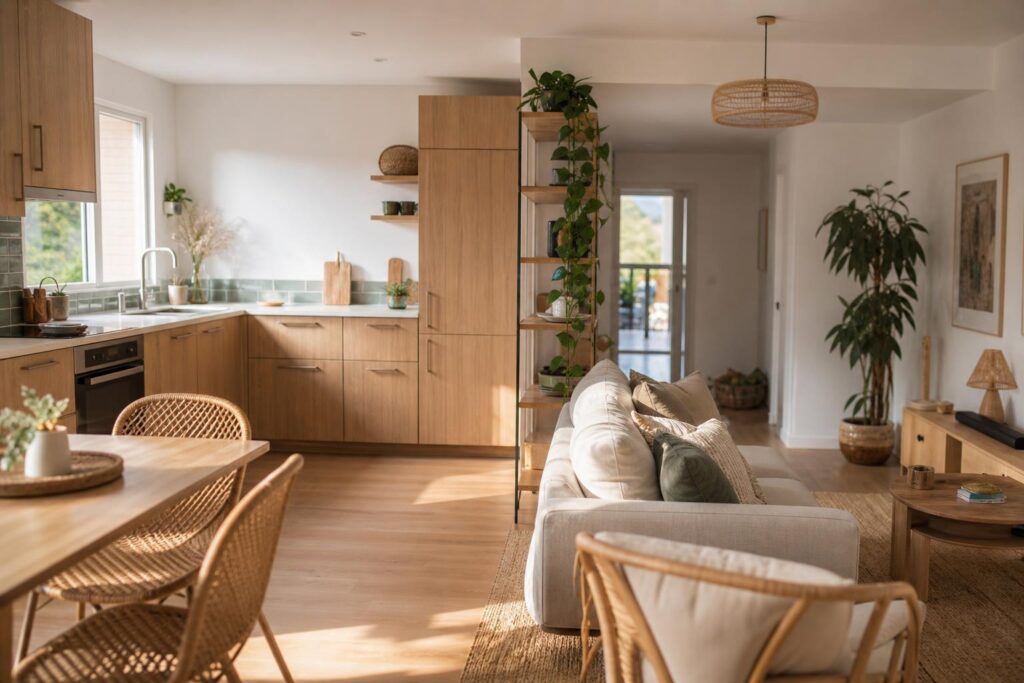
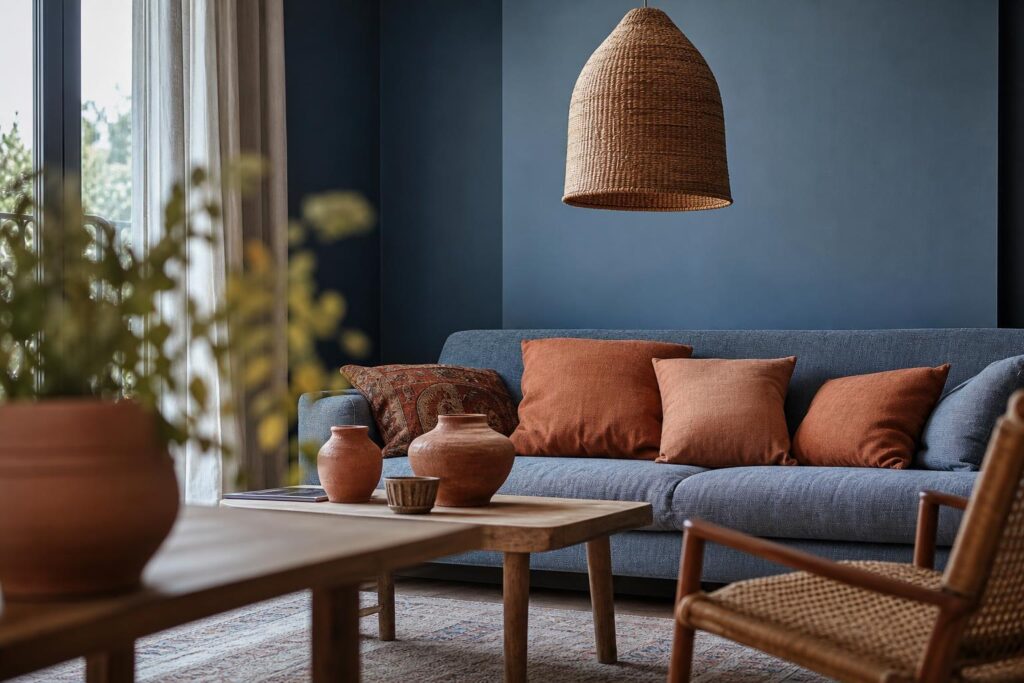
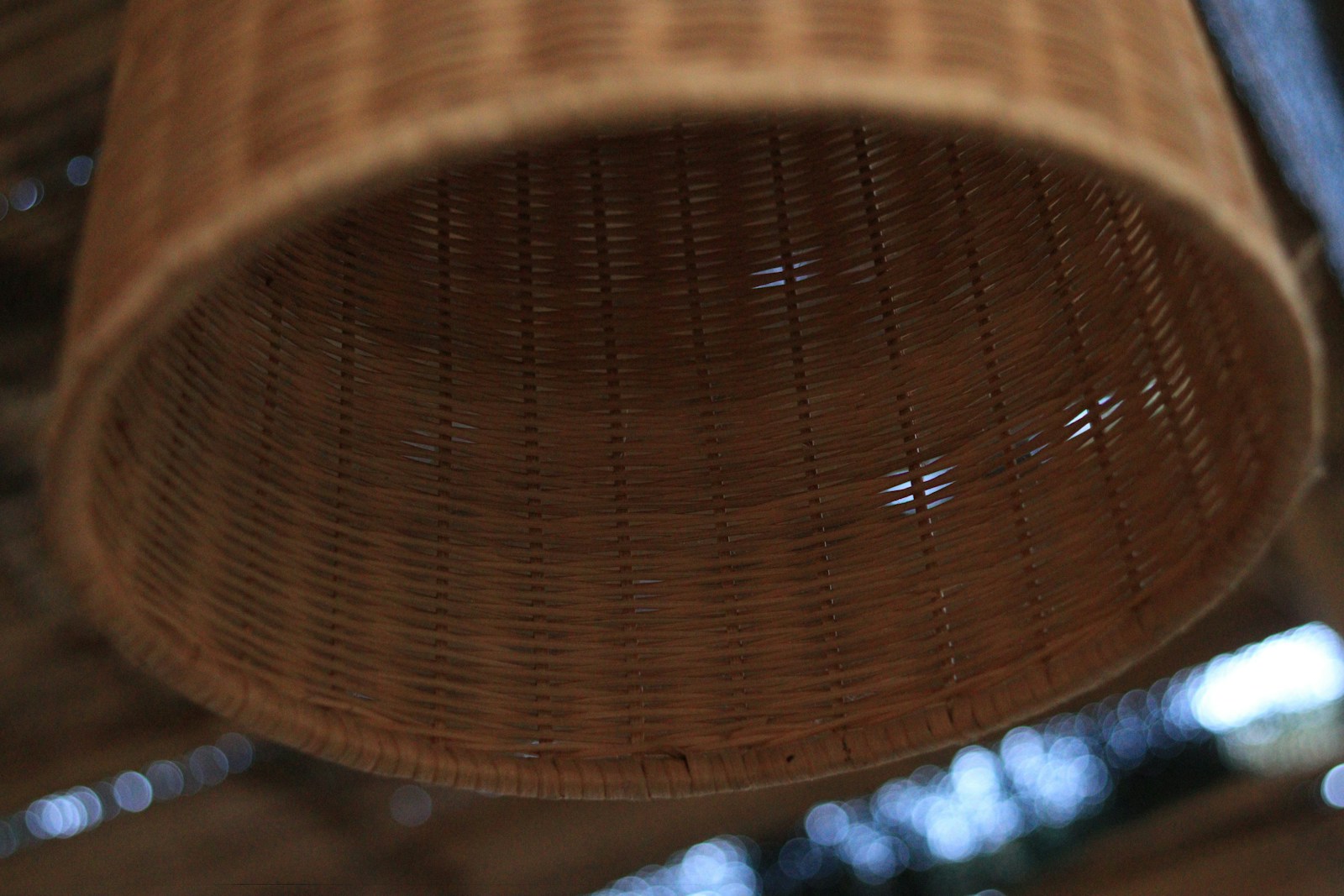
This is my favorite family. A dome in rattan Woven above an island does more than just illuminate: it casts graphic shadows on the countertop and ceiling, instantly giving the room depth.wicker gives a more rustic, more irregular braid; the bamboo curved, with cleaner, almost architectural lines.
Behind these objects lies a craft: the basket maker braiding of plant fibers — wicker, straw, or rattan — to create utilitarian or decorative pieces, a skill recognized as a craft. You're not buying a form, but hours of skilled craftsmanship. We explored this topic in our feature on the rattan and bamboo light fixturesOne precaution only: plant fiber and cooking fat don't mix. Keep braided items above the table, island, or bar — never directly above the stovetop.
Blown glass and ceramics: the material that captures light
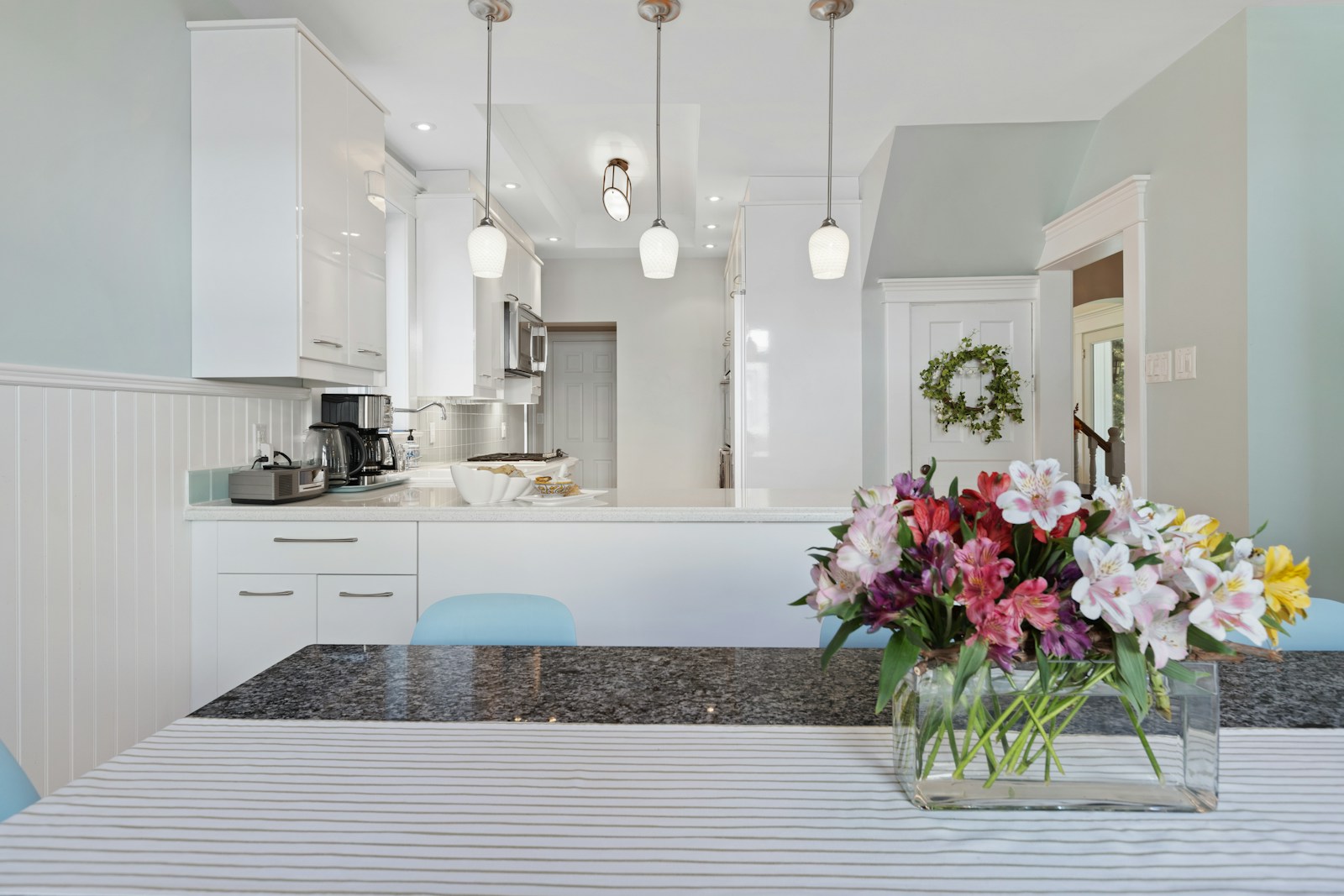
THE blown glass This is the best compromise when you want handcrafted quality without sacrificing maintenance. A transparent glass dome almost disappears, doesn't visually encroach on the space, and can be cleaned with a simple wipe. Look for pieces where the hand is still visible: a varying thickness, a bubble embedded in the glass, a slight asymmetry. Smoked, amber, or bottle-green glass further softens the look.
There ceramic And glazed stoneware does the opposite: being opaque, it concentrates the beam downwards. A ceramic lampshade above a sink gives a clear, very "workshop-like" light, with a glaze that lives and develops a patina.
Brass, copper, terracotta: patinas that bring warmth
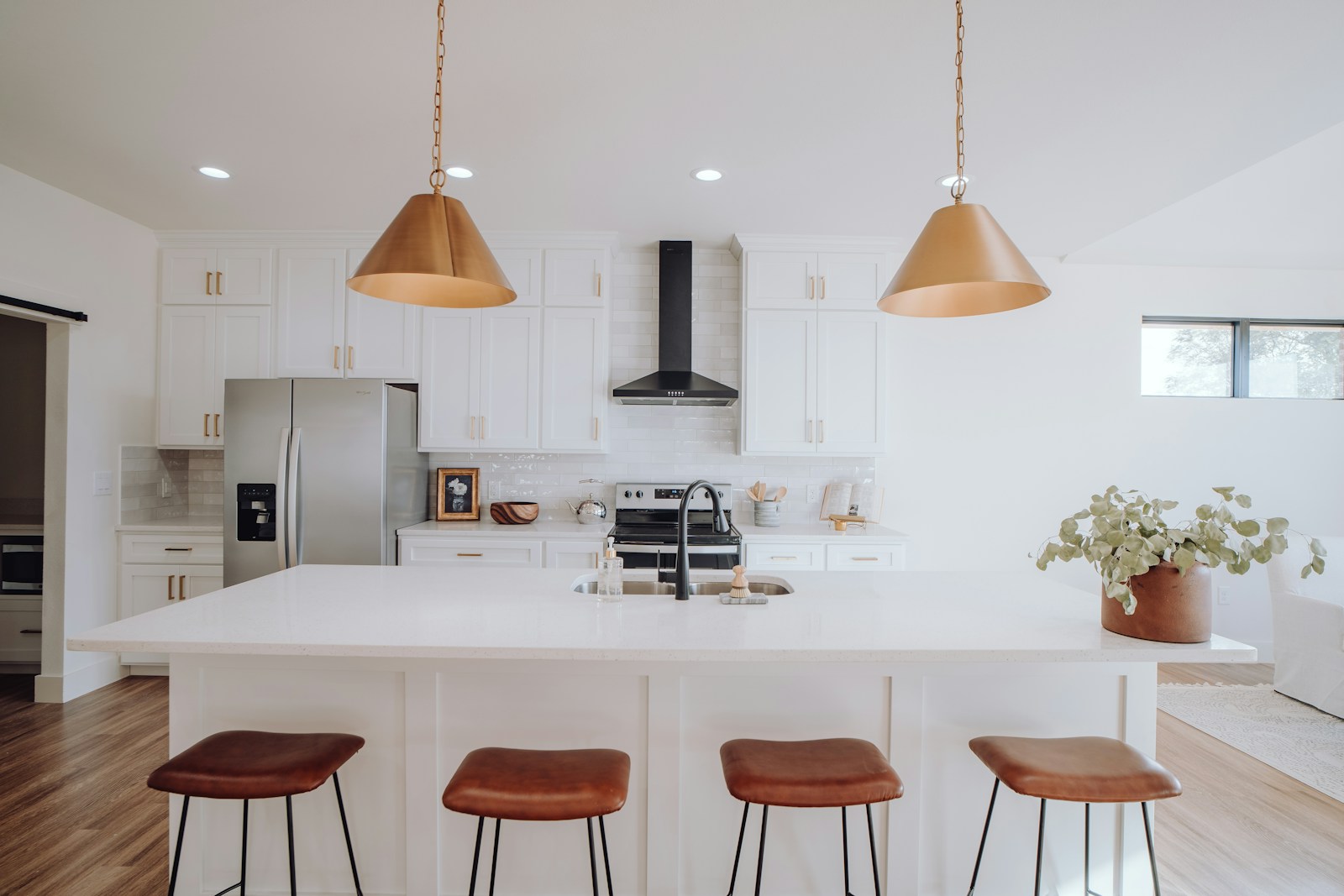
THE brass brushed and the copper They possess a special quality: their interiors reflect light, tinting it slightly with gold. With the same bulb, a brass dome above a table produces a more enveloping light than a white lampshade. And these metals develop a patina, acquire marks, and tell the story of time passing.
There terracotta is the most underestimated material in lighting. A matte and slightly irregular baked clay lampshade casts a low and soft light, very Mediterranean: above a round wooden table, the effect is immediate.
| Suspension type | Matter | To be placed above | Atmosphere achieved |
|---|---|---|---|
| Large braided dome | Rattan, wicker | Dining table, large island | Warm, graphic shadows on the ceiling |
| Trio of small domes | Fine rattan, seagrass | Island or bar, lined up | Rhythmic, natural workshop spirit |
| Bent cylinder | Bamboo, bentwood | Rectangular island | Graphic and crisp, almost Japanese |
| transparent bell jar | Clear blown glass | Island, snack bar, small kitchen | Aerial, visually disappears |
| Tinted bell jar | Smoked or amber glass | Table, dining area | Soft, muted light |
| Enamel lampshade | Ceramic, stoneware | Worktop, sink | Frank and directed, workshop spirit |
| Metal dome | Brushed brass, copper | Table, stone island | Enveloping, with golden highlights |
| Clay lampshade | Matte terracotta | Round table, dining area | Gentle, Mediterranean, calming |
| Multi-arm chandelier | Black metal and glass | Large table, high ceiling | Theatrical, a true centerpiece |
| Semi-flush ceiling light | Bentwood, opaline | Passageway, low ceiling | Neutral, clears the space |
Height, number, alignment: the installation guidelines
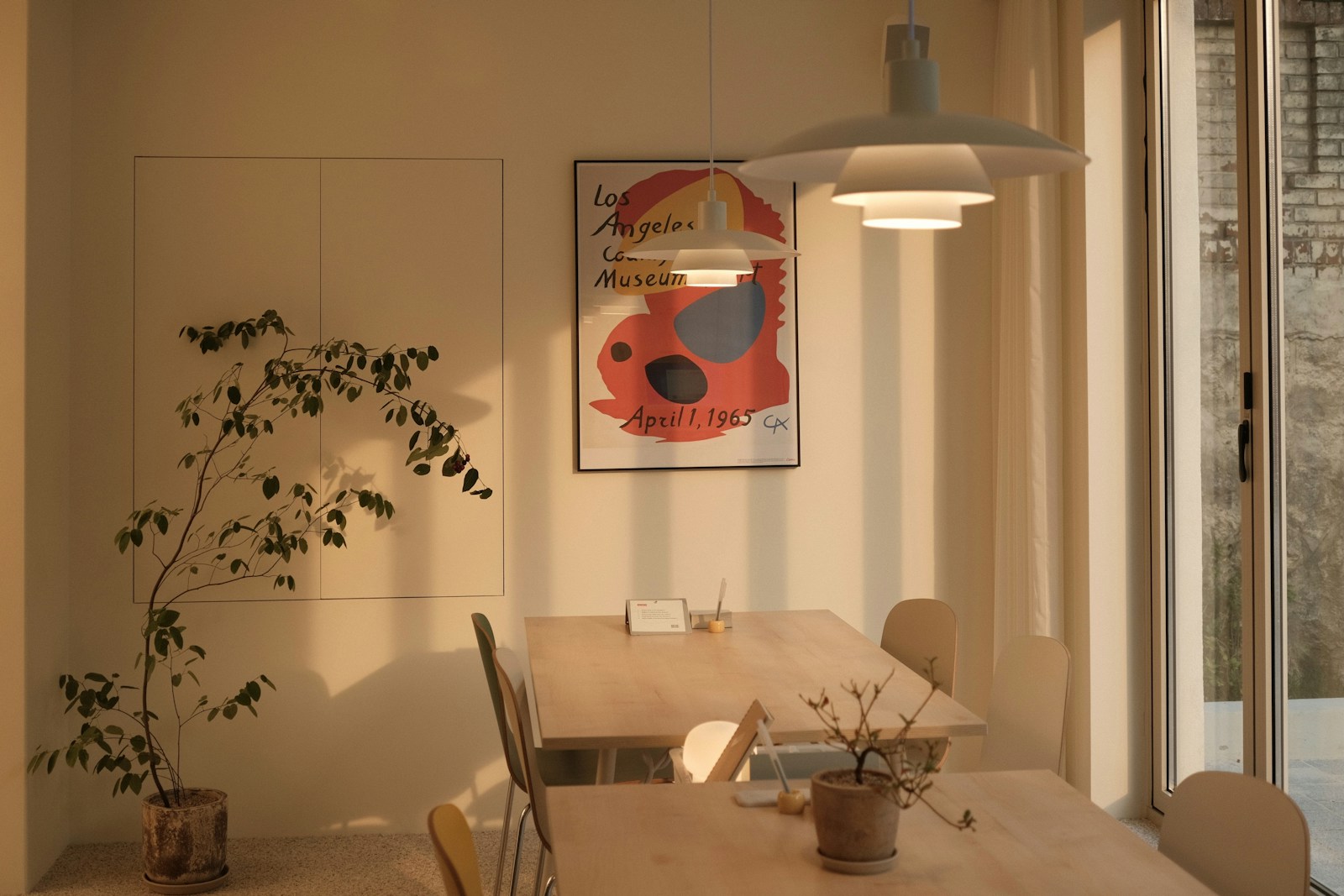
Here's the part that most inspirational articles gloss over, and it makes all the difference between a beautiful photo and a pleasant kitchen. Let's be clear from the start: these aren't standards; no regulation dictates the height of a kitchen pendant light. These are guidelines. orders of magnitude derived from the experience of kitchen designers and installers, to be adjusted to your room and your size.
At what height should it be suspended above an island?
The most common guideline: leave approximately 65 to 80 cm between the island's surface and the bottom of the light fixture. On a standard island, with a surface height of around 90 cm, this places the bottom of the pendant light approximately 1.55 to 1.70 m from the floor. Lower in this range, the light is concentrated and the atmosphere becomes intimate; higher, it diffuses and opens up the view.
The real test isn't the tape measure, it's your gaze. Standing on the other side of the island, you shouldn't be able to see the light bulb or its reflection. If the light source is visible, lower the fixture, choose a deeper lampshade, or switch to a frosted bulb—ADEME also reminds us to Prefer frosted light bulbs and not to expose the bare LEDs to view.
How many pendant lights are needed depending on the length of the island?
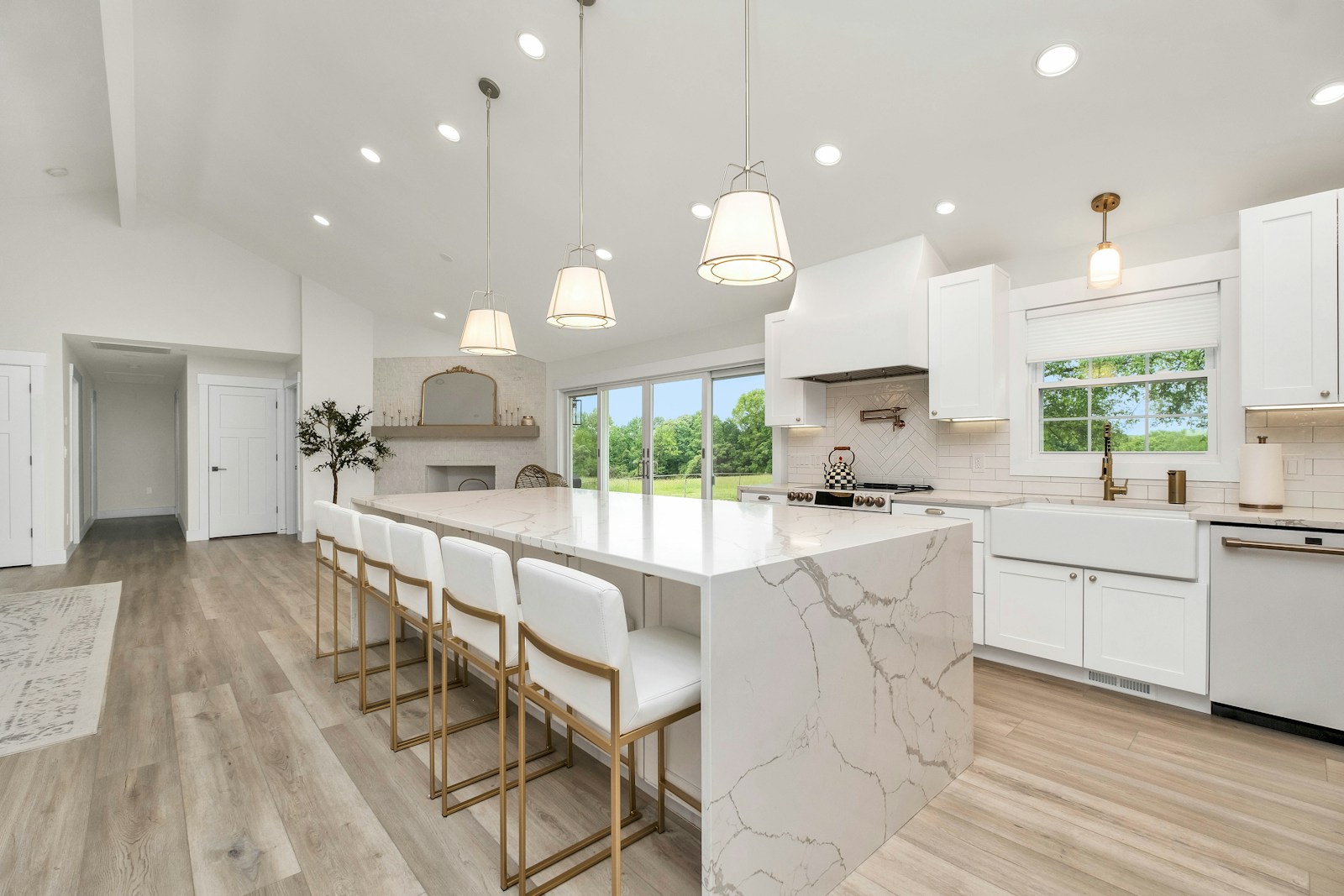
The logic is simple: cover the length without any gaps in shadow, with regular spacing. As a rough guide, allow one pendant light for every 60 to 80 cm of illuminated island, leaving about 30 cm of space at each end.
In practical terms: a compact island, under 120 cm, only requires a single main piece. Between 120 and 180 cm, two suspensions balance well. Above 180 cm, we move on to three — and three small domes are better than one giant light fixture, which is more difficult to proportion.
💡 Tip — Before drilling, do a string test: temporarily suspend the light fixtures at the correct height, then live with them for two days. Sit down, walk around. A 10 cm difference is noticeable very quickly, and is still easily corrected at this stage.
Above a table, and when the ceiling is working against you
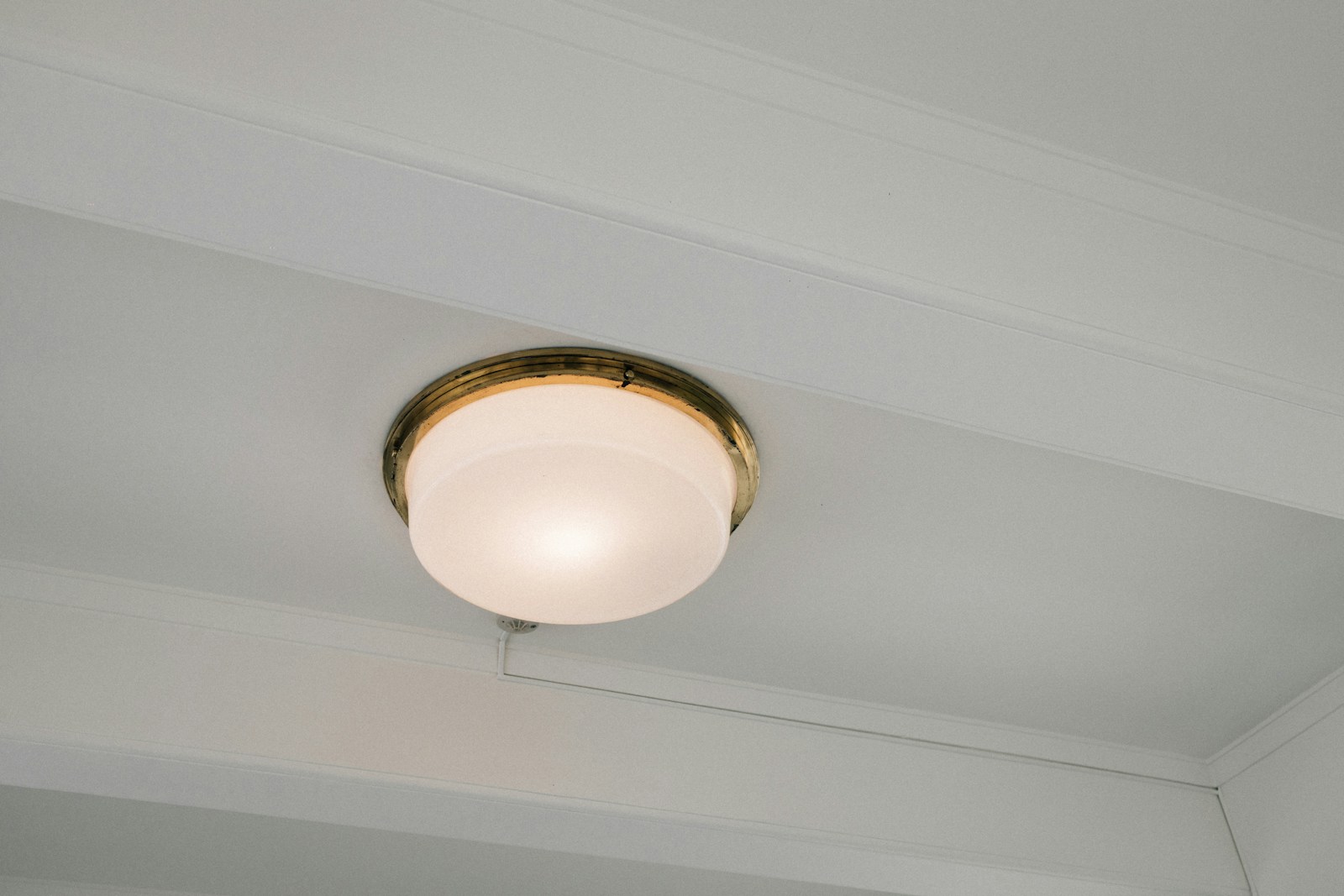
Above a table, the marker slides slightly: 70 to 80 cm between the tabletop and the bottom of the light fixture, sometimes up to 90 cm under a high ceiling. The unwritten rule is very reliable: when seated, you should be able to see the person opposite you without the light obstructing your view; when standing, it should be roughly at eye level. For the diameter, aim for half to two-thirds the width of the tabletop—a 120 cm round table pairs well with a 60 to 70 cm dome. Our color trends for the dining room They complement the topic if you rethink the entire dining area.
With a low ceiling, around 2.40 m, forget about large chandeliers and long cables: opt for a flat ceiling light, a semi-flush dome, or a pendant light with a shortened cable. The principle is this: in areas where people walk, the bottom of the light fixture should remain well above head height, and only lower a pendant light where no one is walking. Conversely, with a very high ceiling, you have to be bold enough to lower the light significantly; otherwise, the light will feel dwarfed and the room will appear uninhabited.
- Measure the ceiling height and the height of the plane to be illuminated: everything can be deduced from these two figures.
- Locate the exact axis of the island or table, and check that the electrical outlet falls on it — otherwise, plan for an offset rosette or a rail.
- Test the height with a string for two or three days, sitting then standing, and check the passage: arm raised, cupboard door open, head of the tallest person in the house.
A word of common sense about electricity: turn off the power at the panel before working on anything, and if the light fixture doesn't already exist, have the circuit installed by an electrician.
The right light: temperature, intensity, dimmer
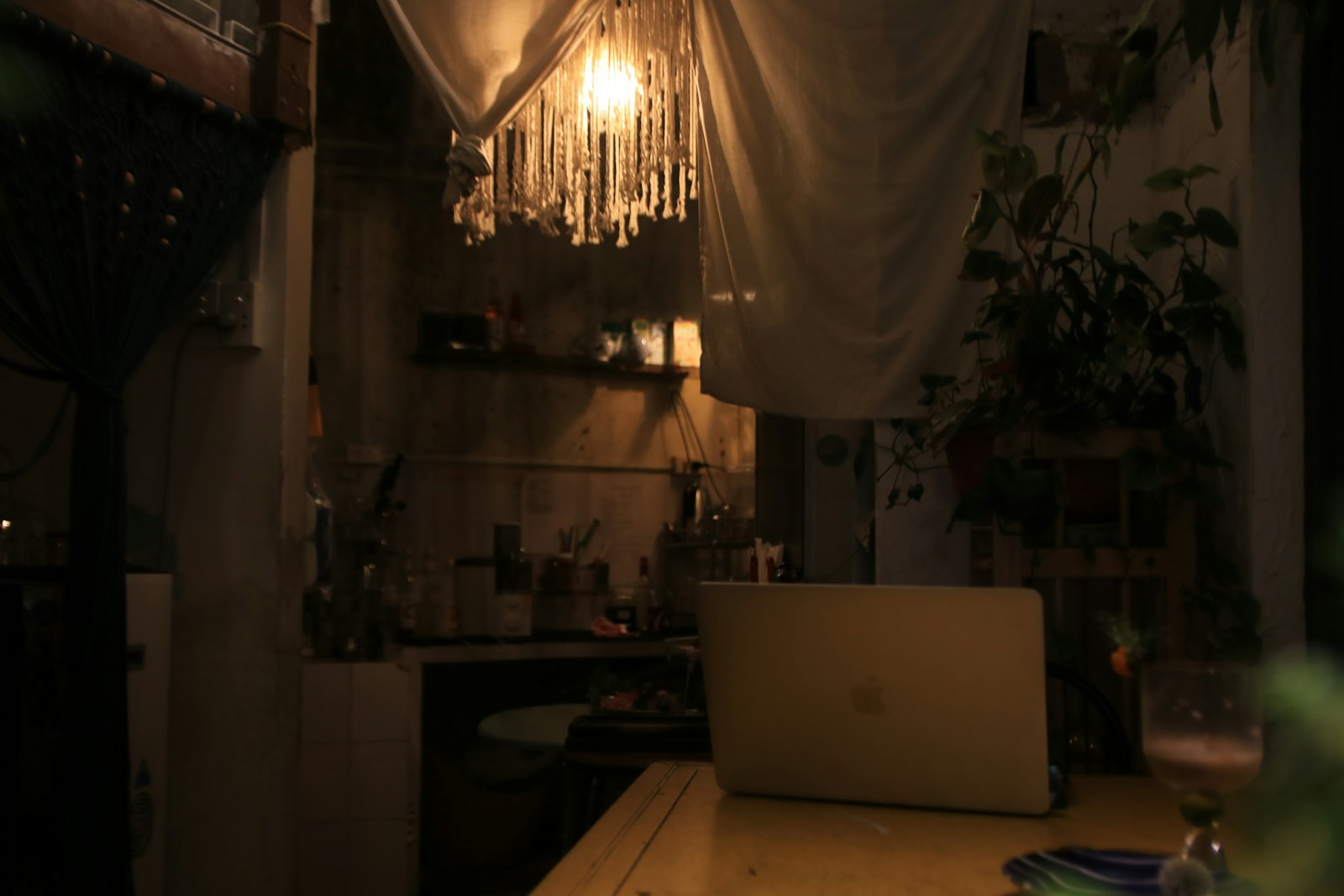
Warm white or neutral white: where to put what
The most beautiful light fixture in the world will never buy back a bad light bulb — and fortunately, that's the easiest mistake to correct. Color temperature is indicated in kelvins on the packaging: ADEME (the French Agency for Ecological Transition) puts it simply: the lower the temperature, the warmer and more relaxing the light will be below 3,000 K; the higher the temperature, the bluer the light will be above 4,000 K, creating a dynamic atmosphere, which the agency recommends for rooms where precision lighting is needed, including kitchens.
I readily combine this reading with the layers. On the work surface, functional lighting benefits from being neutralAround 3,500 to 4,000 K: you can better distinguish the colors of food, you can see what you're cutting. But on the island and the table, I'm sticking with... warm whiteBetween 2,700 and 3,000 K — this is the light that makes us linger after dinner. Two temperatures coexist very well in the same room, provided they are never mixed in the same layer: two nearby pendant lights of different hues, on the other hand, are immediately noticeable.
The final criterion, often overlooked, is the color rendering index, noted as CRI or Ra on the box. The higher it is, the more accurate the colors are — in cooking, where you judge cooking by eye, this is not a detail.
Dimmer and orientation: the details that make all the difference
If I had to give only one piece of advice: put on a dimmer on the ambient lighting layer. The same pendant light then plays two roles — full power at breakfast, very low in the evening. Check that the LED bulb is marked "dimmable": not all of them are, and an incompatible LED will flicker or buzz.
Finally, consider the direction of the light. An opaque lampshade directs all the light downwards: perfect on a flat surface, a bit harsh on a table. A lampshade that's open at the top, or one made of openwork braided fiber, reflects some of the light back onto the ceiling and softens the entire room. This is the principle we were discussing when choosing a lampshade. well-chosen bedside lamp : it is not power that creates comfort, it is direction.
Match the lighting to your kitchen
White and wood kitchen, dark kitchen, antique kitchen
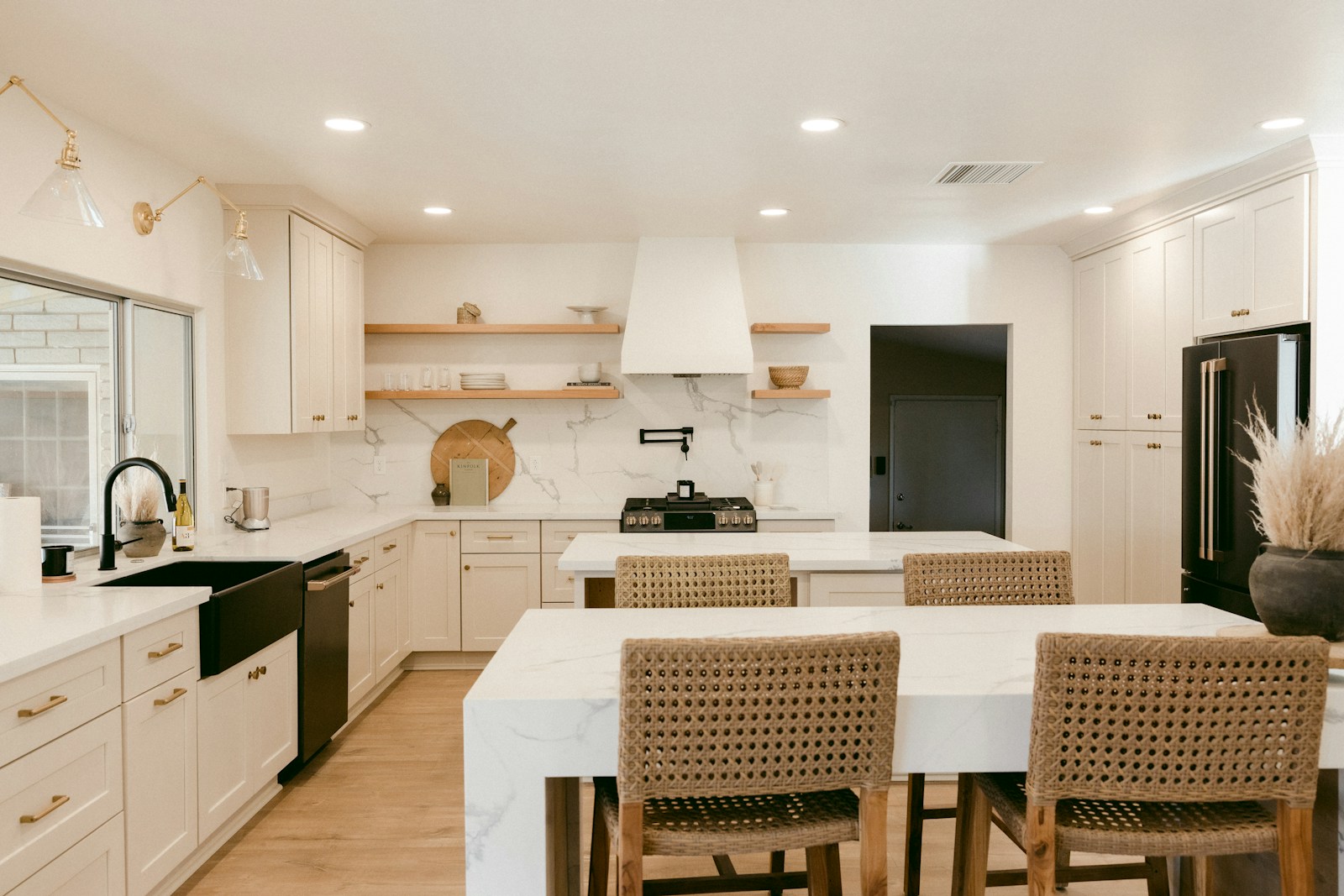
There white and wood kitchen is the most generous terrain: this is where braided fibers truly shine, because they provide the missing texture without adding color. A white opaline framed in brass also works, offering a more graphic look. To extend the harmony to the facade colors, our reference points on the kitchen color trends will help you avoid some wrong turns.
In a dark kitchen — forest green, deep blue, matte black — the challenge is reversed: you need a light source that stands out. Brass, copper, amber glass, or light-colored ceramic creates the necessary contrast; a black pendant light on a black wall disappears. A old-fashioned kitchenWith its beams or stone sink, it supports very well a chandelier with patinated metal branches, or an enameled workshop-style dome: we remain in the realm of assumed functionality, never in pastiche.
As for the style modernHe rarely focuses on the material and almost always on the lines: a clean cylinder, a thin cable, no ornamentation. A modern kitchen chandelier can perfectly well be made of rattan if the design is minimalist—whereas a highly ornate chrome fixture will look dated much faster than a woven dome.
Should the lighting fixtures be matched to the faucets?
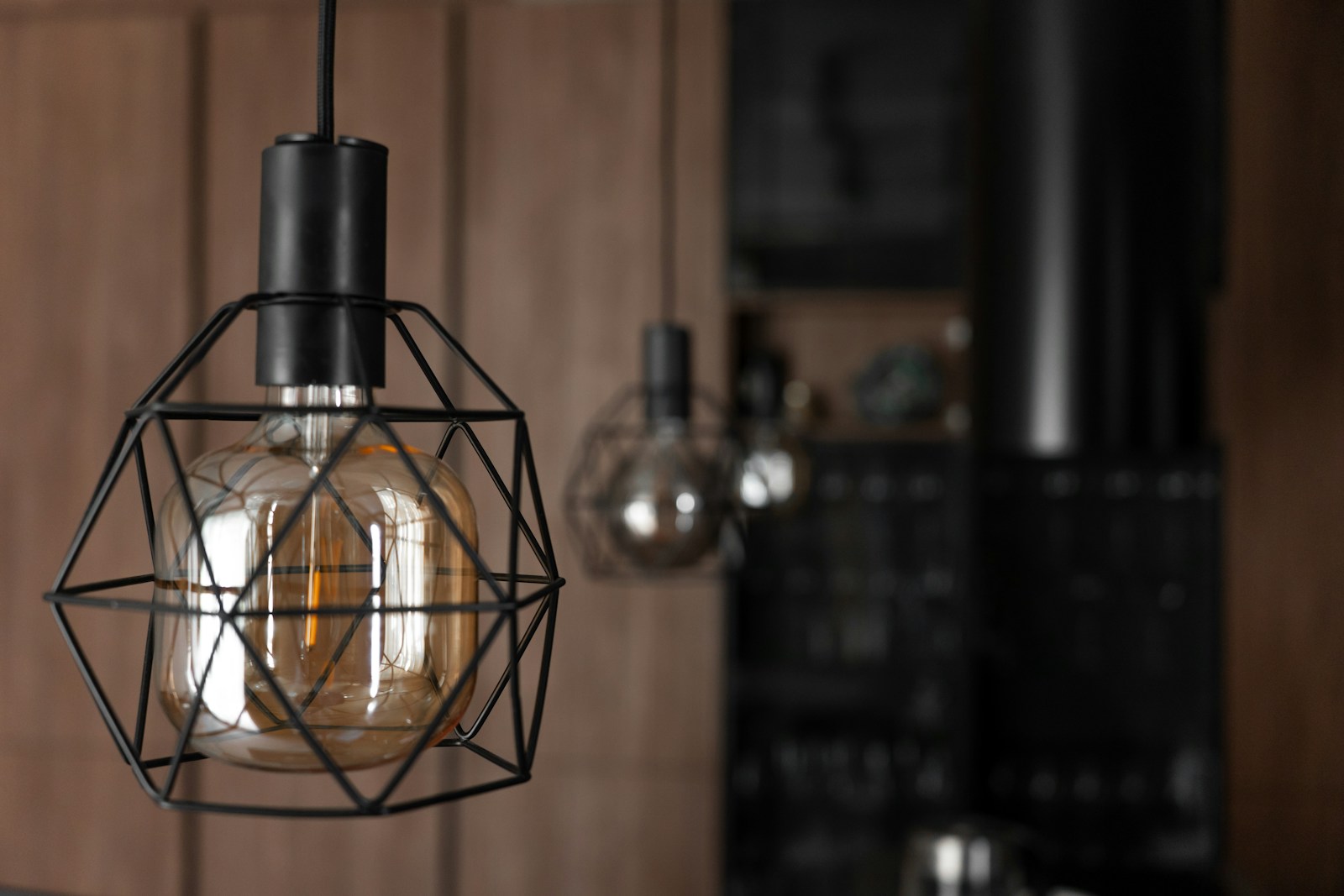
Not necessarily—but there needs to be an intention. The coherence of a kitchen doesn't come from uniformity; it comes from the repetition of a signature element: the same metallic finish, the same material family, the same installation height. Three approaches that work:
- Recall the metal Black faucets and black-framed pendant lights, or brass faucets and brass shades. The most reliable combination, the one that never fails.
- Remember the natural material : a rattan pendant light that complements a basket, cane stools, and a raw wood plank. A material that recurs two or three times becomes a unifying thread.
- Embrace the counterpoint : a unique piece, terracotta or colored blown glass, that looks like nothing else in the kitchen. Provided that it is truly the only one.
If your kitchen opens onto the living room, extend this reasoning: the island pendant light and the living room light fixture don't need to be identical, but they benefit from sharing a finish or material. This is what makes a large space feel cohesive. Whether you choose a craftsperson, a flea market find, a local workshop, or a large home decor retailer, all options are valid, and I especially encourage you to consider the finish before the source—a regular weave, glass without sharp edges, a securely fixed socket.
Looking for a natural, warm and outward-looking interior?
Discover chic ethnic decorFAQ: Your questions about the kitchen chandelier
Which chandelier should I choose for the kitchen?
Choose a washable and heat-resistant light fixture: blown glass, ceramic, brass, or woven fiber if you'll be keeping your distance from the cooktop. Above an island, opt for a low, directional pendant light; in a passageway, a flat ceiling light that maximizes vertical space.
At what height should a light fixture be hung above a kitchen island?
Generally, allow 65 to 80 cm between the bottom of the light fixture and the surface of the island, or approximately 1.55 to 1.70 m from the floor for a standard island. The best guideline remains visual: the light source should remain outside the field of vision of a standing person.
What type of pendant light is suitable above a round table?
A single, centered pendant light works best: it emphasizes the table's geometry. Aim for a diameter approximately half to two-thirds that of the tabletop, and position the base of the light fixture 70-80 cm above it, so as not to obstruct the view.
How to match light fixtures together?
Aim for consistency rather than identicalness: the same metallic finish, the same material family, or the same installation height is enough to create a cohesive look. Two light fixtures of different shapes work very well together if they share brass, matte black, or braided fiber.
What type of lighting is suitable for a high ceiling?
Volume calls for volume: a generous pendant light, a multi-arm chandelier, or a cascading arrangement at varying heights. Lower the light fixture sufficiently so that it becomes a focal point of the room, and ensure easy access for changing the bulb without acrobatics or scaffolding.
What type of chandelier would suit a white and wood kitchen?
This is the most welcoming setting for natural fibers: rattan, wicker, or woven bamboo warm up the white without weighing it down. As an alternative, a white opaline glass framed in brass, or an off-white ceramic, extends the wood without adding another color.